Award-Winning AP Biology Tutors
serving Kansas City, MO
AP Biology
Tutors in Kansas City
Private 1-on-1 tutoring, weekly live classes for academic support, test prep & enrichment, practice tests and diagnostics, and more to elevate grades and test scores.
Based on 3.4M Learner Ratings
UniversitiesSchools & Universities
DeliveredHours Delivered
ProficiencyGrowth in Proficiency
Who needs tutoring?
No obligation. Takes ~1 minute.
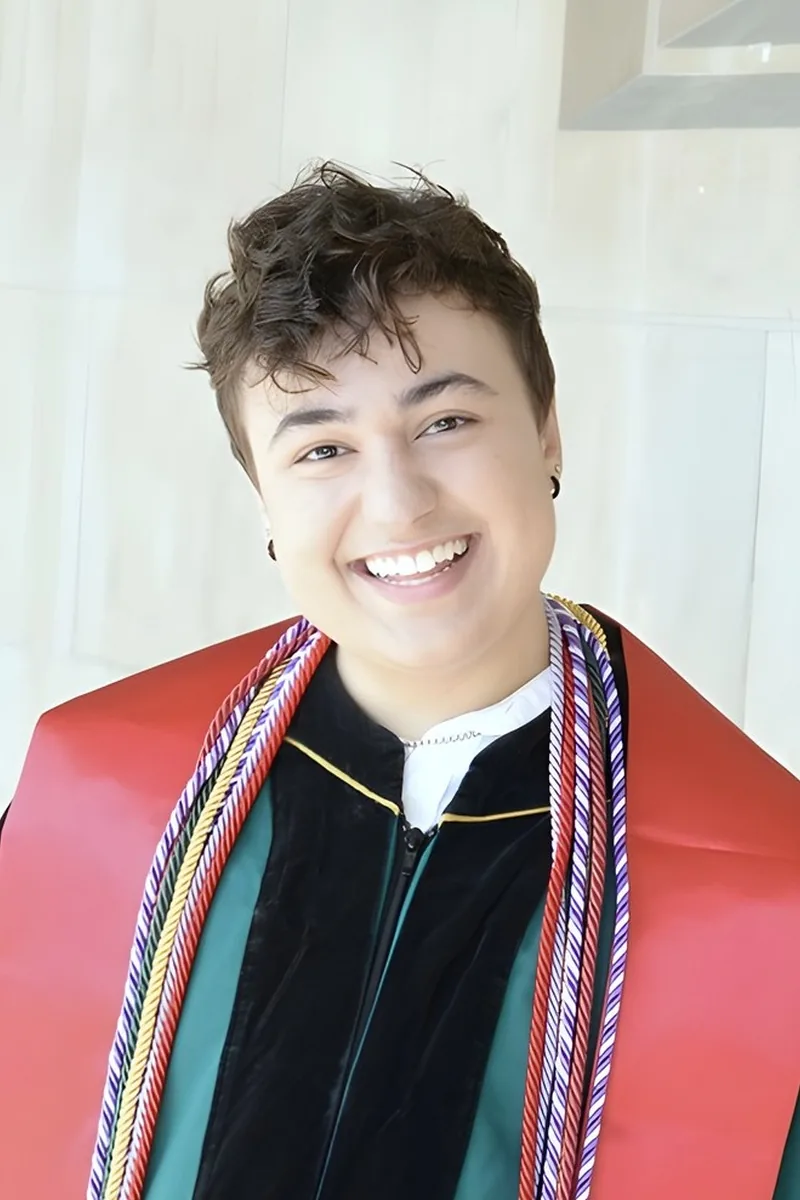
Dental school at UMKC required Nik to master the same molecular biology, genetics, and physiology that AP Bio covers — but at a clinical depth where understanding how a mutation affects protein folding actually matters for diagnosing patients. His biology degree gave him the foundational content, and his 4.9 rating from students suggests he's figured out how to make dense topics like cellular energetics and heredity click for others, not just himself.

AP Biology's free-response questions demand more than memorized facts; they require students to interpret experimental data and construct arguments about biological systems. Samantha's background in bioinformatics means she tackles topics like gene expression, ecology models, and cellular energetics with a data-driven perspective that aligns well with how the AP exam actually tests. She walks students through designing experiments and analyzing results the way working scientists do.
Studying neurobiology and behavior at Penn means Emily lives in the territory where AP Bio gets hardest — signal transduction, nervous system function, and the molecular machinery behind how cells communicate and respond to their environment. She's especially good at unpacking the genetics-to-phenotype pipeline, showing students how a mutation in one gene can ripple through protein folding, cell signaling, and ultimately organism-level behavior. Rated 5.0 by students.
AP Bio covers a staggering range — from cellular respiration pathways to ecology population models to gene regulation — and the exam rewards students who can analyze data, not just recall facts. Kate's science background and engineering training make her especially sharp on the quantitative side of the course, including Chi-square analysis, Hardy-Weinberg calculations, and interpreting experimental results.
As a biology major at Washington University in St. Louis who served as a teaching assistant for an upper-level biology course, Alexander knows AP Bio from both sides — the content and the exam. He digs into the trickiest units, like cell signaling pathways and gene regulation, by mapping out the logic visually rather than relying on rote memorization. His approach emphasizes the data-analysis and experimental-design questions that carry heavy weight on the AP exam.
Between her teaching assistant role for introductory biology at Cornell and her active cancer immunotherapy research on melanoma, Annie lives the material that AP Biology tests. She digs into the toughest units — cell signaling, gene expression and regulation, energy pathways — with the kind of mechanistic detail that earns 4s and 5s on the exam.
Between his neuroscience research at the Jungers Center and molecular biology work at the Oregon Stem Cell Center, Daniel has lived the content that shows up on the AP Biology exam — from cellular signaling pathways to gene expression and evolution. He teaches the free-response section by connecting big biological ideas to the experimental design skills the College Board actually tests for.
Few tutors bring a neuroscience specialization to AP Biology, which means Jhonatan can unpack signal transduction, membrane potentials, and nervous system physiology with a depth most students never get in the classroom. He also tackles the broader curriculum — from cellular respiration energetics to Hardy-Weinberg equilibrium — by tying each unit back to the four Big Ideas the exam is built around.
Biophysics at Rice means Aadith studies biological systems through a quantitative lens — analyzing protein folding energetics, membrane dynamics, and molecular interactions — which gives him an unusual edge on AP Bio's units covering macromolecule structure, enzyme kinetics, and cellular energetics. He's also actively taking biochemistry coursework alongside his physics major, so he can explain concepts like the chemiosmotic mechanism or allosteric regulation with the kind of molecular-level precision that earns full credit on free-response questions.
Todd's undergraduate biology degree from UIUC gives him the content foundation for AP Bio, but it's his 33 ACT and analytical training through his University of Chicago graduate work that sharpen how he teaches the exam's trickiest skill: translating dense lab data into clear, structured free-response answers. He zeroes in on the units where students lose the most points — cellular energetics and heredity — and builds the kind of process-level reasoning that turns memorized pathways into usable knowledge on test day.
AP Bio covers an enormous range — from molecular genetics to ecosystem dynamics — and the exam tests whether students can apply concepts to unfamiliar experimental scenarios. JF's mathematical and computational science training at Stanford sharpens the data-analysis and graph-interpretation skills that the redesigned AP Bio exam leans on heavily. That analytical lens turns intimidating free-response questions into structured problem-solving exercises.
A Yale biochemistry degree plus a year of wet lab research at the NIH means Matthew knows AP Biology's toughest units — molecular genetics, cellular energetics, signal transduction — from the inside out. He teaches the exam's data-analysis questions the way a working scientist reads them: by identifying variables, controls, and what the graph is actually telling you. His 4.9 rating speaks to how well that real-world perspective translates in sessions.
Fourth-year med student at Albert Einstein College of Medicine, Michael has spent years applying the biology he first studied as a summa cum laude graduate in Biology from Yeshiva College — so AP Bio's units on genetics, cellular processes, and physiology aren't abstract for him, they're the foundation of his daily clinical work. His experience teaching MCAT prep for Kaplan means he's already coached students through the same high-stakes biological reasoning that AP Bio's free-response questions demand, especially the kind where you need to connect a molecular mechanism to an organism-level outcome.
Ruthie studied the biological basis of behavior in college, which means she didn't just memorize AP Bio content like cell signaling and genetics — she had to apply it to understand how nervous systems produce behavior, how neurotransmitters cross synapses, and how gene expression shapes organisms at every level. That interdisciplinary angle is especially useful for the exam's ecology and evolution units, where students need to connect molecular mechanisms to organism-level outcomes. Rated 5.0 by students.
Testimonials
Because the right AP Biology tutor makes all the difference.
Average Session Rating – Based on 3.4M Learner Ratings
Practice AP Biology
Free practice tests, flashcards, and AI tutoring for AP Biology
Nearby AP Biology Tutors
Other Kansas City Tutors
Related Science Tutors in Kansas City
Frequently Asked Questions
The AP Biology exam covers eight major units: chemistry of life, cell structure and function, cellular transport, cell communication and division, heredity, gene expression and regulation, natural selection, and ecology. Each unit builds foundational knowledge needed for the exam's 60 multiple-choice questions and free-response section. Understanding how these units connect—rather than memorizing isolated facts—is key to success on test day.
Score improvement depends on your starting point and commitment level, but students typically see meaningful gains when they work with a tutor to identify weak units, practice with released exam questions, and refine their test-taking strategy. Many students jump from a 2 or 3 to a 4 or 5 by focusing on the free-response section, where clear communication of biological concepts is essential. The key is consistent practice over several months, not cramming close to the exam.
Students often struggle most with Unit 6 (gene expression and regulation) and Unit 8 (ecology), which require understanding complex systems and applying concepts across multiple scenarios. The free-response section is another major challenge—it demands that you explain biological processes in detail and connect ideas, not just recall facts. Many students also find the exam's emphasis on data analysis and experimental design unexpected, since it goes beyond traditional memorization.
Most students benefit from 3-4 months of consistent preparation, starting around January for the May exam. This timeline allows you to work through each unit systematically, take multiple practice tests, and refine weak areas without last-minute cramming. If you're starting later or struggling with specific concepts, working with a tutor can help you prioritize the highest-impact topics and use your study time more efficiently.
The free-response section rewards clear, organized explanations—not just correct answers. Start by identifying what the question is asking (often it's testing multiple concepts), outline your response, and use precise biological terminology. Practice writing responses under timed conditions so you can manage the 90 minutes effectively. Many students improve significantly by studying released exam responses and learning how the College Board scores these questions.
Taking 4-6 full-length practice tests under timed conditions is ideal, spaced throughout your preparation period. The first test helps identify your weak units; subsequent tests let you track improvement and adjust your strategy. Between full tests, focus on unit-specific practice questions and free-response drills. A tutor can help you analyze your practice test results to pinpoint exactly where you're losing points and why.
Test anxiety often stems from feeling unprepared for certain topics or unsure about the exam format. Working through practice tests, learning the question types, and building confidence in your weak areas reduces anxiety significantly. On exam day, manage your pacing by spending no more than 1-2 minutes per multiple-choice question, which leaves time for the free-response section. A tutor can also help you develop a pre-exam routine and practice stress-management techniques.
The best AP Biology tutors have strong subject knowledge, understand the College Board's exam format and scoring rubric, and can explain complex concepts clearly. Look for someone with experience helping students improve their AP scores and who can adapt their teaching style to your learning needs. Varsity Tutors connects you with expert tutors in Kansas City who specialize in AP Biology and can tailor their approach to your specific goals and timeline.
Let’s find your perfect tutor
Answer a few quick questions. We’ll recommend the right plan and match you with a top 5% tutor.