Award-Winning Calculus Tutors
serving Kansas City, MO
Calculus
Tutors in Kansas City
Private 1-on-1 tutoring, weekly live classes for academic support, test prep & enrichment, practice tests and diagnostics, and more to elevate grades and test scores.
Based on 3.4M Learner Ratings
UniversitiesSchools & Universities
DeliveredHours Delivered
ProficiencyGrowth in Proficiency
Who needs tutoring?
No obligation. Takes ~1 minute.
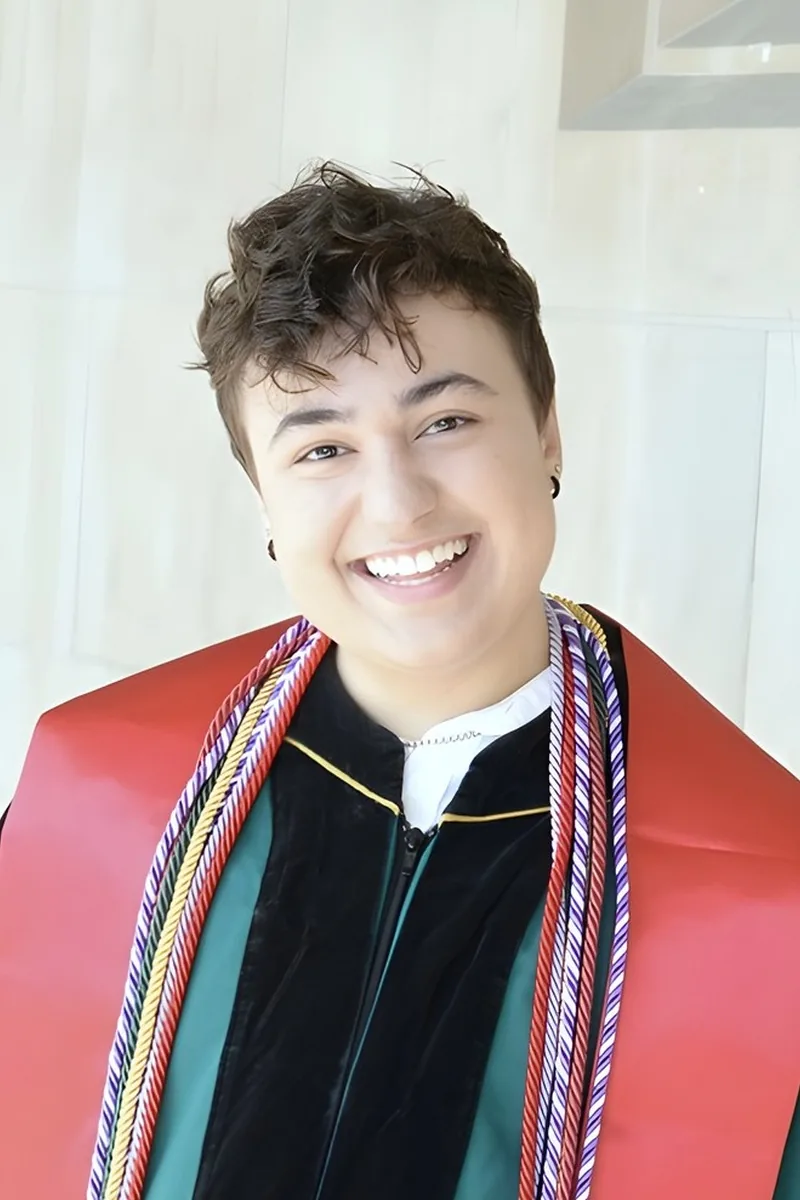
Dental school coursework leans heavily on calculus-based pharmacokinetics and biostatistics, so Nik has applied derivatives and integrals in contexts most math tutors haven't encountered. He breaks down concepts like related rates and area-under-the-curve problems by connecting them to real-world scenarios that make the logic click.

An anthropology and museum studies background doesn't scream calculus, but Victoria's years teaching math across middle school, high school, and college levels mean she's walked students through the conceptual arc from algebra into early calculus territory. Her strength is in making the notation less intimidating — slowing down to unpack what's actually happening when a function approaches a limit or a slope becomes instantaneous, so the ideas land before the formulas pile up.
Chemistry majors don't just take calculus — they use it, and Mubariz's undergraduate work means he's applied derivatives and integrals to reaction rates, thermodynamic functions, and concentration changes in real lab settings. That gives him a way to teach the chain rule or integration by substitution through problems where the math actually describes something physical. His 34 ACT composite confirms the quantitative chops to back it up.
Ann's French and Education degree doesn't scream calculus, and she's honest that her math tutoring strength runs through algebra rather than deep into derivatives. That said, her certified-teacher training in presenting concepts multiple ways makes her a solid fit for students just entering calculus who need the algebraic scaffolding — function behavior, slope, and rate-of-change intuition — explained clearly before the formal notation piles up.
Teaching AP Chemistry and Honors Biology daily means Samuel constantly applies calculus concepts — rates of change in reaction kinetics, area under curves for energy diagrams, and differential relationships in population models. He brings that applied perspective to derivatives and integrals, connecting abstract calculus rules to problems students can visualize.
Engineering coursework — first aerospace, now biotechnology — means Drew has put calculus to work in real problems: thrust equations, fluid dynamics, reaction kinetics, and the differential models that describe biological systems. That applied background lets him teach derivatives and integrals as tools with a purpose, connecting each technique to the physical scenario it was built to describe. Rated 4.9 by students.
I am interested in Physics and Mathematics and working out practical problems from plumbing to electronics. I will someday go back for my Ph.D. in Physics but until then I am looking to grow as an engineer or computer programmer.
Running a school building means Anthony lives in data — tracking growth percentages, analyzing trend lines in student performance, interpreting rates of change across assessment cycles. That administrative math translates surprisingly well to early calculus concepts like derivatives and slope, because he already thinks in terms of how quickly things are changing and what that change means. His teaching background also means he's practiced at slowing down and unpacking the reasoning behind each step.
Teaching seventh-grade math and English for two years means Kristen has spent a lot of time building the algebraic reasoning and function concepts that calculus eventually depends on — she knows exactly where students' foundations tend to crack. Her education degree and 33 ACT composite give her the quantitative ability and pedagogical training to walk through early calculus ideas like limits and slope interpretation in plain, student-friendly language.
Biology and dental science coursework gave Katherine hands-on experience with the calculus that underlies pharmacokinetics, growth curves, and decay models — places where derivatives and integrals describe real biological behavior rather than abstract exercises. Her 33 ACT composite confirms strong quantitative chops, and she teaches the material by connecting each rule back to the science applications that made it click for her. Rated 5.0 by students.
Medical training requires comfort with rates of change — drug concentration curves, physiological modeling, growth and decay — so Jacob's calculus knowledge stays sharp well beyond the classroom. He walks students through derivatives, integrals, and limit concepts by tying each technique back to what it actually describes, which makes the notation less intimidating and the problem-solving more intuitive.
Genetics coursework at Iowa State means Taylor has pushed through the calculus that underpins population genetics models and growth rate equations — places where derivatives aren't abstract but describe how allele frequencies shift over generations. That science-first experience with rates of change gives her a practical vocabulary for teaching limits, differentiation, and integration to students who want to understand the machinery, not just survive the exam. Rated 4.9 by students.
After years of applying calculus in biology and medical contexts — modeling drug absorption rates, interpreting growth curves, analyzing physiological data — Anatoliy explains derivatives and integrals through real problems, not just textbook exercises. He's particularly strong at walking students through the conceptual leap from limits to the fundamental theorem. Holds a 4.9 rating.
Teaching elementary math full-time as a literacy interventionist means Brianna spends her days making abstract concepts concrete for young learners — a skill that translates surprisingly well to unpacking early calculus ideas like limits and instantaneous rates of change. She breaks down intimidating notation into plain, step-by-step language, treating each new concept the way she'd introduce a tricky reading passage: one piece at a time until the whole picture makes sense. Rated 5.0 by students.
An English degree doesn't scream calculus, and Bri is honest about that — this isn't her deepest subject. That said, her experience tutoring algebra through SAT math means she understands the conceptual runway leading into calculus, and she's particularly effective at slowing down the transition from algebraic manipulation to the kind of limit-based reasoning that trips students up early on.
As a medical student, Jessica encounters calculus constantly — drug absorption rates, dosage decay models, and the pharmacokinetic curves that describe how medications move through the body are all derivative and integral problems in disguise. That daily exposure to applied calculus means she can teach concepts like the chain rule or area under a curve by connecting them to real systems where the math has immediate, tangible meaning.
Chemical engineering at the undergraduate level means Austin didn't just take calculus — he used it daily, from heat transfer equations and fluid dynamics to reaction rate modeling and process optimization. That depth of applied experience lets him teach derivatives, integrals, and differential equations as tools with real engineering purpose, connecting each concept to the physical systems it was built to describe.
Teaching algebra through algebra 2 and then into calculus gives Anita a clear picture of where students' foundations crack under pressure — usually around the shift from static equations to dynamic rates of change. She zeroes in on that transition, connecting derivative rules back to the slope and function behavior students already know from earlier courses so the leap feels like a natural next step rather than a foreign language.
Teaching music theory requires the same kind of pattern recognition that drives calculus — reading how intervals relate, how rhythmic subdivisions break apart, how harmonic progressions build and resolve. Meaghan applies that analytical ear to math tutoring, walking through limits and derivatives with the same step-by-step precision she uses to teach students to sight-read a complex score. Rated 5.0 by students.
Mechanical engineering is essentially applied calculus — Jordan spent his undergraduate years using derivatives to analyze motion systems, integrals to calculate work and energy transfer, and differential equations to model thermodynamic processes. That hands-on engineering context means he can explain concepts like the chain rule or integration by parts through problems where the math is actually doing something physical, not just living on a worksheet.
Engineering work at a consulting firm means Sidney uses calculus daily — modeling flow rates, optimizing systems, computing integrals that describe real physical processes. She brings that applied perspective to derivatives, related rates, and integration techniques, showing students why the math matters beyond the textbook. Rated 4.9 by students.
Every dosage calculation in medical school is secretly a calculus problem — Laura's MD training in molecular medicine means she's worked through derivatives and integrals in contexts like drug absorption rates, concentration curves, and physiological modeling. That clinical fluency lets her teach the chain rule or integration by parts with examples that show what the math is actually doing inside a living system. Rated 5.0 by students.
Being midway through a six-year medical program means Vijaya has used calculus as a working tool — modeling drug absorption rates, interpreting decay curves, and applying differential equations to biological systems before most undergrads finish their prereqs. That firsthand experience lets her teach derivatives and integrals as tools with real stakes, not just textbook exercises. Rated 5.0 by students.
An accounting degree means Jessica has worked through the quantitative reasoning that underpins calculus — cost behavior analysis, marginal revenue, and the rate-of-change thinking that shows up throughout business math. She teaches early calculus concepts like limits and derivatives by connecting them to the practical financial contexts where she first encountered them, making abstract notation feel less alien.
Derivatives and integrals finally click when a student sees them as natural extensions of the algebra and pre-calc skills they already have. Hannah's entire academic focus is mathematics, and she digs into the conceptual foundations of limits, the chain rule, and area-under-the-curve problems rather than rushing to formulas. That emphasis on understanding over memorization pays off when problems get more complex.
Mechanical engineering runs on calculus, so Matt didn't just pass the class — he spent years applying derivatives and integrals to real problems involving motion, area, and rates of change. He's especially strong at walking through the conceptual leap from limits to differentiation, which is where most students first feel lost. Holds a 5.0 rating.
Political science at Northwestern doesn't scream calculus, and Parag is honest that it's not his strongest subject — but a 32 ACT and his coursework in quantitative social science methods mean he's comfortable with the foundational logic of rates and accumulation. He's especially effective at translating the abstract notation of limits and early derivatives into plain, step-by-step reasoning, the same skill that earned him a 5.0 rating across his other subjects.
Four years of tutoring math at every level — from elementary arithmetic through multivariable calculus — means Kathleen has seen exactly where students stumble on the conceptual jumps that calculus demands, like the shift from average to instantaneous rate of change or the logic behind the Fundamental Theorem. Her mathematics degree from Washington University gives her the depth to teach not just how to differentiate and integrate but why each technique works. She holds a 4.5 rating.
Limits, derivatives, and integrals each demand a different kind of thinking, and rushing past one to get to the next is where most calculus frustration begins. Rachel slows down at the conceptual transitions — why a derivative is a rate, what an integral actually accumulates — so that applying rules like the chain rule or integration by parts feels grounded rather than mechanical.
Ten years teaching middle school math and history in a Chinese immersion program meant Ruth regularly explained quantitative concepts from multiple angles — a skill that transfers directly to unpacking the logic behind limits and derivatives for students who need more than one way in. Her linguistics training also sharpens how she breaks down calculus notation, treating unfamiliar symbols the way she'd teach a new language: piece by piece until each part carries meaning. Rated 5.0 by students.
Three bachelor's degrees — including one in political science — might not scream calculus, but Derrick's math tutoring background means he's comfortable walking through the early conceptual territory where most students struggle: what a limit actually represents, how slope becomes a derivative, and why the notation looks scarier than the ideas behind it. He takes a communication-first approach, translating dense mathematical language into something that reads clearly.
Creative writing and conflict resolution don't scream calculus, so Madison is straightforward that this isn't her deepest subject — but her tutoring spans math alongside a dozen other areas, and her 5.0 rating speaks to how she teaches, not just what. She approaches early calculus concepts like limits and basic differentiation the way she'd approach a complex text: slowing down, clarifying the language, and making sure each logical step actually lands before moving forward.
Of all the math he teaches — from pre-algebra through competition math — John lights up most when talking about calculus, and that enthusiasm shows in how he tackles the subject's biggest misconceptions head-on. His BS in Mathematics means he can trace every derivative rule and integration technique back to the underlying theory, so students understand *why* the Fundamental Theorem works rather than just applying it mechanically. A 35 ACT composite backs up the quantitative chops.
Jacob first encountered calculus as a tool for modeling reaction rates and thermodynamic changes in his chemistry coursework, so he teaches derivatives and integrals with a strong sense of what they actually measure. Whether a student is struggling with the chain rule or setting up a related-rates problem, he breaks each step into concrete reasoning rather than rote symbol-pushing.
Business calculus was a major component of Mason's economics degree at TCU, where optimization problems and rate-of-change analysis applied directly to cost functions, marginal revenue, and economic modeling. He unpacks derivatives and integrals by grounding them in what's actually happening on the graph — slopes of tangent lines, accumulated area — before layering in the rules and shortcuts. Students who've hit a wall with the chain rule or integration techniques tend to find his approach clarifying.
I am excited to help anyone who might need it!
Studying aerospace engineering at CU Boulder, Evan applies calculus constantly — computing integrals for thrust equations, using derivatives to model flight dynamics, solving differential equations for orbital paths. He brings that applied perspective into tutoring, connecting abstract rules like the chain rule or integration by parts to problems that show why the math matters.
Five years of teaching undergraduate physics means Mayuri has spent serious time with the calculus that underpins it — computing integrals for work and energy, using differential equations to model motion, and applying multivariable techniques to electromagnetic fields. Her PhD in physics gives her fluency not just with how to solve these problems but with what the results physically mean, which makes abstract concepts like the fundamental theorem or convergence tests feel grounded. She also holds degrees in mathematics and statistics, so the pure math side is just as solid.
The jump to calculus trips up many students at the conceptual level — understanding what a derivative actually represents, or why integration reverses that process. Anna's quantitative training through her PhD in experimental psychology means she's comfortable walking through limits, differentiation rules, and applied integration problems with an emphasis on intuition over rote procedure.
Teaching high school physics and chemistry for years means Megan has repeatedly leaned on calculus to explain the real mechanics behind motion, energy, and reaction rates — she knows exactly where derivatives and integrals show up once you move past the introductory versions of those courses. Her master's in curriculum design sharpens how she sequences the material, building from intuitive rate-of-change questions to formal notation so each new rule feels like a logical next step. Rated 5.0 by students.
Testimonials
Because the right Calculus tutor makes all the difference.
Average Session Rating – Based on 3.4M Learner Ratings
Nearby Calculus Tutors
Other Kansas City Tutors
Related Math Tutors in Kansas City
Frequently Asked Questions
Many students struggle with the transition from algebra and pre-calculus to calculus because it requires both procedural fluency and deep conceptual understanding. Common pain points include understanding limits and continuity, applying derivatives and integrals to real-world problems, and connecting visual representations (graphs) to symbolic notation. Word problems are particularly challenging because they require students to translate situations into mathematical language before solving. Personalized tutoring helps students build confidence by breaking these concepts into manageable pieces and showing how they connect to what they've already learned.
During an initial session, a tutor will assess your current understanding of foundational concepts like limits, derivatives, and integrals, and identify specific topics causing difficulty. They'll ask about your learning style, what's worked for you in math before, and what you hope to achieve—whether that's improving your grade, preparing for the AP Calculus exam, or building conceptual understanding. From there, the tutor will create a personalized plan that targets your needs and aligns with your school's curriculum. This collaborative approach ensures you're not just memorizing procedures, but actually understanding the reasoning behind calculus concepts.
Showing work in calculus isn't just about getting the right answer—it demonstrates that you understand each step and can justify your approach. Tutors help students develop problem-solving strategies by walking through solutions step-by-step, asking questions like "Why did we use the chain rule here?" and "What does this derivative tell us about the function's behavior?" This builds the habit of explaining your thinking, which is crucial for exams and deeper learning. Over time, students develop clearer mathematical communication skills and gain confidence in their reasoning, not just their calculations.
Yes. Kansas City's 24 school districts use various calculus programs and approaches, and tutors are experienced working with different textbooks and teaching methods. Whether your school uses AP Calculus, IB Higher Level, or a standard college-prep curriculum, tutors can align their instruction with your specific course materials and pacing. They understand that different textbooks emphasize concepts differently, and they can help you bridge any gaps between how your teacher presents material and how you learn best. This flexibility ensures continuity between classroom learning and tutoring support.
Word problems in calculus require you to translate real-world situations into mathematical models, then apply derivatives or integrals to solve them—a multi-step process that combines reading comprehension, mathematical reasoning, and problem-solving. Many students can execute calculus procedures but struggle to know which tool to use or how to set up the problem. Tutors help by teaching a systematic approach: identifying what's changing, determining what you're asked to find, and connecting the situation to calculus concepts like rates of change or accumulation. With practice and guided feedback, word problems become less intimidating and more like puzzles you know how to solve.
Math anxiety often stems from feeling lost or falling behind, which calculus—a challenging subject—can intensify. Personalized 1-on-1 instruction creates a judgment-free space where you can ask questions without pressure and work at your own pace. Tutors help rebuild confidence by celebrating small wins, breaking complex topics into digestible pieces, and showing you that calculus concepts are logical and learnable. When you understand the "why" behind procedures rather than just memorizing steps, the subject becomes less mysterious and more manageable, which naturally reduces anxiety and increases engagement.
Calculus is fundamentally about understanding relationships—how functions behave, how rates of change connect to accumulation, how different representations (graphs, equations, tables) tell the same story. Tutors help students recognize these patterns by asking guiding questions and drawing connections across topics: "How does the derivative relate to the original function's graph?" or "Why does the second derivative tell us about concavity?" This pattern recognition transforms calculus from a collection of isolated procedures into an interconnected system of ideas. When you see these connections, problem-solving becomes more intuitive and concepts stick longer.
Varsity Tutors connects you with tutors who have strong backgrounds in mathematics—often with degrees in math, engineering, or related fields, and proven experience teaching calculus at the high school or college level. Beyond subject expertise, effective tutors understand how students learn, can adapt their explanations to different learning styles, and know how to build confidence alongside competence. They're familiar with various calculus curricula and can help you not just solve problems, but truly understand the concepts. When matching you with a tutor, Varsity Tutors considers both their qualifications and their ability to work well with your specific needs and goals.
Let’s find your perfect tutor
Answer a few quick questions. We’ll recommend the right plan and match you with a top 5% tutor.