Award-Winning AP Calculus BC Tutors
serving Kansas City, MO
AP Calculus BC
Tutors in Kansas City
Private 1-on-1 tutoring, weekly live classes for academic support, test prep & enrichment, practice tests and diagnostics, and more to elevate grades and test scores.
Based on 3.4M Learner Ratings
UniversitiesSchools & Universities
DeliveredHours Delivered
ProficiencyGrowth in Proficiency
Who needs tutoring?
No obligation. Takes ~1 minute.
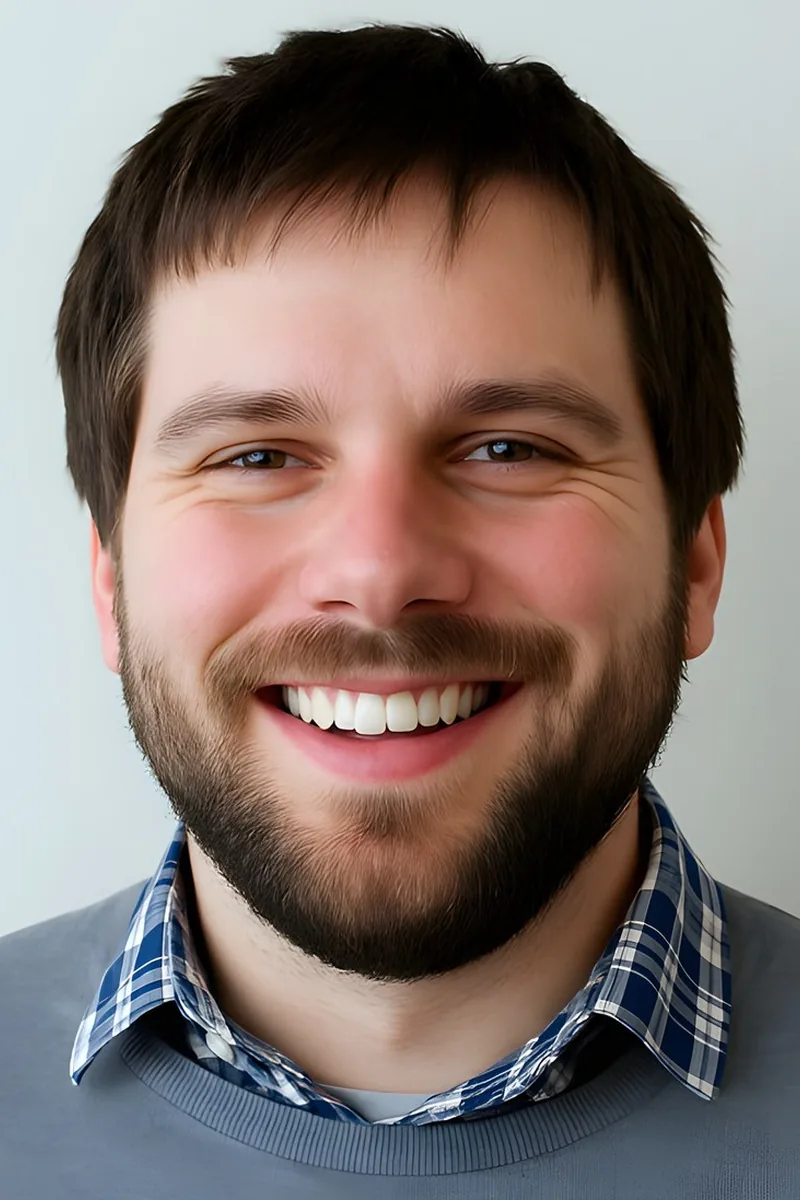
I am interested in Physics and Mathematics and working out practical problems from plumbing to electronics. I will someday go back for my Ph.D. in Physics but until then I am looking to grow as an engineer or computer programmer.

Series convergence tests — ratio, root, integral, comparison — are where most BC students start losing confidence, and Anatoliy tackles each one by building intuition about why a series behaves the way it does before drilling the mechanical steps. His background spans both medicine and advanced math, so he's comfortable connecting BC topics like Taylor series and parametric equations to real modeling problems. Rated 4.9 by students.
Most students walk into BC Calculus expecting a harder version of AB, but the real challenge is conceptual — series convergence and parametric curves require a different kind of thinking than anything they've seen before. John's math degree means he can trace a topic like Taylor polynomial error bounds back to first principles, building the reasoning from scratch rather than handing over a formula to memorize. His 35 ACT reflects the same precision he brings to walking through convergence tests step by step.
Convergence tests, parametric equations, and Taylor series expansions are where BC separates from AB — and where many students start to feel lost. Rithi breaks these topics into intuitive steps, connecting new concepts back to the foundational calculus reasoning students already have. Her 1550 SAT and deep STEM background reflect the kind of mathematical fluency that makes those connections clear.
Scoring a 36 on the ACT while majoring in chemistry at MIT means Nicholas lives in the overlap where rigorous math meets scientific application — and BC Calculus sits right at that intersection. He's especially good at breaking down series convergence and integration techniques by grounding them in the kind of approximation problems he encounters in physical chemistry coursework, so the logic behind a ratio test or a Taylor expansion feels earned rather than arbitrary. Rated 5.0 by students.
Notre Dame's Science-Computing program front-loads calculus-heavy coursework — Aidan moved through multivariable calc and differential equations while simultaneously applying integration techniques and series in his science courses, so BC topics like Taylor polynomials and convergence tests landed as tools he actually needed, not just exam hurdles. He's especially sharp at tracing where a BC struggle — say, setting up an integral in polar coordinates or choosing the right convergence test — traces back to an AB concept that needs reinforcing. His 35 ACT and premed science background keep explanations precise and grounded.
Studying both mathematics and computer science at Rice, William is taking the courses that treat BC topics like series convergence and parametric integration as foundational tools rather than standalone exam material. His 1540 SAT reflects the kind of precise, structured reasoning he brings to breaking down the jump from AB to BC — especially when Taylor polynomial construction or convergence tests start feeling like they came out of nowhere.
Mackenzie scored a 35 on the ACT and tutors math at every level from elementary through AP, which means she knows exactly which algebra and AB gaps trip students up once BC introduces new integration techniques and series. She walks through problems like setting up improper integrals or applying ratio tests by tracing each step back to the reasoning behind it, so students build intuition they can rely on during the exam.
Scoring a perfect 1600 on the SAT while studying computer science at MIT suggests Brice isn't just comfortable with calculus — he's fluent in it, and BC's extension into series, parametric equations, and advanced integration techniques sits squarely in his daily coursework. He breaks down topics like convergence tests by tracing each one back to the limit reasoning students already built in AB, turning what feels like a grab bag of rules into a coherent decision-making process. Rated 4.9 by students.
Having worked as a teaching assistant for multiple engineering courses at Washington University in St. Louis, Ava spent hours breaking down the calculus that trips students up most — and BC's jump into series convergence, parametric derivatives, and advanced integration techniques is exactly the material she kept revisiting with struggling engineers. Her dual degree in mechanical and energy engineering means she's applied Taylor expansions and improper integrals to real thermodynamic and fluid systems, giving her a concrete vocabulary for explaining why these tools matter beyond the AP exam.
Most BC students can follow a convergence test step by step but freeze when asked to choose which test to apply — that decision-making is where Nima, a physics major heading to Duke on a full merit scholarship, spends most of his teaching energy. His physics training means he treats series and parametric equations as descriptions of real motion and real forces, which gives students an intuitive anchor when the abstraction piles up. A 1580 SAT and 4.7 rating back up his ability to make that AB-to-BC jump feel manageable.
Until age 16, Viktor saw math as blind formula memorization — then a series of teachers at the right moment revealed the deeper logic underneath, and he ended up majoring in math at UChicago, where rigorous proof-based coursework made concepts like convergence and infinite series feel inevitable rather than arbitrary. That shift from "memorize the ratio test" to "understand why it works" is exactly what he brings to BC Calculus, especially when students hit the wall where AB intuition stops and formal reasoning about Taylor polynomials and error bounds needs to take over. His 1600 SAT and current CS master's work at NYU keep that analytical edge sharp.
Winning Duke's DT Stallings Award for sustained tutoring of local school students means Taariq has logged serious hours watching where calculus understanding actually breaks down — and BC's leap into series, parametric curves, and advanced integration is where breakdowns happen fastest. His math degree from Duke gives him the theoretical grounding to trace a student's confusion with, say, a ratio test or a polar area integral back to the specific AB concept that isn't solid yet. Rated 4.9 by students.
Princeton's public policy program is surprisingly calculus-heavy — Gianna's coursework in economic modeling and quantitative analysis means she's applied integration techniques and series approximations to real policy questions, not just problem sets. She's especially sharp at walking through the logic of convergence tests and parametric curves, connecting each BC topic back to the AB reasoning that makes it click.
Duke's computer science program required Michelle to live inside the calculus that powers algorithm analysis — convergence behavior, recursive sequences, and the kind of series manipulation that BC students encounter when Taylor polynomials and ratio tests suddenly demand more than AB intuition. She breaks down those topics by tracing each one back to the underlying limit and derivative logic, so the leap to BC feels like a natural next step rather than a wall. Holds a 5.0 rating from students.
Testimonials
Because the right AP Calculus BC tutor makes all the difference.
Average Session Rating – Based on 3.4M Learner Ratings
Practice AP Calculus BC
Free practice tests, flashcards, and AI tutoring for AP Calculus BC
Nearby AP Calculus BC Tutors
Other Kansas City Tutors
Related Math Tutors in Kansas City
Frequently Asked Questions
AP Calculus BC covers all topics from AP Calculus AB plus additional material including parametric equations, polar coordinates, vector-valued functions, and series/sequences. The course focuses on limits, derivatives, integrals, differential equations, and applications of calculus. For students in Kansas City preparing for the exam, understanding both the foundational AB concepts and the BC-specific extensions is essential for success on the multiple-choice and free-response sections.
Yes, AP Calculus BC is more challenging than AB because it covers all AB material plus additional topics like series, parametric equations, and polar coordinates. However, many students find BC manageable with focused preparation and consistent practice. The key difference is pacing and depth—BC moves faster and requires mastery of more complex problem types, particularly in the free-response section where series convergence and parametric motion problems frequently appear.
Score improvement depends on your starting point and consistency with practice. Students who work with a tutor typically see gains of 1-3 points on the 1-5 scale, with the most significant improvements when addressing specific weak areas like integration techniques, series problems, or free-response strategy. Personalized 1-on-1 instruction helps identify gaps in understanding that classroom instruction might miss, allowing you to focus study time where it matters most for test day.
A strong study schedule typically dedicates 4-6 weeks to focused review before the May exam, with earlier months spent mastering each unit as you progress through the course. Start by reviewing AB fundamentals, then move into BC-specific topics like series and parametric equations. In the final 2-3 weeks, shift to full practice tests under timed conditions to build pacing skills—the exam is 3 hours and 15 minutes with 45 multiple-choice questions and 6 free-response problems, so time management is critical.
Students often struggle with series convergence tests, parametric and polar calculus applications, and managing time on the free-response section. Many also find the transition from AB to BC material overwhelming if foundational derivative and integral skills aren't solid. Additionally, test anxiety can impact performance since the exam requires both conceptual understanding and quick execution of multi-step problems—working with a tutor helps build confidence through targeted practice on these specific pain points.
Aim to complete 3-5 full-length practice tests under timed conditions in the 4-6 weeks before the exam. The first practice test helps identify your weak areas, middle tests focus on strategy refinement and pacing, and final tests simulate exam day conditions. Between full tests, practice individual problem types and sections—especially free-response problems, which require detailed written explanations and often reveal gaps that multiple-choice practice misses.
Starting in the fall or early winter gives you the most time to build foundational skills and address gaps before the May exam. However, even starting in March or April can help if you focus on targeted review of weak topics and intensive practice test strategy. For students in Kansas City taking the exam, connecting with a tutor early enough to work through the full curriculum—or at least the BC-specific extensions—ensures you're not cramming unfamiliar material in the final weeks.
Look for tutors with strong mathematics backgrounds, ideally including calculus teaching or tutoring experience, and familiarity with the AP Calculus BC exam format and scoring rubric. Tutors who have helped students improve their scores and can discuss specific strategies for the free-response section are particularly valuable. Varsity Tutors connects you with expert tutors who understand both the content and the test-taking strategies that lead to score improvement.
Let’s find your perfect tutor
Answer a few quick questions. We’ll recommend the right plan and match you with a top 5% tutor.