Award-Winning SAT Tutors
serving Kansas City, MO
SAT
Tutors in Kansas City
Private 1-on-1 tutoring, weekly live classes for academic support, test prep & enrichment, practice tests and diagnostics, and more to elevate grades and test scores.
Based on 3.4M Learner Ratings
UniversitiesSchools & Universities
DeliveredHours Delivered
ProficiencyGrowth in Proficiency
Who will be getting tutoring?
No obligation. Takes ~1 minute.
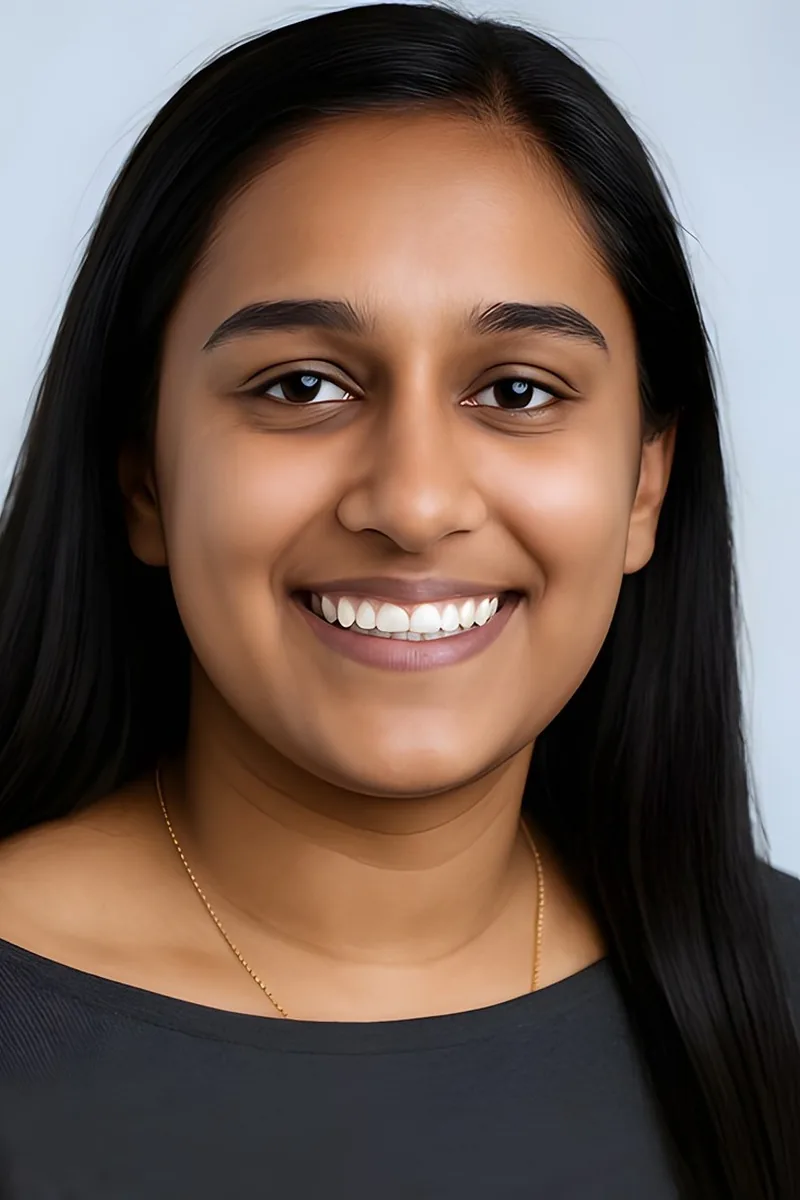
Currently in a six-year medical program, Vijaya knows what it takes to score in the top percentile — her own 1550 SAT is proof — but more importantly, she knows how to teach the timing and elimination strategies that make that score repeatable for someone else. She covers both sides of the exam, connecting the algebraic reasoning in the Math section to the analytical reading skills the Evidence-Based Reading questions demand. Rated 5.0 by students.

Kristen scored a 1480 on the SAT and brings a reading teacher's instinct for breaking down dense passages — the kind that trip students up in the Evidence-Based Reading section. She walks through question types systematically, teaching students to identify trap answers and use textual evidence efficiently across both the Reading and Writing & Language sections. Her English background also means she can sharpen grammar and essay skills simultaneously during prep.
Biology majors spend four years learning to read dense, data-heavy passages under pressure — exactly the skill that drives scores on the SAT's Evidence-Based Reading section. Ashley pairs that analytical reading ability with strong math fundamentals across algebra and data interpretation, and her own 1480 SAT score means she knows firsthand which question types eat up time and which reward a systematic approach.
Scoring a 1550 on the SAT herself, Kathleen knows exactly where the test tries to trip students up — from no-change answers on the Writing section to the wordy word problems that disguise straightforward algebra. Her math degree at Washington University gives her a particular edge on the quantitative side, where she teaches students to spot which formula a question is actually testing before they start calculating. She's rated 4.5 by past students.
Naomi's biochemistry and Spanish double major at Harding means she tackles both sides of the SAT — breaking down reading comprehension passages with the same precision she applies to stoichiometry problems in the math section. She teaches grammar rules for the Writing section as actual logic systems, not just "pick what sounds right" instincts, which tends to produce more consistent score jumps. Her background tutoring across English, chemistry, and languages gives her a versatile toolkit for a test that demands range.
Preparing for the SAT means building two distinct skill sets — analytical reading and algebraic problem-solving — and Joy's academic background spans both. She earned a double major from Boston University in Biology and Hispanic Language and Literatures, which means she's equally comfortable walking through passage-based evidence questions and tackling quadratic or linear modeling problems.
Studying political science at the University of Michigan means Mahika reads and writes analytically every day — skills that translate directly to the SAT's evidence-based reading and writing sections. She teaches students to identify argument structure in passages and apply grammar rules in context, while also covering the math side with targeted strategies for algebra and data analysis questions. That dual comfort across both halves of the test is hard to find in a single tutor.
Most SAT points aren't lost on the hardest questions — they're lost on medium-difficulty ones where rushing or misreading costs easy points. Eric, who scored a 1570, teaches a pacing and elimination strategy built around that insight, drilling students on when to slow down in the Reading section and when to move quickly through familiar algebra patterns in Math. His business background also sharpens his approach to the data interpretation and graph-reading questions that increasingly dominate the exam.
Stanford med student with a perfect 1600 SAT, Maggie knows the test inside out — but what sets her apart is a dual background in economics and molecular biology that gives her genuine fluency on both sides of the exam, from data-heavy math questions to dense science passages in the Reading section. She pinpoints where each student is leaking points and builds targeted drills around those specific question types rather than grinding through full-length practice tests. Rated 5.0 by students.
Medical school at Jefferson demands the same skill set the SAT rewards — fast, accurate reading under pressure and clean quantitative reasoning — and Jamie teaches both sides of the exam with that intensity. Having scored a 1550, he knows exactly where the test tries to create confusion, especially in no-calculator algebra and the evidence-based reading pairs where students second-guess correct answers. His go-to move is translating abstract problems into concrete analogies that make the underlying logic obvious.
Daniel's 1590 SAT sits in the 99th percentile, but what makes him useful as a prep tutor is that he covers both sides of the exam himself — his math degree handles the quantitative sections while his arts background and experience teaching literature, grammar, and essay writing anchors the verbal side. He teaches students to spot the SAT's recurring question structures so that timing pressure shrinks as familiarity grows.
Years of writing and peer-editing philosophy and religion papers at Pomona gave Miranda a precise feel for argument structure and rhetorical traps — exactly what the SAT's Reading and Writing sections test under time pressure. She pairs that verbal strength with a 1560 SAT score and hands-on experience mentoring high schoolers through standardized test strategy. Rated 5.0 by students.
Tanay earned a perfect 1600 on the SAT, which means he's seen exactly how every section rewards specific patterns — from the algebra and data analysis traps in the Math section to the evidence-based reasoning structures that repeat across Reading and Writing passages. His finance coursework at Northeastern sharpened the quantitative and analytical skills he now applies to building section-by-section strategies tailored to where each student is losing points. Rated 5.0 by students.
Having just gone through the SAT herself — scoring a 1580 — Sreya knows exactly which question types feel deceptively easy and where students actually hemorrhage points under time pressure. Her chemistry and computer science training at Michigan built the kind of systematic, pattern-driven thinking she now applies to the Math section's data analysis and algebra problems, while her IB background keeps her sharp on evidence-based reading strategy. Rated 5.0 by students.
Georgetown's math program trained Peter to think in precise, logical steps — exactly the skill that turns the SAT Math section's multi-step word problems and data analysis questions into straightforward solves. His 1580 SAT score and years of tutoring both math and writing mean he covers the full exam without switching gears, connecting algebraic reasoning on one section to evidence-based reading strategy on the next. Rated 5.0 by students.
Zhenrui's Columbia engineering and premed coursework means he's constantly switching between quantitative problem-solving and dense analytical reading — exactly the cognitive gear-shifting the SAT demands. He scored a 1570 on the exam and uses that experience to teach students how to spot the algebraic shortcuts buried in the Math section's trickiest word problems and how to navigate the evidence-based reading pairs efficiently under time pressure.
Most SAT prep treats the math and verbal sections as two separate exams, but Viktor's UChicago math degree and his experience teaching literature, grammar, and college essays mean he can coach the full test without switching gears. He scored a 1600 — a perfect composite — and uses that familiarity with the exam's logic to teach students how to spot the algebraic structures hidden in word problems and the rhetorical patterns that make Reading section trap answers so tempting.
I am passionate about helping students with math, science, test prep, and more! As sophomore undergraduate at Brown University studying Mathematics and Biophysics, I am well experienced with many topics. I received a perfect 36 on my ACT, so I am very confident with test taking.
The SAT's Writing and Language section rewards students who understand grammar rules cold — comma splices, subject-verb agreement, parallel structure — and Daniela's English major coursework means she can explain the logic behind each rule instead of just drilling corrections. Her 1560 SAT score also reflects real strength on the Reading side, where she teaches students to trace an author's argument through paired evidence questions. She rounds out prep on the math sections with a focus on translating word problems into solvable setups.
Testimonials
Because the right SAT tutor makes all the difference.
Average Session Rating – Based on 3.4M Learner Ratings
Practice SAT
Free practice tests, flashcards, and AI tutoring for SAT
Nearby SAT Tutors
Other Kansas City Tutors
Related Test Prep Tutors in Kansas City
Frequently Asked Questions
University of Missouri typically admits students with SAT scores between 1130-1330, though admitted students with scores in the 1200+ range are more competitive. Since Mizzou historically emphasizes ACT scores (average 24-30), many Kansas City students find it helpful to take both tests and submit whichever score is stronger. For automatic admission consideration at Mizzou, focus on achieving at least a 1200 SAT or a 27 ACT combined with a solid GPA.
The ACT has historically been more popular in Missouri and across the Midwest, and many regional universities built their admissions standards around ACT scores. However, all major colleges—including University of Missouri, Washington University in St. Louis, and Saint Louis University—accept both tests equally. The best approach is to take a practice test in both formats to see which plays to your strengths, then focus your prep on whichever test you perform better on. Many Kansas City students benefit from taking both to maximize their college options.
Washington University in St. Louis is highly selective, with admitted students typically scoring between 1510-1570 on the SAT. This places successful applicants in the top 1% nationally—you'll need to excel across all sections, particularly in Evidence-Based Reading/Writing and Math. Beyond the SAT score, WashU looks at your full application, but aiming for 1500+ gives you a competitive foundation for consideration.
The SAT Reading section gives you 65 minutes for 52 questions, which feels rushed for many students. The key is strategic reading: focus on understanding the passage structure and main ideas rather than memorizing details, then use context clues to answer vocabulary-in-context questions without looking up every word. Personalized tutoring helps you identify which question types slow you down most—whether that's paired passages, evidence selection, or data interpretation—so you can practice targeted strategies that fit your pace.
Most students see 100-200 point improvements with focused, personalized prep—especially when tutoring targets your specific weak areas, whether that's multi-step math problems, grammar patterns, or time management. The timeline depends on your starting score and goals: a student aiming to move from 1050 to 1200 typically needs 8-12 weeks of consistent prep, while pushing from 1200 to 1350+ requires more intensive work on advanced content and test-taking strategy. Your improvement accelerates when you work with a tutor who can identify exactly which concepts or question types are holding you back.
Most juniors benefit from starting SAT prep in spring or early summer before senior year, which gives you time to take the test in fall and retake if needed before college application deadlines. If you're already a senior or want to test sooner, you can compress prep into 6-8 weeks with focused tutoring. Starting earlier isn't always better—what matters is consistent, targeted practice on your specific challenges rather than months of unfocused studying.
SAT Math tests both calculator and non-calculator skills across algebra, advanced math, and data analysis. Many students struggle with graph interpretation and multi-step problems because they rush through reading the question or misidentify what the graph actually shows. Personalized tutoring helps you develop a systematic approach: carefully label what you're solving for, eliminate obviously wrong answers first, and practice translating real-world scenarios into equations. Working through problems at your own pace with feedback on your reasoning—not just answers—builds the confidence needed for test day.
Most students take the SAT 1-2 times. Your first attempt gives you real test experience and identifies which sections need work; if you're happy with your score, you're done. If you want to improve, retaking 6-8 weeks later gives you time for targeted prep on specific weaknesses—students who retake after focused tutoring typically see meaningful gains. Taking it more than twice rarely helps unless you're addressing a specific gap, and colleges see all your scores anyway, so quality prep between attempts matters more than frequency.
Let’s find your perfect tutor
Answer a few quick questions. We’ll recommend the right plan and match you with a top 5% tutor.