Award-Winning AP Physics C: Mechanics Tutors
serving Kansas City, MO
AP Physics C: Mechanics
Tutors in Kansas City
Private 1-on-1 tutoring, weekly live classes for academic support, test prep & enrichment, practice tests and diagnostics, and more to elevate grades and test scores.
Based on 3.4M Learner Ratings
UniversitiesSchools & Universities
DeliveredHours Delivered
ProficiencyGrowth in Proficiency
Who needs tutoring?
No obligation. Takes ~1 minute.

John scored a 36 on the ACT and tutors the full calculus-to-physics pipeline — AP Calculus AB, AP Physics 1, and AP Physics C: Mechanics — so he sees exactly where students' math skills break down under the pressure of a mechanics problem. He teaches students to recognize which physical scenarios call for integration versus differentiation before they even write an equation, turning the free-response section into a series of deliberate decisions rather than panicked formula hunts. Rated 4.9 by students.
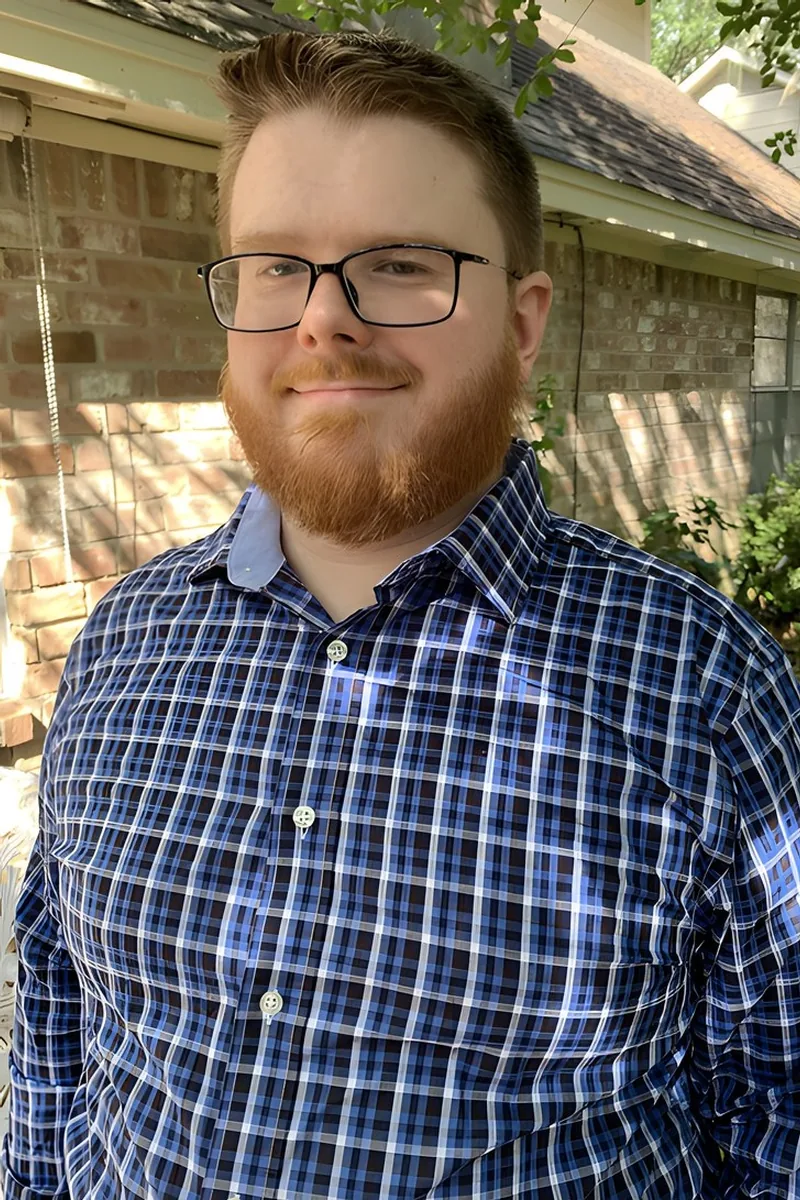
Four years of teaching undergraduate physics labs at the University of Michigan — especially circuits, electromagnetism, and wave mechanics — gave Michael a sharp eye for where students' calculus intuition breaks down inside a physics problem. For AP Physics C: Mechanics, he zeroes in on that breakdown point: translating a physical setup (a block on a spring, a rotating disk with non-uniform mass) into the correct integral or differential equation. His PhD-level fluency means he can explain not just which formula applies, but why the math takes that particular form.
Bettina didn't just study mechanics in a textbook — she earned a PhD in mechanical engineering, meaning she's derived equations of motion for real systems where assumptions about friction, constraints, and rigid-body approximations actually matter. That depth shows up when she teaches AP Physics C: Mechanics topics like rotational dynamics and gravitational potential energy, because she can explain not just how to set up the integral but why that particular model fits the physical situation.
Chemical-biological engineering at the undergraduate level means Kristen solved mechanics problems with real calculus stakes — variable-force work integrals, rotational inertia derivations, coupled differential equations — long before they became exam questions. Her 36 ACT and 1590 SAT speak to the quantitative sharpness she brings to the trickiest AP Physics C problems, especially when students need to bridge the gap between setting up Newton's second law in differential form and actually executing the integration. Rated 4.9 by students.
Bidyut's biomedical engineering coursework at Johns Hopkins fuses calculus-based mechanics with real physical systems — analyzing forces on prosthetic joints, modeling fluid dynamics in arteries — so the Newtonian mechanics and rotational problems on the AP Physics C exam feel like simplified versions of what he already does daily. He scored a 36 ACT and holds a 5.0 tutoring rating, and he's particularly sharp at showing students how to translate a word problem into the correct integral or differential equation before touching any numbers.
Biochemistry might seem unrelated to mechanics, but Shira's coursework in physics and calculus — plus a 1550 SAT — means she's built the quantitative chops to handle the kinematics, force analysis, and integration problems that define AP Physics C. She approaches mechanics the way she approaches lab work: isolate the variables, set up the math carefully, then check whether the answer makes physical sense. Rated 4.9 by students.
Vaughn's physics degree and 1590 SAT mean the calculus-based problem-solving AP Physics C: Mechanics demands — setting up Newton's second law as a differential equation, computing work done by variable forces — is squarely in his wheelhouse. He zeroes in on dimensional analysis and unit tracking as a way to catch errors before they cascade through multi-step free-response problems, a habit that pays off especially in rotational dynamics where signs and reference frames get tricky.
Simulating cosmic ray acceleration through turbulent plasmas requires exactly the kind of calculus-based mechanics reasoning that AP Physics C tests — Newton's laws applied to complex systems, rotational dynamics, and energy methods. Dennis walks students through the hardest problems on the exam by teaching them to set up the physics first and let the calculus follow naturally. Rated 4.7 by students.
Studying Mechanical & Aerospace Engineering at Princeton, Nicolas solves calculus-based mechanics problems daily that go well beyond what the AP exam asks — rigid body dynamics, energy methods for complex systems, and the vector calculus behind rotational motion. That depth lets him quickly pinpoint whether a student's mistake lives in the physics reasoning or the integral setup, and fix the actual gap. Rated 5.0 by students.
Rice's mechanical engineering program puts Ashton through calculus-based statics, dynamics, and kinematics every semester — the same core mechanics that AP Physics C tests, just applied to real structural and machine systems. That daily exposure means he can spot whether a student's free-response mistake is a physics misread or a calculus execution error, and address the right one. His 32 ACT underscores the quantitative fluency backing his approach.
Twenty-five years teaching physics in Massachusetts public schools means Jacques has watched thousands of students hit the same walls on AP Physics C — and he knows exactly how to dismantle them, particularly around variable-force problems and the calculus of rotational inertia. His Princeton chemical engineering degree built the mathematical backbone, but it's the decades of classroom reps that sharpened his ability to explain why you set up the integral that way, not just how to evaluate it. Rated 4.8 by students.
An applied physics degree means Karen didn't just study mechanics for an exam — she built her entire undergraduate education around the Newtonian framework, calculus-based problem-solving, and laboratory work that AP Physics C condenses into a single course. She's especially sharp at connecting real-world scenarios (a spinning figure skater, a car banking a curve) to the free-body diagrams and integrals students need to produce under timed conditions. Rated 5.0 by students.
Testimonials
Because the right AP Physics C: Mechanics tutor makes all the difference.
Average Session Rating – Based on 3.4M Learner Ratings
Practice AP Physics C: Mechanics
Free practice tests, flashcards, and AI tutoring for AP Physics C: Mechanics
Nearby AP Physics C: Mechanics Tutors
Other Kansas City Tutors
Related Science Tutors in Kansas City
Frequently Asked Questions
AP Physics C: Mechanics focuses on classical mechanics using calculus, covering kinematics, Newton's laws, work and energy, momentum, circular motion, oscillations, and gravitation. The course emphasizes problem-solving with calculus-based approaches rather than algebra alone, which distinguishes it from AP Physics 1. For students in Kansas City preparing for the exam, understanding how to apply derivatives and integrals to physics concepts is essential for success on both the multiple-choice and free-response sections.
Students often struggle with the calculus integration required to solve mechanics problems—particularly connecting derivatives and integrals to physical concepts like velocity, acceleration, and force. Time management is another major challenge; the exam requires solving complex problems within strict time limits, and many students get stuck on multi-step problems that require both conceptual understanding and computational skill. Additionally, visualizing three-dimensional motion and rotational dynamics can be difficult without hands-on practice and clear explanations of how these concepts connect to real-world scenarios.
Personalized 1-on-1 instruction allows tutors to identify your specific weak areas—whether that's calculus application, conceptual gaps, or test-taking pacing—and tailor lessons accordingly. Tutors can break down complex topics like energy conservation and rotational motion into manageable steps, work through practice problems at your pace, and teach strategic problem-solving techniques that save time on the actual exam. Research on 1-on-1 tutoring shows it significantly accelerates learning when instruction is customized to your needs, which is especially valuable for a rigorous course like AP Physics C.
Score improvement depends on your starting point, consistency, and how much time you invest. Students who work with tutors on a regular schedule (typically 1-2 sessions per week) and complete practice problems between sessions often see meaningful gains within 4-6 weeks. The most significant improvements typically come from addressing foundational gaps and building problem-solving confidence, which directly translates to better performance on both multiple-choice and free-response sections. Your tutor can help you set realistic goals based on your current understanding and the AP exam timeline.
Practice tests are critical for AP Physics C: Mechanics preparation because they help you get comfortable with the exam format, identify timing issues, and reveal which topics need more review. Taking full-length practice tests under timed conditions helps you develop pacing strategies and reduces test anxiety by familiarizing you with the question types and difficulty level. A tutor can review your practice test results with you, highlight patterns in your mistakes, and focus lessons on the specific concepts or problem types where you're losing points.
While you don't need to be a calculus expert, you should have a solid grasp of derivatives and integrals—or be learning them concurrently. AP Physics C: Mechanics specifically applies calculus to physics, so gaps in calculus fundamentals can make physics concepts harder to understand. If calculus is a weak area, tutors can help you bridge that gap by reviewing the specific calculus skills you need and showing how they apply directly to mechanics problems, making both subjects clearer in the process.
Your first session will typically focus on assessment and goal-setting. A tutor will ask about your current understanding of mechanics concepts, review any practice problems or exams you've taken, and identify your strongest and weakest areas. This helps the tutor create a personalized study plan tailored to your needs and timeline. You'll also discuss your target AP score and the tutor will explain how you'll work together to build confidence and improve your problem-solving skills.
Varsity Tutors connects you with expert tutors who have strong backgrounds in calculus-based physics and AP exam preparation. When you reach out, you'll provide information about your current level, goals, and schedule preferences, and you'll be matched with a tutor who fits your needs. Tutors work flexibly with students in Kansas City to find a learning format and schedule that works best for you, whether you prefer to meet in the evenings, weekends, or other times that fit your routine.
Let’s find your perfect tutor
Answer a few quick questions. We’ll recommend the right plan and match you with a top 5% tutor.