Award-Winning AP Physics C: Mechanics Tutors
serving St. Louis, MO
AP Physics C: Mechanics
Tutors in St. Louis
Private 1-on-1 tutoring, weekly live classes for academic support, test prep & enrichment, practice tests and diagnostics, and more to elevate grades and test scores.
Based on 3.4M Learner Ratings
UniversitiesSchools & Universities
DeliveredHours Delivered
ProficiencyGrowth in Proficiency
Who needs tutoring?
No obligation. Takes ~1 minute.
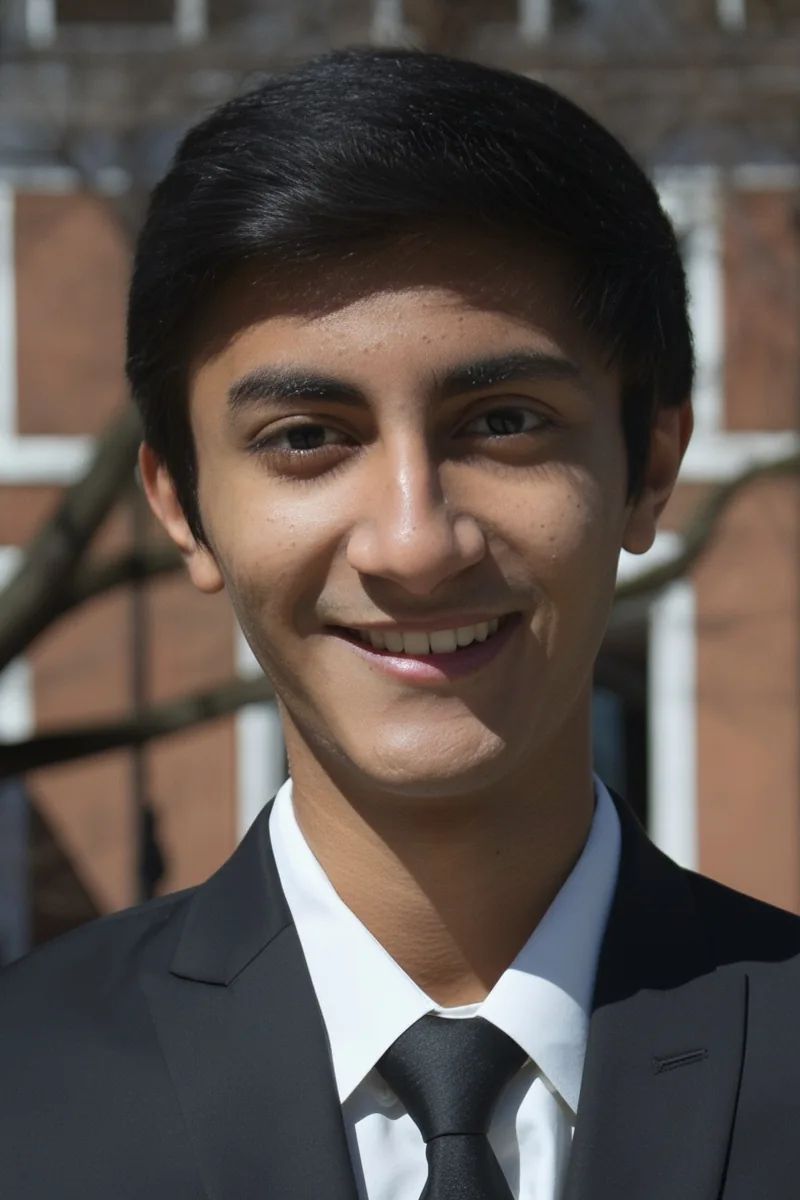
Bidyut's biomedical engineering coursework at Johns Hopkins fuses calculus-based mechanics with real physical systems — analyzing forces on prosthetic joints, modeling fluid dynamics in arteries — so the Newtonian mechanics and rotational problems on the AP Physics C exam feel like simplified versions of what he already does daily. He scored a 36 ACT and holds a 5.0 tutoring rating, and he's particularly sharp at showing students how to translate a word problem into the correct integral or differential equation before touching any numbers.

A PhD in Chemical and Biomolecular Engineering from Buffalo built on a nuclear engineering foundation means Sabry has spent years solving the calculus-heavy mechanics problems — work-energy integrals, rigid body torque derivations, variable-force differential equations — that AP Physics C tests in compressed form. He co-instructed both undergraduate and graduate physics and mechanics courses during his doctoral program, so he knows exactly where students confuse the physical setup with the mathematical execution and can address each independently.
I'm pursuing a double major in Mathematics and English at Vanderbilt University. I have been tutoring math since High School and have native proficiency in Mandarin Chinese. I am dedicated to helping students explore the study methods that will fit their individual needs.
Biophysics at Rice means Aadith solves mechanics problems where the calculus isn't optional — modeling forces on protein structures, analyzing torque in molecular motors, applying Newton's laws to systems most students never picture in a physics classroom. That cross-disciplinary lens gives him a knack for teaching students how to read a physical scenario and decide whether to reach for an energy integral or a force-based differential equation. His 1590 SAT underscores the mathematical precision he brings to every free-response setup.
Engineering coursework at Notre Dame means Alexandra is solving calculus-based mechanics problems every week — free-body diagrams with variable forces, work-energy integrals, the full Newton's second law treatment that AP Physics C demands. Her 1530 SAT and 32 ACT point to the quantitative comfort that lets her explain the reasoning behind each setup rather than just walking through formulas. Rated 5.0 by students.
Most pre-med students avoid the calculus-heavy physics — Manideep leans into it, tackling AP Physics C: Mechanics alongside his biological sciences coursework at Northwestern, where he also TAs in the sciences. He breaks down conservation of energy and momentum problems by starting with the physical scenario and building the integral from there, so students learn a repeatable process instead of hunting for the right formula. Rated 5.0 by students.
Having TA'd multiple engineering courses at WashU while earning dual degrees in mechanical and energy engineering, Ava spent semesters breaking down the same calculus-based force analysis, work-energy theorems, and rotational dynamics that define the AP Physics C: Mechanics curriculum. Her 35 ACT speaks to the quantitative precision she brings to exam prep, and her current graduate work in environmental engineering keeps her fluent in the applied physics and differential equations students encounter on test day.
Jonathan earned his PhD in physics, which means the calculus-based mechanics in AP Physics C — from deriving equations of motion for coupled oscillators to setting up torque integrals for non-uniform rigid bodies — is territory he's navigated at a research level. His teaching fellowship during graduate school had him running students through exactly these problems, building intuition for when to apply Newton's second law in differential form versus jumping straight to energy methods. Rated 5.0 by students.
Rice's physics program throws Will into calculus-based mechanics every day — working through Lagrangian setups, variable-force integrations, and the rotational dynamics problems that make AP Physics C's free-response section so demanding. His approach starts with the underlying physical principle, then builds the math around it piece by piece, so students internalize the reasoning instead of pattern-matching to memorized solutions.
Biomedical engineering throws you into calculus-based mechanics from day one — Spencer's coursework has him modeling forces on biological systems using the same Newtonian framework and integral setups that AP Physics C tests on free-response problems. His 35 ACT and parallel teaching across both AP Calculus BC and AP Physics C mean he can diagnose whether a student's stuck on the physics concept or the calculus execution, and address the right one.
Darren is midway through his physics degree at Northwestern, which means he's actively taking the upper-division mechanics courses that build directly on everything AP Physics C tests — and he still remembers exactly where the conceptual jumps from kinematics to rotational dynamics tripped him up the first time. He zeroes in on free-body diagrams and getting the calculus setup right before students ever touch a number, treating each problem as a reasoning exercise rather than a formula hunt. Rated 5.0 by students.
Scoring a 5 on both AP Physics C: Mechanics and AP Calculus BC while taking 16 AP courses total, Derek built the habit of connecting calculus tools to physical intuition under real exam pressure — and he brings that same efficiency to tutoring. His computer science major at Harvard sharpens his approach to mechanics problems: decompose the system, identify constraints, then execute the math cleanly, much like debugging code. Rated 4.9 by students, he's particularly effective at teaching the structured problem-solving that turns rotational dynamics and variable-force scenarios into manageable steps.
Testimonials
Because the right AP Physics C: Mechanics tutor makes all the difference.
Average Session Rating – Based on 3.4M Learner Ratings
Practice AP Physics C: Mechanics
Free practice tests, flashcards, and AI tutoring for AP Physics C: Mechanics
Nearby AP Physics C: Mechanics Tutors
Other St. Louis Tutors
Related Science Tutors in St. Louis
Frequently Asked Questions
AP Physics C: Mechanics focuses on classical mechanics and includes kinematics, dynamics, energy and momentum, circular motion, oscillations, and gravitation. The course emphasizes calculus-based problem solving and mathematical modeling of physical systems. For students in St. Louis preparing for the exam, understanding how these topics build on each other—from basic motion concepts to complex systems—is essential for success on both the multiple-choice and free-response sections.
AP Physics C: Mechanics requires both strong conceptual understanding and advanced mathematical skills, particularly calculus. Many students struggle with translating word problems into equations, managing multi-step problem solving under time pressure, and connecting abstract concepts to real-world applications. Personalized tutoring helps identify whether difficulties stem from conceptual gaps, mathematical execution, or test-taking pacing—allowing tutors to target the specific areas holding you back.
Score improvement depends on your starting point and consistency with tutoring. Students who begin with foundational gaps often see the most dramatic improvements—sometimes 2-3 points on the 1-5 scale—when they work with an expert tutor to build conceptual understanding and problem-solving strategies. Even students scoring 3s or 4s can reach 5s by refining their approach to free-response questions and improving time management. Realistic progress typically emerges over 8-12 weeks of regular, focused instruction.
Success on AP Physics C requires strategic pacing: spend 1-2 minutes per multiple-choice question (90 minutes total for 45 questions) and allocate 25 minutes per free-response question. Key strategies include reading questions carefully to identify what's being asked, drawing diagrams to visualize problems, and checking whether your answer makes physical sense. Tutors can help you practice these strategies on real AP exams, identify which question types slow you down, and build confidence through repeated, timed practice.
Taking full-length practice tests under timed conditions is the most effective way to pinpoint weaknesses. After each test, analyze which topics (kinematics, energy, circular motion, etc.) caused errors and whether mistakes came from conceptual misunderstanding, calculation errors, or misreading the question. Varsity Tutors connects you with tutors who can review your practice tests, help you categorize your errors, and create a targeted study plan that focuses your remaining prep time on the areas that will have the biggest impact on your score.
Your first session typically includes a diagnostic assessment to understand your current level, identify knowledge gaps, and learn about your learning style and goals. The tutor will review a practice problem or exam section with you to see how you approach problems and where confusion arises. From there, you'll develop a customized study plan that aligns with your timeline before the AP exam, focusing on the concepts and skills that need the most attention.
Look for tutors with strong physics backgrounds—ideally a degree in physics or engineering, or extensive teaching experience with AP Physics C specifically. Experience scoring 4s or 5s on the AP exam, familiarity with the current exam format and rubrics, and the ability to explain complex concepts clearly are all important. Varsity Tutors connects you with expert tutors who understand the specific challenges AP Physics C presents and know how to help students master both the conceptual and mathematical demands of the course.
Most students benefit from 1-2 tutoring sessions per week (60-90 minutes each) combined with independent practice between sessions. If you're starting 3-4 months before the exam, this pace allows time to build foundational understanding, work through challenging topics, and complete multiple full-length practice tests. Students starting closer to exam day may need more frequent sessions. Your tutor will help you create a realistic schedule based on your current level and target score.
Let’s find your perfect tutor
Answer a few quick questions. We’ll recommend the right plan and match you with a top 5% tutor.