Award-Winning SAT Math Tutors
serving St. Louis, MO
SAT Math
Tutors in St. Louis
Private 1-on-1 tutoring, weekly live classes for academic support, test prep & enrichment, practice tests and diagnostics, and more to elevate grades and test scores.
Based on 3.4M Learner Ratings
UniversitiesSchools & Universities
DeliveredHours Delivered
ProficiencyGrowth in Proficiency
Who will be getting tutoring?
No obligation. Takes ~1 minute.
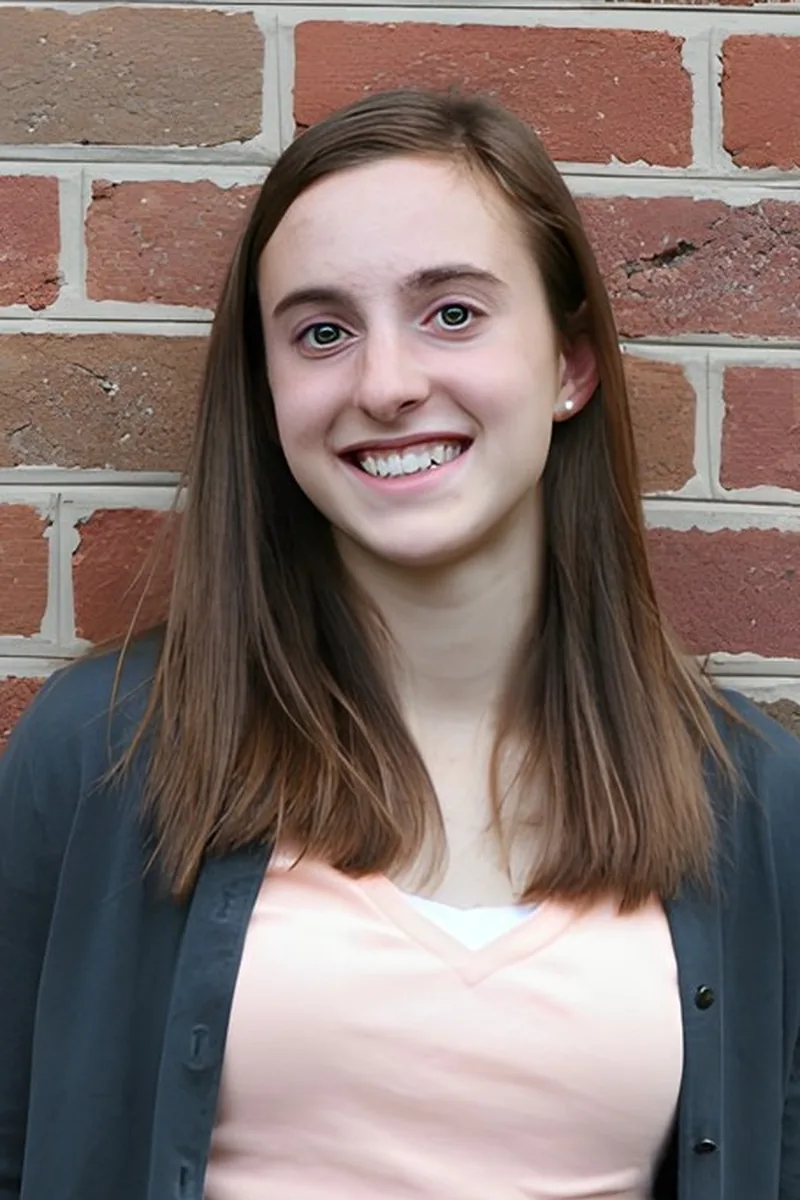
I am an undergraduate at Washington University, and I grew up in Columbus, Ohio. Math has always been one of my favorite subjects. I love Pre-algebra, Calculus, Linear Algebra and everything in between! I have tutored for about four years and have worked with students of all ages. Most students come to me for Math, but I have also worked with students on SAT and ACT test prep, Statistics and Physics. Everyone learns in a slightly different way, and I love figuring out the best way to teach something to people individually and dig down to what questions they really need to have answered to understand the material. In my spare time, I like to go on long bike rides and explore St. Louis's restaurants. I also love baking, playing with dogs and cats, watching movies with my friends and playing soccer.

I am excited to help anyone who might need it!
A decade of teaching math and science bilingually in Ecuador gave Joy an unusually clear sense of how students misread SAT Math prompts — she treats each word problem as a translation exercise, training students to convert cluttered language into the clean algebraic setup hiding underneath. Her double major in biology and Hispanic literatures at Boston University meant constant toggling between quantitative and verbal reasoning, a combination that pays off on the SAT's data-interpretation and modeling questions where reading comprehension is half the battle.
Hola! Mucho gusto! I am a Spanish and Biology tutor with more than three years of tutoring experience currently living in Panama City, Panama. I teach beginner and intermediate Spanish, focusing on developing conversational and grammatical skills in a variety of real-life contexts. I enjoy developing personalized lessons to match each student's needs. My goal is for my students to be able to face any Spanish-related challenge with confidence, so I teach a wide variety of topics to help my students gain practical experience speaking Spanish. I graduated from Harding University with my degree in Biochemistry in May of 2026. I love biology and have experience tutoring a variety of high school and college biology classes. My research focus is on the role of microglial cells in neurodegenerative diseases. On a personal note, I spend much of my free time making art, traveling, and spending time with my family.
Political science at Michigan means Mahika spends her weeks buried in polling data, statistical models, and policy cost-benefit analyses — quantitative reasoning that overlaps heavily with the SAT Math section's percentage, table-reading, and real-world modeling questions. She zeroes in on the algebra-to-application gap, teaching students to convert the test's deliberately wordy setups into straightforward equations before solving, a skill she sharpened through two-plus years of tutoring math alongside test prep.
I am a graduate of Rockhurst University where I received my Bachelor of Arts in Elementary Education with a minor in English Literature. Upon graduating, I became certified to teach both elementary education (grades 1-6) and English Language Arts (grades 5-9) in the state of Missouri. I have spent the past two years teaching seventh grade reading and writing, and I have loved every minute of it! Not only do I love helping my students understand new concepts in my subject areas, but I also really enjoy sharing literature, both classics and new fiction, with them in hopes it will foster a love of reading. I believe in the power of literature to spark critical thinking and help students make meaningful connections to their lives and the lives of others. It may come as no surprise that one of my chief hobbies is reading; I try to read fifty new novels every year, many of which I can then recommend to my students! I tutor a broad range of subjects, most notably English, Literature, and ACT/SAT Test Preparations, but regardless of what I am tutoring, my teaching philosophy and style stems from building relationships with my students. While I have a great innate desire to help the next generation learn and succeed, I realize that the first step to doing so is getting to know my students and their individual needs. Only then can I create truly meaningful, relevant, and applicable lessons and tutoring sessions that will help them learn and grow. My passion is to help students realize their potential as life-long learners and help them succeed as they navigate their educational paths.
Students in a six-year medical program don't get to be shaky on math — and Vijaya's 1550 SAT confirms that fluency carries over to standardized testing. She zeroes in on the geometry and trigonometry questions that many students under-practice, teaching quick sketch-and-solve techniques that turn abstract angle and circle problems into straightforward calculations. Rated 5.0 by students.
Between his 1530 SAT and his physics research at Princeton, Dennis lives in the quantitative world the SAT Math section tests — quadratic modeling, systems of equations, data analysis, and advanced algebra. He pinpoints where students lose points, whether it's careless errors on Heart of Algebra questions or conceptual gaps in Passport to Advanced Math. His sessions zero in on the specific question types each student needs to drill.
A math degree from Georgetown plus a 1580 SAT means Peter doesn't just know the content — he knows which algebraic shortcuts and graph-reading strategies actually save time under pressure. He breaks the SAT Math section into pattern categories so students recognize problem types within seconds and spend their energy solving, not deciphering. Rated 5.0 by students.
I'm a hardworking, compassionate, and patient individual who has been tutoring since high school and helping my little sister with her homework long before. I'll work with every new student individually to recognize his or her strengths and weaknesses to make sure that material is actually being learned, not just memorized.
Scoring 1550 on the SAT herself, Nina knows the specific traps the math section sets — misleading answer choices on quadratic problems, tricky unit conversions, and data-interpretation questions designed to punish rushing. She teaches students a systematic approach to each question type so that pacing and accuracy improve together. Her statistics training also gives her an edge on the data-analysis questions that many tutors treat as an afterthought.
A PhD in computational mathematics means Justin doesn't just know SAT Math content — he understands the underlying structure connecting algebra, functions, and geometric reasoning well enough to show students the fastest route through each problem type. His 1560 SAT score came from the same systematic thinking he now teaches: identifying what a question actually requires before committing to a calculation, which is especially effective on the no-calculator section's trickier polynomial and quadratic setups. Rated 5.0 by students.
I am available to tutor in a broad range of subjects, though I am most passionate about Economics, History, and Civics. Please feel free to contact me and I would be happy to arrange a session.
Violet's 1550 SAT and her math degree from Brown mean she can diagnose exactly where a student's algebra or data analysis gaps are costing them points on SAT Math. She teaches the handful of non-obvious techniques — backsolving, strategic plugging-in, unit analysis on word problems — that turn 650-range scores into 750+ scores. Her style leans heavily on shortcuts that make the no-calculator section feel less like a time crunch.
I'm a rising junior at Brown University studying biomedical engineering. I have lots of experience in middle school through college level instruction in STEM and SAT/ACT prep. My goal is to provide a fun and productive learning environment by only teaching subjects that I am passionate about.
Finance and statistics coursework at NYU means Dennis spends his days building models around the same quantitative reasoning the SAT Math section tests — probability, linear relationships, and interpreting data from tables and graphs. His 1550 SAT score came partly from treating the no-calculator questions as logic puzzles rather than computation drills, an approach he now teaches by walking students through how to eliminate answer choices using number properties before ever picking up a pencil.
I am especially passionate about reading, writing, and foreign languages. I hope to share my passion for knowledge with those around me.
A perfect 1600 SAT means Lisa didn't just survive the math section — she cleared it without dropping a single point, including the ratio, percentage, and systems-of-equations problems that most students lose easy points on. Her sociology background actually sharpens her SAT Math teaching: she's trained to read data tables and interpret statistical claims critically, which maps directly onto the section's problem-solving and data-analysis questions. She breaks down each problem type into a repeatable decision process so students stop second-guessing themselves under time pressure.
I am currently a resident physician at Northwestern Hospital.
Testimonials
Because the right SAT Math tutor makes all the difference.
Average Session Rating – Based on 3.4M Learner Ratings
Practice SAT Math
Free practice tests, flashcards, and AI tutoring for SAT Math
Nearby SAT Math Tutors
Other St. Louis Tutors
Related Test Prep Tutors in St. Louis
Frequently Asked Questions
Score improvement depends on your starting point and effort level, but students typically see meaningful gains within 8-12 weeks of consistent practice. Many students improve by 50-100+ points when they work with a tutor to identify weak areas, learn test-specific strategies, and practice under timed conditions. The key is focusing on your individual challenges—whether that's algebra, geometry, or test pacing—rather than reviewing content you already know.
The SAT Math section gives you 80 minutes for 58 questions, which means you need to average about 1.5 minutes per question. Many students struggle with pacing because they spend too long on difficult problems early on. A tutor can help you develop a strategic approach: quickly identify which questions play to your strengths, tackle those first, then return to harder problems with remaining time. Practice tests are essential—they help you build speed while maintaining accuracy.
The best way is to take a full-length practice test under timed conditions and carefully review which questions you missed or found difficult. Look for patterns—do you struggle more with algebra, geometry, trigonometry, or data analysis? Varsity Tutors connects you with tutors who can analyze your practice test results, pinpoint your specific weak areas, and create a targeted study plan. This focused approach is much more efficient than reviewing everything.
SAT Math includes multiple-choice questions and student-produced response (grid-in) questions covering algebra, advanced math, problem-solving, data analysis, geometry, and trigonometry. Each question type has its own strategy—for example, multiple-choice questions let you use answer choices to check your work, while grid-in questions require you to be extra careful with computation. A tutor can teach you question-specific strategies and help you practice each format until you feel confident.
Test anxiety often stems from feeling unprepared or unsure of your strategy. The best antidote is building genuine confidence through repeated practice under realistic test conditions. Tutors help by teaching you breathing and time-management techniques, building your problem-solving skills so you feel more capable, and giving you honest feedback on your progress. When you've practiced dozens of similar problems and know your approach, test day feels much less intimidating.
Most students benefit from 8-12 weeks of consistent preparation, studying 5-7 hours per week. A typical week might include 2-3 tutoring sessions focused on weak areas, daily practice problems (30-45 minutes), and one full-length practice test. The exact schedule depends on your starting score and test date. A tutor can help you create a personalized plan that fits your schedule and builds momentum toward your goal score.
Practice tests are critical—they're the most accurate way to measure your progress and simulate real test conditions. You should take at least 4-5 full-length practice tests during your preparation, spacing them out over several weeks. After each test, review every question you missed, not just the ones you got wrong. A tutor can help you analyze patterns in your mistakes and adjust your study plan accordingly.
Varsity Tutors connects you with expert tutors who have strong backgrounds in mathematics and experience preparing students for the SAT. When you get matched with a tutor, look for someone who takes time to understand your specific challenges, explains concepts clearly, and gives you honest feedback about your progress. Your first session is a great opportunity to see if the tutoring style works for you—communication and a good fit matter just as much as expertise.
Let’s find your perfect tutor
Answer a few quick questions. We’ll recommend the right plan and match you with a top 5% tutor.