Award-Winning Geometry Tutors
serving Durham, NC
Geometry
Tutors in Durham
Private 1-on-1 tutoring, weekly live classes for academic support, test prep & enrichment, practice tests and diagnostics, and more to elevate grades and test scores.
Based on 3.4M Learner Ratings
UniversitiesSchools & Universities
DeliveredHours Delivered
ProficiencyGrowth in Proficiency
Who needs tutoring?
No obligation. Takes ~1 minute.
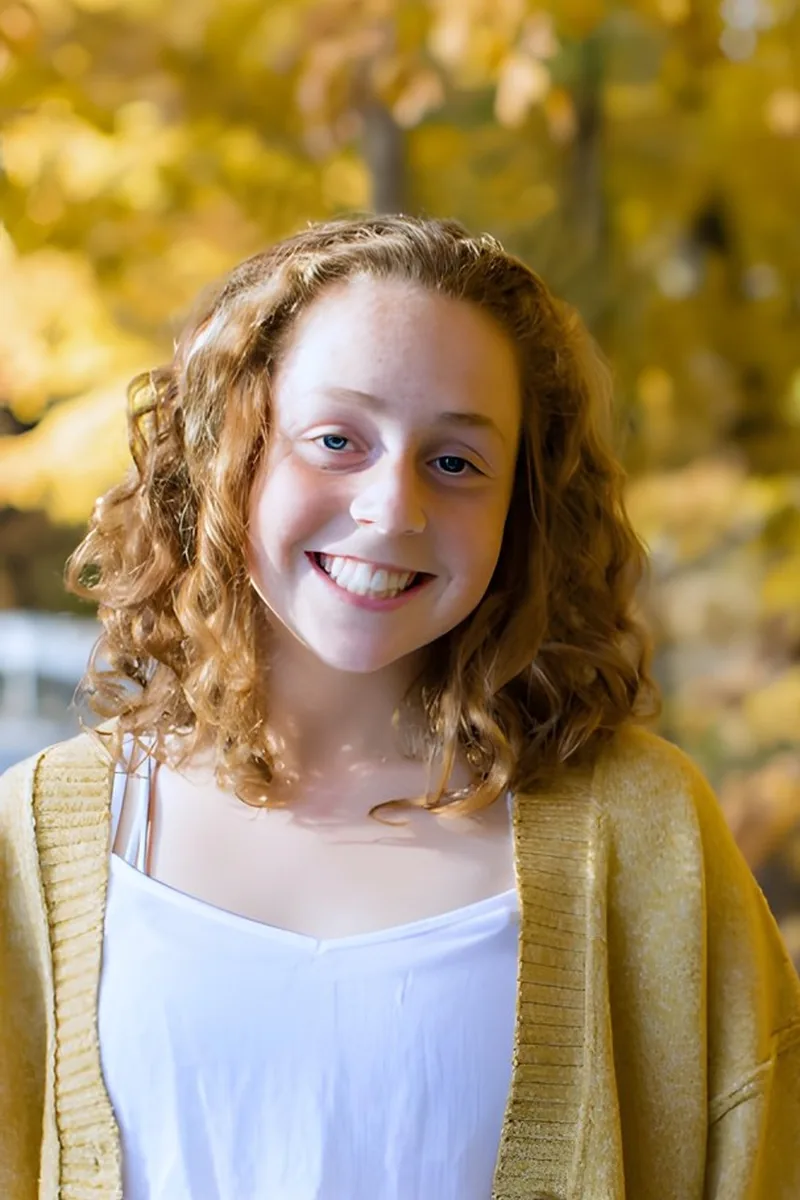
Proofs are usually where geometry students panic, but they're really just structured arguments — something Natalie has a knack for, given her dual interests in engineering and writing at Duke. She walks through angle relationships, triangle congruence, and circle theorems by emphasizing the reasoning behind each step so students can construct proofs independently.
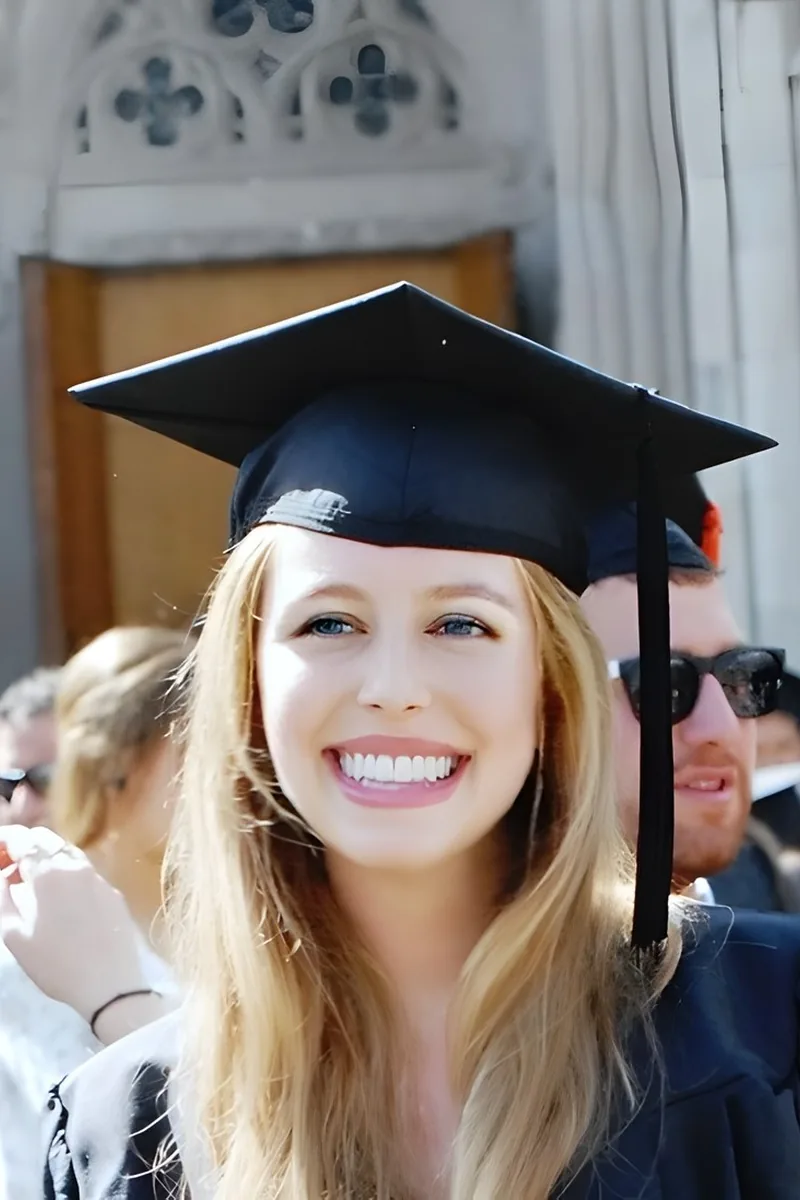
Proofs trip up a lot of geometry students because they require a completely different kind of thinking — logical argumentation instead of computation. Callie approaches them as structured arguments, teaching students to identify what's given, what's needed, and which theorems connect the two. Her 4.7 rating speaks to how well that method clicks with students.
Proofs are usually the sticking point in geometry — not because the logic is impossibly hard, but because nobody teaches students how to organize their reasoning on paper. Tammy breaks proof-writing into a repeatable structure, connecting angle relationships and congruence theorems to a clear chain of logic rather than a guessing game.
Proofs and spatial reasoning trip up a lot of geometry students because the subject asks them to think visually and logically at the same time. Emmanuel's clinical background — where interpreting imaging and understanding anatomical structures is routine — gives him a natural fluency with shapes, angles, and spatial relationships that translates well to the geometry classroom.
Proofs are usually the first place geometry students hit a wall, because suddenly math requires written logical arguments instead of calculations. Jordan teaches proof-writing as a skill closer to engineering design than memorization — identify what you know, figure out what you need, and build a path between them. His Harvey Mudd training emphasized exactly this kind of structured reasoning.
Proofs are where most geometry students panic, but they're really exercises in building logical arguments — a skill Matt sharpened through both his math degree and his policy training at Duke. He teaches students to read a geometric diagram like a set of clues, identifying congruence relationships and parallel-line properties before writing a single statement. That structured thinking also pays off on coordinate geometry and area problems where visualization matters.
As a dedicated tutor pursuing a Bachelor's in Biomedical Engineering from Duke University, I have over 5 years of experience in helping students excel in mathematics, including subjects like Algebra, Calculus, and Differential Equations. My teaching approach centers on fostering a supportive learning environment where students feel encouraged to explore concepts at their own pace. I believe that every student has the potential to succeed, and I strive to connect with each learner by tailoring my methods to their unique needs and learning styles. My passion for tutoring stems from witnessing my students' growth and confidence as they overcome challenges in math. Outside of tutoring, I enjoy being active and spending time with friends.
Proofs trip up most geometry students because they demand a completely different kind of thinking than computation does. Elisa spent her civil engineering coursework reasoning through spatial relationships, load paths, and structural symmetry, which gives her an intuitive way to explain why angle relationships and triangle congruence rules actually hold. She walks through each proof step as a logical argument, not a memorization exercise.
Proofs are usually the breaking point in geometry — students can calculate angles all day but freeze when asked to justify why something is true. Rayhan teaches proof-writing as a form of logical argument, a skill his Duke history training sharpened through years of constructing evidence-based claims. He applies that same structured reasoning to congruence, similarity, and circle theorems.
A wildlife science degree means Emily spent years reading topographic maps, calculating habitat areas, and interpreting spatial data in the field — skills that map directly onto geometry's emphasis on measurement, area, and spatial reasoning. Her writing master's also sharpens the logical structure needed for proof-based problems, where organizing an argument clearly matters as much as knowing the theorems. Rated 4.9 by students.
Proofs are usually the first time a math student has to build a logical argument instead of just finding an answer, and that shift trips up even strong students. Kathleen walks through triangle congruence, parallel line reasoning, and circle theorems by teaching the logic structure first, then layering in the geometry-specific vocabulary. Her experience teaching writing and analytical subjects gives her a unique angle on proof construction as a form of persuasion.
Proofs are usually the first place geometry students feel lost, because suddenly math asks them to argue rather than compute. Florence approaches geometric reasoning the way she approaches writing code at Duke: identify what you know, state your assumptions, and build toward the conclusion one logical step at a time.
Growing up in Rwanda and Kenya, where Caleb often had to teach himself new material from scratch, he developed a habit of breaking concepts down to their most intuitive core — something that pays off in geometry, where students need to genuinely understand why a theorem works before they can wield it in a proof. His 35 ACT and Harvard social sciences coursework reflect sharp logical reasoning, which he channels into teaching students how to set up and navigate geometric arguments involving congruence, similarity, and circle properties.
Proofs are the part of geometry that makes students groan, but they're also where real mathematical thinking starts. Taariq teaches students to build logical chains — from given information through angle relationships, congruence postulates, and similarity theorems — by working through each proof step by step alongside them. His hands-on problem-solving style keeps students engaged instead of lost.
Teaching circuit theory and electronics as a graduate instructor meant Prakash spent years drawing, analyzing, and reasoning through complex diagrams — a skill that maps directly onto geometry, where reading a figure correctly is often the difference between a stuck student and a confident one. He breaks down problems involving parallel lines cut by transversals and properties of quadrilaterals by teaching students to extract every piece of information a diagram gives them before writing a single equation. Rated 4.8 by students.
Training in school psychology means Alyssa understands how students process spatial information differently — some need to see the diagram redrawn three ways before a triangle congruence proof clicks, while others need the logical chain spelled out in words first. She adapts her approach to geometric reasoning on the fly, whether the topic is angle relationships, transformations, or circle theorems. Rated 5.0 by students.
Proofs are usually where geometry goes from manageable to intimidating — suddenly students need to construct logical arguments, not just calculate angles. Ify walks through each proof step by step, connecting the reasoning back to visual intuition so the logic feels natural. She keeps sessions relaxed enough that students aren't afraid to say "I have no idea where to start."
Proofs are usually where geometry students panic, but they're really just logical arguments built one claim at a time. Alisha walks through each proof by connecting it to the visual — showing why corresponding angles matter or how triangle congruence theorems actually work on the diagram in front of you. That combination of logic and spatial reasoning is what makes her geometry sessions effective.
Proofs are usually the first place geometry students hit a wall, because suddenly math requires written logical arguments instead of just calculations. Zoey walks through each proof structure step by step, connecting postulates and theorems to the shapes students can actually visualize. She brings the same patient, incremental approach to angle relationships, triangle congruence, and coordinate geometry problems.
Proofs are where most geometry students stall, because writing a logical argument feels completely different from solving an equation. Paul's background in literary analysis — building claims from evidence — translates surprisingly well to constructing two-column and paragraph proofs. He teaches students to treat each theorem like a premise in an argument.
Angle mazes, proof puzzles, and visual reasoning exercises are how Lexy teaches geometry — she literally designs custom activities that make theorems about parallel lines, triangle congruence, and circle properties stick. Instead of handing students a list of postulates to memorize, she walks them through discovering why each relationship holds. It's an approach that turns geometry from the most dreaded math class into one students actually look forward to.
Proofs are usually the first place geometry students get stuck — the jump from calculating angles to constructing logical arguments is steep. Katrina approaches proofs as a writing exercise as much as a math one, teaching students to build each step from definitions, postulates, and prior results. Her science training at Cornell reinforces that same evidence-based reasoning.
As a math major at UNC Chapel Hill, Tanay teaches geometry with an emphasis on building proof logic from scratch — starting with how to identify given information in a diagram and turn it into a chain of justified steps. He's especially effective with students who understand shapes and formulas but freeze when asked to write a formal proof involving congruent triangles or parallel line theorems. Rated 5.0 by students.
Biochemistry coursework is full of molecular geometry — bond angles, tetrahedral structures, spatial configurations — so Hunter's training gives him a natural fluency with the kind of shape-level reasoning that geometry demands. He unpacks circle theorems and polygon properties by tying them back to concrete visual models, making abstract relationships easier to internalize. Rated 5.0 by students.
Proofs are usually the first place geometry students feel lost — the logic feels nothing like the math they've done before. Gatlin approaches them as puzzles with specific rules, teaching students to identify which postulates and theorems apply before writing a single line. His minor in mathematics gives him a comfort with formal reasoning that translates into clear, step-by-step explanations of congruence, similarity, and circle theorems.
As a biology major and certified EMT, Daiven is used to thinking in terms of real structures — body systems, anatomical landmarks, spatial orientation under pressure — which gives him a practical lens on geometric concepts that pure math backgrounds sometimes miss. He breaks down problems involving triangle congruence and parallel line relationships by sketching clear diagrams first, making the logical steps visible before any formal proof writing begins.
After Princeton and a stint at Google, Rick landed back in academia pursuing a PhD in Psychology — a field where spatial reasoning and data visualization matter more than people expect. That analytical background shows up in how he teaches geometry, breaking down problems involving transformations, circle properties, and triangle relationships into clear logical steps rather than memorized shortcuts.
Proofs are the part of geometry that separates students who understand shapes from students who can reason about them, and they're often the first real logic challenge a student faces. James's computer science background — where writing a proof and writing a program share the same demand for airtight logical steps — makes him especially effective at teaching two-column and paragraph proofs. He also digs into coordinate geometry and triangle congruence with the same structured clarity.
Proofs are usually the first place geometry students hit a wall, because suddenly math requires written logical arguments instead of just calculations. Shaan teaches proof-writing as a structured process — identifying givens, choosing postulates, and building a chain of reasoning one step at a time. His engineering background at Duke reinforces that same kind of systematic thinking, which carries over into congruence, similarity, and coordinate geometry problems.
Proofs are usually the part of Geometry that trips students up, because they demand a different kind of thinking than computation does. Isabella teaches students to build logical chains — from given information through congruence postulates to a conclusion — treating each proof like an argument that needs evidence. Her 5.0 rating speaks to how well that approach clicks.
George's business degree from UNC Chapel Hill might not scream geometry, but the quantitative reasoning behind accounting and finance — calculating ratios, analyzing proportional relationships, interpreting spatial data in charts — maps directly onto topics like similar figures, proportional segments, and area problems. He approaches geometry as a logic puzzle where each given fact narrows the possibilities, which makes him especially effective on problems that require chaining together multiple properties to reach a conclusion. Rated 5.0 by students.
I graduated from the University of North Carolina at Chapel Hill with a Bachelor of Science in Physics. I work with students in a variety of subjects, including Math, Physics, and Chemistry. I have experience working with students on the Autism spectrum and with ADHD.
Proofs are usually where geometry stops feeling intuitive and starts feeling like a foreign language. Matthew approaches them as logical arguments rather than memorization exercises, walking through each theorem step by step until the reasoning clicks. His double-major background in biology and anthropology — both proof-adjacent fields that demand careful evidence-based thinking — gives him a knack for making deductive structure feel natural.
As a biology major, Nicole reads geometric diagrams the way she reads cell structures — by identifying shapes within shapes and figuring out how the parts relate to the whole. She's especially effective at teaching students to break down complex figures for area and perimeter calculations, and to recognize when a problem is really asking them to apply triangle or circle properties they already know. Rated 5.0 by students.
Twentieth-century author Flannery O'Connor left behind two novels, thirty-two short stories, numerous essays, and one frequently-quoted observation: "I write so that I know what I'm thinking." In a similarly self-reflective spirit, I have come to believe that I teach so that I know what I have learned, and how I have learned it. During my first semester as a graduate student, my concentration within the English major was creative writing. In my second semester, I migrated to technical writing. My exposure to both disciplines has given me a great appreciation for all phases of the writing process, from the beautiful chaos of creation to the process of imposing order on what you have created: proofreading, header style definition, and everything else that makes a document look as though it had been as easy to write as it is to read. I've heard many students state plainly that they did not know how to write. I believe the first duty of a composition instructor is to prove two things to students: that they do know how to write, and that writing can be a rewarding means of self-expression, as opposed to the exercise in drudgery that students so often think it is. What I have found, in teaching both English and math, is that assignments should not simply be explained and repeated until the students catch on. Rather, the instructor should look for engaging illustrations of the concepts that underlie those assignments, so that they are easier to understand and more enjoyable to complete.
Proofs are usually the part of geometry that frustrates students most, because they require a completely different kind of thinking than computation. Joseph teaches proof-writing as a logical storytelling exercise — each statement follows from the last — which makes the format feel less arbitrary. His engineering background also lets him show how congruence, similarity, and angle relationships appear in real design problems.
I am a graduate student at George Mason University studying Computer Science. I also graduated at Vanderbilt University, with Bachelors Degrees in Computer Science, Mathematics, and Philosophy. When a student does not understand a topic or concept, I believe the best way to teach it is to meet students where they are at, providing individually catered feedback, and exploring the aspects of a student's weaknesses, finding a way to explain the concept in a way that resonates with and makes sense to the student. I am most familiar with tutoring for the SAT, where I have generally increased scores by 120-300 points.
Proofs are usually the first time a math student has to build a logical argument from scratch, and that shift trips up even strong students. Artem approaches geometry the way he approaches engineering problems — identifying what's given, what's needed, and mapping the reasoning between them. He's particularly effective at teaching students to visualize angle relationships and triangle congruence before writing a single line of proof.
Ten years of competitive wrestling built Bill's intuition for angles, leverage, and spatial positioning — skills that translate surprisingly well to geometry, where visualizing how shapes relate in space is half the work. His general sciences background adds the systematic reasoning needed for proof-based problems, and he unpacks congruence and triangle properties by grounding them in physical, tangible examples rather than abstract rules. Rated 4.9 by students.
Proofs are usually the first place Geometry students hit a wall, because suddenly math requires structured written arguments instead of just calculations. Sarah teaches proof-writing as a skill — identifying given information, choosing the right theorem, and building a logical chain — rather than treating each problem as a one-off puzzle. Her analytical training across mathematics and political science makes her especially good at breaking down the reasoning process step by step.
Testimonials
Because the right Geometry tutor makes all the difference.
Average Session Rating – Based on 3.4M Learner Ratings
Practice Geometry
Free practice tests, flashcards, and AI tutoring for Geometry
Other Durham Tutors
Related Math Tutors in Durham
Frequently Asked Questions
Varsity Tutors matches Durham students with expert Geometry tutors for 1-on-1 instruction. We pair each student with a tutor based on their specific needs, learning style, and goals.
Whether you need homework help, exam prep, or want to get ahead, our Geometry tutors are ready to help.
Common challenges include gaps from earlier material, difficulty with specific concepts, and trouble applying learning to new problems. These issues can snowball quickly in Geometry.
A tutor identifies where you're stuck, fills in gaps, and provides targeted practice. The 1-on-1 format means you get help exactly where you need it.
Tutors work with your student's actual coursework—homework assignments, class notes, and upcoming tests. This keeps tutoring directly relevant to what's happening in the classroom.
When you share information about your student's school and curriculum, we can match you with a tutor who has relevant experience.
All tutors complete background checks, credential verification, and teaching evaluation. Many of our Geometry tutors hold advanced degrees or have years of teaching experience.
You can review tutor profiles to find someone with the right background for your student's level and needs.
Many students see improved grades within a few weeks, along with better understanding of Geometry concepts and more confidence tackling challenging material.
Tutors track progress and adjust their approach to ensure continued improvement.
Most students benefit from 1-2 sessions per week. More frequent sessions help if your student is significantly behind or has an important exam coming up.
Your tutor can recommend a schedule based on your student's specific situation and goals.
Tutoring is purchased in packages of hours, with rates varying by tutor experience. Varsity Tutors offers several options to fit different budgets and needs.
You can discuss pricing during your consultation to find what works best.
Your tutor will assess where your student is, discuss goals, and start working on priority areas. Most students bring current homework or upcoming test material to focus on.
By the end, you'll have a clear sense of how the tutor can help and a plan for moving forward.
Let’s find your perfect tutor
Answer a few quick questions. We’ll recommend the right plan and match you with a top 5% tutor.