Award-Winning AP Statistics Tutors
serving Durham, NC
AP Statistics
Tutors in Durham
Private 1-on-1 tutoring, weekly live classes for academic support, test prep & enrichment, practice tests and diagnostics, and more to elevate grades and test scores.
Based on 3.4M Learner Ratings
UniversitiesSchools & Universities
DeliveredHours Delivered
ProficiencyGrowth in Proficiency
Who needs tutoring?
No obligation. Takes ~1 minute.
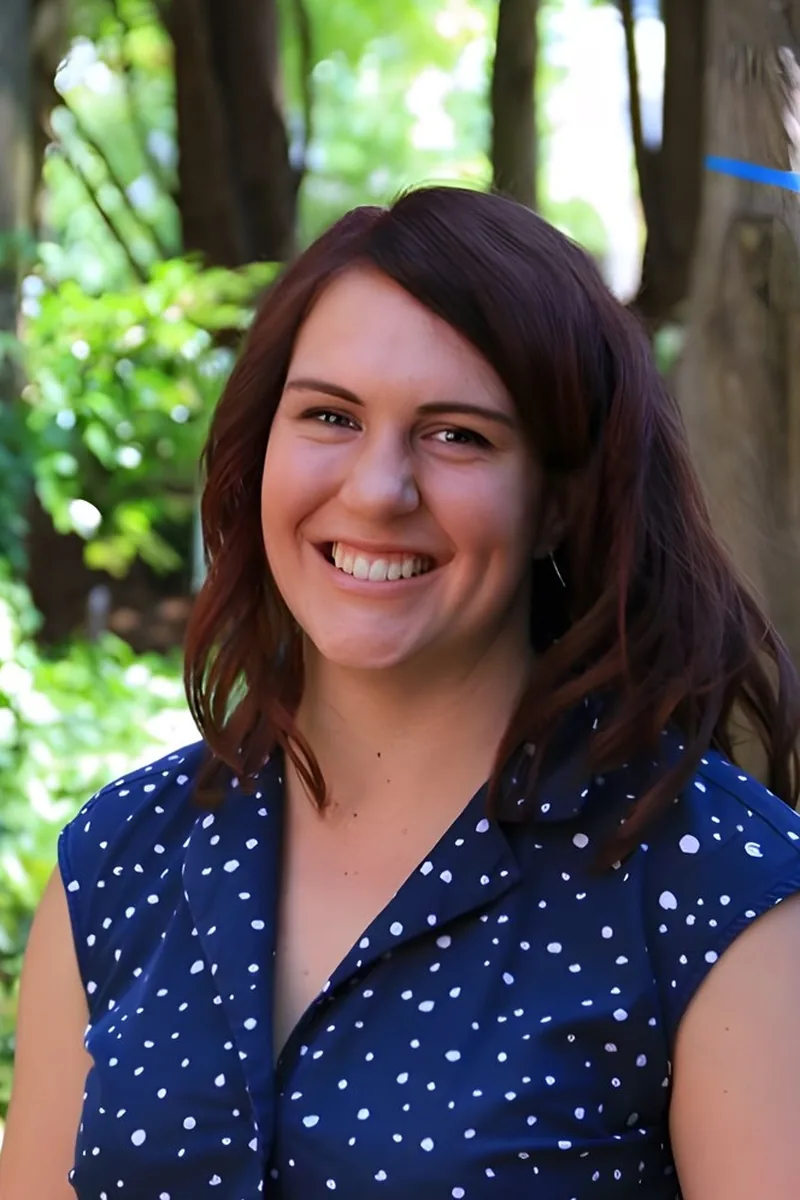
Engineering PhD programs at Georgia Tech don't let you hand-wave through data — Jordan's biomedical research required designing experiments, validating sensor measurements, and running the kind of statistical inference that AP Stats builds its entire curriculum around. That lab experience makes him especially sharp on the exam's trickiest conceptual pieces, like distinguishing between observational studies and experiments or explaining why a particular confidence level changes an interval's width. Rated 5.0 by students.

Computer science students deal with data constantly — and James's CS coursework means he approaches AP Statistics through the lens of data analysis and pattern recognition rather than rote formula application. He's especially effective at teaching students how to read output tables and translate statistical results into the precise written interpretations the AP exam demands. Rated 5.0 by students.
Psychology research runs on statistics — chi-square tests, confidence intervals, regression analysis — and Isabella spent her undergraduate years at UT applying these tools to real behavioral data. That experience means she teaches AP Statistics concepts like experimental design and inference not as abstract formulas but as tools that answer actual questions. Rated 5.0 by students.
I'm an archaeology PhD student at the University of Pennsylvania with extensive teaching experience at the college level. I've taught at Penn, University of the Sciences, and Methodist University in various social sciences, including anthropology, sociology, statistics, public health, and psychology. As a teacher, I'm guided by the idea that what I'm doing with students should be useful to them long-term. Making topics interesting, relevant, and accessible is of paramount importance because it allows students to hone skills that they'll use for the rest of their lives. Teaching is fun for me because I love getting to facilitate and witness my students' breakthroughs. There's nothing better than getting to that eureka moment!
Most AP Stats students come in expecting another algebra class and hit a wall when the exam asks them to explain *why* a Normal model applies or *what* a 95% confidence level actually means in context. Shourya's physics training at UNC Chapel Hill gives him a natural entry point here — physics labs demand exactly this kind of reasoning about uncertainty, variability, and whether a result is real or just random scatter. He breaks down the interpretive language the free-response section rewards, connecting it to the kind of data reasoning students already do intuitively but haven't yet learned to articulate.
As a statistics major at UNC Chapel Hill, Akshay doesn't just know AP Stats — he's immersed in it daily, from probability distributions and inference testing to experimental design. He breaks down tricky concepts like Type I and Type II errors or interpreting confidence intervals in plain language that clicks. Rated 5.0 by students.
Jenna's bachelor's degree in Statistics makes AP Statistics one of her strongest subjects — she doesn't just teach the formulas for chi-square tests or confidence intervals but explains the reasoning behind choosing one inference method over another. She also knows how the AP exam's free-response questions are scored, so she coaches students on how to justify conclusions in the precise language the rubric rewards.
Public health research is fundamentally a statistics course in disguise — Kimberly's Masters work at Columbia involves reading epidemiological studies built on sampling design, confidence intervals, and hypothesis testing, so she can ground AP Stats concepts in real research questions about why a particular study's conclusions hold up or fall apart. She's especially sharp on the inference and study design units, where her psychology background adds a second layer of understanding around confounding variables and observational versus experimental distinctions that the free-response section loves to test.
Graduate-level applied statistics at Penn State is a different animal from AP Stats, but William uses that deeper training to show students why formulas like the one for standard error of a sampling distribution are built the way they are — which makes the interpretation questions on the exam far less mysterious. His biomedical engineering background also means he's comfortable grounding lessons in real study designs, from clinical trials to observational health data, so students practice writing the kind of context-specific conclusions the free-response rubric actually rewards. Rated 4.8 by students.
Neuroscience research at Vanderbilt means Blake regularly encounters experimental design, data interpretation, and statistical inference in contexts like brain imaging studies and behavioral experiments — the same reasoning AP Stats tests on every free-response question. He's especially strong on the conceptual side, walking through why a particular test applies and how to communicate conclusions about p-values and confidence intervals with the precision the rubric demands. Rated 5.0 by students.
Neuroscience research at Brown means Oladele has spent semesters analyzing behavioral data, interpreting variability in experimental results, and deciding whether observed effects in the brain are real or just random noise — skills that map directly onto AP Stats concepts like hypothesis testing and inference. He zeroes in on the thinking-through-the-problem side of the course, teaching students to reason about why a particular test applies to a given scenario instead of just memorizing which calculator function to press. His 1430 SAT and role as head math coach for a college prep program speak to how naturally he breaks down quantitative reasoning for others.
Neuroscience research at Duke meant Ankit was knee-deep in experimental design before he ever opened an AP Stats textbook — controlling for confounding variables, choosing between-subjects versus within-subjects designs, and deciding whether behavioral data actually supports a hypothesis. That background makes him especially sharp on the exam's experimental design and chi-square inference questions, where understanding why you structure a study a certain way matters more than memorizing formulas. Rated 4.8 by students.
When I was young, I used to hate swimming at the beach. The idea of sharks moving around under the waves where I could not see them made me scared to go into the water. As I grew up, however, and began to learn about the different sharks that lived off the shores of my home in Massachusetts, USA, I became less and less scared and more and more fascinated with how and why sharks move around in this underwater world. I began to ask questions like, what do sharks do under the water when we cannot see them? and, where do sharks like to go and why? As a marine scientist now I try to answer these questions. Because sharks live and breathe under the water and can swim long distances and go deep into the ocean, further and deeper than I could follow by myself, to study how these animals move and behave underwater I have to use lots of different types of technology. Sometimes I use underwater robots that can follow the sharks down deeper than humans can go, and that can carry things like cameras so I can directly see what the sharks are doing. In my work now, I use special tags that send out signals every few seconds with a unique name that identifies individual sharks. When the shark swims close enough to receivers placed out in the ocean, these receivers are able to hear and record the tag name, telling where and when individual sharks are present in different areas of the ocean. One thing I love about being a shark scientist is that I can follow sharks all over the world. First, I followed the movement of sharks all the way over in the Atlantic Ocean off the east coast of the USA. Then I moved to Tasmania, Australia, and I followed young sharks as they move around off the coast of New South Wales. Now I am back home in Massachusetts and working on publishing my research.
Neuroscience research runs on statistics — hypothesis testing, confidence intervals, regression analysis, interpreting p-values from real experimental data. Daniel applies that firsthand lab experience from his work at the Jungers Center for Neuroscience Research to break down AP Statistics concepts in ways that go beyond formula sheets. His biomedical engineering coursework at Rice keeps these tools sharp and current.
Most AP Stats students come in expecting another formula-driven math class, then hit a wall when the exam asks them to explain *why* a normal model applies or *what* a 95% confidence level actually means in context. JF's math and CS background at Stanford means he thinks in both precise computation and logical argumentation — exactly the combination the free-response section rewards. Rated 5.0 by students.
Studying Data Science at NYU's Courant Institute means Diego lives in the world of probability distributions, hypothesis testing, and regression analysis every day. He breaks down AP Statistics concepts like confidence intervals and chi-square tests by connecting them to real datasets, making the logic behind inference click before students ever touch a formula sheet.
Biology research at Yale means Shreya regularly interprets data — reading regression output, evaluating sample designs, and deciding whether results are statistically significant before drawing conclusions. She brings that same analytical lens to AP Statistics, teaching students how to set up and justify inference procedures the way the free-response section demands. Rated 5.0 by students.
Chemical and biomolecular engineering at Princeton means Satya's coursework is steeped in statistical modeling — analyzing reaction yields, quantifying experimental uncertainty, and determining whether process variations are significant or just random noise. That engineering lens is especially useful for the AP Stats units on inference and experimental design, where understanding why you'd choose a particular test matters more than memorizing which calculator button to press. His 36 ACT speaks to the precision and structured reasoning the free-response section rewards.
Most AP Stats students already know how to crunch numbers — what trips them up is the interpretive writing, like explaining in precise language what a confidence interval captures or why a study's design supports (or undermines) a causal claim. Talia scored a 36 ACT and brings sharp reading comprehension and argumentative writing skills from her political science background, which turns out to be exactly what the free-response section rewards: constructing clear, evidence-based reasoning under time pressure. Rated 5.0 by students.
Testimonials
Because the right AP Statistics tutor makes all the difference.
Average Session Rating – Based on 3.4M Learner Ratings
Practice AP Statistics
Free practice tests, flashcards, and AI tutoring for AP Statistics
Nearby AP Statistics Tutors
Other Durham Tutors
Related Math Tutors in Durham
Frequently Asked Questions
Varsity Tutors matches Durham students with expert AP Statistics tutors for 1-on-1 instruction. We pair each student with a tutor based on their specific needs, learning style, and goals.
Whether you need homework help, exam prep, or want to get ahead, our AP Statistics tutors are ready to help.
Common challenges include gaps from earlier material, difficulty with specific concepts, and trouble applying learning to new problems. These issues can snowball quickly in AP Statistics.
A tutor identifies where you're stuck, fills in gaps, and provides targeted practice. The 1-on-1 format means you get help exactly where you need it.
Tutors work with your student's actual coursework—homework assignments, class notes, and upcoming tests. This keeps tutoring directly relevant to what's happening in the classroom.
When you share information about your student's school and curriculum, we can match you with a tutor who has relevant experience.
All tutors complete background checks, credential verification, and teaching evaluation. Many of our AP Statistics tutors hold advanced degrees or have years of teaching experience.
You can review tutor profiles to find someone with the right background for your student's level and needs.
Many students see improved grades within a few weeks, along with better understanding of AP Statistics concepts and more confidence tackling challenging material.
Tutors track progress and adjust their approach to ensure continued improvement.
Most students benefit from 1-2 sessions per week. More frequent sessions help if your student is significantly behind or has an important exam coming up.
Your tutor can recommend a schedule based on your student's specific situation and goals.
Tutoring is purchased in packages of hours, with rates varying by tutor experience. Varsity Tutors offers several options to fit different budgets and needs.
You can discuss pricing during your consultation to find what works best.
Your tutor will assess where your student is, discuss goals, and start working on priority areas. Most students bring current homework or upcoming test material to focus on.
By the end, you'll have a clear sense of how the tutor can help and a plan for moving forward.
Let’s find your perfect tutor
Answer a few quick questions. We’ll recommend the right plan and match you with a top 5% tutor.