Award-Winning Organic Chemistry Tutors
serving Allentown, PA
Organic Chemistry
Tutors in Allentown
Private 1-on-1 tutoring, weekly live classes for academic support, test prep & enrichment, practice tests and diagnostics, and more to elevate grades and test scores.
Based on 3.4M Learner Ratings
UniversitiesSchools & Universities
DeliveredHours Delivered
ProficiencyGrowth in Proficiency
Who needs tutoring?
No obligation. Takes ~1 minute.
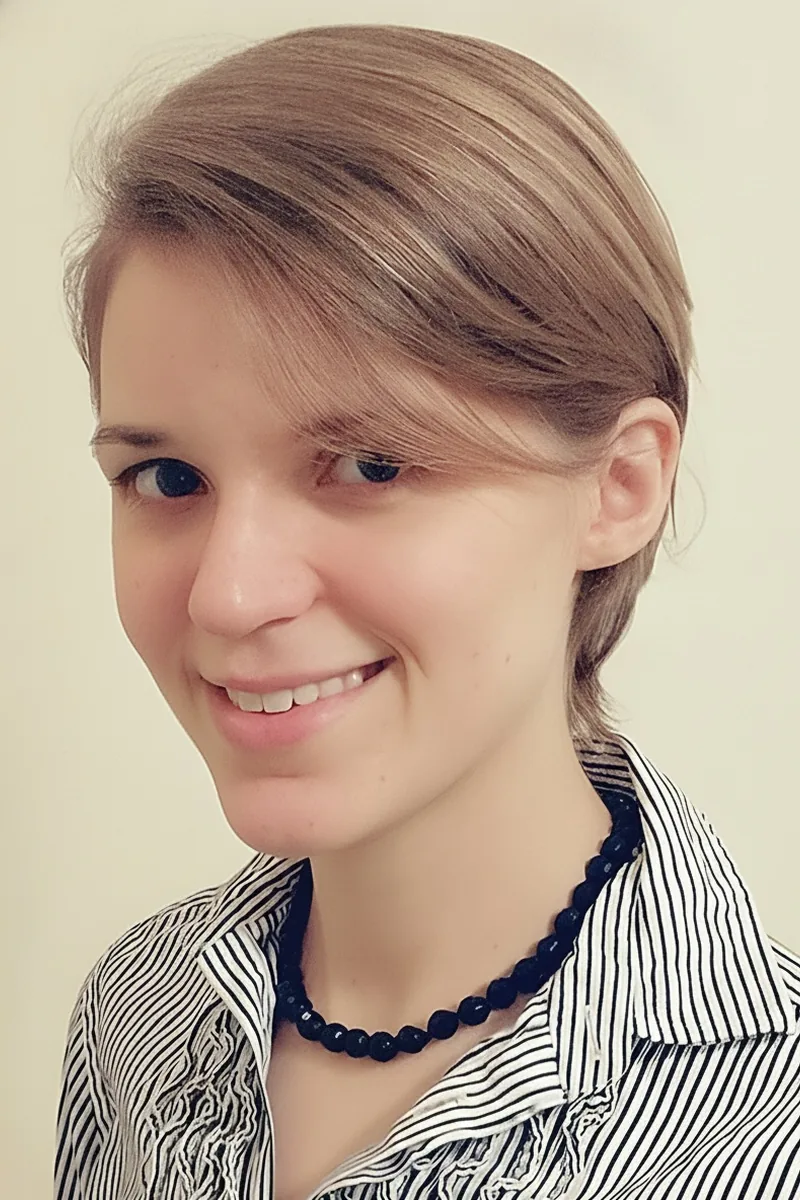
Reaction mechanisms are the backbone of organic chemistry, and most students struggle not because the material is impossibly hard but because they try to memorize hundreds of reactions instead of learning the handful of electron-pushing patterns that explain almost all of them. Rebecca's science training means she teaches students to read a mechanism the way you'd read a sentence — subject, verb, object — so new reactions become predictable rather than surprising.
Most students dread organic chemistry because it feels like a new language, but the logic underneath reaction mechanisms is surprisingly consistent once someone lays it out clearly. Ade approaches each reaction type — substitution, elimination, addition — by teaching students to read electron movement and predict products rather than memorize hundreds of individual reactions.
Reaction mechanisms are the backbone of organic chemistry, and most exam mistakes trace back to shaky arrow-pushing fundamentals. Abhinav teaches students to classify reactions by nucleophile-electrophile interactions first, then layer on stereochemistry and regiochemistry — an approach that turns a seemingly infinite number of reactions into a manageable set of patterns.
Reaction mechanisms are the backbone of Organic Chemistry, and learning to push electrons through an SN1, SN2, or E2 pathway requires a kind of visual logic that's very different from Gen Chem. Tom's neurobiology concentration at Penn meant he encountered organic reactions in both the classroom and the lab, giving him a practical feel for how functional groups behave. He teaches students to recognize patterns across reaction types so new mechanisms feel like variations on a theme rather than entirely new material.
Reaction mechanisms are the language of organic chemistry, and Sophie approaches them as logic puzzles rather than sequences to memorize. Her dual science background and MCAT prep experience mean she can walk through arrow-pushing, stereochemistry, and substitution-versus-elimination decisions with the kind of systematic reasoning that turns a confusing course into a manageable one.
Reaction mechanisms are the backbone of organic chemistry, and most students struggle because they try to memorize arrow-pushing patterns instead of understanding nucleophilicity, sterics, and leaving-group ability. Mary taught organic chemistry as an undergraduate TA at Pitt, spending hours each week walking students through substitution, elimination, and addition reactions until the logic behind each mechanism became second nature.
Reaction mechanisms are really just stories told with curved arrows, and Zain teaches students to read them that way — tracking electron flow through substitution, elimination, and addition reactions until predicting products feels intuitive. His chemistry major at Swarthmore included extensive organic coursework, and it's one of his most-tutored subjects.
Steven studied organismal physiology at Drexel, which meant working through organic chemistry not as a standalone course but as a tool for understanding how molecules behave in living systems — enzyme active sites, metabolic intermediates, drug interactions at the molecular level. That biological context gives him a practical angle on topics like carbonyl chemistry and stereoselectivity that pure mechanism drilling often misses. Rated 5.0 by students.
I am currently a graduate student in Chemical Engineering at the University of Delaware. I am working on using magnetic and flow fields to create advanced materials by directing the self-assembly process of nanoparticles . I have tutored students in Chemistry, Physics and Math all throughout undergraduate and graduate work. I truly enjoy breaking material down into its core components that allows the students to understand complicated information.
Reaction mechanisms click when you stop memorizing arrow-pushing patterns and start understanding electron density, nucleophilicity, and sterics as a connected system. Michael's doctoral research in materials chemistry required him to design and troubleshoot multi-step syntheses, so he teaches organic chemistry the way a working chemist actually thinks through it.
Michael's bioengineering coursework at Pitt means he learned organic chemistry as the foundation for understanding drug interactions, biomaterial design, and the molecular logic behind physiological systems — not as a standalone course to survive and forget. He tackles reaction mechanisms by encouraging students to visualize electron flow and functional group behavior in three dimensions, connecting arrow-pushing to the physical reality of how molecules actually collide and rearrange. Rated 5.0 by students.
I enjoy helping students get to where they want to go there are few things more rewarding to me than seeing your success unfold before my eyes! I am a strong believer that everyone, and I mean EVERYONE, starts somewhere. Let me give you an example: there once was a student who was in danger of failing out of high school heading into their senior year. That student didn't like the direction their life was going, and they decided to enroll in a community college program. After a lot of failing, trying again, failing some more.that student received a scholarship to attend a Top 50-ranked program. Impossible? I say not, because that student was me! I fell into retail management at an early age, and this motivated me to do better for myself. I enrolled as a student at Northampton Community College and, later, I was one of just three community college transfer students accepted into Lehigh University for the Fall 2019 semester. By the time it was all said and done, I attained five college degrees (yes you read that correctly). I have a B.S. in Molecular Biology, B.S. in Biochemistry, B.S. in Behavioral Neuroscience, A.S. in Biological Sciences, and A.S. in Chemistry. Along the way, I worked numerous jobs in order to sustain myself through school. Some of these roles included being a mathematics tutor (from pre-algebra through Calculus III), a teaching assistant in the Biological Sciences Department of Lehigh University where I taught Introduction to Cellular and Molecular Biology Laboratory techniques in addition to Genetics Laboratory Techniques. Outside of teaching, I spent more than 3 years working as an emergency room technician at a Level I Trauma Center throughout the majority of the COVID-19 pandemic. Currently, I work as a Separations Scientist for a confidential pharmaceutical company (Pharma takes confidentiality very seriously so seriously, in fact, that I can only share general pieces of information regarding my job and very, very little specifics as a result of a strict confidentiality agreement). And now, I like to tutor budding students, such as yourself, as a way to help you get to where you want to be. Additionally, I performed original research in a molecular biology-focused laboratory and a biochemistry-focused laboratory. I completed an Honors Thesis in the molecular biology-focused laboratory, and these findings were published in Bioelectricity (see link here if you're interested: https://www.liebertpub.com/doi/10.1089/bioe.2023.0018). As you can imagine, I tutor a lot of subjects, some of which include general chemistry, organic chemistry, biology, developmental biology, cell biology, microbiology, analytical chemistry, molecular biology, neurobiology, and.well, you get the point. My favorite subject to tutor, however, is organic chemistry. Why? Because, like many of you, it was a subject I struggled with initially. In fact, I had to retake both organic chemistry and biochemistry as an undergraduate student! By focusing on where my strengths were (and areas of opportunity), I enhanced my skillset using a step-wise approach (and lots of coffee). Nobody is born with an inherent wealth of knowledge, and I hope that I can show you that this is indeed the reality. The good news? You are already more than capable of achieving the success that brought you here in the first place. My teaching philosophy is simple: take the time to get to know each student as an individual, adapt to their unique learning and communication styles (including awareness of disabilities), and work WITH you to help you unlock your best potential. I will balance telling you what I know without robbing you of the opportunity to learn for yourself, and I will strongly consider your feedback in order to adjust my style to best meet your needs. Some cool experiences outside of the above subjects: I spent nearly one month in Sierra Leone during the summer of 2022, a Western African nation home to one of the highest maternal mortality rates in the world. I was the group leader for a project known as Ukweli Test Strips, a social entrepreneurial venture that aims to lower maternal mortality through low-cost, early-and-often urinary tract infection (UTI) and preeclampsia screenings through our urinary test strips. I worked directly with Sierra Leone's Ministry of Health and Sanitation, and I was responsible for maintaining a service level agreement (SLA) that allowed us to legally operate within the public healthcare system of Sierra Leone. As part of this work, I conducted more than 100 semi-structured interviews of locals within the villages, and I even got to fly over Timbuktu (not kidding)!
Reaction mechanisms are the language of organic chemistry, and Kristina speaks it fluently enough to teach both Orgo I and Orgo II. She approaches each mechanism — whether it's nucleophilic substitution, carbonyl addition, or aromatic electrophilic substitution — by training students to track electron movement and recognize patterns, so new reactions start to feel predictable instead of overwhelming.
Currently studying chemistry at the undergraduate level, Amina is building her organic chemistry knowledge in real time — which means she remembers exactly where arrow-pushing stops making sense and where functional group reactivity starts to click. She tackles mechanisms by working through practice problems alongside students, using the same strategies she's developing in her own coursework to make electron flow and reaction predictions feel systematic rather than random.
Reaction mechanisms only click when you stop memorizing arrows and start seeing electron density. Kevin spent years as a chemistry TA walking students through nucleophilic substitutions, eliminations, and carbonyl additions, and his biochemistry background means he can show exactly where organic chemistry concepts resurface in biological systems.
Anthropology might seem far from organic chemistry, but Dana's coursework in biological anthropology required understanding molecular structures and biochemical processes at the cellular level — functional groups, bonding behavior, and the chemical logic that underpins human biology. She uses that cross-disciplinary perspective to walk through reaction types and electron movement in a way that prioritizes understanding the 'why' behind each mechanism.
I'm available to tutor biology, chemistry, physics, math from Algebra up through AP Calculus, SAT test prep, and French. I've been tutoring students in science and math for 7 years. I also spent 8 months working and studying in France, and have tutored high school and adult students in French. When I'm not working or studying, I love playing volleyball (indoors or on the beach!) and spending time outside, canoeing or hiking with my dog. I look forward to meeting and working with you!
I have been teaching chemistry classes (Organic Chemistry I & II, General Chemistry, Inorganic Chemistry, Medicinal Chemistry) at top-level universities in the US for the past ten years and I am passionate about helping students gain confidence in a challenging subject such as Organic Chemistry. Nothing is greater for me (and of course the student) than when it suddenly "clicks"! When tutoring, I like to draw out the problem/reaction step by step first myself, and then use a different example of the same problem/reaction and have the student explain to me how it is solved.
As an MD/PhD student at Northwestern doing doctoral research in organic synthesis, Austin lives in the world of reaction design — figuring out which bonds to form, which protecting groups to use, and why one retrosynthetic route beats another. That daily immersion means he teaches mechanisms and stereochemistry with the fluency of someone who actually builds molecules, not just someone who once passed the course.
Reaction mechanisms in organic chemistry are less about memorizing hundreds of arrows and more about recognizing a handful of recurring patterns — nucleophilic attacks, leaving group stability, and electron density shifts. Aidan studied organic chemistry as part of Notre Dame's premed track and teaches students to predict products by understanding why electrons move, not just where.
Reaction mechanisms are the backbone of organic chemistry, and students who try to memorize each one individually run out of mental storage by the second exam. Bintou's chemistry training at Penn taught her to classify reactions by electron behavior — nucleophilic attack, leaving group stability, carbocation rearrangement — so patterns emerge instead of isolated steps. She teaches students to predict products by reading the mechanism, not by recognizing a specific example they've seen before.
Preparing for medical school means Benjamin ground through organic chemistry with the kind of intensity that only MCAT stakes demand — reaction mechanisms, carbonyl chemistry, and spectroscopy all studied until the logic behind each transformation became second nature. His evolutionary anthropology background at Duke also gives him a knack for seeing patterns across complex systems, which is exactly the skill that separates students who struggle with synthesis problems from those who can map a retrosynthetic pathway confidently. Rated 5.0 by students.
Reaction mechanisms click when you understand electron movement — why a nucleophile attacks one carbon over another, how steric hindrance redirects a pathway, what drives an elimination versus a substitution. Enric's PhD in Chemistry means he's spent years thinking at the mechanistic level and can unpack arrow-pushing, stereochemistry, and retrosynthetic analysis in ways that make each reaction type feel logical rather than arbitrary.
Reaction mechanisms are the backbone of organic chemistry, and most students struggle not because the material is impossibly hard but because they try to memorize hundreds of reactions instead of recognizing patterns. Manpinder approaches orgo by teaching students to trace electron movement through arrow-pushing — once that skill clicks, predicting products for substitution, elimination, and addition reactions becomes systematic rather than overwhelming.
I'm a current medical student at VCU School of Medicine, and a graduate of Johns Hopkins University. I received my Bachelor of Science in Molecular and Cellular Biology. I've had the pleasure of tutoring a diverse range of students for 5 years; while I tutor a broad set of subjects, I'm most passionate about biology, psychology, and chemistry. I'm a big proponent of ensuring understanding over memorization and teaching concepts that last for years to come (particularly for other students interested in medicine!) In my free time, I love to write poetry, edit essays, and gush about game writing with friends.
Between his biochemistry degree and his current pharmacy doctoral work at VCU, Joel has run through organic chemistry from both the academic and applied sides — understanding how functional group reactivity and stereochemistry translate into real drug design and pharmacological mechanisms. He's also taught university chemistry courses as adjunct faculty, so he knows how to break down multi-step synthesis problems and spectroscopy interpretation at the pace a student actually needs. Rated 5.0 by students.
Being on the pre-med track at Northwestern while studying both biology and chemistry means Kade is taking organic chemistry alongside the same students he tutors — he knows which professors emphasize what, which problem sets are brutal, and where the common mistakes hide in topics like stereochemistry and acyl substitution. That proximity to the material gives him a practical, recently-tested understanding of how to break down multi-step synthesis problems into manageable pieces.
Reaction mechanisms are the language of organic chemistry, and Troy spent two semesters teaching that language as an organic chemistry TA. He walks students through arrow-pushing, stereochemical outcomes, and retrosynthetic analysis by emphasizing the handful of recurring electronic patterns that make hundreds of reactions predictable rather than random.
Reaction mechanisms are the backbone of organic chemistry, and Natasha teaches them the way she learned them in her biomolecular engineering program — by tracing electron movement step by step until the logic feels inevitable rather than arbitrary. She digs into arrow-pushing, stereochemistry, and functional group reactivity by asking students to predict products before revealing answers, building real intuition for how molecules behave.
Studying biochemistry and molecular biology means Raj encountered organic chemistry not as a single course but as the language underlying everything from enzyme kinetics to metabolic pathways — so he teaches functional group reactivity and stereochemistry with that bigger picture always in view. His 5.0 rating and a perfect 36 ACT reflect someone who thinks systematically, which translates directly into how he walks students through multi-step synthesis problems: identify the transformation, trace the electron flow, then confirm the regiochemistry.
Testimonials
Because the right Organic Chemistry tutor makes all the difference.
Average Session Rating – Based on 3.4M Learner Ratings
Practice Organic Chemistry
Free practice tests, flashcards, and AI tutoring for Organic Chemistry
Other Allentown Tutors
Related Science Tutors in Allentown
Frequently Asked Questions
Organic Chemistry requires both memorization of reactions and deep conceptual understanding of molecular mechanisms—a combination that challenges many students. The abstract nature of visualizing molecular structures, understanding 3D bonding, and predicting reaction outcomes makes it one of the most difficult chemistry courses. Personalized 1-on-1 instruction helps students move beyond memorization to truly grasp why reactions occur, which is essential for success in the course and beyond.
During an initial session, a tutor will assess your current understanding of foundational concepts like bonding, molecular structure, and reaction mechanisms. They'll identify specific areas where you're struggling—whether it's visualizing stereochemistry, predicting reaction outcomes, or balancing complex equations—and create a personalized plan to address those gaps. This diagnostic approach ensures that tutoring focuses on your unique challenges rather than generic review.
One of the biggest hurdles in Organic Chemistry is translating 2D structures on paper into 3D molecular reality. Expert tutors use multiple strategies—drawing mechanisms step-by-step, using molecular models, and working through practice problems—to help you develop spatial reasoning skills. Regular practice with visualization techniques, combined with personalized feedback, builds the mental models you need to predict reactions and understand why certain outcomes occur.
Memorizing individual reactions is a losing strategy in Organic Chemistry—there are simply too many to memorize. Understanding mechanisms teaches you the underlying logic of how electrons move and bonds form, so you can predict new reactions you've never seen before. Tutors focus on teaching mechanism-based thinking, which not only improves exam performance but also prepares you for advanced chemistry and research work where creative problem-solving matters.
Absolutely. Lab experiments bring theoretical concepts to life—you'll see actual color changes, observe reaction rates, and work with real compounds. Tutors can help you understand what's happening at the molecular level during your experiments and connect lab observations back to reaction mechanisms and theory. This bridge between hands-on work and conceptual understanding deepens retention and makes the course feel more cohesive.
Students typically struggle with predicting reaction outcomes, drawing and interpreting mechanisms, understanding stereochemistry and chirality, and recognizing reaction patterns across different functional groups. Many also find it difficult to balance complex equations and apply the scientific method to problem-solving. Personalized tutoring targets these specific pain points with targeted practice and conceptual review, helping you build confidence in each area.
Ideally, starting 4-6 weeks before an exam gives you time to build understanding systematically rather than cramming. However, even a few weeks of focused tutoring can significantly improve performance if you're already familiar with the material. The key is consistent practice with feedback—tutors can help you identify weak areas quickly and develop efficient study strategies so you maximize your preparation time.
Look for tutors with strong chemistry backgrounds—ideally with experience in higher-level chemistry courses or research. Beyond credentials, the best tutors can explain complex concepts clearly, adapt their teaching style to your learning needs, and help you develop problem-solving skills rather than just providing answers. Varsity Tutors connects you with expert tutors who have demonstrated success helping students master Organic Chemistry concepts and improve their performance.
Let’s find your perfect tutor
Answer a few quick questions. We’ll recommend the right plan and match you with a top 5% tutor.