Award-Winning Physical Chemistry Tutors
serving Allentown, PA
Physical Chemistry
Tutors in Allentown
Private 1-on-1 tutoring, weekly live classes for academic support, test prep & enrichment, practice tests and diagnostics, and more to elevate grades and test scores.
Based on 3.4M Learner Ratings
UniversitiesSchools & Universities
DeliveredHours Delivered
ProficiencyGrowth in Proficiency
Who needs tutoring?
No obligation. Takes ~1 minute.
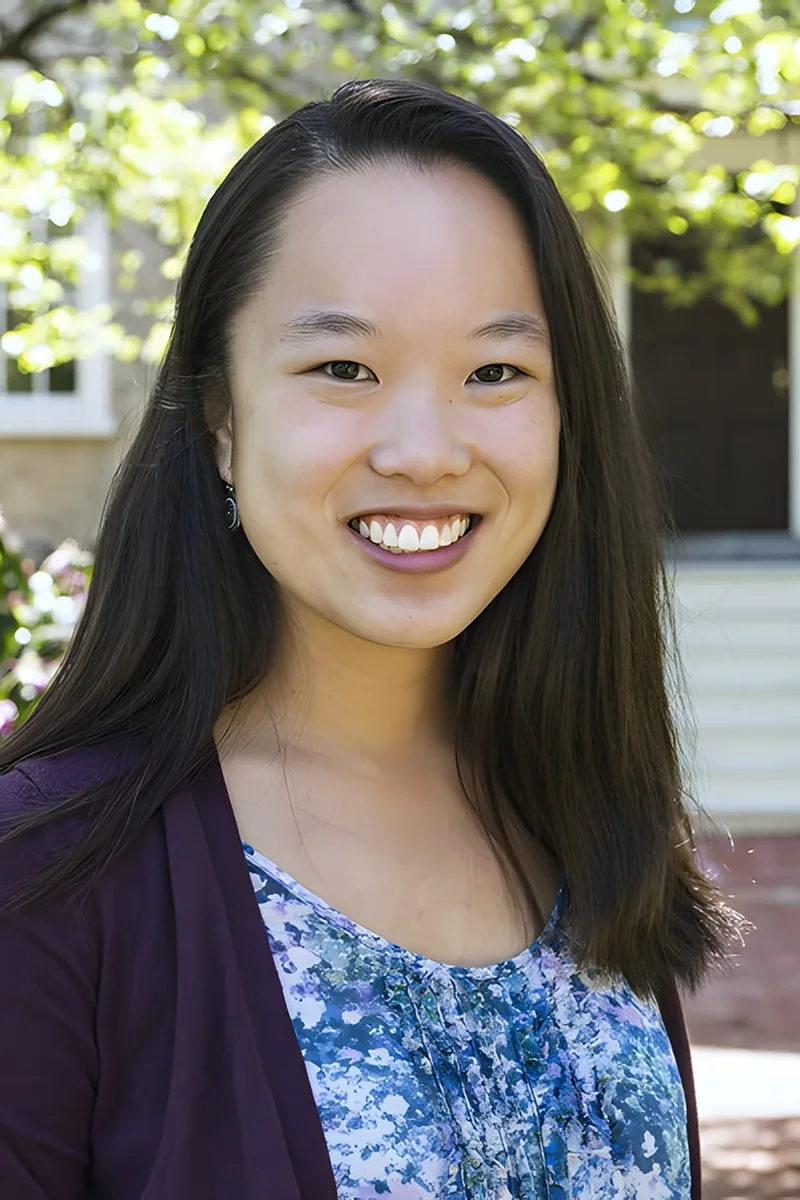
Teaching high school chemistry daily means Kathleen regularly translates thermodynamic concepts like enthalpy, entropy, and equilibrium into language that clicks — a skill that carries directly into the more calculus-heavy treatment those same ideas get in a p-chem course. Her M.S.Ed from Penn and chemistry degree give her both the content depth and the instinct for spotting exactly where a derivation stops making sense to a student. Rated 5.0 by students.

Biology coursework builds a surprising amount of p-chem intuition — enzyme kinetics, membrane energetics, and metabolic thermodynamics all run on the same free energy and rate equations that dominate a physical chemistry sequence. Ade uses that biological grounding to make abstract derivations tangible, turning something like a Boltzmann distribution into a concrete picture of how molecules actually partition energy across states.
I am currently a graduate student in Chemical Engineering at the University of Delaware. I am working on using magnetic and flow fields to create advanced materials by directing the self-assembly process of nanoparticles . I have tutored students in Chemistry, Physics and Math all throughout undergraduate and graduate work. I truly enjoy breaking material down into its core components that allows the students to understand complicated information.
Thermodynamics, kinetics, and quantum mechanics all converge in physical chemistry — and that's exactly where Monika's biochemistry and molecular biology training intersects. She breaks down intimidating topics like Gibbs free energy calculations and reaction rate laws by tying them to real chemical systems she studied during her PhD research. Rated 4.8 by students.
I am most passionate about biology and chemistry. I am a firm proponent of education, believing it to be absolutely necessary for an improved quality of life, and I try to impart this appreciation to all of my students.
Kirby's biochemistry degree at Michigan meant grinding through the thermodynamics and kinetics that sit at the heart of p-chem — Gibbs free energy calculations, equilibrium derivations, and the statistical mechanics of molecular systems were baked into her upper-level coursework. She breaks down the calculus-heavy formalism by keeping each variable tied to the chemical reality it represents, so a daunting derivation like a Clausius-Clapeyron equation reads as a description of phase behavior rather than an abstract math exercise. Rated 4.9 by students.
Environmental statistics at Rice required Alex to work extensively with the same calculus-heavy quantitative methods — differential equations, statistical modeling, multivariable analysis — that students encounter in thermodynamics and kinetics derivations throughout a p-chem sequence. His geography background adds a surprising edge: understanding energy balances and phase transitions in Earth systems translates directly to making sense of state functions and equilibrium in a chemistry context.
Thermodynamic state functions, quantum mechanical models, and kinetic rate laws all converge in Physical Chemistry, and most students need someone who can bridge the math and the chemistry simultaneously. Abismael's chemical engineering training put him through the full gauntlet — partial differential equations applied to heat transfer, Gibbs free energy calculations for phase equilibria, statistical mechanics. He explains each derivation from multiple angles and tests understanding with problems designed to be harder than what shows up on the exam.
As an MD/PhD student at Northwestern with a chemistry PhD focus and a B.S. in Chemical Science from Michigan, Austin has gone deep on the thermodynamics and quantum mechanics that form p-chem's backbone — and he's still actively working through advanced coursework in these areas. He tackles derivations by building chemical intuition first, so when a student hits a wall at, say, a Legendre transform connecting internal energy to Gibbs free energy, the math follows naturally from understanding what each variable physically represents.
Two years as an organic chemistry lab TA at the college level gave Maha hands-on experience with the reaction kinetics and thermodynamic reasoning that form the backbone of any p-chem sequence. Now pursuing graduate work in public health at Johns Hopkins, she approaches topics like equilibrium constants and energy diagrams through the lens of someone who's had to apply them in real experimental settings, not just derive them on paper. Rated 5.0 by students.
Computational linguistics might seem far from p-chem, but Justin's SAT-level math chops and his chemistry coursework give him enough quantitative grounding to tackle the foundational concepts — working through state functions, basic thermodynamic relationships, and the algebra behind equilibrium expressions. He's strongest at slowing down the notation-heavy steps that lose students early in a p-chem sequence, making sure each symbol maps to something physically real before moving forward.
Thermodynamics, quantum mechanics, kinetics — physical chemistry is where math and chemistry collide, and most students need a tutor comfortable in both languages. Natasha's chemical engineering degree gave her deep fluency with partition functions, phase diagrams, and rate laws, and her MIT graduate work keeps those concepts sharp. She approaches p-chem by deriving key equations alongside students so the physics behind each formula becomes visible.
Garrett's biology degree means he already thinks in terms of systems — enzyme kinetics, membrane potentials, metabolic energy flow — which gives him a concrete anchor for the abstract math that makes p-chem so intimidating. He teaches thermodynamic and kinetic concepts by connecting derivations to the biological and chemical phenomena they describe, so something like a Gibbs free energy calculation feels like a tool rather than an exercise in symbol-pushing.
A physics degree gives Cory something many p-chem tutors lack — native comfort with the quantum mechanics and statistical mechanics that chemistry students often encounter for the first time in this course. He treats topics like wave functions, partition functions, and thermodynamic state variables as extensions of the physics he already thinks in, then builds the chemical context around them. Rated 4.9 by students.
A PhD in chemistry means Justin didn't just pass p-chem — he lived in its formalism for years, from quantum mechanical models to statistical thermodynamics, and then kept using it through doctoral research. That depth shows when he teaches: he can trace a concept like chemical potential or a Maxwell relation back to the physical picture driving the math, catching the exact step where a student's understanding breaks down. Rated 5.0 by students.
Testimonials
Because the right Physical Chemistry tutor makes all the difference.
Average Session Rating – Based on 3.4M Learner Ratings
Other Allentown Tutors
Related Science Tutors in Allentown
Frequently Asked Questions
Physical chemistry bridges chemistry and physics by studying the physical properties of molecules and how chemical reactions occur at a molecular level. It's challenging because it requires understanding abstract concepts like thermodynamics, kinetics, and quantum mechanics—often without the visual models available in other chemistry courses. Many students struggle with the mathematical rigor and the need to connect theoretical equations to real molecular behavior.
Students often find thermodynamics (entropy, enthalpy, Gibbs free energy) and kinetics (reaction rates, rate laws, activation energy) most difficult because they require visualizing invisible molecular processes. Quantum mechanics and molecular orbital theory also challenge students who haven't built strong foundational understanding of atomic structure. Additionally, the heavy emphasis on mathematical problem-solving—from unit conversions to differential equations—can overwhelm students who need help connecting the math to the chemistry concepts.
Yes. Tutors can help you understand the theory behind your experiments, interpret data, and connect lab observations to the concepts you're learning in lecture. They can also guide you through proper experimental design, help you troubleshoot unexpected results, and prepare you to write clear lab reports that demonstrate your understanding of the physical chemistry principles at work.
Personalized tutoring helps you develop mental models for invisible processes like molecular collisions, electron behavior, and energy transfer. Tutors can use diagrams, molecular modeling, and real-world analogies to make abstract ideas concrete—for example, explaining entropy through the behavior of gas molecules or activation energy through a ball rolling over a hill. Regular practice with these visualization techniques strengthens your conceptual understanding and makes problem-solving more intuitive.
Absolutely. While physical chemistry is math-intensive, tutors can help you build the specific mathematical skills you need—from logarithms and exponentials to calculus and differential equations—in the context of chemistry problems. This approach helps you see why the math matters and makes it easier to retain. Many students find that working through chemistry-specific math problems with a tutor is more effective than general math tutoring.
Your first session focuses on understanding your current level, identifying specific challenges, and building a personalized learning plan. A tutor will likely review your course material, discuss which topics confuse you most, and assess your problem-solving approach. This helps them tailor future sessions to address your gaps—whether that's strengthening foundational concepts, improving your problem-solving strategy, or preparing for an exam.
Tutors help you move beyond memorizing formulas to truly understanding concepts, which is what exams test. They'll work with you on practice problems, help you recognize which equations apply to different scenarios, and teach you to explain your reasoning clearly. Regular practice with feedback from a tutor also builds confidence and reduces test anxiety by the time exam day arrives.
Varsity Tutors connects you with expert tutors who specialize in physical chemistry and understand the specific curriculum and challenges students in Allentown face. You can get matched with a tutor who fits your schedule and learning style, and your first session is designed to ensure you're working with someone who can help you succeed in this demanding subject.
Let’s find your perfect tutor
Answer a few quick questions. We’ll recommend the right plan and match you with a top 5% tutor.