Award-Winning AP Statistics Tutors
serving Nashville, TN
AP Statistics
Tutors in Nashville
Private 1-on-1 tutoring, weekly live classes for academic support, test prep & enrichment, practice tests and diagnostics, and more to elevate grades and test scores.
Based on 3.4M Learner Ratings
UniversitiesSchools & Universities
DeliveredHours Delivered
ProficiencyGrowth in Proficiency
Who needs tutoring?
No obligation. Takes ~1 minute.
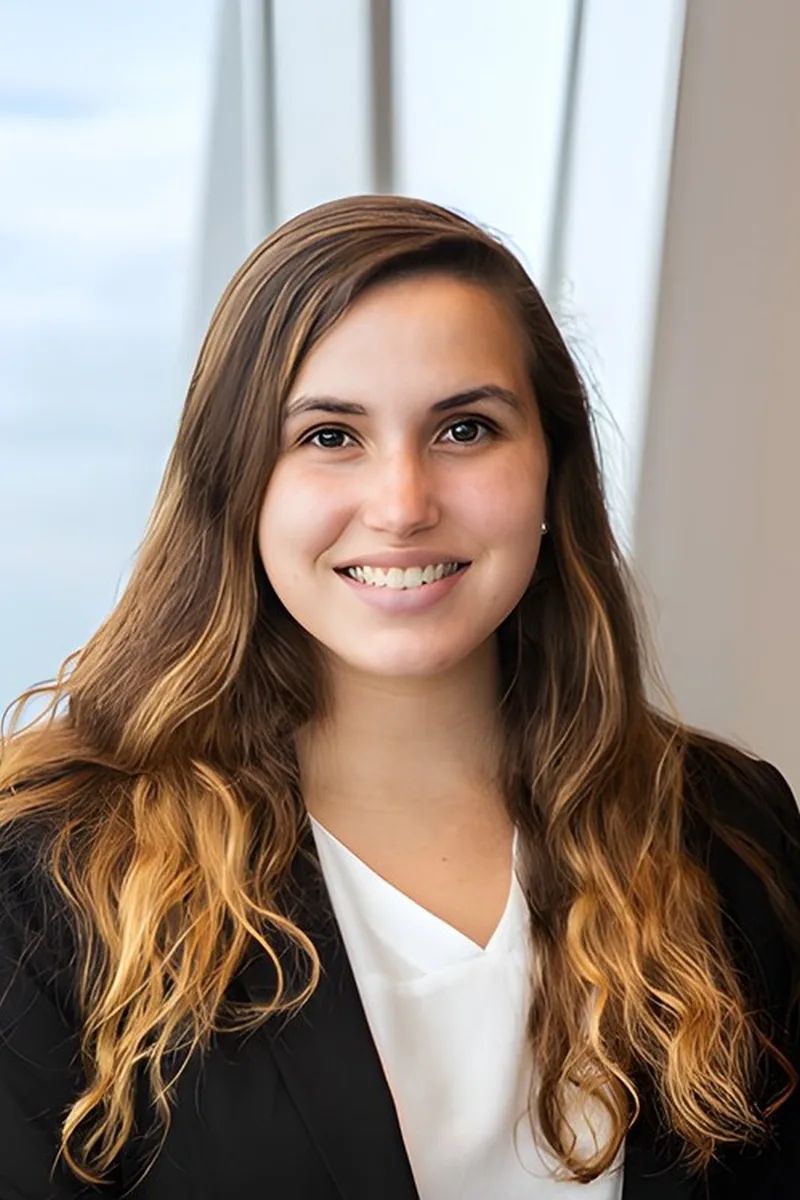
Heather minored in Quantitative Methods at Vanderbilt, which means AP Statistics isn't a side subject for her — it's core to her academic training. She breaks down inference procedures, experimental design, and probability distributions with the kind of fluency that comes from applying statistics daily, not just teaching it from a textbook. Rated 4.9 by students.

Most AP Stats students come in expecting another calculation-heavy math class, then hit a wall when the exam asks them to explain *why* they chose a particular test or *what* a confidence interval actually captures in context. Elena's Child Development background gives her sharp instincts for identifying exactly where that conceptual shift stalls out for each student, and her 1540 SAT confirms the quantitative chops to back it up. She breaks down the free-response writing demands — describing distributions, justifying inference choices — as a communication skill, not just a math skill.
Neuroscience at Vanderbilt means Elliot lives in data — designing experiments, running statistical tests, and interpreting p-values in research contexts every week. He brings that applied perspective to AP Statistics, breaking down concepts like confidence intervals, chi-square tests, and experimental design with real examples rather than abstract formulas.
I'm a graduate student in Applied Statistics with experience in general math and computer programming to boot. I currently have a PhD in Applied Statistics with experience in data analytics. I've had the opportunity to do some math and statistics work for hospitals and research facilities, and I enjoy getting to share my passion for math with others to assist them in their education.
Most AP Stats students come in expecting another math class and get blindsided when the exam asks them to write — to describe distributions in context, justify a choice of test, or explain what a confidence interval actually captures. Emerson's dual background in biology and psychology means he's read and dissected dozens of studies built on exactly this kind of statistical reasoning, from clinical trial designs to behavioral research with messy human data. Rated 5.0 by students, he teaches the interpretive vocabulary and structured argumentation that turn a halfway answer into full free-response credit.
When I was young, I used to hate swimming at the beach. The idea of sharks moving around under the waves where I could not see them made me scared to go into the water. As I grew up, however, and began to learn about the different sharks that lived off the shores of my home in Massachusetts, USA, I became less and less scared and more and more fascinated with how and why sharks move around in this underwater world. I began to ask questions like, what do sharks do under the water when we cannot see them? and, where do sharks like to go and why? As a marine scientist now I try to answer these questions. Because sharks live and breathe under the water and can swim long distances and go deep into the ocean, further and deeper than I could follow by myself, to study how these animals move and behave underwater I have to use lots of different types of technology. Sometimes I use underwater robots that can follow the sharks down deeper than humans can go, and that can carry things like cameras so I can directly see what the sharks are doing. In my work now, I use special tags that send out signals every few seconds with a unique name that identifies individual sharks. When the shark swims close enough to receivers placed out in the ocean, these receivers are able to hear and record the tag name, telling where and when individual sharks are present in different areas of the ocean. One thing I love about being a shark scientist is that I can follow sharks all over the world. First, I followed the movement of sharks all the way over in the Atlantic Ocean off the east coast of the USA. Then I moved to Tasmania, Australia, and I followed young sharks as they move around off the coast of New South Wales. Now I am back home in Massachusetts and working on publishing my research.
Cognitive science trains you to think about how people reason under uncertainty — which is surprisingly close to what AP Stats actually tests, from interpreting conditional probabilities to explaining why a particular sampling method can skew results. Kimberly uses that background to teach the mental models behind concepts like normal distributions and inference, so the logic clicks before students ever touch a calculator. Rated 5.0 by students.
Scoring a 36 ACT means Ethan knows how to break down standardized testing — and AP Statistics is really a standardized test in statistical thinking, where the free-response grading hinges on precise language about inference and experimental design. His environmental science and public policy background at the undergraduate level required constant engagement with data analysis, from interpreting regression models in climate studies to evaluating sampling methods in policy research. Rated 5.0 by students, he zeroes in on the communication side of stats that most math-oriented tutors overlook.
As a statistics major at Carleton College, Aya doesn't just teach AP Stats formulas — she uses them daily in her own coursework. She breaks down tricky concepts like inference for regression slopes, chi-square tests, and experimental design by connecting each one to real data scenarios that make the logic behind the math click.
Crony's dual degrees in Neuroscience and Economics from Brown meant constant exposure to both experimental design and data modeling — two threads that converge neatly in the AP Stats curriculum. He breaks down the normal distribution and z-score reasoning that underpins so much of the course by connecting it to real research contexts, like determining whether a drug trial's results are meaningful or just random variation. Rated 4.6 by students.
Graduate-level applied statistics at Penn State is a different animal from AP Stats, but William uses that deeper training to show students why formulas like the one for standard error of a sampling distribution are built the way they are — which makes the interpretation questions on the exam far less mysterious. His biomedical engineering background also means he's comfortable grounding lessons in real study designs, from clinical trials to observational health data, so students practice writing the kind of context-specific conclusions the free-response rubric actually rewards. Rated 4.8 by students.
Biology research at Yale means Shreya regularly interprets data — reading regression output, evaluating sample designs, and deciding whether results are statistically significant before drawing conclusions. She brings that same analytical lens to AP Statistics, teaching students how to set up and justify inference procedures the way the free-response section demands. Rated 5.0 by students.
Data analytics coursework in biomedical and public health analysis means Vishank doesn't just know the AP Stats formulas — he's used them to draw real conclusions from messy health data sets, which is the exact skill the exam's free-response questions are testing. He's especially sharp on the data collection and study design unit, breaking down why randomization matters and how confounding variables sneak into observational studies. Rated 4.9 by students.
Kyle's statistics degree means he didn't just learn AP Stats concepts — he kept going, building the theoretical framework underneath topics like sampling distributions, expected value, and the normal model that the course only scratches the surface of. That deeper fluency makes him especially effective at explaining why a particular inference procedure applies in a given scenario, not just how to execute it on a calculator. Rated 4.9 by students.
Running experiments in a brain sciences PhD program means Tashina designs studies, collects behavioral data, and determines whether her results hold up under statistical scrutiny — the same cycle of experimental design, data analysis, and inference that AP Stats tests on every free-response question. She's especially sharp on the interpretive side, like articulating why a particular sampling method matters or what a confidence interval actually captures, because her dissertation work requires defending those choices to peer reviewers. Rated 4.7 by students.
Cognitive science at Rice meant Adam spent semesters immersed in experimental design, hypothesis testing, and statistical inference — the exact skills AP Statistics demands. He teaches students to think through probability distributions and confidence intervals the way a researcher would, connecting each concept to the logic behind the test rather than just the formula sheet.
Testimonials
Because the right AP Statistics tutor makes all the difference.
Average Session Rating – Based on 3.4M Learner Ratings
Practice AP Statistics
Free practice tests, flashcards, and AI tutoring for AP Statistics
Nearby AP Statistics Tutors
Other Nashville Tutors
Related Math Tutors in Nashville
Frequently Asked Questions
AP Statistics covers four main units: exploring data through distributions and relationships, sampling and experimentation, probability and random variables, and inference. The course emphasizes understanding statistical concepts, designing studies, analyzing data, and drawing conclusions from evidence. Most students spend significant time on probability distributions, hypothesis testing, and confidence intervals—topics that require both conceptual understanding and computational skills.
Students typically struggle most with probability concepts, distinguishing between different inference procedures (t-tests vs. chi-square tests), and interpreting p-values correctly. Many also find the free-response section challenging because it requires clear communication of statistical reasoning, not just correct calculations. Personalized tutoring helps break down these abstract concepts and builds confidence in explaining statistical findings in context.
AP Statistics scores range from 1-5, with a 3 considered passing. Most colleges grant credit for scores of 3 or higher, though some require a 4 or 5. The national average hovers around 2.8-3.0, so scoring a 4 or 5 puts you well ahead. Working with a tutor to master both the multiple-choice section (50% of the exam) and the free-response section (50%) significantly improves your chances of reaching your target score.
Most students benefit from 3-4 months of consistent preparation, though this depends on your starting point and target score. If you're taking the course, tutoring during the school year helps reinforce concepts as you learn them, making exam prep less stressful. For intensive preparation in the final weeks before the exam, many students work with tutors on practice tests, timing strategies, and identifying weak areas that need focused review.
Practice tests are essential—they help you get comfortable with the exam format, identify which topics need more work, and develop pacing strategies for the 3-hour exam. The multiple-choice section requires quick problem-solving, while the free-response section demands detailed statistical explanations. Tutors can review your practice test performance to pinpoint whether you're struggling with specific concepts, calculation errors, or communicating your reasoning clearly.
Test anxiety often stems from feeling unprepared or uncertain about approaching unfamiliar problems. Working through practice tests with a tutor in a low-pressure setting builds genuine confidence in your skills and helps you develop strategies for staying calm during the actual exam. Tutors can also teach you how to read questions carefully, manage your time effectively, and approach problems systematically—all of which reduce anxiety and improve performance.
Your first session focuses on understanding where you are in the course and what you want to achieve. A tutor will assess your comfort level with key topics, review any recent exams or assignments, and identify specific areas for improvement. From there, you'll develop a personalized study plan that targets your weak spots while reinforcing your strengths, whether that's probability, inference, or data analysis.
Look for tutors with strong backgrounds in statistics, teaching experience with AP-level content, and familiarity with the specific exam format and scoring rubric. Ideally, they've helped other students improve their scores and understand how to explain statistical concepts in multiple ways. Varsity Tutors connects you with expert tutors who know the AP Statistics curriculum inside and out and can adapt their teaching to your learning style.
Let’s find your perfect tutor
Answer a few quick questions. We’ll recommend the right plan and match you with a top 5% tutor.