Award-Winning College Physics Tutors
serving Nashville, TN
College Physics
Tutors in Nashville
Private 1-on-1 tutoring, weekly live classes for academic support, test prep & enrichment, practice tests and diagnostics, and more to elevate grades and test scores.
Based on 3.4M Learner Ratings
UniversitiesSchools & Universities
DeliveredHours Delivered
ProficiencyGrowth in Proficiency
Who needs tutoring?
No obligation. Takes ~1 minute.
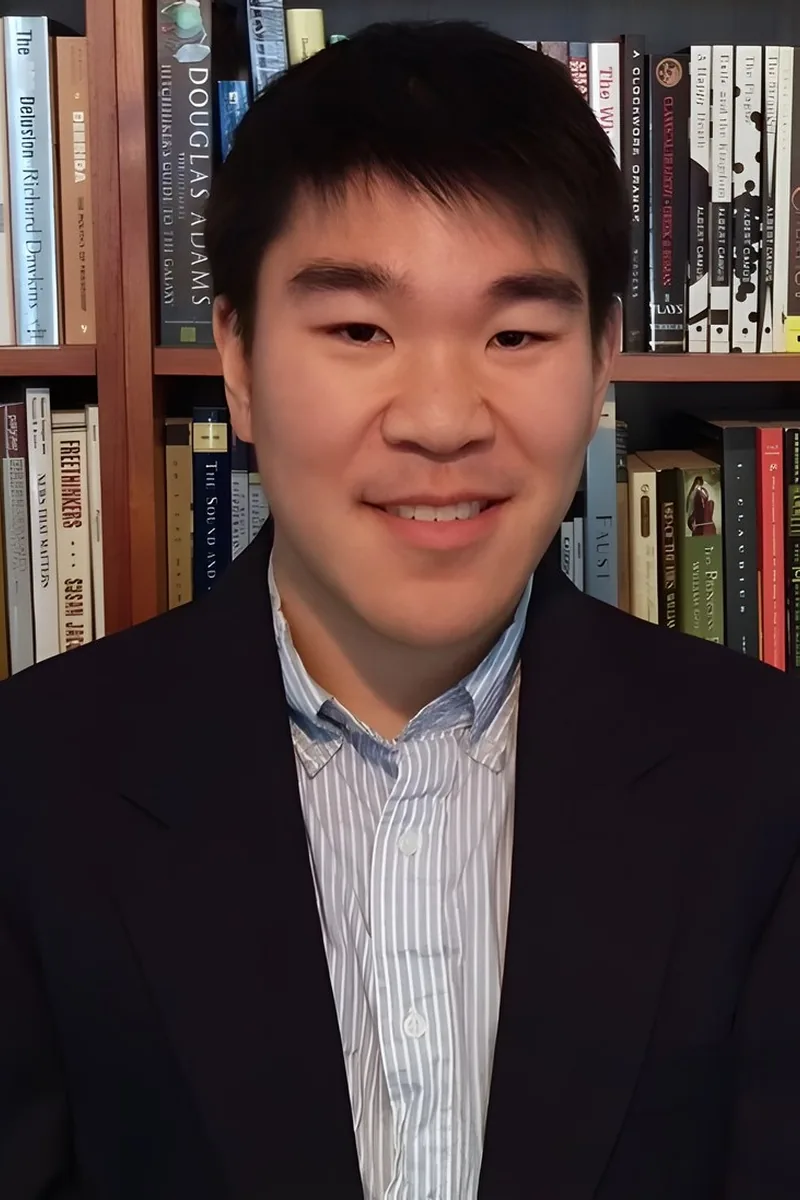
Graduate work in Chemical and Physical Biology at Vanderbilt meant Dennis spent years applying thermodynamics, fluid dynamics, and electromagnetism to biological systems — the same core physics concepts that fill college problem sets, just in a research context where getting the physics wrong meant failed experiments. He breaks down force, energy, and field problems by connecting them to the physical intuition behind the math, which is especially useful for pre-med and life science students navigating calculus-based physics for the first time. Holds a 5.0 rating.
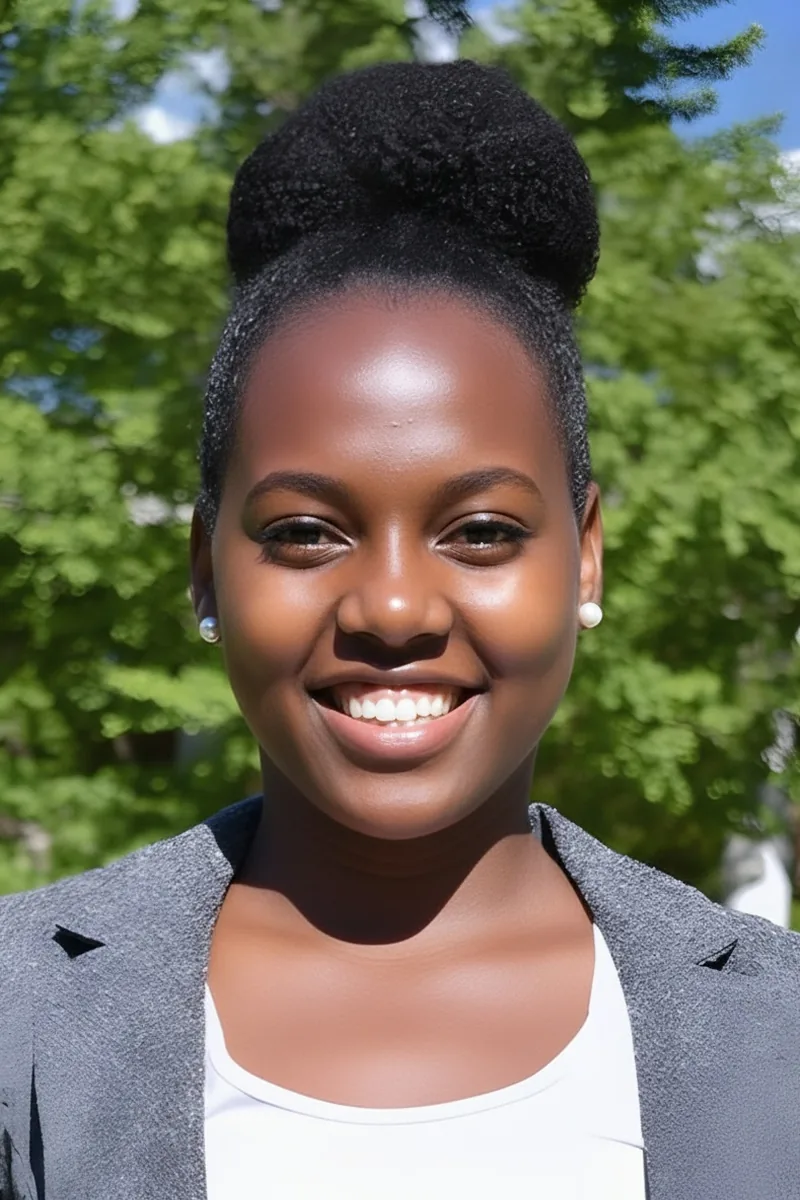
Calculus-based physics was Elsa's daily language as a chemistry major at Vanderbilt — thermodynamics in physical chemistry, mechanics in lab design, electromagnetism in spectroscopy — so she teaches college physics with an intuitive sense for how these concepts actually get used beyond the problem set. She's tutored students through the full introductory sequence and zeroes in on translating word problems into free-body diagrams and energy equations, which is where most students lose their footing.
Pre-med coursework and a biology degree mean Jakobi has sat through the same calculus-based physics gauntlet his students are navigating — mechanics, electricity, optics — and he remembers which concepts felt like hitting a wall. He leans on that recent experience to unpack tricky topics like conservation of momentum or circuit analysis, connecting the physics to biological systems whenever it makes the material click faster.
Free-body diagrams, torque calculations, and energy balance problems aren't abstractions for Matthew — they're the bread and butter of his mechanical engineering training, where getting the physics wrong means a design fails. He breaks down college physics problems by connecting each one to the underlying principle first, whether that's Newton's laws in a pulley system or conservation of energy in a collision. Rated 5.0 by students.
Aerospace engineering is applied physics with higher stakes — orbital mechanics, fluid dynamics over airfoils, structural loads during launch — and Matthew's degree means he solved those problems rigorously before ever stepping into a tutoring session. He breaks down college physics topics like projectile motion, rotational dynamics, and thermodynamic cycles by connecting them to the engineering contexts where they actually matter. Rated 5.0 by students.
Biomedical engineering at the undergraduate level means Kevin spent semesters applying mechanics to musculoskeletal systems, fluid dynamics to blood flow, and circuit models to bioelectric signals — all grounded in the same calculus-based physics that fills college problem sets. He breaks down force diagrams and energy methods by tying them to tangible biomedical scenarios, which gives abstract derivations a concrete anchor. His 33 ACT and 1550 SAT point to the quantitative fluency that keeps pace with fast-moving, problem-heavy courses.
Behavioral neuroscience at Lehigh meant Katherine spent semesters immersed in the physics of biological systems — action potentials as RC circuits, fluid dynamics in blood flow, pressure and wave mechanics in sensory organs — giving her a concrete handle on the concepts that fill college physics problem sets. She's particularly good at walking through the problem-setup phase, teaching students to sketch the physical situation and identify governing principles before touching an equation. Rated 5.0 by students.
Civil engineering coursework at the master's level is essentially college physics with consequences — Kacey has applied statics, dynamics, and fluid mechanics to real structural and hydraulic design problems, which means she can explain not just how to solve a free-body diagram but what happens when you get it wrong. Her 32 ACT reflects strong quantitative chops, and her engineering training keeps her fluent in the calculus-based reasoning that separates college physics from the high school version.
Dissecting cow eyes and sheep hearts at NSLC wasn't just memorable — it forced Nicole to explain the optics of lens refraction and the fluid dynamics of circulatory pressure to high schoolers in real time, which is exactly the kind of conceptual grounding that makes college physics click. Her biology degree from Baylor means she's comfortable with the calculus-based mechanics and thermodynamics that overlap heavily with life science coursework, and she leans into that interdisciplinary angle when walking through force diagrams or energy conservation problems.
Studying computer science means Braden spends his days translating real-world problems into logical, step-by-step solutions — a habit that transfers directly to setting up free-body diagrams or applying conservation laws in college physics. His calculus coursework keeps the mathematical machinery fresh, so he can walk through the integration and vector work that makes mechanics and wave problems click rather than feel like abstract symbol-pushing. Holds a 5.0 rating.
College-level physics ramps up fast, especially when courses introduce calculus-based mechanics or electromagnetism for the first time. Charles works through these topics as part of his mechanical engineering curriculum at Yale, so he can walk through derivations of torque, moment of inertia, or Gauss's law with the fluency of someone who applies them in lab and design projects regularly.
A chemistry degree from Rhodes College means Eric spent semesters in the same calculus-based physics courses his students are navigating now — mechanics, electromagnetism, thermodynamics — and he remembers which conceptual leaps actually trip people up. He connects the physical reasoning to the chemistry he knows cold, so when a problem involves energy conservation or pressure in a system, he can ground the physics in molecular-level intuition that makes the math click.
Biology majors often hit college physics expecting it to feel foreign, but Andrew knows exactly where the two fields talk to each other — pressure in circulatory systems is fluid dynamics, nerve impulses are electrical circuits, and biomechanics is just Newton's laws wearing a lab coat. His 32 ACT and 5.0 tutoring rating back up his ability to break down force diagrams and energy conservation problems for students who think more naturally in living systems than abstract vectors.
Studying mathematics while also teaching AP Physics 1 and programming gives Lawton an unusual vantage point on college physics — he sees the calculus, the physical reasoning, and the computational modeling as three facets of the same problem. When a student gets stuck on, say, differential equations in damped oscillation or vector decomposition in projectile motion, he can pinpoint whether the gap is in the math, the physics intuition, or both. Rated 5.0 by students.
I am an Applied Physics Major with an Emphasis in Mechanical Engineering at Brigham Young University. I love to share the joy I have in the sciences and math to show truly the applications are so far-reaching.
Electromagnetism, optics, and thermodynamics all clicked for Jackson during his chemistry degree, where physics wasn't just a prerequisite — it was the foundation for understanding molecular behavior. He teaches students to set up free-body diagrams and energy conservation problems by connecting each concept to a physical scenario they can visualize. His "Learn One, Do One, Teach One" approach means students don't just watch him solve problems — they explain the reasoning back.
Particle physics research demands comfort with the full sweep of introductory physics — mechanics, electromagnetism, waves, thermodynamics — and Ismael's undergraduate physics training means he's tackled each of these areas with real depth, not just textbook familiarity. When a student gets stuck, he traces the confusion back to its source, whether that's a shaky grasp of free-body diagrams or a misunderstanding of how to apply Gauss's law, and rebuilds from there.
I am currently a Junior at The University of Alabama pursuing degrees in both Mathematics & Economics. After I graduate, I intend to stay at Alabama to get an M.A. in Economics. I have been tutoring both Math and ACT Prep since I was a Sophomore in High School. After 4 years of experience, I continue to enjoy tutoring these subjects, and the constant challenge of improving my abilities and techniques. I get a great sense of satisfaction in helping those I tutor improve their grades, test scores, and overall understanding of the subjects I am teaching them. Not only do I focus on the subject matter being taught, but I also focus on helping students develop the study skills and habits that are imperative to success later in their academic careers. Through my four years of tutoring, I have developed the ability to mold my tutoring style around however the student learns best whether that be visually, through examples, etc. This allows me to provide an individualized tutoring session to each person I tutor. I believe no two students should be tutored the same was; every student has different learning methods and I view it as my responsibility to modify my tutoring style to fit each individual student.
Four years teaching undergraduate physics labs at the University of Michigan — especially courses designed for non-STEM majors — taught Michael how to strip intimidating topics like electromagnetism, circuits, and wave optics down to their physical intuition before layering the math back on. His PhD research deepened that fluency across the full spectrum of college physics, from introductory mechanics through advanced electrodynamics and special relativity. Rated 4.7 by students.
A computer science degree from UCLA means Michael spent semesters deep in the physics that underpins simulation and graphics — kinematics, force modeling, energy systems — and his 1560 SAT confirms the quantitative chops to handle calculus-based problem solving. He teaches students to treat each physics problem like debugging code: isolate what you know, identify the governing principle, then execute step by step until the answer falls out.
Studying applied physics at Cornell means Ritesh isn't just teaching college physics concepts — he's actively using them in coursework and research. He digs into the areas that trip up most introductory students, like applying Newton's laws to rotational systems, working through Gauss's law problems, or connecting energy conservation to real circuits. His 4.6 rating speaks to his ability to make those connections click.
Biomedical engineering at Yale means Ellie applies physics daily — from fluid dynamics in circulatory models to electromagnetic principles in medical imaging. She breaks down topics like torque, wave optics, and circuit analysis by connecting them to real systems she encounters in her coursework and research. Rated 5.0 by students.
College-level physics demands comfort with calculus-based reasoning — deriving equations of motion, integrating force over a path for work, or applying differential equations to oscillations. Kathleen's math degree from Washington University and her experience teaching through multivariable calculus mean she can unpack both the physics intuition and the mathematical machinery simultaneously.
College-level physics demands more than plug-and-chug — problems in electrodynamics, rotational mechanics, or thermodynamics often require combining multiple principles in a single solution. Pranav digs into these multi-step problems as a Biomedical Engineering student at Johns Hopkins, where physics underpins much of his coursework. He walks through derivations and problem-solving strategies that build real fluency with the material rather than surface-level familiarity.
Three years of tutoring introductory physics while completing dual bachelor's degrees in physics and mathematics gave Justin a detailed map of exactly where students lose the thread — the jump from one-dimensional kinematics to rotational analogs, the shift from intuitive force reasoning to formal energy methods. His PhD in Computational Mathematics at the University of Chicago deepened that foundation, adding fluency with the differential equations and vector calculus that make the leap from algebra-based to calculus-based physics so steep. Rated 5.0 by students.
College-level physics ramps up quickly, especially once calculus-based mechanics and electromagnetism enter the picture. Richard's time as a course assistant in Harvard's math department gave him deep comfort with the calculus underpinning topics like electric flux integrals and differential equations of motion. He teaches the physics and the math simultaneously, so students aren't left wondering where a derivation came from.
Predentistry requires a deep pass through college physics — optics, fluid dynamics, mechanics of materials — and Erica tackled that coursework at Harvard alongside a History of Science degree that gave her an unusual ability to explain *where* physical concepts come from and how they evolved into the frameworks students use today. She breaks down problem-solving by connecting the conceptual narrative to the math, so students aren't just plugging into formulas but understanding the physics driving each step. Rated 4.9 by students.
Three physics-related bachelor's degrees give Avram an unusually deep undergraduate perspective on the subject — he's worked through mechanics, electromagnetism, and modern physics multiple times across different programs, which means he knows exactly where the conceptual gaps tend to hide. He breaks down wave phenomena and optics problems by connecting the math back to physical intuition, so equations feel like descriptions of real behavior rather than symbols to manipulate. His 1520 SAT reflects the quantitative precision he brings to problem solving.
Serving as a TA for Duke's Electricity and Magnetism course means Florence has graded the exact types of problems — Gauss's law applications, RC circuits, Faraday's law scenarios — that make college physics students sweat, and she knows precisely where the reasoning breaks down. Her computer science background also gives her a knack for teaching the systematic, step-by-step problem decomposition that turns a wall of physics into something solvable. Holds a 5.0 rating.
Studying molecular biophysics at Brown means Srini lives at the intersection of physics and biology — applying thermodynamics, electromagnetism, and wave mechanics to understand how molecules actually behave in living systems. That dual perspective makes him especially effective at unpacking the conceptual reasoning behind problems in mechanics, circuits, and optics that trip up so many college students.
Testimonials
Because the right College Physics tutor makes all the difference.
Average Session Rating – Based on 3.4M Learner Ratings
Nearby College Physics Tutors
Other Nashville Tutors
Related Science Tutors in Nashville
Frequently Asked Questions
College Physics students often struggle with translating abstract concepts like forces, energy, and motion into mathematical equations. Many find it difficult to visualize how theoretical principles apply to real-world situations—like understanding why a car skids on wet pavement or how electricity flows through a circuit. Additionally, unit conversions and dimensional analysis trip up many students, and the shift from memorization to deeper conceptual understanding requires a different study approach than high school physics.
Personalized 1-on-1 instruction allows tutors to focus on your specific problem areas—whether that's mastering kinematics, understanding thermodynamics, or connecting lab work to theory. A tutor can break down complex concepts into digestible pieces, help you develop problem-solving strategies for different question types, and guide you through practice problems at your own pace. This targeted approach builds both conceptual understanding and the mathematical skills you need to excel on exams and in the lab.
Yes. Tutors can help you understand the theory behind your lab experiments, work through data analysis, and connect your experimental results to the concepts you're learning in lecture. They can also guide you through the scientific method, help you interpret graphs and measurements, and prepare you to think critically about your findings. This support strengthens both your understanding of physics principles and your ability to communicate scientific reasoning effectively.
Your first session is designed to assess where you are and what you need most. A tutor will likely review your course syllabus, discuss which topics feel most challenging, and work through a problem or concept with you to understand your learning style. From there, you'll develop a personalized plan that might focus on specific units, exam preparation, problem-solving strategies, or building foundational understanding—whatever will have the biggest impact on your success.
Varsity Tutors connects you with expert tutors who have strong backgrounds in physics and experience teaching at the college level. The matching process considers your specific needs—whether you need help with mechanics, electricity and magnetism, thermodynamics, or exam prep—as well as your learning preferences and schedule. You'll be matched with someone qualified to support your success in your particular course.
One of the biggest advantages of personalized instruction is that tutors can use diagrams, real-world examples, and step-by-step explanations to make abstract ideas concrete. For instance, a tutor might use sketches to show how forces interact in a collision, or walk you through how energy transforms from one form to another. This visual and conceptual scaffolding helps you build mental models that make problem-solving and exam questions feel much more intuitive.
Effective exam prep goes beyond reviewing notes—it involves practicing problems under timed conditions, identifying patterns in question types, and mastering the concepts behind formulas rather than just memorizing them. A tutor can help you create a study plan, work through practice exams together, and focus on the areas where you're most likely to lose points. Regular practice with feedback builds both confidence and the problem-solving speed you need on test day.
Getting started is straightforward—reach out to Varsity Tutors with information about your course, your current challenges, and your availability. You'll be matched with a qualified tutor who can begin working with you right away. Whether you need help catching up, preparing for an exam, or building a stronger foundation in physics, you can start as soon as this week.
Let’s find your perfect tutor
Answer a few quick questions. We’ll recommend the right plan and match you with a top 5% tutor.