Award-Winning Physical Chemistry Tutors
serving Nashville, TN
Physical Chemistry
Tutors in Nashville
Private 1-on-1 tutoring, weekly live classes for academic support, test prep & enrichment, practice tests and diagnostics, and more to elevate grades and test scores.
Based on 3.4M Learner Ratings
UniversitiesSchools & Universities
DeliveredHours Delivered
ProficiencyGrowth in Proficiency
Who needs tutoring?
No obligation. Takes ~1 minute.

Two biomedical engineering degrees mean Allyson has been doing the calculus-heavy thermodynamics and kinetics work that p-chem formalizes — modeling energy transfer in biological systems, working through rate equations for physiological processes — since undergrad. She zeroes in on the specific mathematical step where a derivation goes from followable to opaque, whether that's a tricky partial derivative in a Maxwell relation or the statistical reasoning inside a Boltzmann distribution. Rated 4.9 by students.
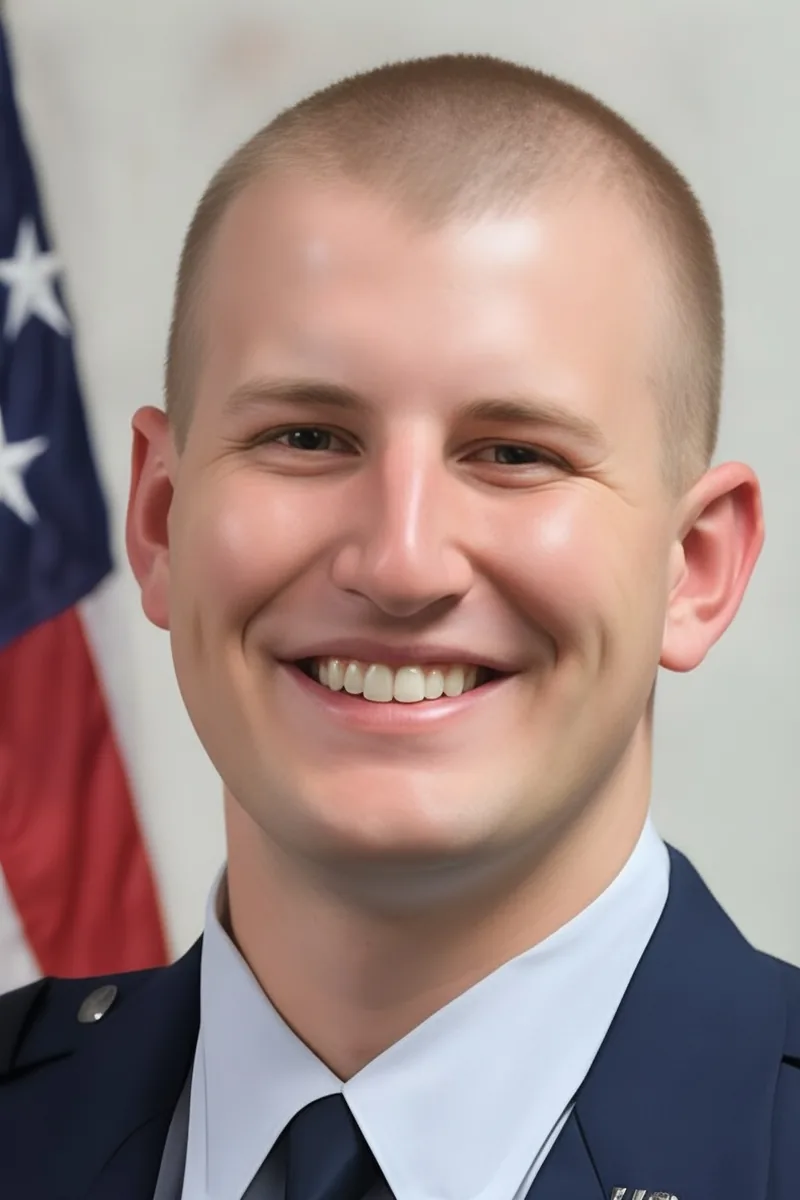
Thermodynamics, quantum mechanics, and kinetics all collide in physical chemistry, and the math intensity alone can be overwhelming. As a chemistry major at TCU who's worked through p-chem coursework firsthand, Nathan breaks down derivations — partition functions, the Schrödinger equation, phase diagrams — into manageable logical steps. He connects the heavy math back to the physical meaning so equations stop feeling arbitrary.
Scoring in the 98th percentile on the MCAT required Nishant to internalize the thermodynamic and kinetic reasoning that p-chem makes rigorous — enthalpy diagrams, equilibrium constants, and rate law derivations all showed up under intense time pressure before he encountered them in their full mathematical form as a medical student at Case Western. He teaches a physics TA's instinct for applied problem-solving to the calculus-dense material, breaking a topic like a Maxwell relation or a phase diagram into the physical question it's actually answering.
Nicholas studied biology with enough chemistry and physics depth to encounter the thermodynamic and kinetic frameworks that p-chem builds on — enzyme energetics, gas laws, equilibrium — before they get buried under pages of calculus. His 33 ACT reflects strong quantitative reasoning, and he leans on that cross-disciplinary perspective to clarify why a concept like enthalpy or a phase transition behaves the way it does at the molecular level, not just how to push through the derivation.
Two chemistry degrees — bachelor's and master's — mean Chad has gone through the full p-chem gauntlet himself, from quantum mechanical models and statistical thermodynamics to the calculus-dense derivations of chemical kinetics. He teaches the subject by zeroing in on where the math and the molecular picture disconnect for each student, whether that's a tricky partial derivative in a thermodynamic identity or the logic behind a partition function. Rated 4.8 by students.
Cornell's chemical engineering curriculum puts you through p-chem at an intense pace — Rahul graduated magna cum laude, which means he didn't just survive thermodynamics, quantum mechanics, and kinetics but internalized the reasoning behind each derivation. He pushes past rote symbol manipulation to make sure students can articulate why a particular state function applies or what a phase boundary physically represents. Rated 4.9 by students.
A physics degree gives Cory something many p-chem tutors lack — native comfort with the quantum mechanics and statistical mechanics that chemistry students often encounter for the first time in this course. He treats topics like wave functions, partition functions, and thermodynamic state variables as extensions of the physics he already thinks in, then builds the chemical context around them. Rated 4.9 by students.
As an MD/PhD student at Northwestern with a chemistry PhD focus and a B.S. in Chemical Science from Michigan, Austin has gone deep on the thermodynamics and quantum mechanics that form p-chem's backbone — and he's still actively working through advanced coursework in these areas. He tackles derivations by building chemical intuition first, so when a student hits a wall at, say, a Legendre transform connecting internal energy to Gibbs free energy, the math follows naturally from understanding what each variable physically represents.
Cornell's biological sciences curriculum put Alec through rigorous quantitative coursework, but it was his TA experience in general chemistry — running problem-solving sessions where students had to wrestle with energy, equilibrium, and rate laws — that sharpened his instinct for where p-chem concepts start to blur. He teaches the subject by slowing down at the exact calculus step where the physical meaning tends to disappear, whether that's setting up a thermodynamic cycle or interpreting what a rate constant actually tells you about molecular collisions. Rated 4.8 by students.
Enric holds a PhD in Chemistry, which means p-chem wasn't just a course requirement — it was the foundation his entire research career was built on, from quantum mechanical modeling to thermodynamic analysis at the graduate level. He teaches the subject by slowing down at the exact calculus step where a derivation goes from followable to opaque, rebuilding the physical reasoning behind each manipulation before moving forward. Rated 5.0 by students.
Garrett's biology degree means he already thinks in terms of systems — enzyme kinetics, membrane potentials, metabolic energy flow — which gives him a concrete anchor for the abstract math that makes p-chem so intimidating. He teaches thermodynamic and kinetic concepts by connecting derivations to the biological and chemical phenomena they describe, so something like a Gibbs free energy calculation feels like a tool rather than an exercise in symbol-pushing.
Differential equations, calculus, and organic chemistry all sit in Nate's regular teaching rotation, which means he's constantly moving between the math and the chemistry that p-chem smashes together — and he knows exactly where students lose the thread between the two. He zeroes in on building intuition around concepts like chemical potential and equilibrium thermodynamics by tying each derivation back to the reaction behavior students already recognize from general and organic chemistry. Rated 5.0 by students.
Medical school at the Medical College of Wisconsin means Abrahim encounters p-chem's core concepts daily — reaction kinetics in pharmacology, thermodynamic energy balances in physiology, and the quantum mechanical principles behind spectroscopic diagnostics. His UCLA biology degree and 34 ACT demonstrate the mathematical fluency needed to work through derivations involving state functions, equilibrium constants, and entropy calculations without losing sight of what the chemistry actually describes. Rated 5.0 by students.
Testimonials
Because the right Physical Chemistry tutor makes all the difference.
Average Session Rating – Based on 3.4M Learner Ratings
Nearby Physical Chemistry Tutors
Other Nashville Tutors
Related Science Tutors in Nashville
Frequently Asked Questions
Physical Chemistry bridges chemistry and physics by studying the physical properties of molecules and how chemical reactions occur at the atomic level. It's challenging because it requires understanding abstract concepts like thermodynamics, kinetics, and quantum mechanics—often simultaneously—while also applying mathematical skills to solve complex problems. Many students struggle with visualizing molecular behavior and connecting equations to real-world chemical phenomena.
Students typically find thermodynamics (entropy, enthalpy, Gibbs free energy), equilibrium calculations, and quantum mechanics most difficult. Balancing equations, unit conversions, and understanding reaction kinetics also trip up many learners. The challenge isn't just memorizing formulas—it's developing the conceptual understanding to apply them to unfamiliar problems, which requires guided practice and clear explanations of underlying principles.
Personalized 1-on-1 instruction allows tutors to identify exactly where your understanding breaks down—whether it's the math, the concept, or the connection between them—and address those gaps directly. Tutors can use visualizations, work through practice problems at your pace, and explain why equations matter, transforming abstract theory into concrete understanding. This targeted approach is especially valuable in Physical Chemistry, where misconceptions in one area often cascade into problems elsewhere.
Your first session is about building a foundation for success. A tutor will assess your current understanding of Physical Chemistry concepts, identify specific challenges you're facing, and learn about your learning style and goals. From there, they'll create a personalized plan that might include reviewing foundational concepts, working through problem-solving strategies, or diving into your current coursework—whatever helps you move forward most effectively.
Yes. Tutors can help you understand the theory behind lab procedures, predict expected outcomes, and develop the scientific reasoning skills you need to analyze results. Whether you're struggling with data interpretation, understanding experimental design, or connecting lab observations to theoretical concepts, personalized instruction helps you approach labs with confidence and deeper comprehension of what you're actually measuring.
Ideally, starting several weeks before an exam allows time to build understanding gradually rather than cramming. However, even a few focused sessions can help if you're short on time—tutors can prioritize the highest-impact topics and problem types most likely to appear on your test. The key is consistent practice with feedback, which is where personalized tutoring makes the biggest difference in exam performance.
Varsity Tutors connects you with tutors in Nashville who have deep expertise in Physical Chemistry and experience helping students master challenging concepts. You can specify your needs—whether it's exam prep, lab support, or building foundational understanding—and get matched with someone whose teaching style fits your learning preferences. The process is straightforward, and you can start sessions quickly once you're connected.
Physical Chemistry problems often have multiple steps and require choosing the right approach before diving into calculations. Tutors teach you systematic problem-solving strategies—like identifying what you know, determining what you need to find, and selecting appropriate equations—so you can tackle unfamiliar problems confidently. This skill transfers across topics and exams, making you a stronger independent learner long after tutoring ends.
Let’s find your perfect tutor
Answer a few quick questions. We’ll recommend the right plan and match you with a top 5% tutor.