Award-Winning AP Spanish Language & Culture Tutors
serving El Paso, TX
AP Spanish Language & Culture
Tutors in El Paso
Private 1-on-1 tutoring, weekly live classes for academic support, test prep & enrichment, practice tests and diagnostics, and more to elevate grades and test scores.
Based on 3.4M Learner Ratings
UniversitiesSchools & Universities
DeliveredHours Delivered
ProficiencyGrowth in Proficiency
Who needs tutoring?
No obligation. Takes ~1 minute.

A cognitive sciences degree with a minor in Spanish means Adam approaches the language analytically — he treats subjunctive triggers and register shifts as pattern-recognition problems, which clicks for students who struggle with the "just memorize it" approach to grammar. His 34 ACT confirms strong reading and reasoning skills that translate directly into coaching the AP exam's interpretive reading and audio tasks, where extracting meaning from authentic Spanish sources under time pressure is half the battle.
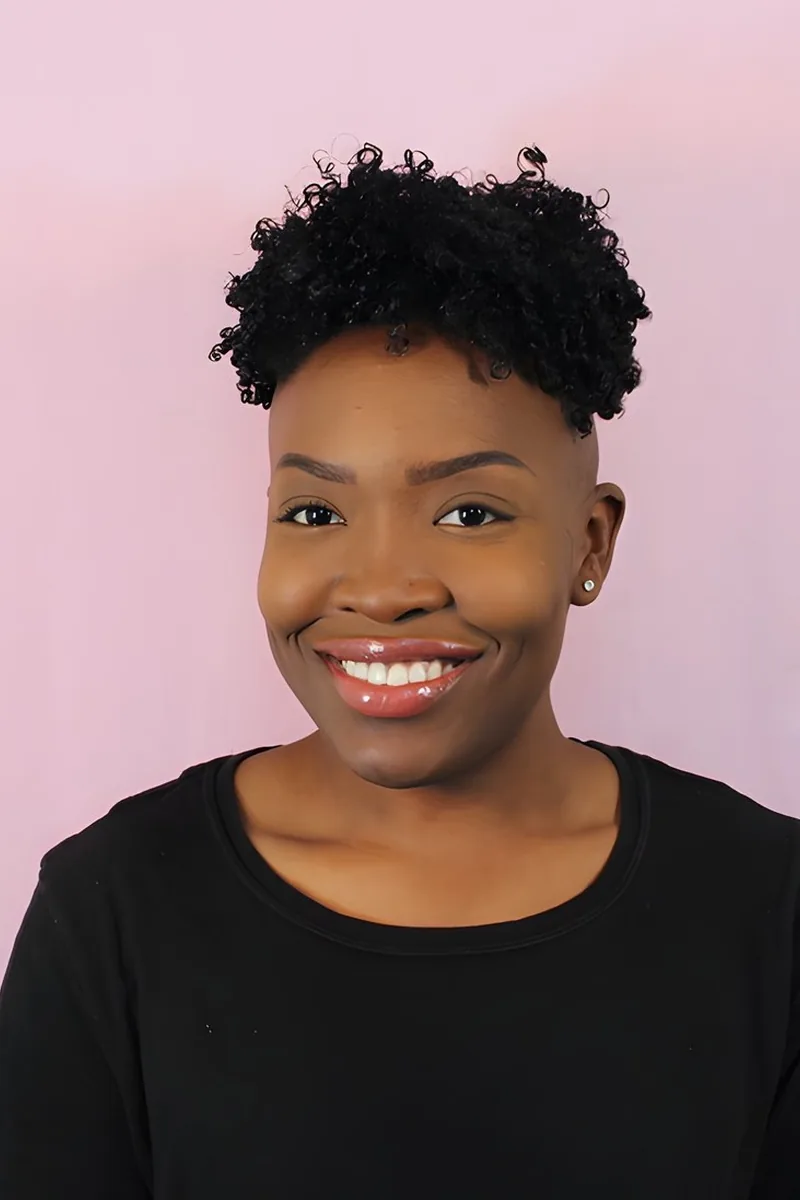
Iselee earned her bachelor's degree in Spanish from Loyola Marymount University, which means the AP exam's demand for formal written register and nuanced cultural knowledge sits squarely in her academic wheelhouse. Her current graduate work in digital communication adds a layer of rhetorical awareness — understanding how audiences process arguments — that she applies to coaching the timed persuasive essay, where students must synthesize Spanish-language sources into a coherent, register-appropriate response. Rated 4.8 by students.
Fluent in Spanish after living in a Spanish-speaking country, Lisanne brings real-world command of the language to AP Spanish prep — not just textbook knowledge. She tackles the exam's trickiest components, like the persuasive essay and cultural comparison, by teaching students to think and organize ideas directly in Spanish. Her experience tutoring every level from Spanish 1 through AP means she quickly identifies the grammar gaps holding a student back from a top score.
Amy's PhD in Spanish Linguistics means she doesn't just know the language — she's studied how it works at the structural level, from phonological patterns to syntactic variation across dialects. That depth shows up most in the exam's interpretive listening section, where recognizing regional pronunciation shifts and parsing rapid connected speech separates students who truly comprehend from those guessing at context. She also teaches every Spanish level from 1 through AP, so she can quickly identify which grammatical gaps need closing before a student tackles timed writing in formal register.
Succeeding on the AP Spanish Language & Culture exam means toggling between interpretive listening, persuasive writing, and spontaneous conversation — often within the same practice session. Ysatris tackles each mode of communication with targeted strategies, from decoding rapid audio sources to structuring argumentative essays with proper transition phrases and cultural references that earn top scores.
The AP Spanish exam's persuasive essay asks students to synthesize sources and argue in formal register — skills that Miguel's English degree sharpened on the analytical side, even though Spanish isn't his core teaching area. His computer science training adds a systematic, pattern-based approach to grammar structures like subjunctive triggers and pronoun placement that can make those rules feel less arbitrary. Rated 4.9 by students.
Pursuing a double major in Spanish and English with a Creative Writing concentration at the University of North Texas, Alexandra lives inside language structure daily — parsing how words build meaning across two languages at once. That dual-language immersion sharpens her ear for the register shifts and idiomatic precision the AP exam's interpersonal speaking and persuasive essay tasks demand. Rated 4.9 by students.
Scoring well on the AP Spanish exam means toggling between formal writing, spontaneous speaking, and rapid listening comprehension — three very different skills. Ana, who tutors across multiple levels of Spanish, tailors her sessions to whichever mode a student struggles with most, whether that's constructing a persuasive email with subjunctive forms or responding fluidly in the simulated conversation task. She keeps sessions largely in Spanish to build the reflexive fluency the exam demands.
Living and traveling in Ecuador, Panama, and Spain gave Sophie the immersive language experience that AP Spanish Language & Culture demands — from navigating regional dialects to understanding cultural contexts that show up in the exam's audio sources and reading passages. She breaks down the interpersonal and presentational speaking tasks so students know how to structure responses under timed conditions.
Succeeding on the AP Spanish Language & Culture exam means toggling between interpretive listening, persuasive writing, and spontaneous conversation — often within the same practice session. Brianna's Spanish experience and her structured approach to exam prep make her effective at breaking down each task type, from audio source synthesis to cultural comparison essays.
Scoring well on AP Spanish Language & Culture means toggling between interpersonal, interpretive, and presentational communication — often under time pressure. Kiara tackles each mode separately, drilling audio-source synthesis for the persuasive essay and sharpening the cultural comparison skills that earn top marks on the free-response section. Her approach turns the exam's six themes into a framework students can actually navigate.
Scoring well on AP Spanish Language & Culture means toggling between interpersonal conversation, presentational writing, and rapid-fire audio sources — often in the same exam session. Meagan majored in Spanish at the undergraduate level and has taught ESL, so she understands language acquisition from both directions and can pinpoint where a student's comprehension or production breaks down.
Medical school in Chicago keeps Caroline juggling multiple languages daily — she double-majored in Chinese at Notre Dame while also building fluency in Spanish through her coursework up to Spanish 3. That multilingual wiring means she approaches AP Spanish prep by connecting how languages share structural logic, breaking down things like conditional chains and register shifts through cross-linguistic patterns rather than rote drilling. Rated 5.0 by students.
Richard earned the highest scores on the AP Spanish exam with listening after double-majoring in Spanish at Emory and studying in Spain. He tackles the presentational writing and interpersonal speaking tasks by drilling the idiomatic expressions, subjunctive constructions, and cultural references that push students from competent into the 4–5 scoring range.
This isn't Katie's core subject — her degrees are in biomedical and biological engineering from Cornell, and her teaching load leans heavily toward STEM, history, and English. That said, her engineering training built the kind of systematic, pattern-based thinking that can help break down Spanish grammar structures and exam strategies for students who need a more analytical approach to language learning.
Tackling AP Spanish Language & Culture means producing polished interpersonal and presentational writing under timed conditions. Lillian breaks down the persuasive essay and email reply tasks by drilling subjunctive triggers, transition phrases, and the cultural comparison framework the rubric specifically rewards.
Ryan's American Studies background means he already thinks in terms of cross-cultural comparison — a skill that maps directly onto the AP Spanish exam's cultural comparison task, where students need to connect practices across communities with nuance and specificity. He teaches Spanish from level 2 through AP and conversational Spanish, so he bridges the gap between structured grammar work and the kind of spontaneous communication the interpersonal speaking section rewards.
Success on the AP Spanish Language exam comes down to thinking in Spanish — not translating from English in your head. Iris builds this fluency by connecting language practice to real cultural content: interpreting audio sources, writing persuasive emails, and constructing spoken presentations on topics like science, community, and global challenges. Her background in anthropology also gives her a genuine comfort with the cultural comparison tasks the exam emphasizes.
Growing up in Miami gave Caitlin daily exposure to Spanish in real-world contexts — the kind of authentic, unscripted language that mirrors what the AP exam throws at students in its interpretive listening and reading sections. She teaches Spanish 1 through 4 and pairs that progression with her own experience navigating Spanish across levels, so she knows exactly which grammar gaps (subjunctive triggers, formal vs. informal register) trip students up on timed free-response tasks. Rated 5.0 by students.
Sarah's English degree and SAT score of 1500 mean she's already wired for the kind of timed, source-based writing the AP Spanish exam throws at students in the persuasive essay — structuring an argument, synthesizing texts, and maintaining formal register under pressure. She teaches Spanish from level 1 through 4 and conversational Spanish, so she can spot whether a student's real bottleneck is subjunctive grammar or the rhetorical organization that separates a passing score from a strong one.
Gus teaches Spanish across all four levels plus conversational Spanish, and his History degree means he's already wired to think about how cultural contexts shape language — a skill that directly feeds the AP exam's cultural comparison free-response. He approaches the interpersonal speaking and listening tasks by turning grammar patterns into narrative logic, making subjunctive triggers and register shifts stick the way a good story does rather than a conjugation chart.
Molly holds degrees in Spanish from Columbia University, which gives her the academic grounding in grammar, composition, and literary analysis that AP Spanish Language & Culture's written and spoken tasks demand. Her classroom teaching experience across multiple grade levels means she quickly spots the structural weaknesses — verb tense confusion, weak transitions, underdeveloped cultural comparisons — that keep students from reaching a 4 or 5. Rated 5.0 by students.
The AP Spanish Language & Culture exam tests real communicative ability: interpersonal writing, persuasive essays that synthesize sources, and spoken presentational responses under time pressure. With a bachelor's degree in Spanish, Phyllis tackles each of these task types directly, sharpening students' command of subjunctive usage, transitional phrases, and the cultural comparisons the exam rewards.
Testimonials
Because the right AP Spanish Language & Culture tutor makes all the difference.
Average Session Rating – Based on 3.4M Learner Ratings
Nearby AP Spanish Language & Culture Tutors
Other El Paso Tutors
Related Languages Tutors in El Paso
Frequently Asked Questions
The AP Spanish Language & Culture exam tests your ability to communicate in Spanish across three modes: interpersonal (conversations), interpretive (reading and listening comprehension), and presentational (speaking and writing). The exam includes multiple-choice sections on reading and listening, plus free-response sections where you'll write emails, essays, and give spoken responses. Success requires strong vocabulary, grammar accuracy, and the ability to understand authentic Spanish from various regions and contexts.
Score improvement depends on your starting point and how consistently you engage with tutoring. Students who work with tutors to target specific weak areas—like verb conjugations, subjunctive mood, or listening comprehension—typically see meaningful gains. The key is identifying exactly where you're losing points (reading speed, accent recognition, essay organization) and practicing those skills repeatedly. Most students benefit from starting tutoring at least 3-4 months before the exam to allow time for skill-building and practice test cycles.
Many students struggle with the subjunctive mood and when to use it correctly, as well as maintaining fluency under timed pressure during speaking sections. The listening section can be challenging because you hear authentic Spanish at natural speed from speakers with different accents and regional variations. Time management is another common issue—students often spend too long on reading passages and rush through the free-response sections. A tutor can help you develop strategies to tackle each section efficiently and build confidence with unfamiliar accents and vocabulary.
Ideally, start tutoring 4-6 months before the exam in May to give yourself time for skill-building, practice tests, and targeted review. If you're starting closer to the exam date, even 8-10 weeks of consistent tutoring can help you identify weak areas and develop test-taking strategies. The frequency matters too—meeting weekly or bi-weekly with a tutor allows you to build momentum and apply feedback between sessions. Your tutor can create a customized timeline based on your current proficiency level and specific goals.
Speaking anxiety is common, especially when you're being recorded for the interpersonal and presentational tasks. Tutors help build confidence by having you practice speaking in low-pressure environments repeatedly—the more you speak, the more natural it becomes. You'll work through the actual exam format, learn strategies for staying calm when you don't know a word (using circumlocution, for example), and get feedback on pronunciation and pacing. Regular practice with a tutor also helps you realize you don't need to be perfect; the exam values communication and effort, not flawless speech.
Look for tutors with strong Spanish proficiency (ideally native or near-native speakers) who understand the AP exam format and have experience helping students prepare. They should be able to assess your specific weaknesses—whether that's grammar, listening comprehension, or writing organization—and create a focused study plan. It's also helpful if they're familiar with test-taking strategies and can provide authentic practice materials and feedback on your free-response sections. Varsity Tutors connects you with tutors who have expertise in AP Spanish and can tailor instruction to your learning style.
Practice tests are essential because they help you understand the exam's pacing, format, and difficulty level while identifying your specific weak areas. Taking full-length practice tests under timed conditions lets you experience the pressure of the real exam and develop strategies for managing your time across all sections. Your tutor can review your practice test results with you, highlight patterns in your mistakes, and help you target those areas in future sessions. Most students benefit from taking 3-4 full practice tests during their preparation period, with tutoring sessions focused on addressing the gaps each test reveals.
El Paso has a rich Spanish-speaking community and many schools offering AP Spanish courses, which means you have access to native speakers and authentic cultural resources. Beyond classroom instruction, personalized tutoring helps you move at your own pace and focus on your individual challenges. Varsity Tutors connects you with expert tutors for students in El Paso who understand the AP exam requirements and can provide targeted support alongside your school's curriculum, giving you the personalized attention that complements what you're learning in class.
Let’s find your perfect tutor
Answer a few quick questions. We’ll recommend the right plan and match you with a top 5% tutor.