Award-Winning AP Calculus BC Tutors
serving Fresno, CA
AP Calculus BC
Tutors in Fresno
Private 1-on-1 tutoring, weekly live classes for academic support, test prep & enrichment, practice tests and diagnostics, and more to elevate grades and test scores.
Based on 3.4M Learner Ratings
UniversitiesSchools & Universities
DeliveredHours Delivered
ProficiencyGrowth in Proficiency
Who needs tutoring?
No obligation. Takes ~1 minute.

Double-majoring in computer science and English is an unusual combination, but Milan's CS coursework means he's actively working through the series, integration techniques, and convergence reasoning that BC piles on top of AB — and his English training makes him unusually precise at explaining the logic behind each step. He breaks down topics like Taylor polynomial construction by building up from the derivative concepts students already trust, so the BC-specific material feels earned rather than arbitrary. His 1540 SAT speaks to the cross-disciplinary rigor he brings to problem-solving.
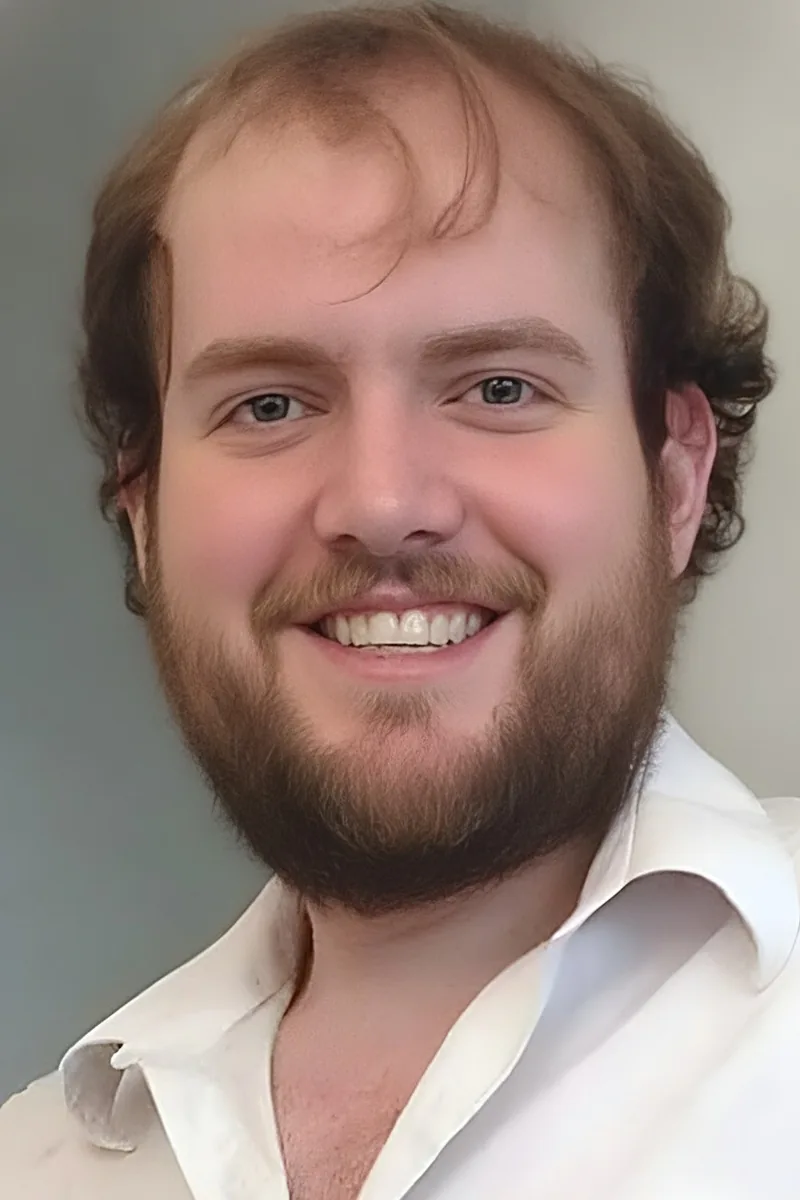
Most BC tutors come from engineering or STEM research — Michael's path through NYU's drama program is unusual, but his 1500 SAT and 35 ACT reflect genuine mathematical chops, and his performance background means he's unusually good at reading when a student's nod actually means confusion. He breaks down the BC-specific jump into series convergence and Taylor polynomial construction by treating each new tool as a logical argument that has to hold together, not just a formula to memorize.
An English and Environmental Studies major might not scream calculus, but Ari's 1590 SAT — nearly a perfect score on the math section — signals serious quantitative chops beneath the humanities surface. He teaches BC topics like series convergence and parametric equations by emphasizing the underlying logic and structure, an approach that clicks especially well for students who need to understand the 'why' before the 'how.' Rated 4.9 by students.
I'm an affable chemistry-loving person whose joy come from delivering knowledge :D
Harvey Mudd's engineering curriculum throws you into BC-level calculus from day one — Daniel was computing improper integrals and building series approximations in his physics and engineering courses while simultaneously learning the theory behind them in math classes. That dual exposure means he teaches topics like convergence tests and Taylor polynomial error bounds with a concrete sense of what they're actually for, not just how to get through the exam.
BC Calculus layers convergence tests, parametric equations, and polar curves on top of an already demanding AB foundation, and most students struggle because they never fully locked in the earlier material. Alain approaches series and sequences by building intuition for why a ratio test works before drilling the mechanics. His math minor at UCLA took him well beyond BC-level content, so he can contextualize even the trickiest topics like Taylor series error bounds.
Convergence tests, parametric equations, and Taylor series expansions are where BC separates from AB — and where many students start to feel lost. Rithi breaks these topics into intuitive steps, connecting new concepts back to the foundational calculus reasoning students already have. Her 1550 SAT and deep STEM background reflect the kind of mathematical fluency that makes those connections clear.
Scoring a 36 on the ACT while majoring in chemistry at MIT means Nicholas lives in the overlap where rigorous math meets scientific application — and BC Calculus sits right at that intersection. He's especially good at breaking down series convergence and integration techniques by grounding them in the kind of approximation problems he encounters in physical chemistry coursework, so the logic behind a ratio test or a Taylor expansion feels earned rather than arbitrary. Rated 5.0 by students.
Molecular biology might seem distant from BC Calculus, but Agustin's 1560 SAT and deep comfort with competition math mean he's built the kind of rigorous problem-solving instincts that make topics like convergence tests and parametric derivatives tractable rather than terrifying. He breaks down the logic behind each technique — why the ratio test actually tells you something, how polar area integrals connect back to Riemann sums — so the BC extension from AB feels like a natural next step. Rated 4.5 by students.
Most people who breeze through math can't explain it — Daniel learned BC Calculus by grinding through the logic of every convergence test, every parametric derivative, every series expansion until it genuinely made sense, and that's exactly how he teaches it. As an applied mathematics undergrad, he's currently using these tools in upper-level coursework, so he knows which BC concepts tend to feel arbitrary and how to make the reasoning behind them stick.
Biomedical engineering eats BC Calculus for breakfast — Spencer's coursework has him building models with differential equations, approximating functions with series, and integrating across complex domains before he even opens his calc textbook. That real-time immersion means he can walk through something like the Lagrange error bound or a tricky polar area setup with the fluency of someone who just used it in a lab report, not someone dusting off old notes. His 1550 SAT and 35 ACT speak to the test-taking precision he pairs with that technical depth.
Sanjana doesn't just know AP Calculus BC — she teaches it, serving as a Course Assistant for Harvard's introductory calculus sequence. That means she's seen exactly where students stumble on Taylor series, parametric equations, and convergence tests, and she knows how to untangle those concepts in real time. Rated 5.0 by students.
BC Calculus layers convergence tests, parametric equations, and polar curves on top of an already demanding AB foundation, and keeping all of it organized is half the battle. Tessa's approach is to unpack each new topic by tying it back to core ideas students already understand — showing, for instance, how Taylor series are really just an extension of local linearity. She's a math major at Yale with a 4.9 client rating.
Scoring a 36 on the ACT while studying economics at Vanderbilt means Kerr lives comfortably in the quantitative reasoning that BC Calculus demands — and his computer science focus sharpens the algorithmic thinking behind recursive sequences and series convergence. He teaches BC's trickiest leaps, like moving from basic integration to constructing Taylor polynomials, by grounding each new idea in the conceptual logic rather than just the procedural steps. Rated 4.9 by students.
BC Calculus throws students into convergence tests, parametric equations, and polar curves on top of an already demanding AB foundation — it's a lot to hold in your head at once. Corrina's mechanical engineering degree meant living in multivariable and differential equations daily, so she teaches series and integration techniques with the fluency of someone who actually uses them. Rated 4.7 by students.
Duke's computer science program required Michelle to live inside the calculus that powers algorithm analysis — convergence behavior, recursive sequences, and the kind of series manipulation that BC students encounter when Taylor polynomials and ratio tests suddenly demand more than AB intuition. She breaks down those topics by tracing each one back to the underlying limit and derivative logic, so the leap to BC feels like a natural next step rather than a wall. Holds a 5.0 rating from students.
BC Calculus throws students into deep water fast — Taylor and Maclaurin series, parametric equations, and convergence tests all pile up in a single semester. Rahi's applied mathematics engineering background means he can unpack these topics by connecting them to the real-world modeling problems they were designed to solve. He builds each concept from its AB foundation so students see how the BC extensions actually work.
Biology majors at WashU don't just memorize — Laura's upper-level coursework in evolutionary modeling and physical chemistry means she's actively using integration techniques, differential equations, and series approximations to solve problems outside a math classroom. That cross-disciplinary fluency is especially useful for BC's trickiest conceptual leap: understanding what a Taylor polynomial actually approximates and why specific convergence tests apply in specific situations. Rated 5.0 by students.
Testimonials
Because the right AP Calculus BC tutor makes all the difference.
Average Session Rating – Based on 3.4M Learner Ratings
Practice AP Calculus BC
Free practice tests, flashcards, and AI tutoring for AP Calculus BC
Nearby AP Calculus BC Tutors
Other Fresno Tutors
Related Math Tutors in Fresno
Frequently Asked Questions
AP Calculus BC covers all topics from AP Calculus AB plus additional advanced material. The full curriculum includes limits, derivatives, applications of derivatives, integration, differential equations, sequences, series, and parametric equations. The BC exam tests your ability to work with these concepts both analytically and graphically, so you'll need to master problem-solving across multiple representations.
Many students struggle with the transition from algebra to calculus thinking—understanding why derivatives and integrals work, not just how to compute them. Series and sequences, which are unique to BC, trip up students who haven't built strong foundational skills. The exam also requires fast, accurate work under time pressure, so pacing and recognizing when to use different techniques are critical skills to develop.
Score improvement depends on your starting point and how consistently you work. Students who get personalized 1-on-1 instruction focused on their specific weak areas—whether that's integration techniques, series convergence, or test-taking strategy—typically see meaningful gains. Many students improve by 1-2 score points, though the exact improvement varies based on your baseline, study habits, and time invested before the exam.
Practice tests are essential for AP Calculus BC success. They help you identify which topics need more work, build stamina for the 3-hour exam, and get comfortable with the question formats and pacing. Taking full-length practice tests under timed conditions, then reviewing every mistake carefully, is one of the most effective ways to prepare. Tutors can help you analyze your practice test results to target your studying efficiently.
Your first session is about understanding where you stand. Expect to discuss your current grade, which topics feel strongest and weakest, and your AP exam timeline. Many tutors will work through a problem or two with you to see your thinking process and identify gaps. This helps create a personalized study plan focused on your specific needs rather than generic test prep.
The AP Calculus BC exam has two sections: 45 minutes for 30 multiple-choice questions and 90 minutes for 6 free-response questions. A common strategy is spending about 1.5 minutes per multiple-choice question, which leaves time to revisit difficult ones. For free-response, allocate roughly 15 minutes per question and tackle easier ones first to build confidence. Tutors can help you practice pacing strategies so timing becomes automatic on test day.
Varsity Tutors connects you with expert tutors experienced in AP Calculus BC who understand the curriculum and exam format. When you get matched with a tutor, you can discuss your schedule, learning style, and specific goals. Tutors work flexibly with your needs, whether you need help with a single tough concept or comprehensive exam prep over several months.
Series and sequences are unique to BC and require thinking about infinity and convergence in ways that feel abstract to many students. The variety of convergence tests (ratio test, integral test, alternating series test) can feel overwhelming without a clear strategy for when to use each one. Working through targeted practice with a tutor helps you build intuition for recognizing which test applies and why, rather than just memorizing formulas.
Let’s find your perfect tutor
Answer a few quick questions. We’ll recommend the right plan and match you with a top 5% tutor.