Award-Winning AP Statistics Tutors
serving Sacramento, CA
AP Statistics
Tutors in Sacramento
Private 1-on-1 tutoring, weekly live classes for academic support, test prep & enrichment, practice tests and diagnostics, and more to elevate grades and test scores.
Based on 3.4M Learner Ratings
UniversitiesSchools & Universities
DeliveredHours Delivered
ProficiencyGrowth in Proficiency
Who needs tutoring?
No obligation. Takes ~1 minute.
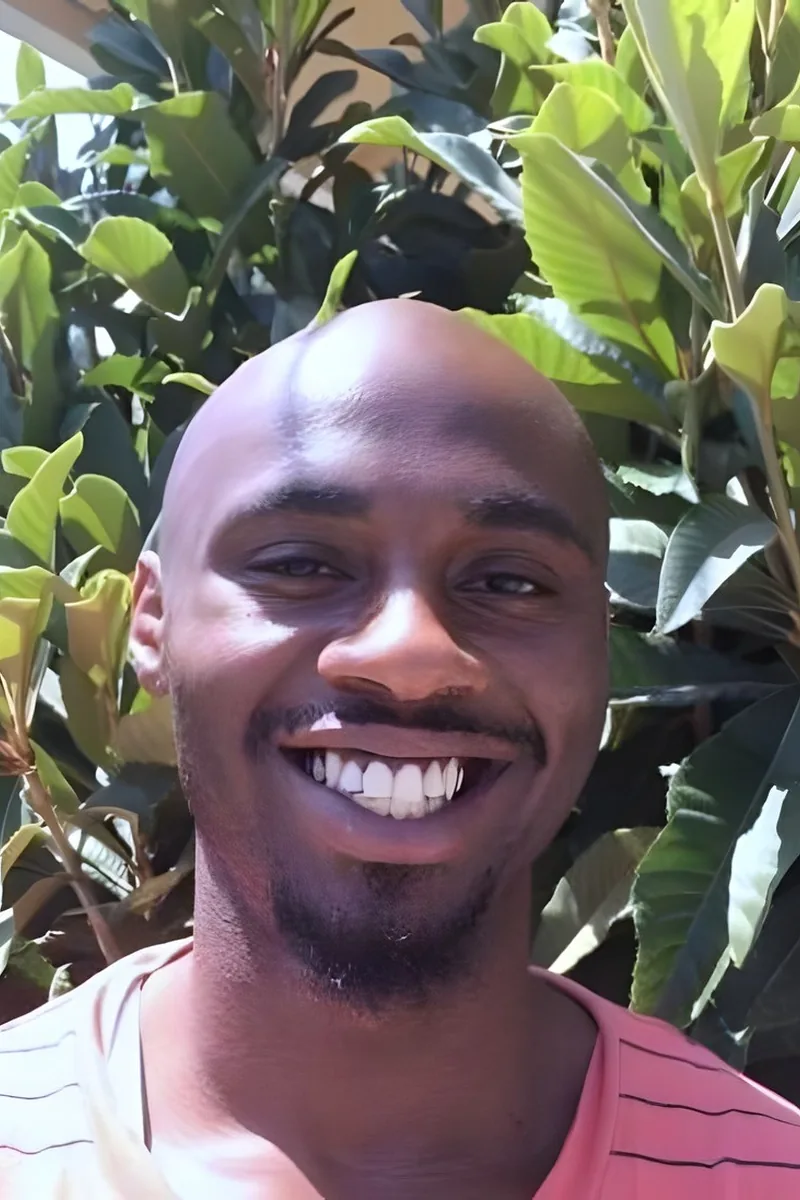
Caltech's economics program is quantitatively rigorous — Brian's coursework meant building econometric models, running hypothesis tests on real datasets, and defending statistical conclusions in ways that mirror exactly what AP Stats free-response questions demand. His dual background in CS and economics gives him a knack for explaining the logic behind choosing between z-procedures and t-procedures, or why independence conditions matter, in terms that click for students who think algorithmically. SAT score of 1580 speaks to the precision he brings to exam strategy.

Business economics at UCLA meant Alain was constantly building and interrogating statistical models — testing whether consumer behavior patterns held up under regression analysis, or whether a pricing strategy's results were just sampling noise. His math minor adds the formal probability backbone that makes topics like binomial and geometric distributions click on a conceptual level, not just a calculator-button level. He's planning to pursue graduate work in mathematical game theory, which is essentially applied probability and strategic inference all the way down.
Biostatistics coursework during her Master's in Biotechnology gave Rithi hands-on experience designing experiments, running statistical tests on biological data, and interpreting whether results actually mean something — which is the exact reasoning cycle AP Stats builds its curriculum around. She's especially sharp on the probability and sampling distribution units, where her neuroscience research background makes concepts like normal approximations and variability in sample means feel concrete rather than abstract. Rated 4.9 by students.
Computational mathematics at Rice means Vinson doesn't just know the formulas behind normal distributions and chi-square tests — he understands the underlying theory well enough to explain why a particular inference procedure works, not just when to use it. That mathematical depth is especially useful for the AP Stats units on sampling distributions and probability, where students with strong computational instincts often struggle to shift into the interpretive, context-driven reasoning the exam actually scores on. Rated 4.8 by students.
Neuroscience research runs on statistics — hypothesis testing, confidence intervals, regression analysis, interpreting p-values from real experimental data. Daniel applies that firsthand lab experience from his work at the Jungers Center for Neuroscience Research to break down AP Statistics concepts in ways that go beyond formula sheets. His biomedical engineering coursework at Rice keeps these tools sharp and current.
Hello! My name is Gabe, and I currently work as a Biostatistician in New York. I hold a Master's degree in Epidemiology from Johns Hopkins and a Bachelor's degree from NYU. Statistics isn't for everyone, but I hope to help students expand their knowledge or gain confidence in using it for a class. I am skilled in R studio for statistical and epidemiological analysis. My goal is to help students perform their best by becoming comfortable with the concepts.
Most AP Stats students come from algebra and calculus courses where there's one right answer — so the shift to interpreting output, justifying assumptions, and writing about uncertainty in plain English catches them off guard. Matthew's dual math and computer science background at Harvard means he's comfortable on both sides of that divide: the formal probability theory underneath and the data-driven reasoning the exam actually grades you on. Rated 4.9 by students.
Data analytics coursework in biomedical and public health analysis means Vishank doesn't just know the AP Stats formulas — he's used them to draw real conclusions from messy health data sets, which is the exact skill the exam's free-response questions are testing. He's especially sharp on the data collection and study design unit, breaking down why randomization matters and how confounding variables sneak into observational studies. Rated 4.9 by students.
Licensed math teacher with a bachelor's in mathematics, Jacob brings the algebraic backbone that makes AP Stats click — he knows exactly when students need a quick refresher on transformations or logarithmic properties to make sense of Normal calculations or linearizing curved data. His classroom experience with Common Core's data and statistics strands means he's already taught the conceptual groundwork that the AP exam builds on, particularly around variability, sampling, and making claims from data. Rated 5.0 by students.
Computational biology at Cornell means Emily lives in statistical analysis — hypothesis testing, regression models, and probability distributions are part of her daily coursework. She breaks down AP Stats concepts like experimental design and inference by connecting them to real datasets, making the logic behind each test click before students ever touch a formula sheet.
Victor's master's in applied mathematics means he's worked through probability theory at a level well beyond what AP Stats requires — and that depth lets him explain *why* the normal model underlies so many inference procedures, not just how to punch z-scores into a calculator. He zeros in on the conditional reasoning behind hypothesis tests and the precise language needed to interpret p-values and confidence intervals, which is where most points are won or lost on the free-response section. Rated 5.0 by students.
As a statistics major at Michigan Tech, Blake lives in the material that AP Stats students are tested on — probability distributions, inference procedures, experimental design, and the logic behind hypothesis testing. He breaks down tricky concepts like Type I and Type II errors or interpreting confidence intervals in context, which are exactly the areas where AP exam free-response questions separate 4s and 5s.
Biology research at Yale means Shreya regularly interprets data — reading regression output, evaluating sample designs, and deciding whether results are statistically significant before drawing conclusions. She brings that same analytical lens to AP Statistics, teaching students how to set up and justify inference procedures the way the free-response section demands. Rated 5.0 by students.
Running experiments in a brain sciences PhD program means Tashina designs studies, collects behavioral data, and determines whether her results hold up under statistical scrutiny — the same cycle of experimental design, data analysis, and inference that AP Stats tests on every free-response question. She's especially sharp on the interpretive side, like articulating why a particular sampling method matters or what a confidence interval actually captures, because her dissertation work requires defending those choices to peer reviewers. Rated 4.7 by students.
Testimonials
Because the right AP Statistics tutor makes all the difference.
Average Session Rating – Based on 3.4M Learner Ratings
Practice AP Statistics
Free practice tests, flashcards, and AI tutoring for AP Statistics
Nearby AP Statistics Tutors
Other Sacramento Tutors
Related Math Tutors in Sacramento
Frequently Asked Questions
AP Statistics focuses on four main units: exploring data through visualizations and summaries, sampling and experimentation design, probability and random variables, and inference using confidence intervals and hypothesis testing. The exam emphasizes understanding statistical concepts and interpreting real-world data rather than heavy computation. A tutor can help you master each unit's key ideas and practice applying them to the types of problems you'll see on test day.
Score improvement depends on your starting point and consistency with practice. Students who work with a tutor typically see gains by strengthening weak areas—whether that's interpreting confidence intervals, designing experiments, or avoiding common mistakes on free-response questions. Most students benefit from identifying specific gaps early and dedicating focused practice to those topics, which a tutor can guide you through systematically.
Many students struggle with distinguishing between different statistical methods (when to use a t-test vs. chi-square, for example) and interpreting what results actually mean in context. The free-response section also trips up students who know the concepts but rush through explanations or forget to connect their calculations back to the question. Tutors often focus on building confidence with these interpretation skills and teaching you how to structure clear, complete answers.
Time management is critical—the multiple-choice section (90 minutes, 40 questions) requires you to work efficiently without sacrificing accuracy, while the free-response section (90 minutes, 6 questions) demands thorough explanations. Effective strategies include reading questions carefully to identify what's being asked, showing all work and reasoning (even if your final answer is wrong, you can earn partial credit), and practicing with released exams to get comfortable with the format and pacing. A tutor can help you develop a personalized approach based on your strengths and test-taking habits.
Practice tests are essential—they help you identify weak topics, build stamina for the full 3-hour exam, and get comfortable with question formats and timing. Taking full-length practice tests under timed conditions is far more valuable than studying notes alone. A tutor can review your practice test results with you, pinpoint exactly where you're losing points, and create a targeted study plan to address those gaps before test day.
Ideally, you'll begin focused exam prep 2-3 months before the test in May, though this depends on how well you're keeping up in class. If you're already strong in the course, lighter practice and review may be enough. If you're struggling with concepts or want to boost your score, starting earlier gives you time to work through difficult topics without cramming. Varsity Tutors connects you with expert tutors who can assess where you stand and create a realistic prep timeline tailored to your needs.
Look for tutors with strong statistics knowledge, experience teaching AP Statistics specifically, and familiarity with the exam format and scoring rubric. They should be able to explain concepts clearly, help you understand why certain methods are used, and give you feedback on free-response answers that mirrors how the AP graders evaluate them. Varsity Tutors connects you with expert tutors in Sacramento who have proven success helping students master AP Statistics.
Your first session is typically a diagnostic—the tutor will assess your current understanding of key AP Statistics topics, identify your strongest and weakest areas, and learn about your goals (score target, timeline, specific challenges). This helps them create a personalized study plan focused on what will have the biggest impact on your exam performance. You'll leave with a clear roadmap and confidence about what to work on next.
Let’s find your perfect tutor
Answer a few quick questions. We’ll recommend the right plan and match you with a top 5% tutor.