Award-Winning AP Statistics Tutors
serving San Francisco, CA
AP Statistics
Tutors in San Francisco
Private 1-on-1 tutoring, weekly live classes for academic support, test prep & enrichment, practice tests and diagnostics, and more to elevate grades and test scores.
Based on 3.4M Learner Ratings
UniversitiesSchools & Universities
DeliveredHours Delivered
ProficiencyGrowth in Proficiency
Who needs tutoring?
No obligation. Takes ~1 minute.
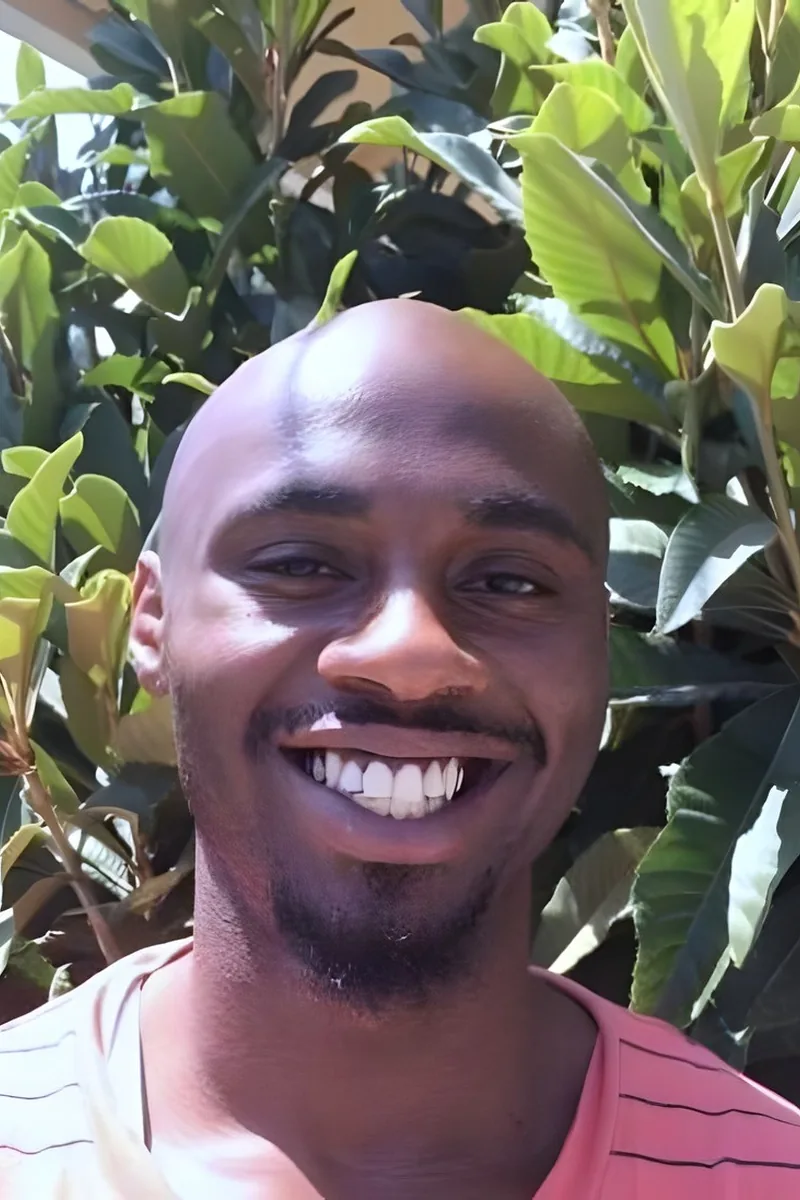
Caltech's economics program is quantitatively rigorous — Brian's coursework meant building econometric models, running hypothesis tests on real datasets, and defending statistical conclusions in ways that mirror exactly what AP Stats free-response questions demand. His dual background in CS and economics gives him a knack for explaining the logic behind choosing between z-procedures and t-procedures, or why independence conditions matter, in terms that click for students who think algorithmically. SAT score of 1580 speaks to the precision he brings to exam strategy.

Business economics at UCLA meant Alain was constantly building and interrogating statistical models — testing whether consumer behavior patterns held up under regression analysis, or whether a pricing strategy's results were just sampling noise. His math minor adds the formal probability backbone that makes topics like binomial and geometric distributions click on a conceptual level, not just a calculator-button level. He's planning to pursue graduate work in mathematical game theory, which is essentially applied probability and strategic inference all the way down.
Philosophy, Politics, and Economics at Penn is a surprisingly stats-adjacent combination — Kevin's coursework requires interpreting polling data, evaluating economic models, and dissecting whether a study's methodology actually supports its conclusions. That training in rigorous argument transfers well to the AP Stats free-response section, where earning full credit depends on explaining *why* a particular inference procedure applies, not just executing calculator steps. His 34 ACT speaks to the kind of precise, test-ready thinking that keeps answers tight under exam pressure.
Cognitive science at Rice meant Adam spent semesters immersed in experimental design, hypothesis testing, and statistical inference — the exact skills AP Statistics demands. He teaches students to think through probability distributions and confidence intervals the way a researcher would, connecting each concept to the logic behind the test rather than just the formula sheet.
With two master's degrees in mathematics education and state teaching certification, Anthony has taught the full arc of the math curriculum — which means he knows exactly where AP Stats diverges from every other math class students have taken. He zeroes in on the reasoning behind inference procedures, teaching students to articulate why they're choosing a particular test and what their conclusion actually means in context, rather than just punching numbers into a calculator. His 34 ACT reflects the kind of disciplined, structured thinking that pays off on the exam's language-heavy free-response questions.
Neuroscience research at Vanderbilt means Blake regularly encounters experimental design, data interpretation, and statistical inference in contexts like brain imaging studies and behavioral experiments — the same reasoning AP Stats tests on every free-response question. He's especially strong on the conceptual side, walking through why a particular test applies and how to communicate conclusions about p-values and confidence intervals with the precision the rubric demands. Rated 5.0 by students.
Data analytics coursework in biomedical and public health analysis means Vishank doesn't just know the AP Stats formulas — he's used them to draw real conclusions from messy health data sets, which is the exact skill the exam's free-response questions are testing. He's especially sharp on the data collection and study design unit, breaking down why randomization matters and how confounding variables sneak into observational studies. Rated 4.9 by students.
A PhD in economics at Yale means Anthony lives in regression output, probability models, and econometric inference daily — and his undergraduate physics and math training is where he first learned to think rigorously about uncertainty and distributions. He's especially sharp on the chi-square and inference units where students need to move past calculator mechanics and articulate the reasoning behind their procedure choice, which is exactly what the free-response rubric scores hardest. Rated 5.0 by students.
Most AP Stats students already know how to crunch numbers — what trips them up is the interpretive writing, like explaining in precise language what a confidence interval captures or why a study's design supports (or undermines) a causal claim. Talia scored a 36 ACT and brings sharp reading comprehension and argumentative writing skills from her political science background, which turns out to be exactly what the free-response section rewards: constructing clear, evidence-based reasoning under time pressure. Rated 5.0 by students.
Biostatistics coursework during her Master's in Biotechnology gave Rithi hands-on experience designing experiments, running statistical tests on biological data, and interpreting whether results actually mean something — which is the exact reasoning cycle AP Stats builds its curriculum around. She's especially sharp on the probability and sampling distribution units, where her neuroscience research background makes concepts like normal approximations and variability in sample means feel concrete rather than abstract. Rated 4.9 by students.
Cognitive science trains you to think about how people reason under uncertainty — which is surprisingly close to what AP Stats actually tests, from interpreting conditional probabilities to explaining why a particular sampling method can skew results. Kimberly uses that background to teach the mental models behind concepts like normal distributions and inference, so the logic clicks before students ever touch a calculator. Rated 5.0 by students.
Victor's master's in applied mathematics means he's worked through probability theory at a level well beyond what AP Stats requires — and that depth lets him explain *why* the normal model underlies so many inference procedures, not just how to punch z-scores into a calculator. He zeros in on the conditional reasoning behind hypothesis tests and the precise language needed to interpret p-values and confidence intervals, which is where most points are won or lost on the free-response section. Rated 5.0 by students.
Public health research is fundamentally a statistics course in disguise — Kimberly's Masters work at Columbia involves reading epidemiological studies built on sampling design, confidence intervals, and hypothesis testing, so she can ground AP Stats concepts in real research questions about why a particular study's conclusions hold up or fall apart. She's especially sharp on the inference and study design units, where her psychology background adds a second layer of understanding around confounding variables and observational versus experimental distinctions that the free-response section loves to test.
A physics PhD requires living inside probability distributions, error analysis, and hypothesis testing — Jonathan has spent years determining whether experimental results are statistically significant or just noise, which is the exact reasoning AP Stats builds its entire free-response section around. He unpacks the logic behind confidence intervals and chi-square tests by grounding them in real data scenarios, making the interpretive leaps feel intuitive rather than formulaic. Rated 5.0 by students.
Testimonials
Because the right AP Statistics tutor makes all the difference.
Average Session Rating – Based on 3.4M Learner Ratings
Practice AP Statistics
Free practice tests, flashcards, and AI tutoring for AP Statistics
Nearby AP Statistics Tutors
Other San Francisco Tutors
Related Math Tutors in San Francisco
Frequently Asked Questions
AP Statistics covers four main units: exploring data (descriptive statistics, visualizations, and distributions), sampling and experimentation (study design, bias, and sampling methods), probability and random variables (probability rules, binomial and normal distributions), and inference (confidence intervals and hypothesis testing). The course emphasizes understanding statistical concepts and interpreting results rather than heavy computation, making it accessible to students with varying math backgrounds.
Score improvement depends on your starting point and commitment level, but students typically see meaningful gains by focusing on weak areas—whether that's understanding probability concepts, mastering hypothesis testing, or improving data interpretation skills. Many students jump from a 2 or 3 to a 4 or 5 by working through practice problems systematically and learning to identify what each question is really asking. Varsity Tutors connects you with expert tutors who can pinpoint your specific gaps and create a targeted study plan.
Students often struggle with distinguishing between different statistical concepts—like confusing correlation with causation, or mixing up Type I and Type II errors. Another major challenge is understanding when to use which test (t-test vs. chi-square, for example) and interpreting what the results actually mean. Time management on the exam is also tricky since the free-response section requires clear explanations of your reasoning, not just calculations. Personalized tutoring helps you build conceptual understanding so these distinctions become intuitive.
On the multiple-choice section, read questions carefully to catch what's actually being asked—AP Statistics questions often include subtle wording that changes the correct answer. For free-response questions, show all your work and explain your reasoning, since partial credit is available even if your final answer is wrong. Practice with actual AP exam questions under timed conditions so you develop a sense of pacing; many students benefit from doing the free-response section first (since it's worth more points) then tackling multiple choice. Tutors can help you refine these strategies through practice tests and targeted feedback.
Most students benefit from starting test prep 2-3 months before the exam if they're already in the course, though this varies based on your comfort level with statistics concepts. A typical study schedule includes reviewing units as you finish them in class, then doing comprehensive review in the final month with full-length practice tests every 1-2 weeks. If you're taking AP Statistics at one of San Francisco's 229 schools, your teacher's pacing will guide your timeline, but working with a tutor can help you stay on track and fill knowledge gaps before they pile up.
Practice tests are essential for AP Statistics because they help you identify exactly which concepts you understand and which ones need more work—whether that's probability, inference, or experimental design. Taking full-length, timed practice tests also builds confidence and helps you develop pacing strategies so you're not rushed on exam day. Ideally, you should complete at least 3-4 full practice tests during your prep, reviewing your mistakes carefully after each one. Tutors can help you analyze your practice test results and create focused study plans based on your specific weak areas.
Look for tutors with strong statistics backgrounds—ideally college-level coursework or professional experience using statistics—who can explain concepts clearly and help you build intuition, not just memorize formulas. Experience with AP exam preparation is valuable since tutors familiar with the exam format know what College Board emphasizes and how to help you avoid common mistakes. Varsity Tutors connects you with expert tutors who understand AP Statistics curriculum and can tailor their approach to your learning style, whether you need conceptual explanations, practice problem walkthroughs, or exam strategy coaching.
Your first session is typically a diagnostic conversation where a tutor learns about your current understanding, identifies specific challenges, and discusses your goals—whether you're aiming for a 3, 4, or 5 on the exam. You might work through a sample problem or two to see how you approach statistics questions and where you need support. From there, the tutor will create a personalized study plan focused on your weak areas, whether that's probability foundations, hypothesis testing, or data interpretation skills.
Let’s find your perfect tutor
Answer a few quick questions. We’ll recommend the right plan and match you with a top 5% tutor.