Award-Winning ACT Science Tutors
serving Aurora, CO
ACT Science
Tutors in Aurora
Private 1-on-1 tutoring, weekly live classes for academic support, test prep & enrichment, practice tests and diagnostics, and more to elevate grades and test scores.
Based on 3.4M Learner Ratings
UniversitiesSchools & Universities
DeliveredHours Delivered
ProficiencyGrowth in Proficiency
Who needs tutoring?
No obligation. Takes ~1 minute.
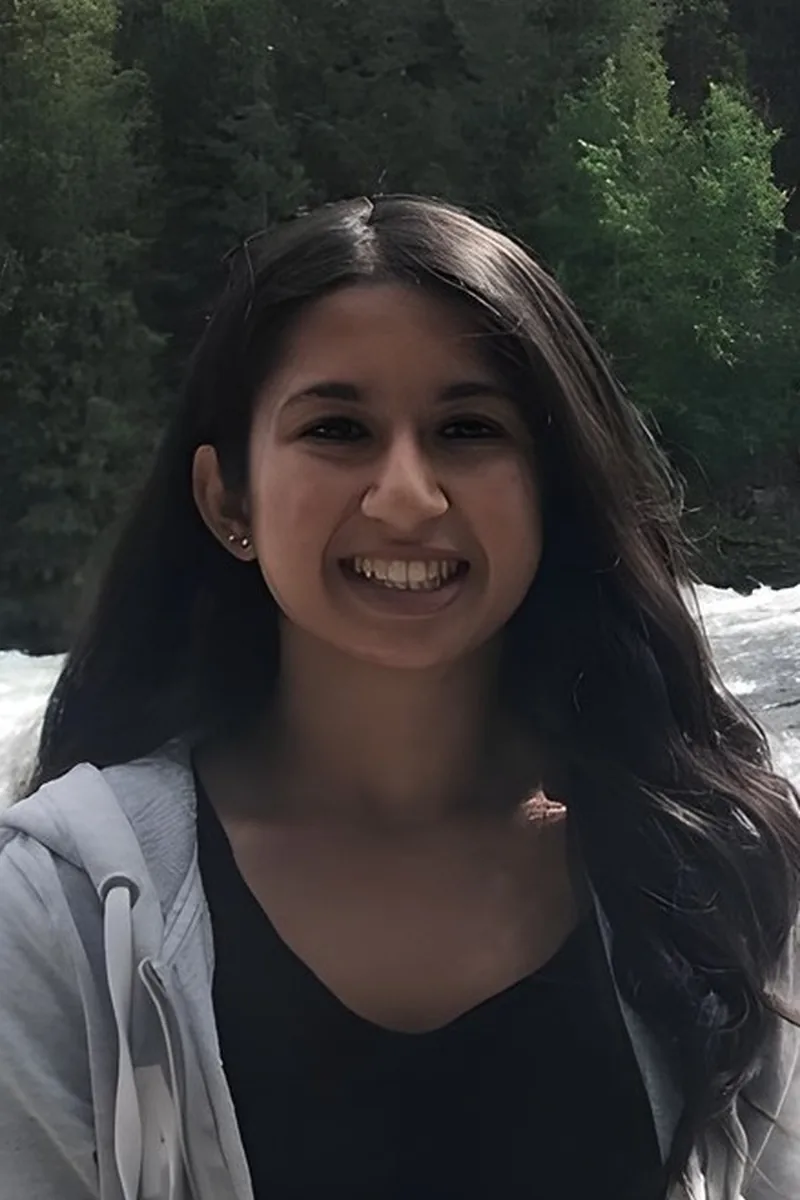
I am a student at the Georgia Institute of Technology studying Chemical Engineering. For the past several years, I have worked with students extensively. Through hosting events for younger kids to learn about STEM and for older teens to practice empathetic design, I know the importance of teaching students in ways that engage them rather than frustrate them, which I apply to my teaching. I have tutored high school students in a drop-in resource center in various subjects including math of all levels, chemistry, and English, making me adequately equipped in a variety of topics. I have also tutored several students long-term. Establishing relationships with students and exploring their unique learning styles is my favorite part of tutoring. I prioritize helping students discover HOW to learn in a manner that is the most effective for them, so they can begin to use those skills on their own throughout their education. Learning is a lifelong skill that requires practice for improvement; I strive to help my students gain confidence in their ability to learn.

The ACT Science section is less about knowing science and more about reading graphs, interpreting experimental designs, and spotting trends in data quickly. Colton's biomedical engineering training at UVA means he spent years doing exactly that — pulling conclusions from complex datasets and evaluating conflicting results. His 32 ACT composite and deep science background make him especially effective at teaching the passage-analysis strategies this section actually tests.
Rohith's astronomy major means he's comfortable with the kind of dense figures and experimental comparisons that make the ACT Science section feel overwhelming to most students — reading spectra, tracking variable relationships across charts, and evaluating competing models was just coursework for him. He brings that fluency to test day by teaching students to identify what each figure's axes actually measure before even glancing at the questions, which eliminates most of the guesswork.
I am a current student at the Colorado School of Mines, studying to double major in Applied Mathematics and Engineering Physics. I have been tutoring students professionally for one year, but also through my schools for 5 years now. I tutor most kinds of Math and Science, and love doing so; being able to help spread understanding of a difficult concept never fails to bring me joy. As a current student, I understand how lecturing is often not the most effective (or interesting) way to learn, so I like to be very interactive and ask a lot of questions in my teaching, almost like a conversation between the student and myself.
I am a neuroscience and psychology double major from CU Boulder working to go to PA school down the road. I am originally from the East coast, but definitely prefer the hiking here. I was a learning assistant (basically student focused teacher aid) at CU, and took a course to learn more effective pedagogy. Afterwards, I was asked to be a mentor, and continued trying to help as much as I can.
Most students panic when they see the ACT Science section, but it's really a data interpretation test disguised as science. Christian's mechanical engineering background means reading graphs, tables, and experimental setups is second nature to him, and he teaches students to ignore jargon and zero in on what the data actually shows. His 34 ACT composite and 5.0 rating speak to how well that approach translates to score gains.
Most of ACT Science isn't really about science knowledge — it's about reading graphs, spotting trends, and comparing experimental setups under time pressure. Oliver's 33 ACT composite and his CU Boulder science training make him unusually well-equipped for the section: he teaches the data-interpretation shortcuts while also explaining the underlying biology and chemistry when a question actually demands content knowledge.
Most students panic when they see the ACT Science section's dense graphs and conflicting-viewpoints passages, but the trick is realizing it's mostly a data interpretation test. Graham's astrophysics and chemistry coursework at CU Boulder means he reads scientific figures daily, and he teaches students to extract trends and compare experimental setups quickly rather than getting lost in jargon. He holds a 5.0 client rating.
An environmental biology degree turns out to be perfect preparation for the ACT Science section, which is really a test of how quickly you can read graphs, interpret experimental designs, and compare competing hypotheses. Rosemary teaches students to ignore the intimidating scientific jargon and zero in on the data tables and figure labels where the actual answers live. Her 32 ACT composite backs up the approach.
I am a undergraduate student who is willing to help other students in subjects that they may be experiencing difficulties in.
I am a licensed high school history teacher, but have worked with 2-year-olds, college undergraduates, and every age in between. I have previously tutored preschoolers through high schoolers in math and reading, and worked at a university in Santiago with Chilean undergraduates studying both English as a second language and the teaching of English. I am most passionate about teaching in the humanities, but find that working with students on any subject is fulfilling, including standardized test prep. Having lived abroad in Spain and Chile, I also know the importance of connecting classroom learning in Spanish to the actual experience of the language and am always excited to help Spanish come alive beyond conjugation worksheets. Regardless of subject, I strive to ensure that my students build the strategies and confidence they need to be capable, self-directed learners. My own interests include reading, camping and hiking, cooking, and rugby.
Treat the ACT Science section like a data interpretation exercise, not a science test — that's the core of Austin's approach. He walks students through how to read conflicting viewpoints passages and extract trends from graphs without getting lost in unfamiliar terminology about pH levels or geological strata. As a computer science major in the KU Honors Program, he's comfortable with data analysis and teaches students to be the same.
I am a patient, intellectual, and calm college student at the University of Michigan passionate about tutoring others to improve their proficiency in a wide variety of subjects. I teach students by creating individualized plans that cater to the strengths and weaknesses of the student. I work hard and as long as it takes to ensure that the student derives maximum benefit. I love teaching a wide variety of subjects, and have a speciality in standardized tests.
I really enjoy helping students master the fundamentals of math, physics, computer science, and electrical engineering, as well as succeed on standardized tests like the ACT. I focus on teaching in an interactive way by trying to understand your thought process and building your understanding using simple examples and guidance. Learning these fields is challenging but also very rewarding, and I believe everyone can find enjoyment in it and see the beauty in the theory and use the applications throughout their careers.
I'm referring to math, of course, but I didn't always like the subject. Until about age 16, I thought of math as a boring, mind-numbing process of blindly memorizing formulas and then forgetting them after the test, but a series of wonderful teachers showed me the truth. I had thought that everything in math was invented arbitrarily just to torture students, but actually it all made sense in a deep way. When I caught a glimpse of what math really was, I found it irresistible and I ended up majoring in math in college at UChicago. I'm currently a Master's student in Computer Science at NYU.
The ACT Science section is really a data interpretation exam disguised with lab coats and beakers. Alex approaches it that way — teaching students to read graphs, compare experimental setups, and spot conflicting hypotheses without getting lost in unfamiliar terminology. As a medical student with a chemical engineering background and a 36 ACT composite, he knows exactly when the section requires outside science knowledge and when it doesn't.
The ACT Science section barely tests science knowledge — it's really about reading graphs, interpreting conflicting viewpoints, and extracting trends from dense data tables under time pressure. Logan scored a 36 composite and trains students to ignore the intimidating terminology and zero in on what each figure actually shows. Once students see it as a data-literacy exercise, scores jump quickly.
The ACT Science section isn't really a science test — it's a data interpretation test disguised as one. Emily's background in biology, chemistry, and biostatistics means she can quickly teach students to parse conflicting viewpoints passages and extract trends from dense graphs, which is where most points are lost. Her 35 ACT composite shows she's mastered the pacing and strategy the section demands.
The ACT Science section is less about biology or chemistry knowledge and more about reading graphs under pressure — and Tracy, who scored a 36 composite, approaches it exactly that way. She teaches students to ignore the scientific jargon, locate the variables in each figure, and identify trends before even glancing at the questions. Once students stop trying to understand the experiment and start extracting data, their accuracy jumps.
I am currently a resident physician at Northwestern Hospital.
I am an aspiring applied mathematician, with particular interest in image processing and climate science. I graduated in May 2017 from Washington University in St. Louis with a bachelor's in physics and mathematics, and am beginning a PhD program in September 2017 at the University of Chicago in Computational and Applied Mathematics. I've tutored introductory physics students for three years and enjoyed it thoroughly, as a chance to help other students while revisiting fundamental concepts to enhance my own knowledge. I'm eager to continue reaching out and helping students of math and physics to succeed and, furthermore, to appreciate the beauty and power of these subjects.
I am currently a student at Duke University studying Biomedical Engineering and Economics. Just a little bit about me and some of my interests. Some of my favorite academic interests include memoirs and modern classics. I think Catcher in the Rye is still one of my all time favorite books but Percy Jackson, a modern classic, is up there too. Beyond academics, I take great guilty pleasure in watching TV shows such as Westworld, Sherlock, How I Met Your Mother, and even The Bachelorette when I'm at a low point.
I am a 2023 graduate of the University of Notre Dame with a Finance/Economics major and a minor in Innovation and Entrepreneurship. I am a passionate student in the math and business realms, as I enjoy the intuitiveness of the former and the real-world potential of the latter. During classes in middle and high school, I developed a reputation of being a good source of help within my classes in a non-tutor capacity, and grew that into a peer tutor role a couple times a week during lunch my senior year of high school. What I hope to accomplish with my tutoring is ensure that you not only achieve your desired grade/score, but see how the different concepts relate to each other in the bigger picture. The more important part is to critically think about the subject matter in other, more unfamiliar contexts. Also, in my math subjects, I seek to provide personal secrets in realms including quicker computation strategies, unique acronyms for certain rules, and other intuitive shortcuts.
Despite its name, ACT Science barely tests science knowledge — it's really about reading graphs, interpreting experimental setups, and drawing conclusions from data tables under time pressure. Kerr unpacks each passage type (data representation, research summaries, conflicting viewpoints) and teaches students exactly where to look for answers. His 36 composite came partly from treating this section as a reading exercise, not a science exam.
Testimonials
Because the right ACT Science tutor makes all the difference.
Average Session Rating – Based on 3.4M Learner Ratings
Practice ACT Science
Free practice tests, flashcards, and AI tutoring for ACT Science
Nearby ACT Science Tutors
Other Aurora Tutors
Related Test Prep Tutors in Aurora
Frequently Asked Questions
Varsity Tutors matches Aurora students with expert ACT Science tutors for 1-on-1 instruction. We pair each student with a tutor based on their specific needs, learning style, and goals.
Whether you need homework help, exam prep, or want to get ahead, our ACT Science tutors are ready to help.
Common challenges include gaps from earlier material, difficulty with specific concepts, and trouble applying learning to new problems. These issues can snowball quickly in ACT Science.
A tutor identifies where you're stuck, fills in gaps, and provides targeted practice. The 1-on-1 format means you get help exactly where you need it.
Tutors work with your student's actual coursework—homework assignments, class notes, and upcoming tests. This keeps tutoring directly relevant to what's happening in the classroom.
When you share information about your student's school and curriculum, we can match you with a tutor who has relevant experience.
All tutors complete background checks, credential verification, and teaching evaluation. Many of our ACT Science tutors hold advanced degrees or have years of teaching experience.
You can review tutor profiles to find someone with the right background for your student's level and needs.
Many students see improved grades within a few weeks, along with better understanding of ACT Science concepts and more confidence tackling challenging material.
Tutors track progress and adjust their approach to ensure continued improvement.
Most students benefit from 1-2 sessions per week. More frequent sessions help if your student is significantly behind or has an important exam coming up.
Your tutor can recommend a schedule based on your student's specific situation and goals.
Tutoring is purchased in packages of hours, with rates varying by tutor experience. Varsity Tutors offers several options to fit different budgets and needs.
You can discuss pricing during your consultation to find what works best.
Your tutor will assess where your student is, discuss goals, and start working on priority areas. Most students bring current homework or upcoming test material to focus on.
By the end, you'll have a clear sense of how the tutor can help and a plan for moving forward.
Let’s find your perfect tutor
Answer a few quick questions. We’ll recommend the right plan and match you with a top 5% tutor.