Award-Winning Physical Chemistry Tutors
serving Colorado Springs, CO
Physical Chemistry
Tutors in Colorado Springs
Private 1-on-1 tutoring, weekly live classes for academic support, test prep & enrichment, practice tests and diagnostics, and more to elevate grades and test scores.
Based on 3.4M Learner Ratings
UniversitiesSchools & Universities
DeliveredHours Delivered
ProficiencyGrowth in Proficiency
Who needs tutoring?
No obligation. Takes ~1 minute.
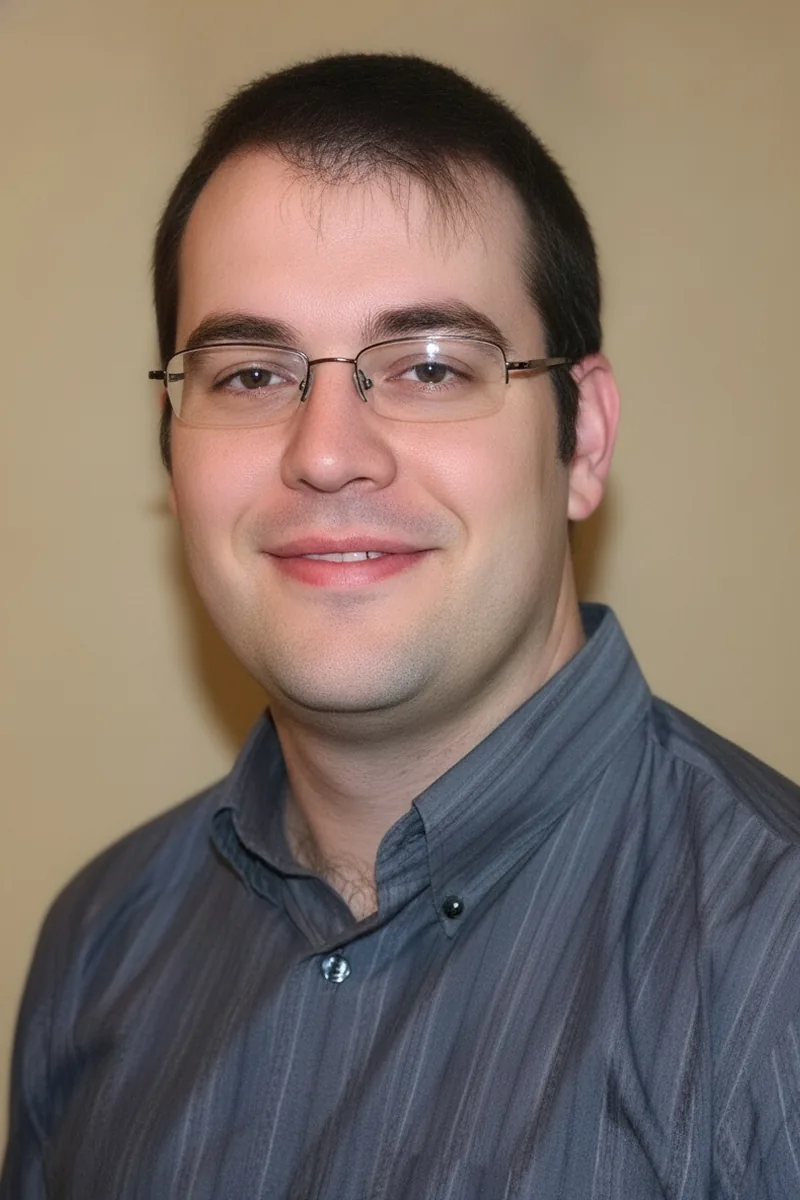
I am currently an adjunct professor of chemistry at a small liberal arts college in the Chicago area. Previously, I worked in the chemical industry for several years as a researcher, but I've found that the most satisfying moments have come when I am able to share my expertise with someone else. Similarly, I very much enjoyed the four semesters in the graduate school when I was a teaching assistant. It gave me the opportunity to work with students and help them develop an understanding for the subject. These are the primary reasons that I have decided to go into teaching.

Two years as an organic chemistry lab TA at the college level gave Maha hands-on experience with the reaction kinetics and thermodynamic reasoning that form the backbone of any p-chem sequence. Now pursuing graduate work in public health at Johns Hopkins, she approaches topics like equilibrium constants and energy diagrams through the lens of someone who's had to apply them in real experimental settings, not just derive them on paper. Rated 5.0 by students.
Two chemistry degrees — bachelor's and master's — mean Chad has gone through the full p-chem gauntlet himself, from quantum mechanical models and statistical thermodynamics to the calculus-dense derivations of chemical kinetics. He teaches the subject by zeroing in on where the math and the molecular picture disconnect for each student, whether that's a tricky partial derivative in a thermodynamic identity or the logic behind a partition function. Rated 4.8 by students.
This is Jacob's home turf. He earned his Ph.D. in Physical Chemistry from UC Berkeley and now conducts research at Northwestern, so topics like quantum mechanics, statistical thermodynamics, and spectroscopy are part of his everyday work. He walks students through the math-heavy derivations that make p-chem notoriously difficult, connecting each equation back to the physical picture it describes.
P-chem is where thermodynamics, quantum mechanics, and kinetics collide, and most students feel overwhelmed by the math intensity alone. Jacob's biochemistry-emphasis BS in Chemistry means he tackled these derivations firsthand — from partition functions to the Schrödinger equation — and he's skilled at unpacking the physical meaning behind each equation so the math stops feeling arbitrary. Rated 5.0 by students.
Enric holds a PhD in Chemistry, which means p-chem wasn't just a course requirement — it was the foundation his entire research career was built on, from quantum mechanical modeling to thermodynamic analysis at the graduate level. He teaches the subject by slowing down at the exact calculus step where a derivation goes from followable to opaque, rebuilding the physical reasoning behind each manipulation before moving forward. Rated 5.0 by students.
Between biochemistry, organic chemistry, and physical chemistry, Samantha sits at the intersection where biology meets the math-heavy formalism of thermodynamics and kinetics — she understands both the molecular systems and the derivations that describe them. She breaks apart intimidating topics like Gibbs free energy or chemical equilibria by tying each variable back to the biological and chemical processes students already recognize from earlier coursework. Rated 5.0 by students.
Garrett's biology degree means he already thinks in terms of systems — enzyme kinetics, membrane potentials, metabolic energy flow — which gives him a concrete anchor for the abstract math that makes p-chem so intimidating. He teaches thermodynamic and kinetic concepts by connecting derivations to the biological and chemical phenomena they describe, so something like a Gibbs free energy calculation feels like a tool rather than an exercise in symbol-pushing.
Genetics PhD work is surprisingly calculus-intensive — population dynamics, statistical mechanics of molecular interactions, and the thermodynamic stability of nucleic acid structures all demand the same quantitative reasoning that drives p-chem. Nicholas brings that background to topics like free energy calculations and kinetic modeling, where his comfort with both the math and the molecular biology underneath it keeps derivations grounded in actual chemical behavior. Rated 4.8 by students.
Differential equations, calculus, and organic chemistry all sit in Nate's regular teaching rotation, which means he's constantly moving between the math and the chemistry that p-chem smashes together — and he knows exactly where students lose the thread between the two. He zeroes in on building intuition around concepts like chemical potential and equilibrium thermodynamics by tying each derivation back to the reaction behavior students already recognize from general and organic chemistry. Rated 5.0 by students.
A PhD in chemistry means Justin didn't just pass p-chem — he lived in its formalism for years, from quantum mechanical models to statistical thermodynamics, and then kept using it through doctoral research. That depth shows when he teaches: he can trace a concept like chemical potential or a Maxwell relation back to the physical picture driving the math, catching the exact step where a student's understanding breaks down. Rated 5.0 by students.
Medical school at the Medical College of Wisconsin means Abrahim encounters p-chem's core concepts daily — reaction kinetics in pharmacology, thermodynamic energy balances in physiology, and the quantum mechanical principles behind spectroscopic diagnostics. His UCLA biology degree and 34 ACT demonstrate the mathematical fluency needed to work through derivations involving state functions, equilibrium constants, and entropy calculations without losing sight of what the chemistry actually describes. Rated 5.0 by students.
Testimonials
Because the right Physical Chemistry tutor makes all the difference.
Average Session Rating – Based on 3.4M Learner Ratings
Nearby Physical Chemistry Tutors
Other Colorado Springs Tutors
Related Science Tutors in Colorado Springs
Frequently Asked Questions
Physical Chemistry combines abstract theoretical concepts with complex mathematical problem-solving, which creates unique challenges. Students often struggle with visualizing molecular-level phenomena, balancing thermodynamic equations, and understanding how theoretical principles apply to real lab work. Personalized 1-on-1 instruction helps break down these interconnected topics and build both conceptual understanding and problem-solving skills.
Yes—tutors can help you understand the scientific reasoning behind experiments, work through data analysis, and connect lab observations to theoretical concepts. Whether you're struggling with experimental design, calculating results, or interpreting findings, personalized instruction helps you develop stronger scientific thinking skills alongside your technical knowledge.
These foundational skills require both practice and clear understanding of the underlying logic. Tutors work with you on systematic approaches—like dimensional analysis for conversions and the atom-counting method for equations—so you're not just memorizing steps but understanding why they work. Targeted practice with immediate feedback helps these skills become automatic.
Tutors use multiple strategies to make invisible concepts visible: drawing molecular structures, working through energy diagrams, using analogies to familiar systems, and breaking complex processes into step-by-step sequences. When you can visualize what's happening at the molecular level, thermodynamic relationships and reaction mechanisms become much clearer and easier to apply.
Your first session focuses on understanding your specific challenges, learning style, and goals. A tutor will assess which concepts are unclear, identify gaps in foundational knowledge, and create a personalized plan tailored to your needs—whether that's exam prep, lab report support, or building deeper conceptual understanding.
Varsity Tutors connects you with expert tutors who understand Physical Chemistry curriculum and can work with your schedule and learning style. You'll be matched with someone qualified to help you master both the content and the problem-solving strategies that make Physical Chemistry manageable.
Understanding concepts is far more valuable—memorized formulas without context lead to mistakes and difficulty applying knowledge to new problems. Tutors help you build genuine understanding of why formulas work and when to use them, which makes both problem-solving and exams much more manageable. You'll still learn key formulas, but as tools that make sense rather than arbitrary rules.
Tutors help you identify weak areas, practice problem-solving under exam conditions, review difficult concepts, and develop test-taking strategies specific to Physical Chemistry. With personalized instruction, you can focus study time on what actually needs work rather than reviewing material you already understand.
Let’s find your perfect tutor
Answer a few quick questions. We’ll recommend the right plan and match you with a top 5% tutor.