Award-Winning Physical Chemistry Tutors
serving Hartford, CT
Physical Chemistry
Tutors in Hartford
Private 1-on-1 tutoring, weekly live classes for academic support, test prep & enrichment, practice tests and diagnostics, and more to elevate grades and test scores.
Based on 3.4M Learner Ratings
UniversitiesSchools & Universities
DeliveredHours Delivered
ProficiencyGrowth in Proficiency
Who needs tutoring?
No obligation. Takes ~1 minute.
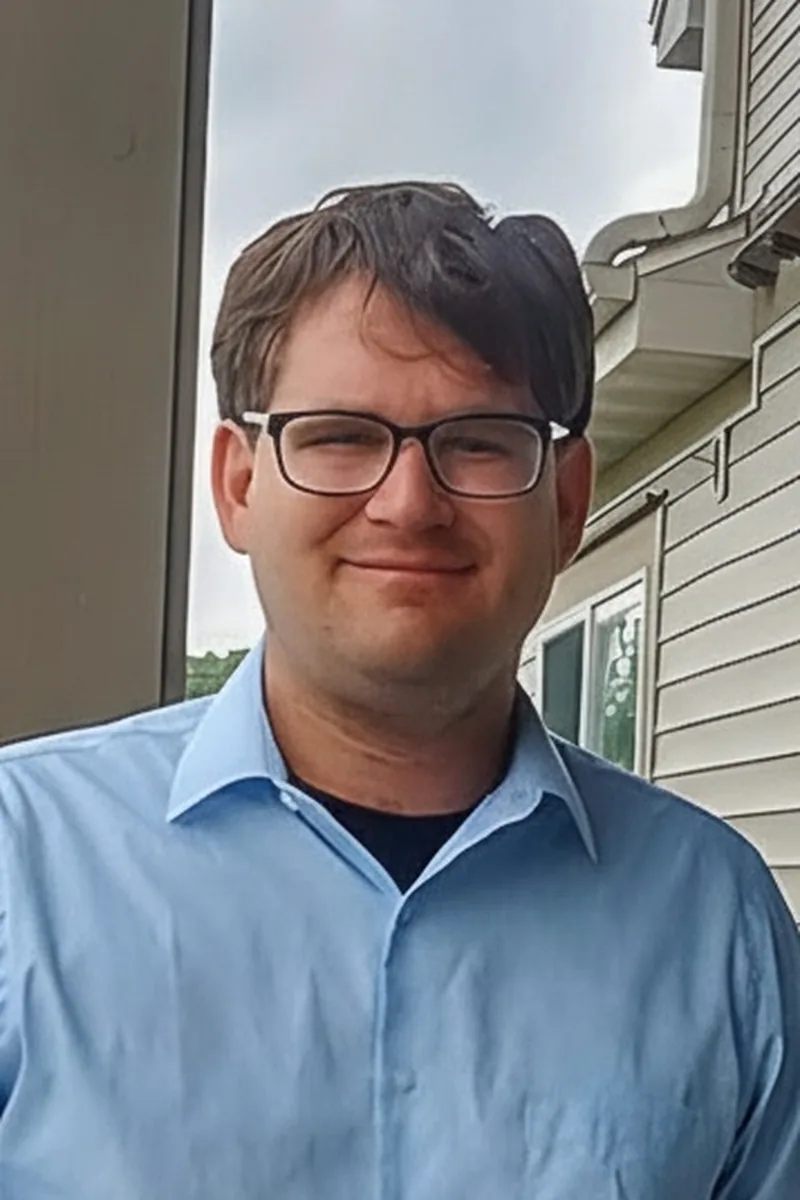
Having studied quantum mechanics and electromagnetism as part of his physics degree, Michael already speaks the mathematical language that makes p-chem so demanding — the wave equations, the statistical distributions, the calculus buried inside every thermodynamic derivation. He teaches from the physics side in, explaining why a Boltzmann distribution or a partition function behaves the way it does before layering on the chemical context that gives it practical meaning.

Cornell's chemical engineering curriculum puts you through p-chem at an intense pace — Rahul graduated magna cum laude, which means he didn't just survive thermodynamics, quantum mechanics, and kinetics but internalized the reasoning behind each derivation. He pushes past rote symbol manipulation to make sure students can articulate why a particular state function applies or what a phase boundary physically represents. Rated 4.9 by students.
Maurice's teaching background in special education sharpens his ability to break down the layered abstractions in p-chem — when a student is lost inside a Gibbs free energy derivation, he isolates exactly which conceptual step broke down and rebuilds from there. His coursework across calculus, statistics, and chemistry gives him enough quantitative range to walk through the thermodynamic and kinetic formalisms, even if p-chem isn't his deepest specialty.
Biochemistry lab work and a dual bachelor's in arts and biochemistry mean Andrew has already applied the thermodynamics, kinetics, and quantum mechanical concepts that make p-chem brutal — calculating free energy changes in enzyme systems, modeling reaction rates at the molecular level. He unpacks the heavy calculus in derivations by keeping one foot in the real chemistry, so a partition function or a phase diagram reads as a description of molecular behavior rather than an exercise in pure math. Rated 4.9 by students.
Pre-med coursework at Rutgers — graduating summa cum laude with a 4.0 — put Sam through the gauntlet of thermodynamics, kinetics, and quantum chemistry that p-chem demands, all while building the calculus fluency needed to survive dense derivations. He approaches topics like enthalpy, entropy, and rate laws by stripping each equation back to the physical scenario it models, making the leap from math to molecular meaning less painful.
A physics degree gives Cory something many p-chem tutors lack — native comfort with the quantum mechanics and statistical mechanics that chemistry students often encounter for the first time in this course. He treats topics like wave functions, partition functions, and thermodynamic state variables as extensions of the physics he already thinks in, then builds the chemical context around them. Rated 4.9 by students.
Pursuing a dual Ph.D./Pharm.D. at UConn with graduate work in medicinal chemistry means Xhesika encounters the thermodynamic and kinetic formalism of p-chem as daily working tools — calculating drug stability, modeling reaction pathways, predicting how molecular interactions shift with temperature and pressure. She teaches derivations like Maxwell relations and Clausius-Clapeyron by tying each variable back to the pharmacological systems where she actually uses them, so the math carries chemical weight instead of feeling like abstract symbol-pushing.
Garrett's biology degree means he already thinks in terms of systems — enzyme kinetics, membrane potentials, metabolic energy flow — which gives him a concrete anchor for the abstract math that makes p-chem so intimidating. He teaches thermodynamic and kinetic concepts by connecting derivations to the biological and chemical phenomena they describe, so something like a Gibbs free energy calculation feels like a tool rather than an exercise in symbol-pushing.
Pre-med coursework at Rice plus dual degrees in environmental sciences and ecology meant Daniel was solving energy balance problems and applying thermodynamic reasoning to natural systems well before encountering p-chem's formal derivations. His lab technician work at Rice keeps the quantitative skills sharp — setting up calculations involving enthalpy, equilibrium, and kinetic models is part of the daily routine, not a distant textbook memory.
Teaching high school chemistry daily means Kathleen regularly translates thermodynamic concepts like enthalpy, entropy, and equilibrium into language that clicks — a skill that carries directly into the more calculus-heavy treatment those same ideas get in a p-chem course. Her M.S.Ed from Penn and chemistry degree give her both the content depth and the instinct for spotting exactly where a derivation stops making sense to a student. Rated 5.0 by students.
A PhD in biophysics and a master's in organic chemistry mean Amin has worked through the quantum mechanics, statistical mechanics, and thermodynamics of p-chem from both the physical and molecular sides — deriving partition functions in one course, then applying free energy calculations to real chemical systems in the next. That dual perspective lets him teach a topic like the Boltzmann distribution or a phase diagram by moving fluidly between the mathematical formalism and the chemistry it's actually describing.
Testimonials
Because the right Physical Chemistry tutor makes all the difference.
Average Session Rating – Based on 3.4M Learner Ratings
Nearby Physical Chemistry Tutors
Other Hartford Tutors
Related Science Tutors in Hartford
Frequently Asked Questions
Physical Chemistry bridges chemistry and physics, focusing on the fundamental principles that explain how and why chemical reactions occur. Key topics typically include thermodynamics (energy and heat transfer), kinetics (reaction rates and mechanisms), quantum mechanics (atomic structure and bonding), equilibrium, electrochemistry, and spectroscopy. For students in Hartford, a tutor can help connect these abstract concepts to real-world applications like battery technology, industrial processes, and environmental chemistry.
Balancing equations requires understanding both the rules of stoichiometry and the underlying chemistry—it's not just about matching numbers. Many students struggle because they try to memorize patterns rather than understanding why atoms must be conserved. Personalized 1-on-1 instruction helps you develop a systematic approach, recognize common patterns, and build confidence with complex equations like redox reactions where oxidation states add another layer of challenge.
Unit conversions are foundational in Physical Chemistry—from moles to grams, pressure units, energy conversions, and more. The challenge isn't just the math; it's knowing which conversion factor to use and why. A tutor can teach you dimensional analysis as a problem-solving strategy, help you build a mental toolkit of common conversions, and practice with the types of multi-step calculations you'll encounter on exams and in lab work.
Physical Chemistry involves visualizing things you can't see—electron clouds, energy diagrams, and molecular motion. Tutors use multiple strategies to build understanding: drawing detailed diagrams, using analogies to familiar systems, working through energy calculations step-by-step, and connecting theory to observable lab results. When you understand the 'why' behind a concept rather than just memorizing it, you can apply that knowledge to new problems and remember it long-term.
Absolutely. Physical Chemistry labs require you to design experiments, collect precise data, analyze results, and connect them back to theory. Tutors can help you understand the scientific principles behind your experiments before you enter the lab, review data analysis techniques, discuss how to troubleshoot unexpected results, and prepare lab reports that clearly explain your findings. This preparation makes lab time more productive and helps you develop stronger scientific reasoning skills.
Thermodynamics tells you whether a reaction is possible and how much energy is involved; kinetics tells you how fast it happens. A reaction might be thermodynamically favorable but kinetically slow (or vice versa), and students often mix these up because they both involve energy concepts. Personalized tutoring helps you build clear mental models for each, work through problems that highlight their differences, and understand why both matter in real-world chemistry—like why diamonds don't spontaneously turn into graphite despite being thermodynamically unfavorable.
Varsity Tutors connects you with expert tutors who have strong backgrounds in Physical Chemistry and experience helping students master its challenging concepts. When you get matched with a tutor, you can discuss your specific needs—whether that's exam preparation, lab report writing, or deep understanding of particular topics like quantum mechanics or electrochemistry. The personalized approach means your tutor can focus on your exact pain points rather than generic review.
Understanding is far more valuable than memorization in Physical Chemistry. While you'll need to know key equations, memorizing without understanding leaves you helpless when a problem looks slightly different from textbook examples. A tutor helps you learn the reasoning behind formulas—why entropy increases, how activation energy affects reaction rates, what each variable represents—so you can derive or adapt equations when needed. This deeper learning also makes the material stick longer and transfers better to new situations.
Let’s find your perfect tutor
Answer a few quick questions. We’ll recommend the right plan and match you with a top 5% tutor.