Award-Winning AP Environmental Science Tutors
serving New Haven, CT
AP Environmental Science
Tutors in New Haven
Private 1-on-1 tutoring, weekly live classes for academic support, test prep & enrichment, practice tests and diagnostics, and more to elevate grades and test scores.
Based on 3.4M Learner Ratings
UniversitiesSchools & Universities
DeliveredHours Delivered
ProficiencyGrowth in Proficiency
Who needs tutoring?
No obligation. Takes ~1 minute.

As a PhD student researching microbial ecology, Isaac lives the material that AP Environmental Science covers — biogeochemical cycles, ecosystem dynamics, biodiversity loss, and human impact on natural systems. He brings current research context into exam prep, connecting FRQ strategies to the kind of scientific reasoning the College Board actually rewards. His 5.0 rating speaks to how well that approach lands with students.
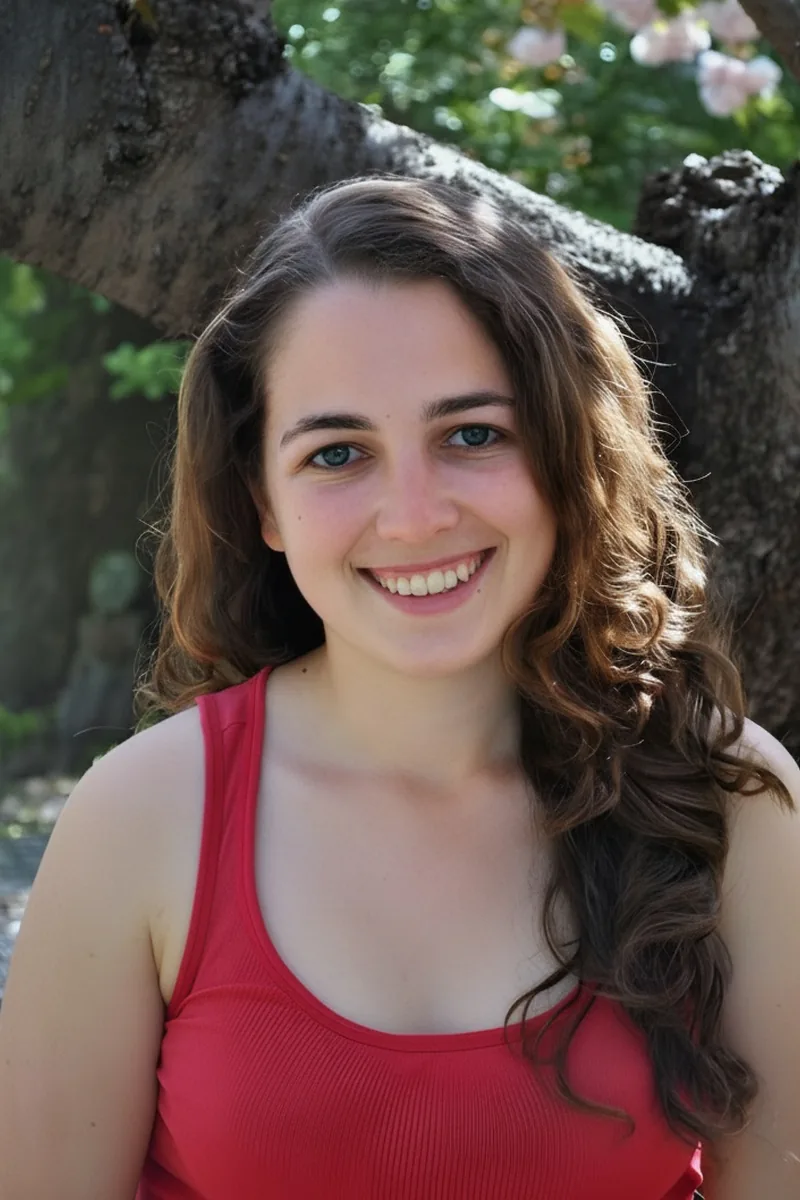
Having earned her degree in Environmental Studies from Temple, Annie knows AP Environmental Science inside and out — from biogeochemical cycles and ecosystem energy flow to the policy and human-impact questions that dominate the free-response section. She also spent a gap year working on organic farms in New Zealand, which means topics like soil science, sustainable agriculture, and biodiversity loss come with firsthand context that sticks.
Hello, students! My name is Pranav, and I'm so excited to be tutoring with Varsity Tutors. I have vast experience tutoring both personally and professionally; I've held officer positions in several nonprofit organizations, including STEMpals and The Do Re Mi Project, teaching courses ranging from biology to music theory. I took 16 AP courses throughout high school with all 5s, and I earned a 1570 on my SAT, so I'm pretty familiar with the majority of academic subjects! I have experience tutoring any and all skill levels, and I'm always open to expanding my horizons, so please don't hesitate to book your first lesson. I'm looking forward to meeting with you!
Eric's degree in Ecology & Evolutionary Biology means he studied the actual science behind APES — population ecology, species interactions, and ecosystem-level processes — not just the survey-course version. He teaches students to think about environmental problems the way an ecologist would, tracing how a disturbance like deforestation or nutrient loading ripples through trophic levels and feedback loops until the full picture clicks.
Sofia's ecology concentration at the University of Chicago means AP Environmental Science isn't a subject she just studied — it's her field. She unpacks FRQ-heavy topics like biogeochemical cycles, biodiversity loss, and energy resource tradeoffs with the depth of someone who does research in a neurobiology lab and thinks about ecosystems professionally. That firsthand scientific context makes the difference between memorizing vocabulary and actually understanding environmental systems.
Creative writing isn't the obvious path to APES, but Sydney's strength is in the skill most students neglect: constructing clear, evidence-driven free-response answers that earn full credit instead of rambling through half-remembered vocabulary. Her 35 ACT and 1600 SAT reflect the kind of analytical reading ability that translates directly to interpreting experimental designs and data sets on the exam. Rated 4.9 by students.
Stanford's Science, Technology, and Society major sits at the exact intersection APES lives in — where ecological science meets human systems, policy decisions, and technological trade-offs. Rithika's IB and National AP Scholar background means she's already navigated the kind of interdisciplinary, essay-heavy exams that APES models itself on, and she uses that experience to teach students how to connect scientific evidence to real-world environmental consequences in their free-response answers.
Finance majors learn to model complex systems with multiple interacting variables — resource scarcity, cost-benefit trade-offs, long-term risk — and Rinky applies that same analytical framework to APES topics like resource depletion, environmental cost analysis, and sustainability trade-offs that show up heavily in free-response prompts. Her 1520 SAT and 5.0 tutoring rating speak to the precision she brings when walking through the data-interpretation and calculation questions that surprise students expecting a soft science course.
Before she ever tutored APES, Jenna was on the other side — she used tutoring herself in high school to push through tough coursework and earned a 31 ACT and full-tuition scholarship along the way. That experience gives her a sharp read on where students get stuck, especially on the policy and legislation units where environmental science intersects with the kind of big-picture cause-and-effect reasoning she sharpened across her humanities and writing coursework. Rated 4.9 by students.
Three years working on organic farms and sustainable land stewardship projects gave Dylan firsthand experience with the biogeochemical cycles, soil science, and ecosystem dynamics that AP Environmental Science tests in detail. He connects FRQ-style questions back to real fieldwork — explaining nutrient runoff or biodiversity loss through situations he's actually observed — which makes the material stick far better than rote review.
Medical school at UMKC built on a cellular and molecular biology foundation means Lina understands the biological machinery — nutrient cycling, cellular respiration, photosynthetic pathways — that underpins the ecosystem-level questions APES actually tests. She teaches students to trace environmental problems back to their molecular origins, like connecting eutrophication to the specific biochemistry of decomposition and dissolved oxygen depletion. Rated 5.0 by students.
Pharmacy students spend semesters on toxicology, chemical fate in biological systems, and dose-response relationships — concepts Amy applies directly to APES units on pollution, bioaccumulation, and human health impacts. Her biology minor at Northeastern reinforces the ecological side, from nutrient cycling to population dynamics, and a 1550 SAT signals the quantitative precision needed for the exam's calculation-heavy free-response questions. Rated 4.9 by students.
Running a natural sciences department at a bilingual elementary school in Ecuador gave Joy firsthand experience with the ecological and conservation concepts that anchor the AP Environmental Science curriculum. She digs into topics like biogeochemical cycles, biodiversity loss, and resource management with real-world case studies drawn from her ecology and conservation biology specialization at Boston University. Her Master of Arts in Teaching adds a layer of exam-strategy coaching that keeps students focused on the free-response skills the AP exam rewards.
Testimonials
Because the right AP Environmental Science tutor makes all the difference.
Average Session Rating – Based on 3.4M Learner Ratings
Practice AP Environmental Science
Free practice tests, flashcards, and AI tutoring for AP Environmental Science
Nearby AP Environmental Science Tutors
Other New Haven Tutors
Related Science Tutors in New Haven
Frequently Asked Questions
AP Environmental Science tutoring focuses on the major units covered on the exam: Earth systems, biodiversity, populations, human impact on the environment, and energy resources. A tutor will help you master both the conceptual understanding and the data analysis skills needed, since the exam emphasizes real-world environmental problems and their solutions. You'll work through practice questions, learn to interpret graphs and data, and build confidence with the exam's format.
Score improvement depends on your starting point and commitment, but many students see meaningful gains—typically 1-2 points on the 1-5 scale—when they work consistently with a tutor over several months. The biggest improvements come from identifying your weak areas (whether that's ecosystems, human populations, or free-response writing) and targeting them with focused practice. Even students scoring 3s can reach 4s or 5s with strategic preparation and regular practice testing.
Many students struggle with the breadth of the curriculum—there's a lot of content across different environmental systems—and with translating that knowledge into strong free-response answers. Others find the quantitative sections challenging, especially calculations involving population growth, energy conversions, or water quality. Time management on the exam is also tricky: balancing 80 multiple-choice questions with 3 free-response questions requires practice and strategy.
Your first session is about understanding where you stand. A tutor will assess your current knowledge of key APES concepts, identify which units feel strongest and which need work, and learn about your goals—whether you're aiming for a 3, a 4, or a 5. From there, you'll build a personalized study plan that focuses on your priorities, whether that's mastering content, improving free-response writing, or building test-taking speed.
Effective APES test strategy involves managing your 3-hour exam time wisely: spending about 90 minutes on the multiple-choice section and 90 minutes on free-response questions. A tutor can teach you how to identify quick-win questions versus ones that need deeper analysis, how to approach data-heavy questions methodically, and how to structure strong free-response answers that earn full credit. Practice tests under timed conditions are essential—they help you refine your pacing and build confidence.
Taking 4-6 full-length practice tests over your prep period is ideal, spaced out so you have time to review and learn from each one. The first test gives you a baseline; the middle tests help you identify patterns in what you're missing; and the final tests should show improvement and build your confidence. Between full tests, working through individual practice questions on specific units helps reinforce concepts and test question formats.
Strong free-response answers on APES require you to connect concepts, use specific examples, and show your reasoning clearly. A tutor can teach you the format: start by understanding what the question is really asking, organize your answer logically (often by concept or by steps in a process), and use evidence—whether that's a calculation, a graph interpretation, or a real-world example. Practicing these answers under time pressure and getting feedback on your writing is key to improvement.
Look for tutors with strong backgrounds in environmental science, ecology, or related fields, and ideally experience teaching or tutoring AP-level content. They should understand the College Board's exam format and scoring rubrics, be able to explain complex environmental systems clearly, and have strategies for helping students tackle both the content and the test itself. Varsity Tutors connects you with tutors who have proven expertise in helping students succeed on this challenging exam.
Let’s find your perfect tutor
Answer a few quick questions. We’ll recommend the right plan and match you with a top 5% tutor.