Award-Winning MCAT Verbal Reasoning Tutors
serving Washington, DC
Who needs tutoring?
FEATURED BY


TUTORS FROM
- YaleUniversity
- PrincetonUniversity
- StanfordUniversity
- CornellUniversity
Award-Winning MCAT Verbal Reasoning Tutors serving Washington, DC
Certified Tutor
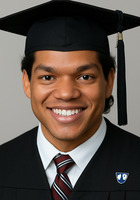
Tony
The MCAT's verbal reasoning passages are deliberately unfamiliar — philosophy, social science, humanities — and the trick is extracting an author's argument without getting lost in the content. Tony's Yale education immersed him in exactly this kind of dense, cross-disciplinary reading, and he compl...
Yale University
Bachelor of Science in Biology

Certified Tutor
10+ years
Samantha
MCAT CARS passages are deliberately dense and unfamiliar — philosophy, ethics, art criticism — and the section rewards the ability to track an author's argument without getting lost in the weeds. As a current medical student who earned a perfect SAT verbal score, Samantha teaches specific strategies...
Duke University
Bachelors in Global Health Determinants, Behaviors, and Interventions
Harvard Medical School
Current Grad Student, MD
Certified Tutor
6+ years
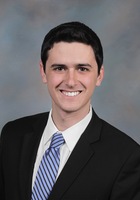
David
The MCAT's CARS section isn't really about reading speed — it's about recognizing argument structure in passages on topics you've never seen before. David treats each passage as a logic puzzle, teaching students to identify the author's central claim and map how evidence supports it before even look...
Yale University
Bachelor of Science in Neuroscience
Harvard University
Current Grad Student, Bioethics and Medical Ethics
Certified Tutor
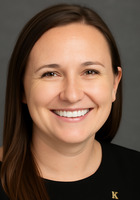
Laura
The MCAT's Critical Analysis and Reasoning Skills section throws dense humanities and social science passages at students who've spent months buried in biochemistry. Laura's 1510 SAT demonstrates her reading comprehension chops, and her economics background means she's comfortable dissecting complex...
Massachusetts Institute of Technology
Bachelors, Economics
Certified Tutor
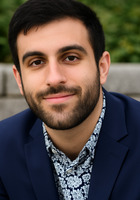
Shayan
Penn's pre-health track is heavy on science, but Shayan's biology and literature background means he's equally comfortable pulling apart a dense ethics passage as he is with a biochemistry textbook — and CARS demands exactly that cross-disciplinary comfort. He teaches students to read for the author...
University at Buffalo
Bachelors, Biology, General
University of Pennsylvania
Current Grad Student, Pre-Health
Certified Tutor
Timothy
The MCAT's CARS section isn't a science test — it's an exercise in dissecting dense, unfamiliar arguments under pressure. As a current medical student who also studied political science, Timothy developed sharp close-reading skills across both humanities and sciences, and he teaches specific strateg...
Drexel University College of Medicine
Current Grad Student, M.D.
University of California Los Angeles
Bachelors, Political Science and Government
Certified Tutor
Mosab
The CARS section rewards a specific kind of reading — extracting an author's argument from dense, unfamiliar passages under extreme time pressure. Mosab's dual background in international relations and health sciences means he's spent years doing exactly that across humanities and science texts, and...
Tufts University
Bachelors, International Relations and Arabic
Harvard University
Current Grad Student, Health Sciences
Certified Tutor
Vinay
MCAT CARS passages are deliberately dense and drawn from unfamiliar disciplines, which is exactly why Vinay's interdisciplinary background — biology, economics, public policy, and now medicine — gives him a natural edge in teaching the section. He breaks down how to identify an author's central thes...
Columbia University in the City of New York
Master in Public Health Administration, MPA in Developmental Practice
University of California Los Angeles
B.S. in Molecular, Cell, & Developmental Biology

Certified Tutor
6+ years
Samantha
The MCAT's CARS section rewards a very specific kind of reading — extracting an author's argument structure, identifying assumptions, and evaluating evidence across dense humanities and social science passages. Samantha's neuroscience training at Penn, combined with her own love of reading and writi...
University of Pennsylvania
Bachelor in Arts, Neuroscience

Certified Tutor
10+ years
An economics degree trains you to read dense, jargon-heavy arguments about policy, markets, and human behavior — then tear apart the reasoning underneath. Rohan applies that same analytical lens to CARS passages, teaching students to strip away unfamiliar content and zero in on how an author builds ...
Northwestern University
Bachelors, Economics
Other Washington Tutors
Related Graduate Test Prep Tutors in Washington
Frequently Asked Questions
Score improvement depends on your starting point and how consistently you engage with personalized instruction. Most students working with a tutor see meaningful gains within 4-8 weeks of focused study, with some improving 3-5 points on the scaled score. The key is identifying your specific weak areas—whether that's pacing through dense passages, managing test anxiety, or mastering question-type strategies—and having someone hold you accountable to a structured study plan.
Research on 1-on-1 instruction shows it's significantly more effective than solo studying because tutors can provide immediate feedback, adjust difficulty in real time, and help you break through plateaus that independent prep often hits.
Most test-takers struggle with the balance between reading comprehension and question speed. You have roughly 8-9 minutes per passage and questions, which forces hard choices: do you read carefully for nuance or skim and rely on detail questions? The answer is strategic reading—understanding what information the MCAT typically tests, identifying passage structure quickly, and learning to distinguish between main ideas and supporting details.
A tutor can help you practice on real AAMC materials and develop a personalized timing rhythm that works for your reading style, rather than forcing a one-size-fits-all approach. This typically involves taking full-length practice tests under timed conditions and reviewing where seconds are wasted.
MCAT Verbal Reasoning primarily tests two question categories: comprehension questions (about main ideas, specific details, and passage purpose) and reasoning questions (inference, author perspective, and application). Most students find reasoning questions more challenging because they require deeper engagement with the author's argument and intent, not just finding information on the page.
Personalized tutoring helps because tutors can diagnose which question types trip you up specifically, then build targeted practice with deliberate review of your thought process. Some students misread what's being asked; others understand the question but struggle to justify their answer choice from the passage text.
Test anxiety often shows up as rushed reading, second-guessing answers, or freezing on difficult passages. The most effective approach is building confidence through repeated, successful practice under realistic test conditions. When you've taken 10+ full-length practice tests and learned to trust your process, anxiety has less room to sabotage you.
Tutors also teach concrete strategies like pacing checkpoints (knowing where you should be after passage 2 or 3), self-talk techniques, and how to move past a difficult passage without derailing your momentum. Knowing you have a plan reduces the mental chatter that fuels anxiety during the real exam.
Start by taking a full-length practice test under timed conditions, then review every single question—not just the ones you got wrong. Look for patterns: Are you missing inference questions? Struggling with science passages over humanities? Running out of time on later passages? Getting distracted by trap answer choices? These patterns point to whether your issue is comprehension, strategy, pacing, or critical reasoning skills.
A tutor can accelerate this diagnostic process by analyzing your practice tests, asking clarifying questions about your thought process, and isolating whether an error came from misreading the passage, misunderstanding the question, or not fully evaluating all answer choices. Once your weak areas are clear, you can stop practicing everything equally and target the specific skills that need work.
Most test-takers benefit from 6-12 weeks of consistent preparation, with Verbal Reasoning representing about 1/3 of your overall MCAT study time (alongside Physical Sciences and Biological Sciences). A solid weekly schedule looks like: 2-3 focused passage drills (15-20 minutes), 1 full-length practice test (around 95 minutes total including all sections), and 2-3 hours of review and targeted skill work on weak areas.
Consistency matters more than volume—studying 5 hours per week for 10 weeks beats cramming 50 hours in 2 weeks. Personalized tutoring helps you adjust this template based on your goals, timeline, and starting point, ensuring you're not wasting time on skills you've already mastered while doubling down on genuine weak areas.
Varsity Tutors matches you with an experienced MCAT tutor based on your specific needs, learning style, and goals. You'll discuss your current score, target score, timeline, and any particular challenges (like anxiety or a specific question type), and we'll connect you with someone who has deep expertise in medical school entrance preparation and a track record of helping students improve their Verbal Reasoning performance.
Your tutor creates a personalized study plan, conducts regular practice test reviews, and adjusts strategy as you progress. Most students meet weekly or bi-weekly, with flexible scheduling that works around your work, school, and other obligations.
Connect with MCAT Verbal Reasoning Tutors in Washington
Get matched with local expert tutors