Award-Winning Physical Chemistry Tutors
serving Cape Coral, FL
Physical Chemistry
Tutors in Cape Coral
Private 1-on-1 tutoring, weekly live classes for academic support, test prep & enrichment, practice tests and diagnostics, and more to elevate grades and test scores.
Based on 3.4M Learner Ratings
UniversitiesSchools & Universities
DeliveredHours Delivered
ProficiencyGrowth in Proficiency
Who needs tutoring?
No obligation. Takes ~1 minute.
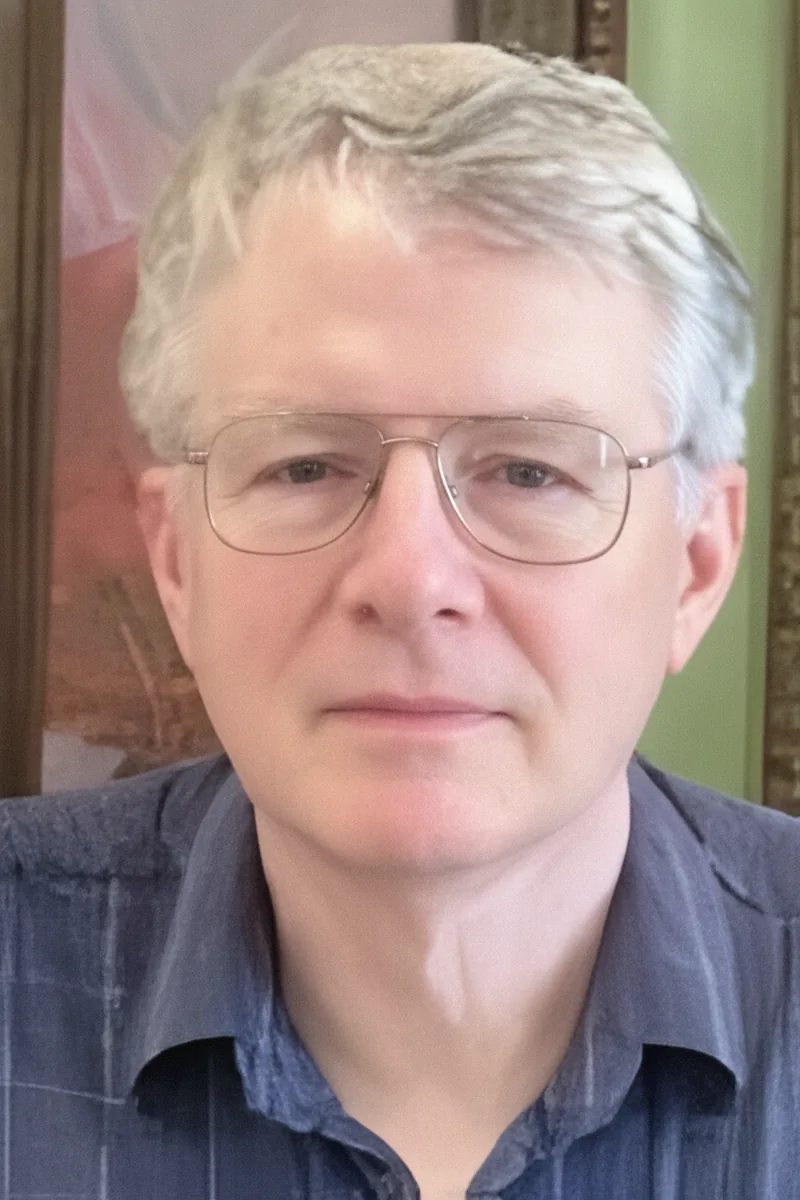
I grew up in the Boston area and now live in Citrus County, Florida. I graduated from MIT in chemical engineering and worked for many years as a chemical process engineer, so I have a strong background in math and science, especially chemistry and thermodynamics. I've also been granted six U.S. patents. When the pandemic hit us, I moved to Florida and did part-time work as a chess tutor, then became a substitute teacher in the middle and high schools in our district. I enjoyed working with the students, many of whom had difficulty learning in big classes with many disruptions. I found that I could best help these students by using real-world examples to teach difficult concepts in a new way. Often, then, the student would come away with a new perspective and a much better understanding of the concept. I was happy to be able to help. These days as a VT tutor, I continue to use, whenever possible, real-world examples in my own material in chemistry and thermodynamics.
Genetics PhD work is surprisingly calculus-intensive — population dynamics, statistical mechanics of molecular interactions, and the thermodynamic stability of nucleic acid structures all demand the same quantitative reasoning that drives p-chem. Nicholas brings that background to topics like free energy calculations and kinetic modeling, where his comfort with both the math and the molecular biology underneath it keeps derivations grounded in actual chemical behavior. Rated 4.8 by students.
Enric holds a PhD in Chemistry, which means p-chem wasn't just a course requirement — it was the foundation his entire research career was built on, from quantum mechanical modeling to thermodynamic analysis at the graduate level. He teaches the subject by slowing down at the exact calculus step where a derivation goes from followable to opaque, rebuilding the physical reasoning behind each manipulation before moving forward. Rated 5.0 by students.
Thermodynamics, quantum mechanics, kinetics — physical chemistry is where math and chemistry collide, and most students need a tutor comfortable in both languages. Natasha's chemical engineering degree gave her deep fluency with partition functions, phase diagrams, and rate laws, and her MIT graduate work keeps those concepts sharp. She approaches p-chem by deriving key equations alongside students so the physics behind each formula becomes visible.
Pursuing a PhD in Analytical Chemistry at UIUC means Whitney spends her days immersed in the quantitative rigor that makes p-chem so demanding — thermodynamic derivations, kinetic modeling, and the statistical mechanics underlying instrumental techniques. She's currently TAing college-level chemistry courses, which keeps her sharp on exactly where students lose the thread in topics like Gibbs free energy, phase diagrams, and partition functions. That combination of active research and daily teaching gives her a practical read on which derivations need more physical intuition and which just need cleaner math.
A PhD in chemistry means Justin didn't just pass p-chem — he lived in its formalism for years, from quantum mechanical models to statistical thermodynamics, and then kept using it through doctoral research. That depth shows when he teaches: he can trace a concept like chemical potential or a Maxwell relation back to the physical picture driving the math, catching the exact step where a student's understanding breaks down. Rated 5.0 by students.
Rice's chemistry curriculum put Asad through the full p-chem gauntlet — thermodynamics, quantum mechanics, kinetics — and his path to medical school at UT Houston means he's had to internalize concepts like enthalpy, entropy, and equilibrium well enough to apply them in biological and clinical contexts. That dual pressure of rigorous chemistry coursework and MCAT preparation sharpened his ability to explain why a derivation works, not just how to grind through the math.
P-chem is where thermodynamics, quantum mechanics, and kinetics collide, and most students feel overwhelmed by the math intensity alone. Jacob's biochemistry-emphasis BS in Chemistry means he tackled these derivations firsthand — from partition functions to the Schrödinger equation — and he's skilled at unpacking the physical meaning behind each equation so the math stops feeling arbitrary. Rated 5.0 by students.
I am most passionate about biology and chemistry. I am a firm proponent of education, believing it to be absolutely necessary for an improved quality of life, and I try to impart this appreciation to all of my students.
Maurice's teaching background in special education sharpens his ability to break down the layered abstractions in p-chem — when a student is lost inside a Gibbs free energy derivation, he isolates exactly which conceptual step broke down and rebuilds from there. His coursework across calculus, statistics, and chemistry gives him enough quantitative range to walk through the thermodynamic and kinetic formalisms, even if p-chem isn't his deepest specialty.
A PhD in chemical engineering means Alexander spent years deriving and applying the exact thermodynamic frameworks — equations of state, phase equilibria, transport phenomena — that p-chem students encounter stripped of their engineering context. His biosystems engineering background adds a second layer, connecting statistical mechanics and kinetics to real molecular systems rather than leaving them as abstract formalisms. Rated 4.9 by students.
Cornell's biological sciences curriculum put Alec through rigorous quantitative coursework, but it was his TA experience in general chemistry — running problem-solving sessions where students had to wrestle with energy, equilibrium, and rate laws — that sharpened his instinct for where p-chem concepts start to blur. He teaches the subject by slowing down at the exact calculus step where the physical meaning tends to disappear, whether that's setting up a thermodynamic cycle or interpreting what a rate constant actually tells you about molecular collisions. Rated 4.8 by students.
Mechanical engineering at Rice means Aleksey has been solving thermodynamic cycles, heat transfer problems, and differential equations for years — the exact mathematical toolkit that p-chem throws at students in a chemistry wrapper. He breaks down topics like entropy, enthalpy, and phase equilibria by treating them as engineering problems first, then layering in the molecular-level chemistry that gives each variable its meaning. Rated 5.0 by students.
An applied mathematics degree plus active graduate math coursework gives Drisana the calculus fluency that p-chem demands — she's comfortable with the differential equations, multivariable integrals, and linear algebra that show up in everything from quantum mechanical wave functions to statistical thermodynamics. Where many chemistry students struggle because the math outpaces them, she tackles derivations from the opposite direction, building physical meaning onto mathematical structures she already knows cold. Rated 5.0 by students.
Testimonials
Because the right Physical Chemistry tutor makes all the difference.
Average Session Rating – Based on 3.4M Learner Ratings
Nearby Physical Chemistry Tutors
Other Cape Coral Tutors
Related Science Tutors in Cape Coral
Frequently Asked Questions
Physical chemistry bridges chemistry and physics, focusing on how molecules behave, energy transformations, and the mathematical principles behind chemical reactions. Students often find it challenging because it requires understanding abstract concepts like thermodynamics and quantum mechanics while also mastering complex calculations and unit conversions. Personalized 1-on-1 instruction helps break down these interconnected concepts so they make sense together rather than feeling like isolated topics.
Balancing equations and stoichiometry require both systematic thinking and practice—areas where personalized tutoring excels. A tutor can teach you the underlying logic (why atoms must be equal on both sides) rather than just the mechanical steps, then work through progressively complex problems with you. This combination of conceptual understanding and targeted practice builds confidence and accuracy much faster than working alone.
Yes—tutors can help you connect lab work to the theoretical concepts you're learning in class, explain how to design experiments that test hypotheses, and guide you through data analysis and error evaluation. Understanding the scientific method and why experiments are structured certain ways deepens your grasp of physical chemistry principles. This support is especially valuable for interpreting results and writing lab reports that demonstrate real scientific thinking.
Abstract concepts like entropy, enthalpy, and molecular motion are easier to grasp when a tutor uses diagrams, analogies, and real-world examples to make them tangible. Tutors can draw energy diagrams, explain phase changes using everyday scenarios, and help you mentally model what's happening at the molecular level. This visual and conceptual foundation makes the math and formulas much more meaningful.
Unit conversions trip up many students because they require tracking multiple conversions at once and understanding dimensional analysis—skills that aren't always taught explicitly. Tutors can teach you a systematic approach to setting up conversion problems so you understand the logic, not just memorize steps. Once you see the pattern, conversions become a reliable tool rather than a source of frustration.
Your first session is about understanding where you are right now—what concepts feel solid, where you're getting stuck, and what your specific goals are (passing the course, preparing for an exam, improving your grade). The tutor will ask diagnostic questions, listen to your challenges, and start identifying patterns in your learning. From there, you'll develop a personalized plan that focuses on your biggest priorities and learning style.
Varsity Tutors connects you with tutors who have deep expertise in physical chemistry and experience helping students master challenging topics like thermodynamics, kinetics, and quantum mechanics. When you get matched with a tutor, you'll know their qualifications and can discuss your specific needs before you start. This personalized matching ensures you're working with someone who understands both the subject and your learning goals.
Understanding concepts is far more valuable—when you understand why a formula works, you can apply it to new situations and remember it longer. That said, some formulas and constants do need to be memorized, and a tutor can help you identify which ones and find memory strategies that stick. The goal is building genuine understanding so you're not just plugging numbers into equations, but actually thinking like a chemist.
Let’s find your perfect tutor
Answer a few quick questions. We’ll recommend the right plan and match you with a top 5% tutor.