Award-Winning Physical Chemistry Tutors
serving Miami, FL
Physical Chemistry
Tutors in Miami
Private 1-on-1 tutoring, weekly live classes for academic support, test prep & enrichment, practice tests and diagnostics, and more to elevate grades and test scores.
Based on 3.4M Learner Ratings
UniversitiesSchools & Universities
DeliveredHours Delivered
ProficiencyGrowth in Proficiency
Who needs tutoring?
No obligation. Takes ~1 minute.
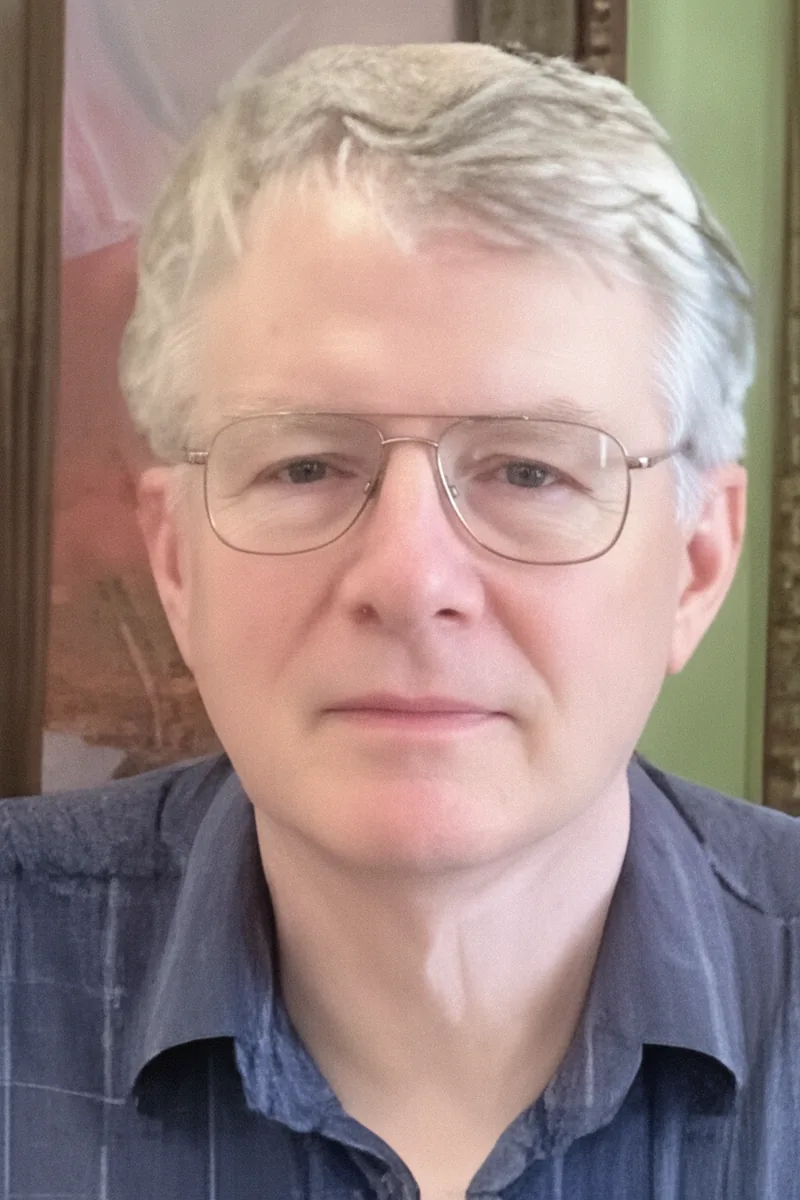
I grew up in the Boston area and now live in Citrus County, Florida. I graduated from MIT in chemical engineering and worked for many years as a chemical process engineer, so I have a strong background in math and science, especially chemistry and thermodynamics. I've also been granted six U.S. patents. When the pandemic hit us, I moved to Florida and did part-time work as a chess tutor, then became a substitute teacher in the middle and high schools in our district. I enjoyed working with the students, many of whom had difficulty learning in big classes with many disruptions. I found that I could best help these students by using real-world examples to teach difficult concepts in a new way. Often, then, the student would come away with a new perspective and a much better understanding of the concept. I was happy to be able to help. These days as a VT tutor, I continue to use, whenever possible, real-world examples in my own material in chemistry and thermodynamics.

Genetics PhD work is surprisingly calculus-intensive — population dynamics, statistical mechanics of molecular interactions, and the thermodynamic stability of nucleic acid structures all demand the same quantitative reasoning that drives p-chem. Nicholas brings that background to topics like free energy calculations and kinetic modeling, where his comfort with both the math and the molecular biology underneath it keeps derivations grounded in actual chemical behavior. Rated 4.8 by students.
Cornell's biological sciences curriculum put Alec through rigorous quantitative coursework, but it was his TA experience in general chemistry — running problem-solving sessions where students had to wrestle with energy, equilibrium, and rate laws — that sharpened his instinct for where p-chem concepts start to blur. He teaches the subject by slowing down at the exact calculus step where the physical meaning tends to disappear, whether that's setting up a thermodynamic cycle or interpreting what a rate constant actually tells you about molecular collisions. Rated 4.8 by students.
Pre-med coursework at Rutgers — graduating summa cum laude with a 4.0 — put Sam through the gauntlet of thermodynamics, kinetics, and quantum chemistry that p-chem demands, all while building the calculus fluency needed to survive dense derivations. He approaches topics like enthalpy, entropy, and rate laws by stripping each equation back to the physical scenario it models, making the leap from math to molecular meaning less painful.
A PhD in biophysical chemistry means Tom didn't just survive p-chem — he built a research career on it, working at the intersection of thermodynamics, quantum mechanics, and molecular behavior where the math has to be airtight. He treats the subject like a language students need to actively speak: drilling derivations and problem sets until manipulating a Maxwell relation or setting up a partition function becomes fluent rather than formulaic.
A physics degree means Eitan spent years inside the quantum mechanics, statistical mechanics, and thermodynamics that p-chem courses formalize on the chemistry side — Schrödinger's equation, Boltzmann statistics, and state functions are native territory rather than new abstractions. He teaches the derivations by clarifying the physical picture each equation encodes, so a student wrestling with a partition function or a Carnot cycle can see the molecular behavior driving every calculus step. Holds a 5.0 rating.
Biology research through the American Museum of Natural History and pre-med coursework at Cornell gave Krishna hands-on exposure to the thermodynamic and kinetic principles that p-chem formalizes — energy changes in biological systems, reaction rates, equilibrium behavior. She uses that life-science grounding to make topics like Gibbs free energy and rate laws feel like descriptions of real molecular events rather than pure derivation exercises.
Scoring in the 98th percentile on the MCAT required Nishant to internalize the thermodynamic and kinetic reasoning that p-chem makes rigorous — enthalpy diagrams, equilibrium constants, and rate law derivations all showed up under intense time pressure before he encountered them in their full mathematical form as a medical student at Case Western. He teaches a physics TA's instinct for applied problem-solving to the calculus-dense material, breaking a topic like a Maxwell relation or a phase diagram into the physical question it's actually answering.
Teaching high school chemistry daily means Kathleen regularly translates thermodynamic concepts like enthalpy, entropy, and equilibrium into language that clicks — a skill that carries directly into the more calculus-heavy treatment those same ideas get in a p-chem course. Her M.S.Ed from Penn and chemistry degree give her both the content depth and the instinct for spotting exactly where a derivation stops making sense to a student. Rated 5.0 by students.
Two biomedical engineering degrees mean Allyson has been doing the calculus-heavy thermodynamics and kinetics work that p-chem formalizes — modeling energy transfer in biological systems, working through rate equations for physiological processes — since undergrad. She zeroes in on the specific mathematical step where a derivation goes from followable to opaque, whether that's a tricky partial derivative in a Maxwell relation or the statistical reasoning inside a Boltzmann distribution. Rated 4.9 by students.
I am pursuing a career in dentistry/oral surgery and will be beginning dental school at Boston University this fall. For this reason I recently took the DAT, which I am capable of assisting you with as well. During my undergraduate education, which I completed this past December, I worked in my school's tutoring center, helping my peers succeed in mathematics and science courses. Outside of my academic life, I am a big sports fan and I mostly follow the New York sports teams. For fun, I like to play basketball and golf with my friends. I am looking forward towards getting to know you and helping you with your academic needs.
A PhD in chemical engineering means Alexander spent years deriving and applying the exact thermodynamic frameworks — equations of state, phase equilibria, transport phenomena — that p-chem students encounter stripped of their engineering context. His biosystems engineering background adds a second layer, connecting statistical mechanics and kinetics to real molecular systems rather than leaving them as abstract formalisms. Rated 4.9 by students.
A PhD in chemistry means Justin didn't just pass p-chem — he lived in its formalism for years, from quantum mechanical models to statistical thermodynamics, and then kept using it through doctoral research. That depth shows when he teaches: he can trace a concept like chemical potential or a Maxwell relation back to the physical picture driving the math, catching the exact step where a student's understanding breaks down. Rated 5.0 by students.
Decades as a PhD chemical engineer meant Steven was solving Clausius-Clapeyron problems, reaction kinetics models, and energy balance derivations long before they were textbook exercises — they were daily work. He breaks down p-chem's toughest material by explaining a concept one way, re-explaining it from a different angle, then grounding it in a real engineering application where the math actually matters. Rated 4.9 by students.
Testimonials
Because the right Physical Chemistry tutor makes all the difference.
Average Session Rating – Based on 3.4M Learner Ratings
Nearby Physical Chemistry Tutors
Other Miami Tutors
Related Science Tutors in Miami
Frequently Asked Questions
Physical Chemistry combines principles of physics and chemistry to study matter and energy at the molecular level. Most courses cover thermodynamics (heat, energy, and spontaneity), kinetics (reaction rates and mechanisms), quantum mechanics (atomic structure and bonding), and equilibrium. Additional topics often include electrochemistry, spectroscopy, and statistical mechanics. Since Miami's school districts follow Florida's standards, coursework typically emphasizes both theoretical understanding and practical applications—making it important to connect these abstract concepts to real-world systems.
Physical Chemistry is challenging because it requires understanding abstract molecular-level concepts while simultaneously applying complex mathematics. Students often struggle with visualizing quantum states, balancing thermodynamic equations, and connecting mathematical derivations to physical meaning. Personalized tutoring helps by breaking down these interconnected topics into manageable pieces, building strong foundational understanding rather than relying on memorization, and showing how equations represent real chemical behavior. A tutor can also identify whether gaps are in math skills, conceptual understanding, or problem-solving strategy—and address each specifically.
Lab work is essential in Physical Chemistry because it grounds theoretical concepts in observable phenomena—seeing how temperature affects reaction rates, measuring equilibrium constants, or observing spectroscopic data makes the theory concrete. Tutoring can strengthen your lab skills by helping you understand the scientific reasoning behind experimental design, interpret data correctly, and write clear lab reports that explain results. A tutor can also help you prepare for lab practicals, troubleshoot unexpected results, and develop the systematic thinking that makes you a more independent scientist.
Memorizing formulas might get you through homework problems, but Physical Chemistry requires deeper understanding—knowing why a formula applies, what each variable represents, and when it breaks down. For example, memorizing the ideal gas law is different from understanding what happens when gases deviate from ideal behavior and why. Tutoring emphasizes conceptual mastery by connecting equations to molecular behavior, using visual models and real examples, and helping you develop problem-solving strategies that work across different scenarios. This approach builds lasting understanding and makes exam preparation far more effective.
Varsity Tutors connects you with experienced tutors who have deep expertise in Physical Chemistry and understand the curriculum taught in Miami's schools. When you connect with a tutor through Varsity Tutors, you get matched based on your specific needs—whether that's strengthening foundational concepts, improving problem-solving speed, or preparing for the AP Chemistry exam's Physical Chemistry section. Your tutor can provide personalized instruction tailored to your learning style and goals, making your study time more efficient and effective.
Absolutely. Unit conversions and dimensional analysis are critical skills in Physical Chemistry because you're constantly working with energy in different units (joules, calories, electron volts), pressure in various scales (atm, Pa, bar), and concentrations in multiple forms (molarity, molality, mole fraction). Many students lose points on exams not from conceptual misunderstanding but from careless unit errors. Tutoring helps you develop systematic approaches to dimensional analysis, build confidence with unit conversions, and create mental frameworks that prevent these errors. Mastering this skill early makes Physical Chemistry problems feel much more manageable.
Success in AP or honors Physical Chemistry requires mastery across several areas: strong algebra and logarithm skills for calculations, conceptual understanding of thermodynamic principles and reaction kinetics, ability to interpret graphs and data, and practice with multi-step problems that combine several topics. Beyond memorizing content, focus on developing your scientific reasoning—learning to predict how systems respond to changes and justify your predictions. Tutoring can help you identify which topics are your weakest areas, practice with exam-style questions under timed conditions, and build strategies for tackling unfamiliar problems confidently.
Let’s find your perfect tutor
Answer a few quick questions. We’ll recommend the right plan and match you with a top 5% tutor.