Award-Winning AP Physics C: Mechanics Tutors
serving Palm Bay, FL
AP Physics C: Mechanics
Tutors in Palm Bay
Private 1-on-1 tutoring, weekly live classes for academic support, test prep & enrichment, practice tests and diagnostics, and more to elevate grades and test scores.
Based on 3.4M Learner Ratings
UniversitiesSchools & Universities
DeliveredHours Delivered
ProficiencyGrowth in Proficiency
Who needs tutoring?
No obligation. Takes ~1 minute.
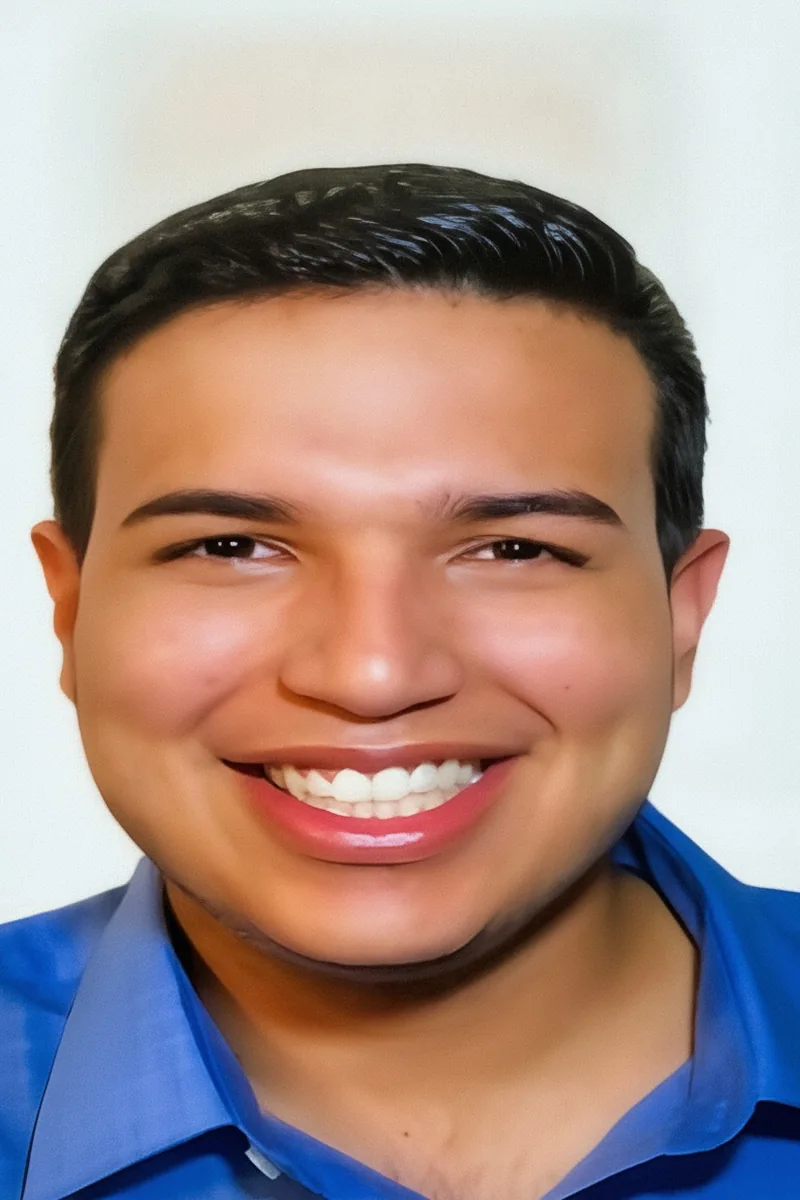
Scoring a 5 on both AP Physics C: Mechanics and AP Calculus BC while taking 16 AP courses total, Derek built the habit of connecting calculus tools to physical intuition under real exam pressure — and he brings that same efficiency to tutoring. His computer science major at Harvard sharpens his approach to mechanics problems: decompose the system, identify constraints, then execute the math cleanly, much like debugging code. Rated 4.9 by students, he's particularly effective at teaching the structured problem-solving that turns rotational dynamics and variable-force scenarios into manageable steps.
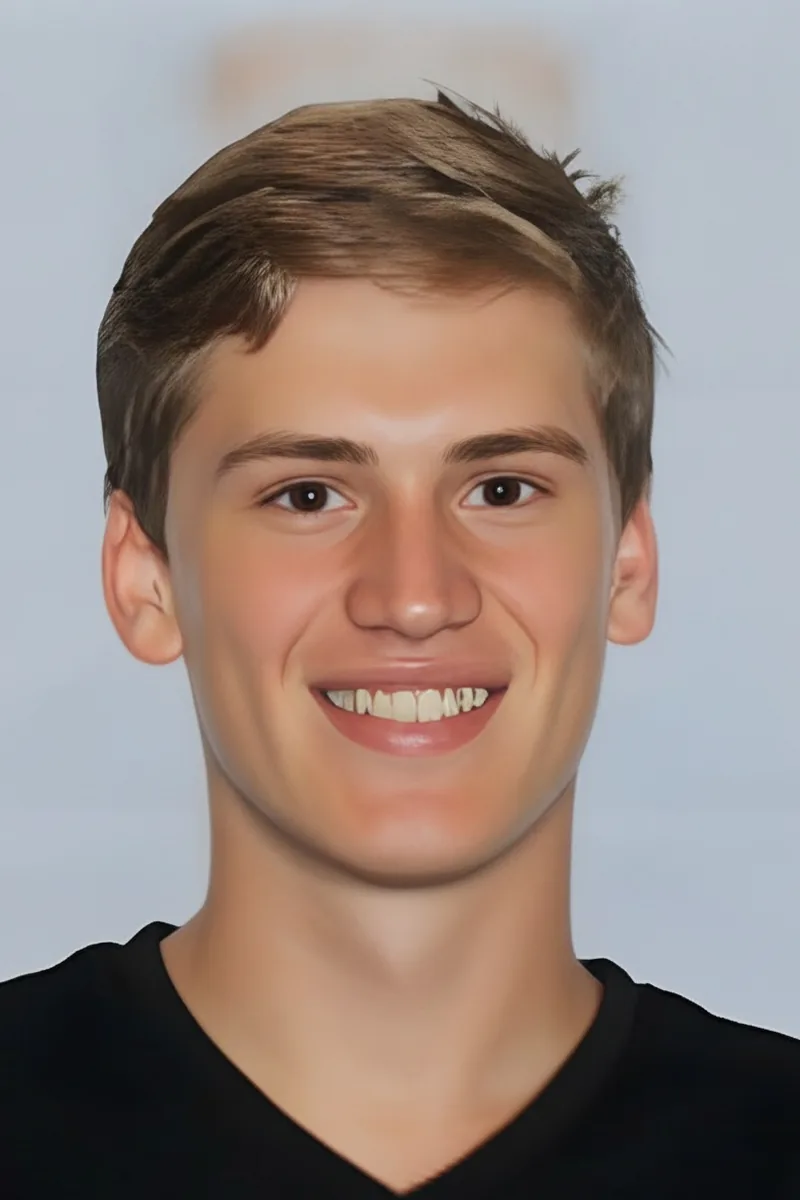
Studying Mechanical & Aerospace Engineering at Princeton, Nicolas solves calculus-based mechanics problems daily that go well beyond what the AP exam asks — rigid body dynamics, energy methods for complex systems, and the vector calculus behind rotational motion. That depth lets him quickly pinpoint whether a student's mistake lives in the physics reasoning or the integral setup, and fix the actual gap. Rated 5.0 by students.
A math degree gives Dalila the calculus fluency that separates AP Physics C from the algebra-based course — she's comfortable setting up the integrals and derivatives that underpin variable-force problems, work-energy applications, and kinematics beyond constant acceleration. She also tutors AP Physics 1, AP Physics 2, and both SAT Math Subject Tests, so she understands how to scale her explanations depending on whether a student needs help with the underlying physics concepts or specifically with translating a free-body diagram into a solvable differential equation.
Thirty years of teaching physics and holding a state certification means Michael has watched thousands of students hit the same stumbling blocks in calculus-based mechanics — the shift from memorizing kinematic equations to actually deriving motion from Newton's second law in integral form. His molecular biology graduate work gave him the quantitative rigor to teach across disciplines, and he uses that cross-training to connect force diagrams and energy methods to the kind of systematic reasoning that clicks on free-response problems.
Often, courses forget the fun and intuitive aspects of physics and mathematics, so I try to emphasize this while problem-solving. Since everyone learns differently, multiple approaches to solving problems are useful to discuss when possible. I understand many students have different priorities (e.g., time crunch on problem sets, building intuition, developing learning strategies), so I try to be flexible.
I am working towards a Bachelor of Arts in Pure and Applied Mathematics as well as a Bachelor of Arts in Astronomy and Physics. I have enjoyed studying math and science since I was in elementary school. I would always help my friends out by answering their questions about the material. For about the last five years, I have had my own tutoring business where I have tutored a wide variety of math courses from elementary school math to pre-calculus and calculus. I like to make sure my students have a complete understanding of the core concepts before going into practice questions. I have also had experience helping my peers with physics and computer science courses.
Working in a nanotechnology lab and finishing an honors thesis means Harrison regularly applies the calculus-based mechanics — force analysis, energy methods, variable-mass systems — that AP Physics C tests, but in contexts where getting the physics wrong has real experimental consequences. He pairs that lab intuition with a 35 ACT and a 4.9 tutoring rating, and he's especially effective at teaching students to read a free-response prompt and decide whether to reach for Newton's second law in differential form or jump straight to a conservation principle.
Fifteen AP exams and a computer science major at UCF mean Nathan thinks about mechanics problems the way a programmer thinks about systems — isolate variables, trace dependencies, solve step by step. That structured approach pays off on the calculus-heavy free-response questions, especially when a problem chains kinematics into a work-energy integral and students need to keep the physics and the math organized simultaneously. Rated 4.9 by students.
Neuroscience taught Evan to think about systems — how forces, feedback loops, and physical constraints interact — which translates surprisingly well to the calculus-based mechanics problems on the AP Physics C exam. He approaches topics like projectile motion and gravitational fields by building physical intuition first, then layering in the derivatives and integrals so the math feels like a natural extension of the reasoning. Rated 5.0 by students.
I'm currently an undergraduate student at Georgia Institute of Technology pursuing a degree in Electrical Engineering. I mostly tutor subjects that reside in the STEM field as those subjects are my strong points. I have been a tutor in the past back in high school. During that time, I realized that helping students understand difficult material can be very awarding. In my free time, when I'm not studying for school or practicing sports, I like to play video games and hangout with friends. Every once in a while I'll pick up my violin and play songs that I've learned in the past; I find it very relaxing.
John scored a 36 on the ACT and tutors the full calculus-to-physics pipeline — AP Calculus AB, AP Physics 1, and AP Physics C: Mechanics — so he sees exactly where students' math skills break down under the pressure of a mechanics problem. He teaches students to recognize which physical scenarios call for integration versus differentiation before they even write an equation, turning the free-response section into a series of deliberate decisions rather than panicked formula hunts. Rated 4.9 by students.
Mechanics is where Cory is most at home. He treats AP Physics C: Mechanics as a student's first real encounter with calculus-based reasoning about the physical world — deriving kinematic equations from integrals, connecting Newton's laws to differential equations in rotational dynamics, and building intuition for conservation laws that goes beyond plugging into formulas. His physics degree means the vector calculus never gets hand-waved away.
Sanjana's applied math studies at Harvard and her role as a Course Assistant for introductory calculus mean she's fluent in the exact differential and integral techniques that AP Physics C: Mechanics layers onto every force, torque, and energy problem. She's especially effective at bridging the gap when students grasp the physics intuitively but struggle to translate a scenario — say, a block on a spring with friction — into the correct differential equation and solve it cleanly. Rated 5.0 by students.
Biochemistry might seem unrelated to mechanics, but Shira's coursework in physics and calculus — plus a 1550 SAT — means she's built the quantitative chops to handle the kinematics, force analysis, and integration problems that define AP Physics C. She approaches mechanics the way she approaches lab work: isolate the variables, set up the math carefully, then check whether the answer makes physical sense. Rated 4.9 by students.
Rice's physics program throws Will into calculus-based mechanics every day — working through Lagrangian setups, variable-force integrations, and the rotational dynamics problems that make AP Physics C's free-response section so demanding. His approach starts with the underlying physical principle, then builds the math around it piece by piece, so students internalize the reasoning instead of pattern-matching to memorized solutions.
Richard holds both a B.S. in Math and a B.S. in Physics, which means the calculus and the mechanics aren't two separate languages for him — they developed together, and he teaches AP Physics C that way, treating the math as inseparable from the physical reasoning rather than an add-on. His graduate work in atmospheric sciences demanded constant modeling of force systems and fluid dynamics, so problems involving variable forces or energy conservation across complex scenarios are second nature. He can also tutor entirely in Spanish for bilingual students who think more clearly in their first language.
I am a professional scientist with multiple years of experience in the biopharmaceutical field. I have spent time in the classroom with elementary aged students and am comfortable with this age group. I am also familiar with AP classes and ACT/SAT preparation. I look forward to sharing my love of learning with students and helping them achieve academic goals!
I'm pursuing a double major in Mathematics and English at Vanderbilt University. I have been tutoring math since High School and have native proficiency in Mandarin Chinese. I am dedicated to helping students explore the study methods that will fit their individual needs.
Three years of tutoring introductory physics students while completing dual bachelor's degrees in physics and mathematics — followed by a PhD in Computational Mathematics — means Justin has taught the calculus-based mechanics in AP Physics C from both sides of the chalkboard. He digs into the spots where students typically stall, like setting up angular momentum problems or knowing when a scenario calls for energy methods versus force analysis, and walks through the underlying math until the physics clicks. Rated 5.0 by students.
AP Physics C: Mechanics isn't the obvious fit for a political science major — but Lila also tutors calculus, pre-calculus, and both AP Physics C courses, and her 36 ACT reflects the quantitative chops that calculus-based mechanics actually demands. She's especially useful for students who need someone to slow down and rebuild the connection between a free-body diagram and the integral it implies, rather than racing through derivations.
Pharmacy school trains you to think in systems — how one variable cascades through an entire mechanism — and Lillian applies that same reasoning to mechanics problems where forces, constraints, and calculus all interact at once. Her prepharmacy science background covers the physics and math rigor AP Physics C demands, and her 34 ACT confirms the quantitative chops to back it up. She's especially effective at teaching students to identify which physical principle governs a problem before touching any equations, rated 4.9 by students.
Engineering coursework at Notre Dame means Alexandra is solving calculus-based mechanics problems every week — free-body diagrams with variable forces, work-energy integrals, the full Newton's second law treatment that AP Physics C demands. Her 1530 SAT and 32 ACT point to the quantitative comfort that lets her explain the reasoning behind each setup rather than just walking through formulas. Rated 5.0 by students.
Testimonials
Because the right AP Physics C: Mechanics tutor makes all the difference.
Average Session Rating – Based on 3.4M Learner Ratings
Practice AP Physics C: Mechanics
Free practice tests, flashcards, and AI tutoring for AP Physics C: Mechanics
Nearby AP Physics C: Mechanics Tutors
Other Palm Bay Tutors
Related Science Tutors in Palm Bay
Frequently Asked Questions
AP Physics C: Mechanics is a calculus-based physics course that dives deeper into motion, forces, and energy than AP Physics 1. While AP Physics 1 uses algebra and is more conceptual, AP Physics C: Mechanics requires calculus to solve problems and emphasizes mathematical rigor. This course covers kinematics, Newton's laws, work-energy, momentum, circular motion, and oscillations—making it ideal for students planning to study engineering, physics, or related STEM fields in college.
Score improvement depends on your starting point and commitment level, but most students see meaningful gains with consistent, personalized instruction. The exam is scored 1-5, with a 3 considered passing; students who work with tutors typically improve by 1-2 score points over a few months. The key is identifying your specific weak areas—whether that's calculus application, free-body diagrams, or energy conservation—and targeting those gaps with focused practice and feedback.
The biggest hurdle is integrating calculus with physics concepts—many students struggle to set up derivatives and integrals correctly in motion problems. Free-body diagrams and force analysis also trip up students who haven't internalized Newton's laws deeply. Additionally, time management during the exam is critical; students often spend too long on conceptual setup and rush through calculations, or vice versa. Tutors can help you develop systematic problem-solving strategies and build confidence in both the math and the physics reasoning.
Most students benefit from starting tutoring 3-4 months before the May exam, meeting 1-2 times per week for focused sessions. However, the right timeline depends on your current level—if you're struggling with calculus fundamentals or missed early units, starting earlier (6 months out) gives you more breathing room. Alongside tutoring sessions, plan to spend 5-7 hours per week on independent practice, including full practice tests and problem sets. Consistency matters more than cramming; steady, spaced practice builds deep understanding and test-taking stamina.
Practice tests are essential—they reveal which topics you've mastered and where you need more work, plus they build familiarity with exam pacing and question formats. Take your first full practice test early (even if you're not fully prepared) to establish a baseline, then use subsequent tests every 2-3 weeks to track progress. After each test, spend time reviewing not just wrong answers but also questions you guessed on correctly; this helps you identify conceptual gaps. Tutors can help you analyze your practice test results strategically, focusing your study time on high-impact areas rather than topics you've already solidified.
Look for tutors with strong physics backgrounds—ideally those who've taken AP Physics C themselves, earned high scores, or studied physics in college. Equally important is teaching experience; a tutor should be able to explain complex concepts clearly and adapt their approach to your learning style. For AP Physics C specifically, you want someone comfortable with calculus applications in physics and familiar with common student misconceptions. When you connect with Varsity Tutors, we match you with experienced tutors who can demonstrate expertise in both the content and test-taking strategies.
Your first session is typically diagnostic and goal-setting focused. The tutor will assess your current understanding of key topics, identify your strongest and weakest areas, and learn about your learning style and test timeline. You'll discuss your target score and any specific challenges you're facing—whether that's calculus anxiety, conceptual confusion, or test-taking speed. From there, the tutor creates a personalized study plan that prioritizes the topics most likely to improve your score, ensuring your tutoring time is spent efficiently and strategically.
Test anxiety often stems from feeling unprepared or unsure how to approach problems—tutoring builds confidence by ensuring you understand the material deeply and have practiced exam-style questions extensively. As you solve more problems correctly and see your practice test scores improve, anxiety naturally decreases. Tutors also teach test-taking strategies like breaking complex problems into steps, managing time effectively, and knowing when to skip and return to a question. This combination of content mastery and strategic confidence-building helps you walk into exam day ready to perform.
Let’s find your perfect tutor
Answer a few quick questions. We’ll recommend the right plan and match you with a top 5% tutor.