Award-Winning AP Physics C: Mechanics Tutors
serving Jacksonville, FL
AP Physics C: Mechanics
Tutors in Jacksonville
Private 1-on-1 tutoring, weekly live classes for academic support, test prep & enrichment, practice tests and diagnostics, and more to elevate grades and test scores.
Based on 3.4M Learner Ratings
UniversitiesSchools & Universities
DeliveredHours Delivered
ProficiencyGrowth in Proficiency
Who needs tutoring?
No obligation. Takes ~1 minute.
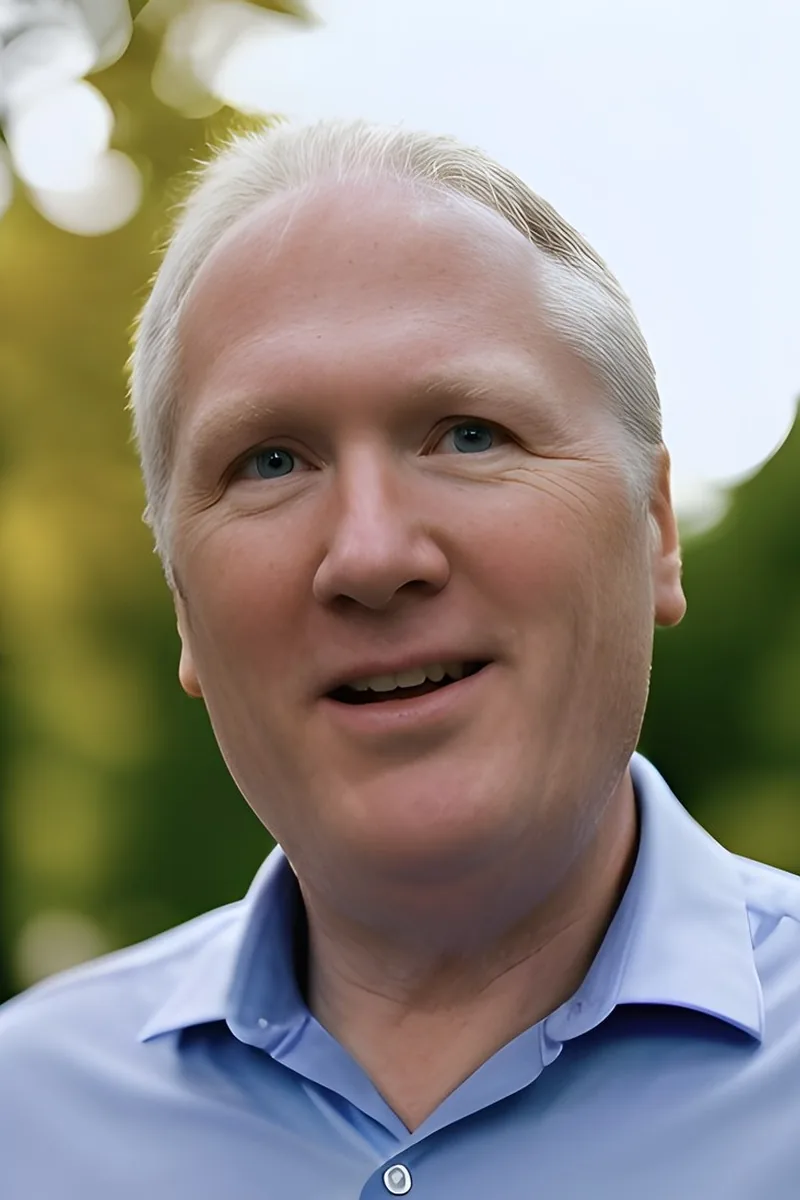
Thirty years of teaching physics and holding a state certification means Michael has watched thousands of students hit the same stumbling blocks in calculus-based mechanics — the shift from memorizing kinematic equations to actually deriving motion from Newton's second law in integral form. His molecular biology graduate work gave him the quantitative rigor to teach across disciplines, and he uses that cross-training to connect force diagrams and energy methods to the kind of systematic reasoning that clicks on free-response problems.

Often, courses forget the fun and intuitive aspects of physics and mathematics, so I try to emphasize this while problem-solving. Since everyone learns differently, multiple approaches to solving problems are useful to discuss when possible. I understand many students have different priorities (e.g., time crunch on problem sets, building intuition, developing learning strategies), so I try to be flexible.
Scoring a 5 on both AP Physics C: Mechanics and AP Calculus BC while taking 16 AP courses total, Derek built the habit of connecting calculus tools to physical intuition under real exam pressure — and he brings that same efficiency to tutoring. His computer science major at Harvard sharpens his approach to mechanics problems: decompose the system, identify constraints, then execute the math cleanly, much like debugging code. Rated 4.9 by students, he's particularly effective at teaching the structured problem-solving that turns rotational dynamics and variable-force scenarios into manageable steps.
Studying Mechanical & Aerospace Engineering at Princeton, Nicolas solves calculus-based mechanics problems daily that go well beyond what the AP exam asks — rigid body dynamics, energy methods for complex systems, and the vector calculus behind rotational motion. That depth lets him quickly pinpoint whether a student's mistake lives in the physics reasoning or the integral setup, and fix the actual gap. Rated 5.0 by students.
A math degree gives Dalila the calculus fluency that separates AP Physics C from the algebra-based course — she's comfortable setting up the integrals and derivatives that underpin variable-force problems, work-energy applications, and kinematics beyond constant acceleration. She also tutors AP Physics 1, AP Physics 2, and both SAT Math Subject Tests, so she understands how to scale her explanations depending on whether a student needs help with the underlying physics concepts or specifically with translating a free-body diagram into a solvable differential equation.
I am working towards a Bachelor of Arts in Pure and Applied Mathematics as well as a Bachelor of Arts in Astronomy and Physics. I have enjoyed studying math and science since I was in elementary school. I would always help my friends out by answering their questions about the material. For about the last five years, I have had my own tutoring business where I have tutored a wide variety of math courses from elementary school math to pre-calculus and calculus. I like to make sure my students have a complete understanding of the core concepts before going into practice questions. I have also had experience helping my peers with physics and computer science courses.
Working in a nanotechnology lab and finishing an honors thesis means Harrison regularly applies the calculus-based mechanics — force analysis, energy methods, variable-mass systems — that AP Physics C tests, but in contexts where getting the physics wrong has real experimental consequences. He pairs that lab intuition with a 35 ACT and a 4.9 tutoring rating, and he's especially effective at teaching students to read a free-response prompt and decide whether to reach for Newton's second law in differential form or jump straight to a conservation principle.
Fifteen AP exams and a computer science major at UCF mean Nathan thinks about mechanics problems the way a programmer thinks about systems — isolate variables, trace dependencies, solve step by step. That structured approach pays off on the calculus-heavy free-response questions, especially when a problem chains kinematics into a work-energy integral and students need to keep the physics and the math organized simultaneously. Rated 4.9 by students.
Neuroscience taught Evan to think about systems — how forces, feedback loops, and physical constraints interact — which translates surprisingly well to the calculus-based mechanics problems on the AP Physics C exam. He approaches topics like projectile motion and gravitational fields by building physical intuition first, then layering in the derivatives and integrals so the math feels like a natural extension of the reasoning. Rated 5.0 by students.
I'm currently an undergraduate student at Georgia Institute of Technology pursuing a degree in Electrical Engineering. I mostly tutor subjects that reside in the STEM field as those subjects are my strong points. I have been a tutor in the past back in high school. During that time, I realized that helping students understand difficult material can be very awarding. In my free time, when I'm not studying for school or practicing sports, I like to play video games and hangout with friends. Every once in a while I'll pick up my violin and play songs that I've learned in the past; I find it very relaxing.
Computational engineering at UT Austin means Atharva lives at the intersection of calculus, physics, and code — so when an AP Physics C problem requires setting up a differential equation for a variable-force scenario or computing rotational inertia through integration, he's drawing on skills he uses across multiple disciplines daily. His 33 ACT and 5.0 tutoring rating back up an approach that emphasizes building the free-body diagram and mathematical model together, so students see exactly where the physics ends and the calculus begins.
Chemical-biological engineering at the undergraduate level means Kristen solved mechanics problems with real calculus stakes — variable-force work integrals, rotational inertia derivations, coupled differential equations — long before they became exam questions. Her 36 ACT and 1590 SAT speak to the quantitative sharpness she brings to the trickiest AP Physics C problems, especially when students need to bridge the gap between setting up Newton's second law in differential form and actually executing the integration. Rated 4.9 by students.
AP Physics C: Mechanics isn't the obvious fit for a political science major — but Lila also tutors calculus, pre-calculus, and both AP Physics C courses, and her 36 ACT reflects the quantitative chops that calculus-based mechanics actually demands. She's especially useful for students who need someone to slow down and rebuild the connection between a free-body diagram and the integral it implies, rather than racing through derivations.
An applied physics degree means Karen didn't just study mechanics for an exam — she built her entire undergraduate education around the Newtonian framework, calculus-based problem-solving, and laboratory work that AP Physics C condenses into a single course. She's especially sharp at connecting real-world scenarios (a spinning figure skater, a car banking a curve) to the free-body diagrams and integrals students need to produce under timed conditions. Rated 5.0 by students.
Jared's PhD work in mechanical engineering at Lehigh means he's solving advanced dynamics problems daily — the kind where AP Physics C's rotational kinematics and work-energy integrals are just the warm-up. His biomedical engineering background adds a practical dimension: he can show students how a torque problem on the exam mirrors the same mechanics behind joint loading or prosthetic design, making abstract calculus-based physics feel grounded in something real.
Free-body diagrams, rotational inertia, and conservation of energy problems all require calculus-based reasoning that trips students up when they try to rely on formulas alone. Emily completed the full pre-med physics sequence at Cornell and spent her senior year tutoring calculus — two skills that converge directly in AP Physics C: Mechanics. She breaks multi-step problems into the underlying math so students see why the setup matters as much as the answer.
Steven's biology degree from Drexel included the calculus-based physics sequence that maps directly onto AP Physics C: Mechanics — kinematics, Newton's laws in differential form, and energy conservation problems that demand clean integral setups. Where many science-track tutors skim the mechanics, his organismal physiology concentration meant applying force and motion concepts to biological systems, giving him a concrete way to explain why a free-body diagram matters before any calculus happens. Rated 5.0 by students.
Emily's computational biology major at Cornell pairs heavy calculus and physics coursework with programming — a combination that trained her to model real systems mathematically, which is exactly what AP Physics C: Mechanics demands when a problem asks you to integrate a variable force or derive an equation of motion. Her 36 ACT and 1590 SAT reflect the kind of quantitative precision that pays off on the exam's trickiest free-response questions, especially those involving work-energy theorem applications and non-constant acceleration. Rated 4.9 by students.
Biochemistry might seem unrelated to mechanics, but Shira's coursework in physics and calculus — plus a 1550 SAT — means she's built the quantitative chops to handle the kinematics, force analysis, and integration problems that define AP Physics C. She approaches mechanics the way she approaches lab work: isolate the variables, set up the math carefully, then check whether the answer makes physical sense. Rated 4.9 by students.
Rice's mechanical engineering program puts Ashton through calculus-based statics, dynamics, and kinematics every semester — the same core mechanics that AP Physics C tests, just applied to real structural and machine systems. That daily exposure means he can spot whether a student's free-response mistake is a physics misread or a calculus execution error, and address the right one. His 32 ACT underscores the quantitative fluency backing his approach.
Having earned a BS in both physics and math from Yale, Anthony did the calculus-based mechanics — Lagrangian setups, variable-force integrations, rotational energy derivations — before pivoting to a PhD in economics, which means he teaches the material with the clarity of someone who's already fully digested it rather than still learning alongside students. His 1560 SAT and 5.0 tutoring rating back up what his physics training makes obvious: he can untangle the spots where the calculus and the physical reasoning collide, especially on free-response problems that demand both.
A PhD in Chemical and Biomolecular Engineering from Buffalo built on a nuclear engineering foundation means Sabry has spent years solving the calculus-heavy mechanics problems — work-energy integrals, rigid body torque derivations, variable-force differential equations — that AP Physics C tests in compressed form. He co-instructed both undergraduate and graduate physics and mechanics courses during his doctoral program, so he knows exactly where students confuse the physical setup with the mathematical execution and can address each independently.
Testimonials
Because the right AP Physics C: Mechanics tutor makes all the difference.
Average Session Rating – Based on 3.4M Learner Ratings
Practice AP Physics C: Mechanics
Free practice tests, flashcards, and AI tutoring for AP Physics C: Mechanics
Nearby AP Physics C: Mechanics Tutors
Other Jacksonville Tutors
Related Science Tutors in Jacksonville
Frequently Asked Questions
AP Physics C: Mechanics focuses on classical mechanics and includes kinematics, Newton's laws, work and energy, momentum, circular motion, oscillations, and gravitation. The course emphasizes calculus-based problem-solving, requiring students to understand both conceptual principles and mathematical applications. For students in Jacksonville preparing for the exam, mastering these interconnected topics through systematic study is essential for success.
AP Physics C: Mechanics combines conceptual physics with calculus, requiring students to not only understand physical principles but also apply derivatives and integrals to solve problems. Many students struggle with the transition from algebra-based to calculus-based reasoning, and the exam demands both quick problem-solving and deep conceptual understanding. Personalized 1-on-1 instruction helps identify specific gaps—whether in calculus skills, conceptual misunderstandings, or problem-solving strategy—so you can address them directly.
Score improvement depends on your starting point and how consistently you engage with tutoring and practice. Students who work with tutors typically see meaningful gains by focusing on weak areas, practicing with released exam questions, and refining their problem-solving approach. Most students benefit from starting tutoring at least 2-3 months before the exam, allowing time to build conceptual mastery and test-taking confidence.
Your first session typically focuses on understanding your current level, identifying specific challenges (whether with kinematics, energy concepts, circular motion, or calculus application), and establishing a personalized study plan. A tutor will likely assess your comfort with foundational concepts and calculus skills, then tailor upcoming sessions to address gaps and build toward exam readiness. This diagnostic approach ensures your tutoring is focused and efficient.
Practice tests are critical—they reveal which topics you've mastered and which need more work, help you develop pacing strategies for the 90-minute exam, and reduce test anxiety by building familiarity with question formats. Varsity Tutors connects you with tutors who use released AP exams and quality practice materials to simulate real testing conditions. Working through practice tests with a tutor's feedback accelerates learning far more than practicing alone.
The AP Physics C: Mechanics exam has 45 minutes for 35 multiple-choice questions and 45 minutes for 3 free-response problems. Effective timing requires practicing with actual exam questions to develop a sense of pacing—typically spending 1-2 minutes per multiple-choice question and allocating time proportionally across free-response sections. A tutor can help you identify which question types slow you down and practice strategies to work efficiently without sacrificing accuracy.
Common mistakes include misapplying Newton's second law in non-inertial reference frames, confusing energy conservation with work-energy theorem, making sign errors in circular motion and gravitation problems, and rushing through free-response questions without showing complete reasoning. Many students also struggle with calculus application—forgetting to integrate or differentiate when required. Personalized instruction helps you recognize your specific error patterns and develop habits to catch them before exam day.
Look for tutors with strong physics backgrounds—ideally with college-level physics experience or AP Physics C teaching experience—and familiarity with the current AP exam format and scoring rubric. Tutors should be able to explain concepts clearly, guide you through problem-solving strategies, and provide constructive feedback on your free-response work. Varsity Tutors connects you with expert tutors in Jacksonville who understand both the content and the specific demands of the AP exam.
Let’s find your perfect tutor
Answer a few quick questions. We’ll recommend the right plan and match you with a top 5% tutor.