Award-Winning College Physics Tutors
serving Springfield, MO
College Physics
Tutors in Springfield
Private 1-on-1 tutoring, weekly live classes for academic support, test prep & enrichment, practice tests and diagnostics, and more to elevate grades and test scores.
Based on 3.4M Learner Ratings
UniversitiesSchools & Universities
DeliveredHours Delivered
ProficiencyGrowth in Proficiency
Who needs tutoring?
No obligation. Takes ~1 minute.
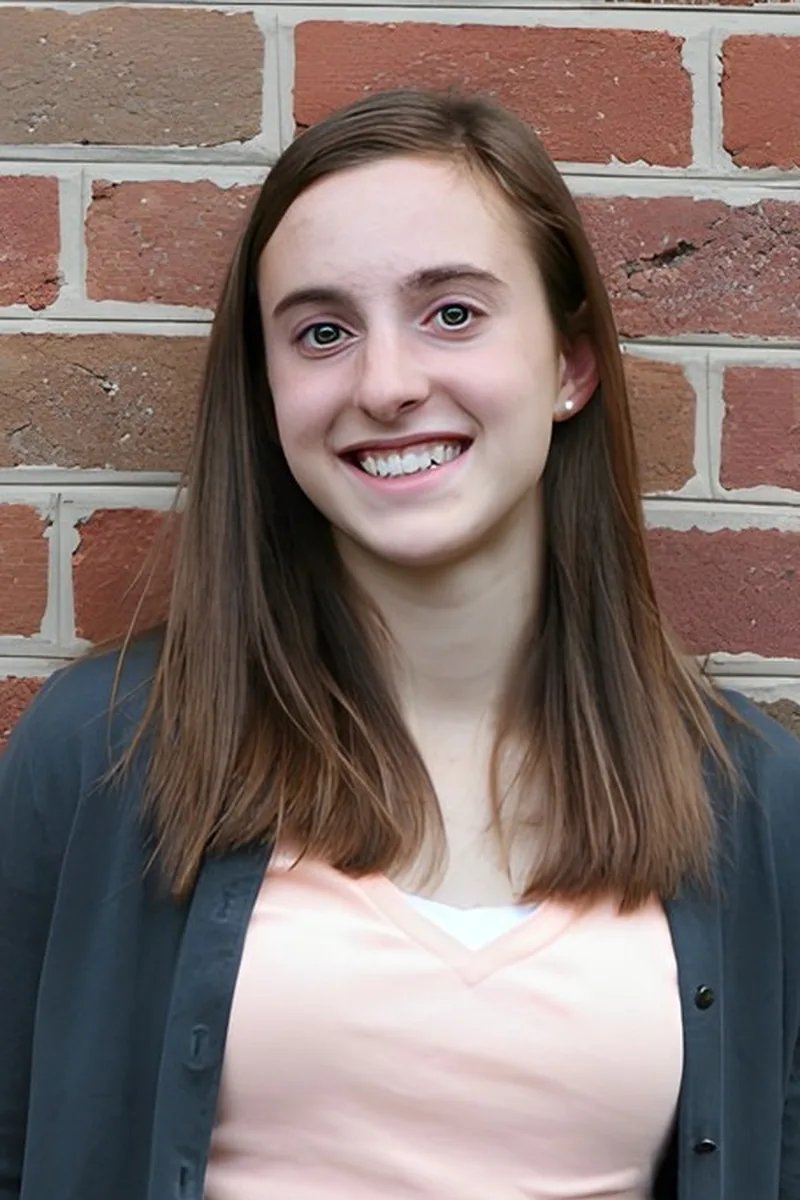
College-level physics demands comfort with calculus-based reasoning — deriving equations of motion, integrating force over a path for work, or applying differential equations to oscillations. Kathleen's math degree from Washington University and her experience teaching through multivariable calculus mean she can unpack both the physics intuition and the mathematical machinery simultaneously.
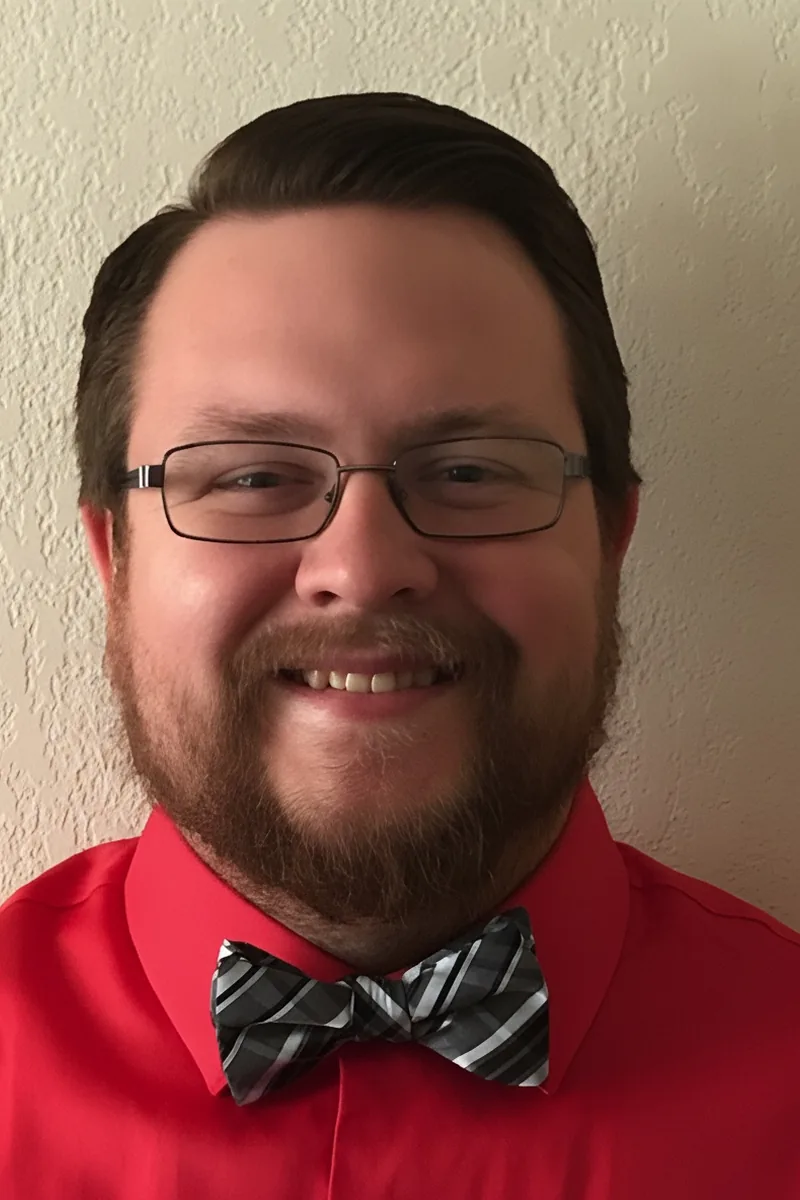
Teaching AP Chemistry, Honors Biology, and Anatomy & Physiology in a high school classroom means Samuel regularly translates physics into the language his students already speak — explaining pressure gradients through circulatory systems, connecting thermodynamic laws to calorimetry labs, and grounding wave behavior in real instrumentation. His master's in science education sharpens that skill further, giving him a structured way to diagnose exactly where a student's conceptual understanding breaks down during multi-step problem solving. Rated 4.9 by students.
I am interested in Physics and Mathematics and working out practical problems from plumbing to electronics. I will someday go back for my Ph.D. in Physics but until then I am looking to grow as an engineer or computer programmer.
Having spent four years solving problems in thermodynamics, kinetics, and quantum mechanics as part of his chemistry degree at Missouri State, Jacob approaches college physics with the mathematical rigor it demands. He's especially strong on topics where physics and chemistry overlap — electromagnetism, fluid dynamics, and energy conservation — and breaks multi-step problems into clear, logical sequences.
I am excited to help anyone who might need it!
Five years of tutoring undergraduate physics while completing a PhD in the subject means Mayuri has seen every way students get tripped up — from misapplying Newton's third law in multi-body problems to losing signs in electric potential calculations. She teaches the diagnostic step most students rush past: figuring out which physical principle actually governs a scenario before touching any math. Her triple background in physics, mathematics, and statistics makes her especially comfortable with the calculus-heavy and data-driven portions of the course.
Certified to teach secondary science and holding a 33 ACT, Megan brings a teacher's instinct for diagnosing exactly where a student's reasoning breaks down — whether it's setting up free-body diagrams, misapplying conservation laws, or losing the physics inside the calculus. Her graduate work in curriculum design means she structures problem-solving practice deliberately, building from conceptual understanding to multi-step quantitative problems rather than just assigning more homework. Rated 5.0 by students.
College physics ramps up fast — suddenly rotational dynamics, electromagnetic induction, and wave optics all demand calculus fluency on top of conceptual understanding. Anatoliy's math background through calculus BC combined with his science training means he can tackle both sides of that challenge simultaneously. He's especially effective at connecting the integral and differential forms of physics equations to their physical meaning.
Chemical engineering coursework is essentially college physics with higher stakes — fluid dynamics, heat transfer, and thermodynamics applied to industrial-scale systems where getting the math wrong has real consequences. Austin brings that engineering rigor to problems involving energy balances, pressure, and mechanics, walking students through the physical reasoning step by step rather than letting them default to equation hunting.
Free-body diagrams, torque calculations, stress analysis, fluid dynamics — Jordan didn't just study these in a textbook but worked through them as core requirements of a mechanical engineering degree, where getting the physics wrong means the design fails. That engineering lens means he tackles college physics problems the way a practicing engineer would: sketching the system, identifying constraints, and choosing the right principle before touching an equation. He's especially sharp on mechanics and thermodynamics, the two areas where his coursework went deepest.
Biomedical engineering at Brown means Phillip solves physics problems with real biological stakes — modeling fluid flow through vessels, analyzing stress on implant materials, calculating electrical signals in tissue. That daily overlap with mechanics, thermodynamics, and electromagnetism gives him a practical fluency that makes college physics problem sets feel less abstract and more like puzzles with actual answers. Rated 5.0 by students.
Chemical engineering at Vanderbilt means Greg solves physics problems daily — fluid mechanics, heat transfer, thermodynamics, and force balances are baked into every core course, so his explanations come from repeated, hands-on application rather than textbook summaries. His math double major gives him the calculus fluency to walk through derivations cleanly, especially when problems involve integration over continuous systems or solving second-order differential equations of motion. Rated 5.0 by students.
Engineering coursework at Cornell means Abby is actively grinding through the same calculus-based physics — mechanics, wave motion, electromagnetism — that her students are tackling, which keeps her explanations grounded in the specific problem styles and pitfalls that show up on current exams. She breaks down multi-step problems by isolating the physical principle first, then translating it into the math, so students stop guessing which equation to use. Holds a 5.0 rating.
Three years of tutoring introductory physics while completing dual bachelor's degrees in physics and mathematics gave Justin a detailed map of exactly where students lose the thread — the jump from one-dimensional kinematics to rotational analogs, the shift from intuitive force reasoning to formal energy methods. His PhD in Computational Mathematics at the University of Chicago deepened that foundation, adding fluency with the differential equations and vector calculus that make the leap from algebra-based to calculus-based physics so steep. Rated 5.0 by students.
Predentistry requires a deep pass through college physics — optics, fluid dynamics, mechanics of materials — and Erica tackled that coursework at Harvard alongside a History of Science degree that gave her an unusual ability to explain *where* physical concepts come from and how they evolved into the frameworks students use today. She breaks down problem-solving by connecting the conceptual narrative to the math, so students aren't just plugging into formulas but understanding the physics driving each step. Rated 4.9 by students.
Studying computer science at MIT means Brice lives inside the math and physics that most students only encounter on problem sets — his coursework regularly demands fluency in mechanics, wave behavior, and electromagnetism as foundations for everything from signal processing to computational modeling. He breaks physics problems into the same kind of step-by-step logical structure he'd use to debug code, which makes tangled multi-concept questions feel systematic rather than overwhelming. Rated 4.9 by students.
College-level physics demands more than plug-and-chug — problems in electrodynamics, rotational mechanics, or thermodynamics often require combining multiple principles in a single solution. Pranav digs into these multi-step problems as a Biomedical Engineering student at Johns Hopkins, where physics underpins much of his coursework. He walks through derivations and problem-solving strategies that build real fluency with the material rather than surface-level familiarity.
College-level physics ramps up fast, especially when courses introduce calculus-based mechanics or electromagnetism for the first time. Charles works through these topics as part of his mechanical engineering curriculum at Yale, so he can walk through derivations of torque, moment of inertia, or Gauss's law with the fluency of someone who applies them in lab and design projects regularly.
Neuroscience gave Julie a deep working knowledge of the physics that governs biological systems — membrane capacitance, electrical potentials across ion channels, fluid dynamics in neural vasculature — so she brings a concrete, applied lens to college physics topics that other tutors treat purely abstractly. Her strong quantitative background (1480 SAT, dual B.S. in Neuroscience) means she's comfortable walking through the calculus-based derivations in mechanics and E&M without losing sight of what the physics actually describes. Rated 5.0 by students.
Biomedical engineering at Johns Hopkins means Christine solves physics problems daily that most students only see in textbooks — fluid dynamics in blood flow, pressure gradients across membranes, mechanics of prosthetic joints — giving her a concrete, application-heavy lens for the material. She's particularly strong on the thermodynamics and mechanics portions of college physics, where her coursework overlaps most directly with standard problem sets. Holds a 5.0 rating.
A chemistry degree from Yale means Zosia spent years in courses where physics does the heavy lifting — thermodynamics driving reaction spontaneity, quantum mechanics explaining atomic structure, electrostatics governing molecular interactions — so she knows these concepts from the inside out. She's particularly effective at teaching students to translate word-heavy problem statements into clean free-body diagrams or energy bar charts before touching an equation. Rated 4.9 by students.
Biomedical engineering at Duke means Eric solves physics problems daily — modeling forces on prosthetic joints, analyzing fluid flow through artificial vessels, calculating electrical signals in biosensors — so the mechanics and electromagnetism in a college physics course map directly onto work he's already doing. He breaks multi-step problems into their physical components first, making sure the reasoning is solid before any math hits the page. Holds a 5.0 rating.
Testimonials
Because the right College Physics tutor makes all the difference.
Average Session Rating – Based on 3.4M Learner Ratings
Nearby College Physics Tutors
Other Springfield Tutors
Related Science Tutors in Springfield
Frequently Asked Questions
Varsity Tutors matches Springfield students with expert College Physics tutors for 1-on-1 instruction. We pair each student with a tutor based on their specific needs, learning style, and goals.
Whether you need homework help, exam prep, or want to get ahead, our College Physics tutors are ready to help.
Common challenges include gaps from earlier material, difficulty with specific concepts, and trouble applying learning to new problems. These issues can snowball quickly in College Physics.
A tutor identifies where you're stuck, fills in gaps, and provides targeted practice. The 1-on-1 format means you get help exactly where you need it.
Tutors work with your student's actual coursework—homework assignments, class notes, and upcoming tests. This keeps tutoring directly relevant to what's happening in the classroom.
When you share information about your student's school and curriculum, we can match you with a tutor who has relevant experience.
All tutors complete background checks, credential verification, and teaching evaluation. Many of our College Physics tutors hold advanced degrees or have years of teaching experience.
You can review tutor profiles to find someone with the right background for your student's level and needs.
Many students see improved grades within a few weeks, along with better understanding of College Physics concepts and more confidence tackling challenging material.
Tutors track progress and adjust their approach to ensure continued improvement.
Most students benefit from 1-2 sessions per week. More frequent sessions help if your student is significantly behind or has an important exam coming up.
Your tutor can recommend a schedule based on your student's specific situation and goals.
Tutoring is purchased in packages of hours, with rates varying by tutor experience. Varsity Tutors offers several options to fit different budgets and needs.
You can discuss pricing during your consultation to find what works best.
Your tutor will assess where your student is, discuss goals, and start working on priority areas. Most students bring current homework or upcoming test material to focus on.
By the end, you'll have a clear sense of how the tutor can help and a plan for moving forward.
Let’s find your perfect tutor
Answer a few quick questions. We’ll recommend the right plan and match you with a top 5% tutor.