Award-Winning Geometry Tutors
serving Springfield, MO
Geometry
Tutors in Springfield
Private 1-on-1 tutoring, weekly live classes for academic support, test prep & enrichment, practice tests and diagnostics, and more to elevate grades and test scores.
Based on 3.4M Learner Ratings
UniversitiesSchools & Universities
DeliveredHours Delivered
ProficiencyGrowth in Proficiency
Who needs tutoring?
No obligation. Takes ~1 minute.
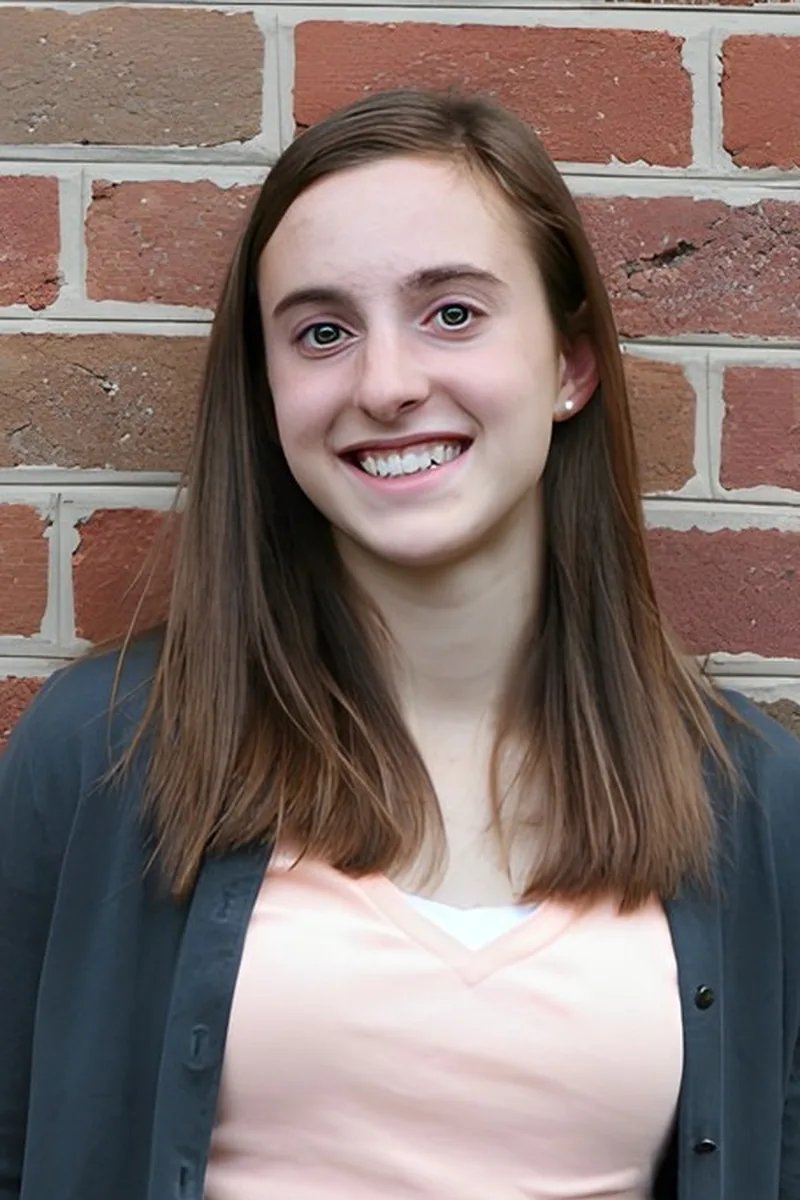
A math major at Washington University with a 35 ACT, Kathleen has the kind of fluency across algebra, trigonometry, and spatial reasoning that lets her spot exactly which prerequisite skill is tripping a geometry student up — whether it's solving equations inside angle relationships or applying trig ratios to right triangles. She teaches the "why" behind each theorem so students can reconstruct steps on their own instead of memorizing proof templates.

Proofs are usually where geometry students panic — the logic feels unfamiliar and the format is rigid. Rachel teaches proof-writing as organized storytelling, showing students how to chain together postulates and theorems into an argument that flows. Her emphasis on diagramming and marking up figures gives students a concrete anchor before they ever write a single statement.
A chemistry major at WashU, Mubariz is used to thinking about molecular geometry — bond angles, spatial arrangements, symmetry — which gives him a natural entry point into the kind of shape-and-angle reasoning that drives high school geometry. He teaches the 'why' behind each theorem rather than just the procedure, breaking down problems involving triangle relationships and angle properties so students can reconstruct the logic on their own instead of memorizing steps.
The jump from arithmetic to geometry is the first time many students have to argue *why* something is true instead of just computing an answer — and that shift trips up more kids than any specific theorem. John's math degree means he can teach the reasoning behind congruence and angle relationships from the ground up, connecting each proof step to intuition rather than leaving students to memorize statement-reason pairs. His 35 ACT reflects the kind of precise, methodical thinking he brings to even the trickiest multi-step diagram problems.
Proofs are usually the moment geometry stops feeling easy, so Jacob spends real time on the logic behind congruence and similarity rather than rushing to the next theorem. His scientific training at Missouri State sharpened his ability to build step-by-step arguments — exactly the skill students need when tackling two-column proofs, angle relationships, and coordinate geometry problems.
I am excited to help anyone who might need it!
A decade of teaching science in bilingual classrooms in Ecuador gave Joy a knack for making abstract ideas concrete — a skill that pays off in geometry when students need to visualize why a proof works or how a transformation changes a figure. Her biology background, where diagramming structures and reasoning about spatial relationships is routine, translates naturally to topics like symmetry, properties of polygons, and geometric constructions.
Chemical engineering is full of geometry most students never see — reactor vessel dimensions, pipe cross-sections, flow through oddly shaped channels — so Austin thinks about shapes and measurements as practical tools, not abstract exercises. He unpacks problems involving area, volume, and right-triangle relationships by tying them back to physical intuition about why the formulas work the way they do.
Proofs are usually the first place geometry students panic, and Jessica has a knack for demystifying them by teaching the logical structure behind each step before asking anyone to write one. She covers everything from triangle congruence and similarity to circle theorems and coordinate geometry. Her medical school training in systematic reasoning translates surprisingly well to the deductive thinking geometry demands.
Proofs are usually the first place geometry students get stuck — going from "I can see it's true" to writing a logical argument feels like a completely different subject. Jordan approaches proof-writing as an engineering problem: identify what you know, figure out what connects to what, and build the argument one justified step at a time. He also covers coordinate geometry and triangle relationships with the same structured thinking.
Proofs are usually the part of geometry that trips students up, because suddenly math requires written arguments instead of calculations. Matt teaches students to map out each logical step — from identifying congruent triangles to applying parallel-line theorems — the same way he'd sketch out an engineering design before building it.
Proofs are usually the first time a math student has to construct a logical argument rather than just compute an answer, and that shift trips up a lot of Geometry students. Samantha's doctoral training in computer science was built on formal logic and proof construction, so she teaches students to approach two-column and paragraph proofs as structured reasoning exercises rather than mysterious rituals.
Proofs are usually where geometry stops feeling like math and starts feeling like a foreign language. Ava tackles that disconnect by teaching students to read diagrams actively — identifying congruent triangles, parallel line relationships, and angle pairs before ever writing a formal statement. Her engineering background means spatial reasoning is second nature to her.
Materials science is a field where you're constantly thinking about how structures behave — crystal lattices, grain boundaries, stress distributions across shapes — so Jennifer's engineering background gives her a natural fluency with the spatial reasoning geometry demands. She unpacks problems involving angle relationships and properties of polygons by connecting them to the physical intuition she built studying how real materials are structured. Rated 5.0 by students.
An English major might seem like an unlikely geometry tutor, but Ayako's 1540 SAT score speaks to serious quantitative chops — and she approaches geometric reasoning the way she approaches a close reading, breaking a complex figure into its component parts and asking what each piece tells you. She's especially effective at teaching students how to extract usable information from dense diagrams involving circles, inscribed angles, and overlapping triangles. Rated 5.0 by students.
Jackie scored a 36 on the math section of the ACT, and her coursework through AP Calculus BC and Multivariable Calculus means she's deeply fluent in the reasoning skills that underpin geometry. She breaks down topics like angle relationships, area formulas, and coordinate geometry by tying them back to the algebraic thinking students already have — making new concepts feel like extensions, not mysteries. Rated 5.0 by students.
A chemistry major at Harvard, James is used to thinking in three dimensions — molecular geometries, orbital shapes, bond angles — which gives him a natural fluency with the spatial reasoning geometry requires. He tackles circle theorems and polygon properties by encouraging students to sketch, label, and reason through diagrams before jumping to formulas, building the kind of geometric intuition that makes even multi-step problems feel manageable. Rated 4.9 by students.
Economics at UChicago is surprisingly proof-heavy — Ellie's coursework in mathematical economics requires the same kind of structured, step-by-step logical reasoning that geometry proofs demand. She applies that training to help untangle the visual-to-logical leap students struggle with, particularly when translating a diagram involving circle theorems or polygon properties into a written argument. Her 1520 SAT speaks to the broader math fluency she brings to the table.
Proofs trip up most geometry students because they demand a completely different kind of reasoning than plugging numbers into formulas. David's economics training at the University of Chicago built the same logical, step-by-step argumentation that geometric proofs require, and he applies that structured thinking to everything from triangle congruence to circle theorems.
A year as a course assistant in Harvard's math department taught Richard how to break abstract reasoning into concrete steps — a skill that pays off in geometry when students need to connect definitions, postulates, and theorems into a coherent proof. His government major, which is essentially an exercise in building airtight arguments from messy evidence, reinforces the same logical sequencing that two-column and paragraph proofs demand.
Proofs are usually where geometry goes from manageable to frustrating — suddenly students need to justify every step with logic instead of just calculating angles. Maggie approaches proof-writing as a skill closer to constructing an argument than solving an equation, a perspective sharpened by her dual background in science and the liberal arts. She also covers coordinate geometry, triangle congruence, and circle theorems with the same emphasis on reasoning over rote steps.
Proofs are usually where geometry students panic — the logic feels nothing like the computation they're used to. Rachel spent her Dartmouth engineering program constructing logical arguments from axioms and constraints, so she's comfortable walking students through how to set up two-column and paragraph proofs while also tackling area, volume, and triangle congruence.
Proofs are usually the first place Geometry students feel lost, because the subject suddenly asks them to justify every step rather than just compute an answer. Christopher teaches students to treat each proof like an engineering problem: identify what's given, figure out what's needed, and build a logical bridge between the two using congruence, similarity, and angle relationships. His structured approach has earned him a 4.8 rating from students.
Holding dual degrees from UCLA in biology and mathematics-economics, Vinay brings an unusual ability to toggle between abstract reasoning and concrete problem-solving — exactly what geometry demands when a student has to move from reading a diagram to constructing a formal proof. He unpacks circle theorems and polygon properties by tying them back to the algebraic foundations students already have, closing gaps before they compound. Rated 5.0 by students.
Testimonials
Because the right Geometry tutor makes all the difference.
Average Session Rating – Based on 3.4M Learner Ratings
Practice Geometry
Free practice tests, flashcards, and AI tutoring for Geometry
Nearby Geometry Tutors
Other Springfield Tutors
Related Math Tutors in Springfield
Frequently Asked Questions
Varsity Tutors matches Springfield students with expert Geometry tutors for 1-on-1 instruction. We pair each student with a tutor based on their specific needs, learning style, and goals.
Whether you need homework help, exam prep, or want to get ahead, our Geometry tutors are ready to help.
Common challenges include gaps from earlier material, difficulty with specific concepts, and trouble applying learning to new problems. These issues can snowball quickly in Geometry.
A tutor identifies where you're stuck, fills in gaps, and provides targeted practice. The 1-on-1 format means you get help exactly where you need it.
Tutors work with your student's actual coursework—homework assignments, class notes, and upcoming tests. This keeps tutoring directly relevant to what's happening in the classroom.
When you share information about your student's school and curriculum, we can match you with a tutor who has relevant experience.
All tutors complete background checks, credential verification, and teaching evaluation. Many of our Geometry tutors hold advanced degrees or have years of teaching experience.
You can review tutor profiles to find someone with the right background for your student's level and needs.
Many students see improved grades within a few weeks, along with better understanding of Geometry concepts and more confidence tackling challenging material.
Tutors track progress and adjust their approach to ensure continued improvement.
Most students benefit from 1-2 sessions per week. More frequent sessions help if your student is significantly behind or has an important exam coming up.
Your tutor can recommend a schedule based on your student's specific situation and goals.
Tutoring is purchased in packages of hours, with rates varying by tutor experience. Varsity Tutors offers several options to fit different budgets and needs.
You can discuss pricing during your consultation to find what works best.
Your tutor will assess where your student is, discuss goals, and start working on priority areas. Most students bring current homework or upcoming test material to focus on.
By the end, you'll have a clear sense of how the tutor can help and a plan for moving forward.
Let’s find your perfect tutor
Answer a few quick questions. We’ll recommend the right plan and match you with a top 5% tutor.