Award-Winning ACT Science Tutors
serving Frisco, TX
ACT Science
Tutors in Frisco
Private 1-on-1 tutoring, weekly live classes for academic support, test prep & enrichment, practice tests and diagnostics, and more to elevate grades and test scores.
Based on 3.4M Learner Ratings
UniversitiesSchools & Universities
DeliveredHours Delivered
ProficiencyGrowth in Proficiency
Who needs tutoring?
No obligation. Takes ~1 minute.
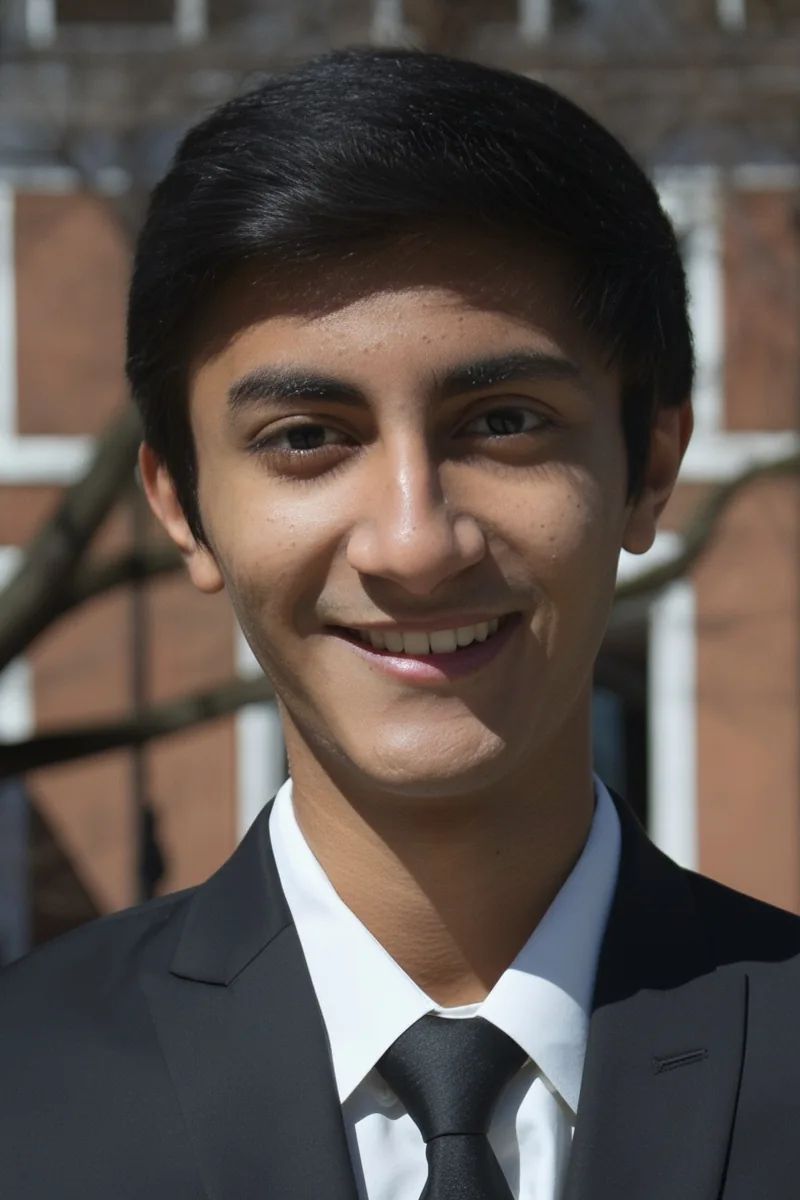
The ACT Science section is less about knowing biology or chemistry and more about reading graphs, interpreting conflicting viewpoints, and extracting data under a tight clock. Bidyut — who scored a 36 composite and studies biomedical engineering — teaches students a systematic method for parsing dense passages and tables so they spend their time answering, not re-reading.

Most students panic when they see the ACT Science section, but Chaya treats it as what it really is: a data-reading exercise wrapped in scientific language. She walks students through how to extract trends from graphs, compare experimental setups, and evaluate conflicting viewpoints — skills that don't require advanced science knowledge, just careful, efficient reading.
Despite its name, ACT Science is really a data interpretation exam — students rarely need to recall actual science content and instead must read graphs, evaluate experimental designs, and compare competing hypotheses under tight time constraints. As a pre-med biomedical engineering student at UT Austin, Felipe reads scientific figures and tables daily, which makes him especially effective at teaching students how to extract the right information quickly. He earned a 34 ACT composite and treats this section as the most improvable part of the test.
Hello! My name is Ananya Ganni, and I am a student of the Canfield Business Honors program at UT Austin's McCombs School of Business. In high school, I took 19 AP classes, including AP Calculus AB, AP Calculus BC, AP Biology, AP Statistics, AP English Language, AP English Literature, AP World History, AP Government, and AP Macroeconomicsall of which I received a 5 on. I was in the top 5% at my school of 500 students, and I got a 35 ACT and 1540 SAT superscore. I have 5 years of tutoring experience and currently tutor students at UT Austin as well. Apart from this, I offer college admissions advice. Besides UT, I got into UMich, UNC, USC, and IU. So, if you need help with any of these subjects or college admissions, please feel free to reach out to me. I am flexible with my teaching methods and personalize my teaching strategy to each individual student. I look forward to speaking with you!
I am currently working in the Finance industry and I believe teaching should be customized to each individual person to get a whole understanding as no student is the same. I learn best by teaching and hope to share this with you!
I'm Sam. recently graduated from the University of Texas at Austin with a Bachelors Degree in Economics. I have minors in both Mathematics and Electrical Engineering. I am taking time off from academics and am filling that time with tutoring.
The ACT Science section barely tests science knowledge — it's really about reading graphs, interpreting data tables, and comparing experimental setups under time pressure. Daniel approaches it that way, drilling students on how to extract the one relevant variable from a dense passage without getting lost in the details. His 32 ACT composite and analytical training in computer science at Texas A&M make him well-suited for this data-heavy section.
Despite its name, the ACT Science section is really a data interpretation exam — students who try to rely on biology or chemistry knowledge alone often run out of time. John treats each passage as a puzzle: read the axes, find the trend, answer the question. His 36 ACT composite and experience teaching both physics and chemistry mean he can also fill in the occasional outside-knowledge questions that catch other students off guard.
Most students panic when they see an unfamiliar experiment on the ACT Science section, but the test is really about interpreting graphs, tables, and conflicting viewpoints under time pressure. Sugi's dual background in biochemistry and cognitive science — plus years of reading dense research literature in medical school — makes her especially effective at teaching students to extract data quickly without getting lost in scientific jargon. Her perfect 36 ACT speaks for itself.
The ACT Science section looks intimidating, but it's really a test of how quickly students can pull data from graphs, tables, and conflicting viewpoints — not how much biology or chemistry they remember. Jiatian, who has spent years interpreting research data in medical school, teaches students to ignore the jargon and zero in on trends, variables, and experimental design. That shift in mindset alone often unlocks significant score gains.
Alyssa's physical therapy doctorate means she spends her days buried in research studies — parsing experimental designs, reading data figures, and evaluating conflicting results — which is exactly what the ACT Science section demands. She scored a 35 composite herself and teaches students to treat each passage like a lab report: skip the dense background text, go straight to the figures, and answer from the data. Rated 5.0 by students.
Eisha treats the ACT Science section as a data interpretation exercise, teaching students to read graphs, tables, and conflicting viewpoints without getting bogged down in the actual science content. Her 36 ACT composite and public health background at UT Austin mean she's comfortable with both the experimental reasoning and the biological concepts that show up most often.
I'm currently a freshman at Rice University studying applied math. I've always had a love for sharing knowledge with others, and I started tutoring when I was a junior in high school. As a former AP student and a National AP Scholar, I have the experience necessary to guide my students through challenging curriculum. Though I specialize in tutoring mathematics and physics, I am experienced with and am happy to tutor a broad range of subjects.
Most students panic when they see ACT Science passages full of unfamiliar terminology, but the section is really a data interpretation exercise disguised as science. Tim breaks each passage into its core components — graph trends, table relationships, and conflicting viewpoints — so students can answer confidently without needing to understand every technical detail. His engineering training means reading dense, data-heavy material is second nature.
Most students panic when they see an unfamiliar experiment on the ACT Science section, but the test rarely asks for actual science knowledge — it asks whether you can read a graph, compare data sets, and follow a researcher's logic. Adam scored a 35 composite and approaches this section as a data literacy exercise, teaching students to extract answers from figures and tables without getting lost in jargon.
Despite its name, the ACT Science section is really a data-literacy exam — students need to read graphs, compare experimental setups, and evaluate conflicting hypotheses without deep content knowledge. Miguel approaches it the same way he'd approach parsing a dataset in his Computer Science work: isolate the variables, track the trend, answer the question. He scored a 35 ACT composite and teaches students to spend no more than 50 seconds per question by ignoring background text until a question specifically demands it.
I'm a student at Vanderbilt University pursuing a BA in Cognitive Studies and a minor in Corporate Strategies. I have worked at the Mama Lere Hearing School at the Vanderbilt Medical Center for deaf preschoolers as well as volunteered as a first grade Sunday School teacher. In addition, I have had multiple ongoing volunteer positions as a tutor in schools in low-income areas in the subjects of Algebra I/II and English Language Arts. I have had the privilege of helping these students rise up beyond the any expectations, and I believe that a large part of their success comes not only from tutoring but from mentorship. Building a strong relationship with the student is first and foremost to being an effective tutor. I have strong skills in assessing the student's needs and meeting them where they are at.
The ACT Science section is really a data-interpretation exam disguised as science — success depends on reading graphs, tables, and conflicting viewpoints quickly and accurately. Rakhi's applied math background gives her a sharp eye for extracting trends from data sets, and she teaches students to identify what each question is actually asking before hunting through passages. Rated 4.8 by students, she also draws on her chemistry and physics knowledge when questions do require outside content.
I'm a freshman at Rice University, and planning to major in Mathematical Economic Analysis and Computer Science. I'm also a student athlete and a starting member of The Rice University Men's Golf Team so I understand time is crucial and will do my best to help you understand and not just memorize concepts so you don't have to spend time every week trying to understand the same thing. A lot of math concepts repeat themselves in high school and college. My core is in math and that is where I will be most efficient in helping a student. Aside from that, please let me know if you have any questions or need anything.
I'm starting my junior year at Northwestern University in Evanston, IL. I'm currently getting my degree in biology with a concentration in health and human disease, global health, and a minor in French. I love reading, traveling, learning and helping others learn! I have experience tutoring high school and elementary school students in math, science, and English and I love tutoring in each subject equally. Eventually, I see myself going to medical school and researching topics related to viral diseases which I've been interested in since a very young age. I'm very passionate about the subjects I teach and hope to pass my passion on to the individuals I tutor!
The ACT Science section is really a data interpretation exam disguised in lab coats — most questions can be answered from graphs and tables without any outside science knowledge. As a neuroscience major who regularly reads dense research figures, Meghana teaches students to isolate variables, identify trends across competing experiments, and ignore the intimidating jargon. Her 34 composite reflects how well this approach translates to actual score gains.
I am most passionate about biology and chemistry. I am a firm proponent of education, believing it to be absolutely necessary for an improved quality of life, and I try to impart this appreciation to all of my students.
I am a graduate of Texas A&M University; I received a Bachelor of Science in Biology along with being a minor in Spanish. I also studied at Plano ISD in high school. As Plano ISD is recognized for its academic achievements and competitiveness, I have always been positively challenged by my curriculum and by my peers to improve and to push myself to excel. From a young age, I have always been a part of the Gifted and Talented program. Trying to challenge myself and wanting to be different, I took a risk and joined the International Baccalaureate (IB) Program, a program that was not as well recognized at the time and was extremely difficult. Joining the IB program was the best decision I have taken thus far. I gained knowledge from all around world- different insights, different histories, different philosophies, different literature, etc.
The ACT Science section is really a data interpretation test disguised as science, and Rosemarie treats it that way. She teaches students to read graphs, tables, and conflicting viewpoints passages efficiently — skipping the jargon and zeroing in on what each question actually asks. Her 33 ACT composite backs up an approach that consistently clicks for students.
The ACT Science section is really a data interpretation test disguised as biology, chemistry, and physics — and Whitney's daily experience analyzing research data as a biomedical engineering student at Texas A&M makes her a natural fit for teaching it. She shows students how to extract trends from graphs, compare experimental setups, and ignore the intimidating jargon that's designed to slow them down. Her 35 ACT composite confirms she's practiced what she teaches.
Most students panic when they see the ACT Science section's dense graphs and conflicting experiments, but Harsh treats it as a data interpretation exercise that barely requires science knowledge at all. As a biology major in UT Austin's Health Science Scholars program, he does bring real scientific fluency — which kicks in for the handful of questions that actually test outside knowledge. Rated on a 35 ACT composite, his systematic approach to reading figures and tables translates directly into faster, more accurate answers.
I am a prematriculant student at the University of Chicago. In high school I took advanced STEM courses at the University of North Texas through a high school program called the Texas Academy of Math and Science. I love taking high level math courses, but I get even more excited when I can help friends and classmates in courses I have already taken. I believe that having a solid understanding of math concepts builds you up for success in any field. I have experience as a teaching assistant in pre-calculus and calculus and have experience tutoring and assisting students in high school math, calculus, and differential equations. When preparing students for standardized tests like the ACT and SAT, I focus on filling any gaps in material and teaching new techniques for making the test easier and quicker to take. I have used and perfected these techniques while taking the ACT and SAT myself and have had success on both tests. I am also a National Merit Finalist.
I am a rising sophomore at Rice University in Houston, Texas. I am majoring in Social Policy Analysis with minors in global health technologies and biochemistry and cell biology. I am passionate about refugee advocacy, global health, and women's education. I am also on the pre-med track and hope to go to medical school after Rice. I have tutored for four years in high school and have a younger sibling that I have tutored in the ACT and standardized tests. I am pretty flexible and look forward to working with any new students.
The ACT Science section isn't really a science test — it's a data interpretation exercise disguised as one. Brett's neuroscience training at Rice means he reads graphs, conflicting viewpoints passages, and experimental designs daily, and he teaches students to extract answers from figures without getting bogged down by unfamiliar terminology. His 35 ACT composite speaks to the systematic approach he brings to every section.
The ACT Science section barely tests science knowledge — it's really about reading graphs, interpreting conflicting viewpoints, and drawing conclusions from data under time pressure. Raj's biochemistry training at Rice means he reads experimental setups instinctively, and he teaches students to do the same by zeroing in on axes, trends, and control variables before touching the questions. His 36 ACT composite came partly from treating this section as a data literacy exercise.
I am currently studying petroleum engineering at The University of Houston. Although I was typically a strong student in all areas throughout high school, there were some teaching styles I encountered that complicated the material more than was necessary. In fact, I avoided certain subjects for several years simply because of one unpleasant introductory class.
I'm a Chemical Engineering major at the University of Texas at Austin with a strong passion for teaching. I enjoy helping students in biology, algebra, and chemistry, focusing on building meaningful relationships that make learning engaging and approachable. Teaching not only strengthens my own understanding but also allows me to see the impact of confidence and curiosity in others. Outside of academics, I love staying active through hiking and playing sports like basketball. I also enjoy exploring new food spots, which gives me a chance to connect with different cultures and experiences.
I am able to tutor on a variety of subjects, but I'm especially passionate about test prep! I'm currently traveling around Europe and South America, before I start law school at the University of Texas this fall.
The ACT Science section is less about knowing science and more about reading graphs, interpreting conflicting viewpoints, and extracting data under time pressure. Snipta's dual background in computer science and cognitive science — plus hands-on research at the National Institutes of Health — means she can break down every passage type, from data representation to research summaries, with real clarity. Her 34 ACT composite speaks to the systematic approach she brings.
I'm a senior at UT Austin studying biology pre-med with a certificate in business foundations. I remember high school being tough and teachers couldn't really help me one-on-one, so I'm here to help you with anything you may be struggling with!
I am majoring in Cognitive Sciences with the intention of getting into Medical school.
I'm Aurnab. I'm a Bioengineering student at Rice University. I've been tutoring since high school. Due to my wide background in a variety of subjects that I've studied, I have a very interdisciplinary approach to tutoring that can be tailored to any student to achieve results.
I am currently a senior at the University of Texas at Austin and graduated from high school in 2022 earning a 4.0 GPA along with a 1530 SAT (800 Math, 730 Reading) and a 34 ACT (30 Math, 34 Science, 35 English, 35 Reading). Achieving these results taught me that strong outcomes come from effective habits, not shortcuts, and I spent years refining study techniques such as active recall and spaced repetition that helped me learn more efficiently and with less stress. These strategies continue to support me in my college coursework and shape how I approach teaching. I began tutoring during high school and quickly discovered how meaningful it was to help other students gain confidence in subjects they once found intimidating. I have experience working one-on-one with middle school and high school students in both volunteer and informal tutoring settings, focusing on math, English, and standardized test preparation. My tutoring style centers on patience and clarity, breaking down complex ideas into manageable steps and reinforcing understanding through practice. I place a strong emphasis on helping students understand how to study effectively, rather than relying on memorization alone. I am comfortable tutoring math and English at all levels, as well as SAT Math and Reading and ACT Math and Reading. Having recently navigated rigorous coursework and competitive testing myself, I understand the pressures students face and strive to create a supportive, encouraging learning environment. My goal is not only to help students improve their grades or scores, but also to equip them with study skills and confidence that will benefit them well beyond our tutoring sessions.
Don's biochemistry coursework means he's already fluent in the experimental designs, data tables, and figure-heavy formats that the ACT Science section recycles in every passage. Where many students get tripped up by the Conflicting Viewpoints questions, he breaks each scientist's claim down to its core variable and teaches students to spot exactly where the two interpretations split. A 35 ACT composite and 5.0 rating from students back up that precision.
The ACT Science section barely tests science knowledge — it tests whether you can read a dense graph, compare two experimental setups, and draw a conclusion under time pressure. Shyon scored a 35 composite and treats this section as a data literacy exercise, drilling students on how to extract trends from figures without getting lost in the passage text.
Testimonials
Because the right ACT Science tutor makes all the difference.
Average Session Rating – Based on 3.4M Learner Ratings
Practice ACT Science
Free practice tests, flashcards, and AI tutoring for ACT Science
Nearby ACT Science Tutors
Other Frisco Tutors
Related Test Prep Tutors in Frisco
Frequently Asked Questions
Varsity Tutors matches Frisco students with expert ACT Science tutors for 1-on-1 instruction. We pair each student with a tutor based on their specific needs, learning style, and goals.
Whether you need homework help, exam prep, or want to get ahead, our ACT Science tutors are ready to help.
Common challenges include gaps from earlier material, difficulty with specific concepts, and trouble applying learning to new problems. These issues can snowball quickly in ACT Science.
A tutor identifies where you're stuck, fills in gaps, and provides targeted practice. The 1-on-1 format means you get help exactly where you need it.
Tutors work with your student's actual coursework—homework assignments, class notes, and upcoming tests. This keeps tutoring directly relevant to what's happening in the classroom.
When you share information about your student's school and curriculum, we can match you with a tutor who has relevant experience.
All tutors complete background checks, credential verification, and teaching evaluation. Many of our ACT Science tutors hold advanced degrees or have years of teaching experience.
You can review tutor profiles to find someone with the right background for your student's level and needs.
Many students see improved grades within a few weeks, along with better understanding of ACT Science concepts and more confidence tackling challenging material.
Tutors track progress and adjust their approach to ensure continued improvement.
Most students benefit from 1-2 sessions per week. More frequent sessions help if your student is significantly behind or has an important exam coming up.
Your tutor can recommend a schedule based on your student's specific situation and goals.
Tutoring is purchased in packages of hours, with rates varying by tutor experience. Varsity Tutors offers several options to fit different budgets and needs.
You can discuss pricing during your consultation to find what works best.
Your tutor will assess where your student is, discuss goals, and start working on priority areas. Most students bring current homework or upcoming test material to focus on.
By the end, you'll have a clear sense of how the tutor can help and a plan for moving forward.
Let’s find your perfect tutor
Answer a few quick questions. We’ll recommend the right plan and match you with a top 5% tutor.