Award-Winning PCAT Biology
Tutors
PCAT Biology
Tutors
Private 1-on-1 tutoring, weekly live classes for academic support, test prep & enrichment, practice tests and diagnostics, and more to elevate grades and test scores.
Based on 3.4M Learner Ratings
UniversitiesSchools & Universities
DeliveredHours Delivered
ProficiencyGrowth in Proficiency
Who needs tutoring?
No obligation. Takes ~1 minute.
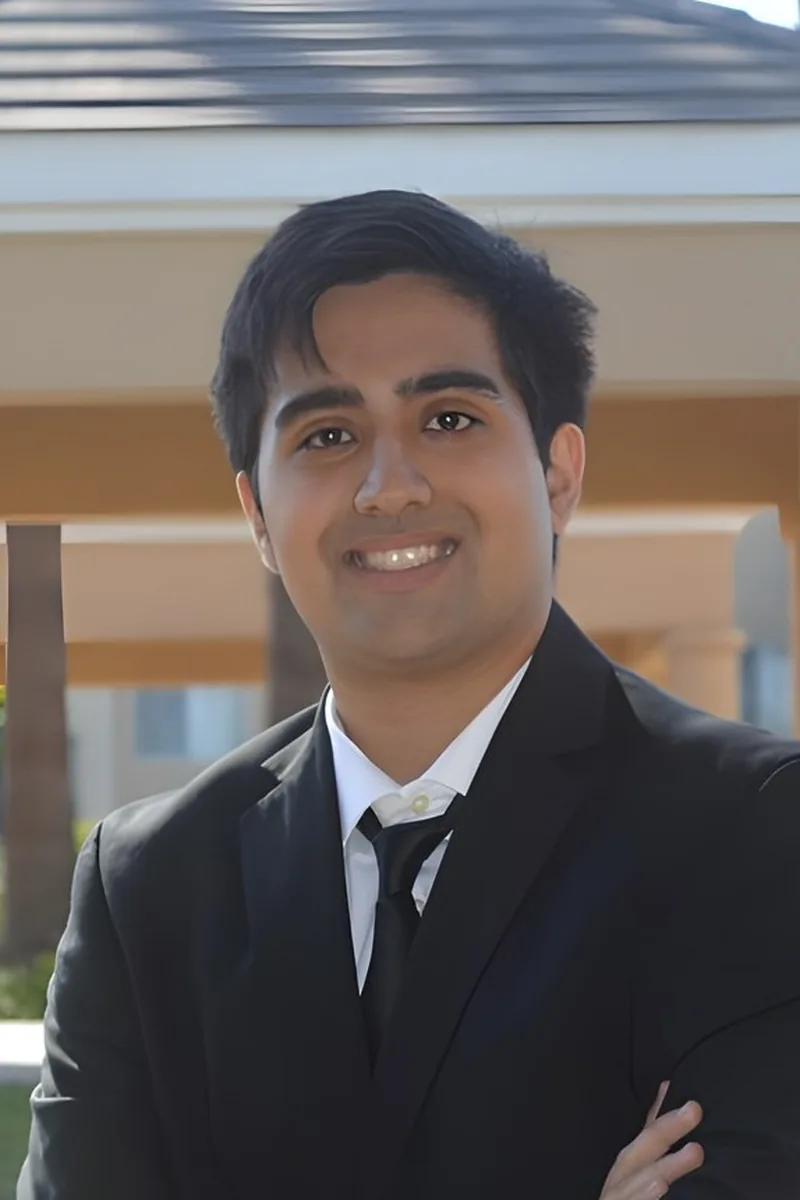
Having gone from a UCLA biology degree straight through to medical school at the Medical College of Wisconsin, Abrahim has cycled through cell biology, microbiology, genetics, and human physiology multiple times at increasing depth — which means he can quickly calibrate how much detail a PCAT question actually demands versus how much a med school lecture buries you in. He's especially sharp on metabolism, organ system physiology, and molecular genetics, drilling the recall speed that the timed format punishes students for lacking. Rated 5.0 by his students.

A neuroscience degree plus a master's in biotechnology means Rithi has already gone deep on the cellular and molecular biology the PCAT tests — signal transduction, genetics, membrane physiology — and then layered on the applied science that ties those concepts together. She's now in medical school at Robert Wood Johnson, so human anatomy and organ system physiology are part of her daily workload rather than distant memories. Rated 4.9 by her students.
The PCAT Biology section covers everything from cellular metabolism to human anatomy in a compressed, high-stakes format. Sanjul's biology degree and four years of medical school mean he can quickly identify which molecular biology, genetics, and microbiology concepts a student needs to drill versus which ones they already understand. He builds targeted review plans that prioritize the highest-yield topics.
Arianna's neuroscience degree means she spent years studying biological systems at the cellular and molecular level — signal transduction, neuroanatomy, gene expression — which overlaps directly with the content the PCAT Biology section prioritizes. She pairs that depth with broad coursework in cell biology, microbiology, and anatomy to cover the exam's full range without losing focus on the highest-yield topics. Rated 4.8 by her students.
Currently a P1 pharmacy student, Lillian is working through the exact biology — cell signaling, microbiology, genetics, organ system physiology — that the PCAT tests, which means the material is fresh and actively reinforced by her coursework rather than years removed. Her prepharmacy training built especially strong instincts around anatomy and physiology integration, the area where PCAT questions tend to layer multiple systems into a single prompt. She's rated 4.9 by her students and scored a 34 on the ACT.
Studying for the PCAT Biology section with someone currently finishing a PharmD means covering microbiology, human anatomy and physiology, and cellular processes with a tutor who uses this material daily. Syeda zeroes in on the biological systems most heavily tested — cardiovascular, renal, endocrine — and connects each concept to pharmacological applications that make the content easier to retain. She holds a 5.0 rating from her students.
Medical school at Rutgers gave Mike repeated passes through the biology the PCAT emphasizes — cell biology, genetics, microbiology, and human anatomy — while his psychology degree at Miami (summa cum laude) built the behavioral science foundation that often catches pharmacy applicants off guard on integrated questions. He's especially useful for students who need to tighten their recall on physiology and cellular processes under timed pressure, since medical training demands exactly that kind of rapid-fire application.
The PCAT Biology section leans heavily on microbiology, human physiology, and cellular processes — all areas Uchenna covered extensively during both his biochemistry degree at UMBC and his medical school coursework at Michigan. He breaks down topics like organ system integration and genetic regulation into the concise, testable frameworks the PCAT rewards, rather than the sprawling detail of a full biology course.
Orlando's MD training in molecular medicine means he's internalized the biology the PCAT covers — genetics, cell signaling, microbiology, organ system physiology — at a depth well beyond what the exam requires, which lets him strip each topic down to exactly the level of detail pharmacy applicants need to recall under time pressure. His neuroscience background adds particular strength on nervous system physiology and signal transduction, areas where PCAT questions often layer multiple concepts into a single prompt. Rated 4.8 by his students.
Sam's Ph.D. research in biochemistry at Drexel means he lives in the material the PCAT Biology section tests — cellular and molecular biology, genetics, microbiology, and human physiology. He breaks down high-yield topics like enzyme kinetics, DNA replication, and organ system integration so students can reason through unfamiliar questions instead of relying on rote recall.
A biochemistry and molecular biology degree from Middlebury plus active Ph.D. research at UConn gives Xhesika deep command of the biology tested on the PCAT — microbiology, genetics, anatomy, and cellular processes. She tackles each topic by zeroing in on the high-yield details the exam actually tests, cutting through the noise of broader biology coursework.
Whitney's graduate work in analytical chemistry at UIUC means she thinks about biological systems at the molecular level — exactly the lens the PCAT Biology section rewards when it asks about enzyme kinetics, membrane transport, or metabolic pathways. Her TA experience in both college chemistry and biology courses sharpened her ability to explain how cellular processes and physiological mechanisms connect, which is where most PCAT questions live. She approaches the content from a quantitative angle that's especially useful for the data-interpretation style questions pharmacy applicants often underestimate.
Every major system tested on PCAT Biology — cellular processes, genetics, microbiology, anatomy — falls squarely within Michelle's biology degree. She tackles the section by connecting isolated facts into larger conceptual chains, so students can reason through unfamiliar questions instead of relying on pure recall. Her 4.9 rating speaks to how well that approach works in practice.
I am a law student, but I took an unusual route to get there. I used to attend medical school but had a change of heart in my career path. Part of this was due to my political science major (double major with biology) in college as well as a number of Spanish and other courses that I took. Tutoring is something, I feel, that has come naturally to me, even back to my high school days. My goal is to help you learn as much as you can and reach your true potential. I will work hard to make sure that this happens, as long as you put in the work, too! We will work together to tailor your learning experience to your needs.
I am a 4th year medical student who has been tutoring since college. I love working with people and teaching students. I have a strong background in the sciences and look forward to helping make science easy for everyone. I look forward to working with you.
Tackling PCAT Biology means covering everything from cellular processes and genetics to human anatomy and microbiology in a format that rewards quick recall and application. Emily is currently in pharmacy school at the University of Houston, so the biology tested on the PCAT is material she recently mastered and continues to use in her coursework. She connects each topic back to the way questions are actually structured on the exam.
Steven's biology degree gave him deep exposure to the exact content domains the PCAT covers — cell biology, microbiology, molecular genetics, and anatomy — and he's continued teaching those subjects across multiple levels, from introductory to college-level coursework. That range means he can quickly gauge whether a student needs to rebuild fundamentals like membrane transport or just sharpen recall speed on genetics and metabolic pathways. Rated 5.0 by his students.
Yuxuan's biochemistry degree at UC Berkeley — plus hands-on experience co-teaching organic chemistry lab and running review sessions — means the molecular and cellular concepts the PCAT Biology section leans on (enzyme function, metabolic pathways, genetics) are material he's both mastered and explained to other students repeatedly. His chemistry-heavy background is particularly useful for the questions that blur the line between biology and biochemistry, like membrane transport mechanisms or protein structure-function relationships. Rated 4.9 by his students.
Testimonials
Because the right PCAT Biology tutor makes all the difference.
Average Session Rating – Based on 3.4M Learner Ratings
Top 20 Graduate Test Prep Subjects


Top 20 Subjects
Frequently Asked Questions
Score improvement depends on your starting point and commitment level, but students typically see meaningful gains within 8-12 weeks of focused preparation. If you're struggling with foundational concepts, you might gain 5-10 points; if you're already scoring competitively but need refinement, improvements of 2-5 points are realistic. The key is identifying exactly where you're losing points—whether that's concept gaps, timing issues, or test strategy—and addressing those specific weaknesses through targeted practice and personalized instruction.
Most students struggle with three main areas: (1) Volume and depth of content—PCAT Biology covers cellular biology, biochemistry, genetics, and evolution in significant detail, and it's easy to feel overwhelmed; (2) Application-heavy questions—the test rarely asks for pure recall; instead, it requires you to apply concepts to unfamiliar scenarios; and (3) Time management—students often get caught in lengthy passages and run out of time for later questions. Personalized tutoring helps you develop efficient study strategies, master high-yield content, and practice pacing within realistic test conditions.
The most effective approach is to take a full-length practice test under timed conditions, then review every question—not just the ones you got wrong. For each incorrect answer, determine whether you missed it because of (1) a concept gap, (2) misunderstanding the question, or (3) running out of time. Organize your results by topic (cell biology, metabolism, genetics, etc.) to spot patterns. Varsity Tutors connects you with tutors who excel at diagnostic analysis; they can review your practice tests, pinpoint content weaknesses and strategic mistakes, and create a study plan that prioritizes the areas where you'll gain the most points.
A typical recommended timeline is 8-12 weeks of preparation, with 10-15 hours per week of focused study—roughly 80-180 hours total for the entire PCAT, with Biology being a significant portion. However, the right schedule depends on your baseline knowledge, target score, and test date. Students with strong science backgrounds might need less time; those rebuilding foundational concepts may need more. A tutor can help you create a realistic study calendar, break content into manageable chunks, and adjust your pace based on practice test results and progress milestones.
Test anxiety during Biology often stems from fear of running out of time or encountering unfamiliar question formats. Build confidence through three strategies: (1) Repeated practice under timed conditions—the more practice tests you complete, the more the format becomes familiar and less threatening; (2) Strategic pacing drills—practice moving quickly past difficult questions and returning to them later, so you feel in control rather than panicked; and (3) Concept mastery—when you truly understand the material, anxiety decreases because you're not relying on luck. Tutors can guide you through these practices, help you develop a personal test-day strategy, and build the confidence that comes from consistent, targeted preparation.
PCAT Biology includes several question types: multiple-choice with single correct answers, questions requiring application of concepts to new scenarios, passage-based questions where you extract relevant details, and comparative questions that test understanding across related topics. The challenge is that these formats reward deep understanding and strategic reading, not memorization. Effective preparation involves practicing each question type repeatedly, learning to identify what information you actually need versus what's extraneous, and developing a process for eliminating wrong answers. Tutors familiar with PCAT Biology can teach you question-specific strategies and help you practice until these formats feel second nature.
The best PCAT Biology tutors combine three qualities: (1) Deep content expertise—they understand not just what the answer is, but why test makers ask certain questions and what concept gaps those questions target; (2) Test strategy knowledge—they've studied the PCAT's specific question patterns and can teach pacing, elimination techniques, and how to approach different question types; and (3) Personalization skills—they identify your exact weaknesses through diagnostics and tailor explanations to your learning style rather than using a one-size-fits-all approach. Varsity Tutors connects you with expert tutors who specialize in PCAT preparation and can create a study plan aligned with your goals and timeline.
Let’s find your perfect tutor
Answer a few quick questions. We’ll recommend the right plan and match you with a top 5% tutor.