Award-Winning 6th Grade Math
Tutors
6th Grade Math
Tutors
Private 1-on-1 tutoring, weekly live classes for academic support, test prep & enrichment, practice tests and diagnostics, and more to elevate grades and test scores.
Based on 3.4M Learner Ratings
UniversitiesSchools & Universities
DeliveredHours Delivered
ProficiencyGrowth in Proficiency
Who needs tutoring?
No obligation. Takes ~1 minute.
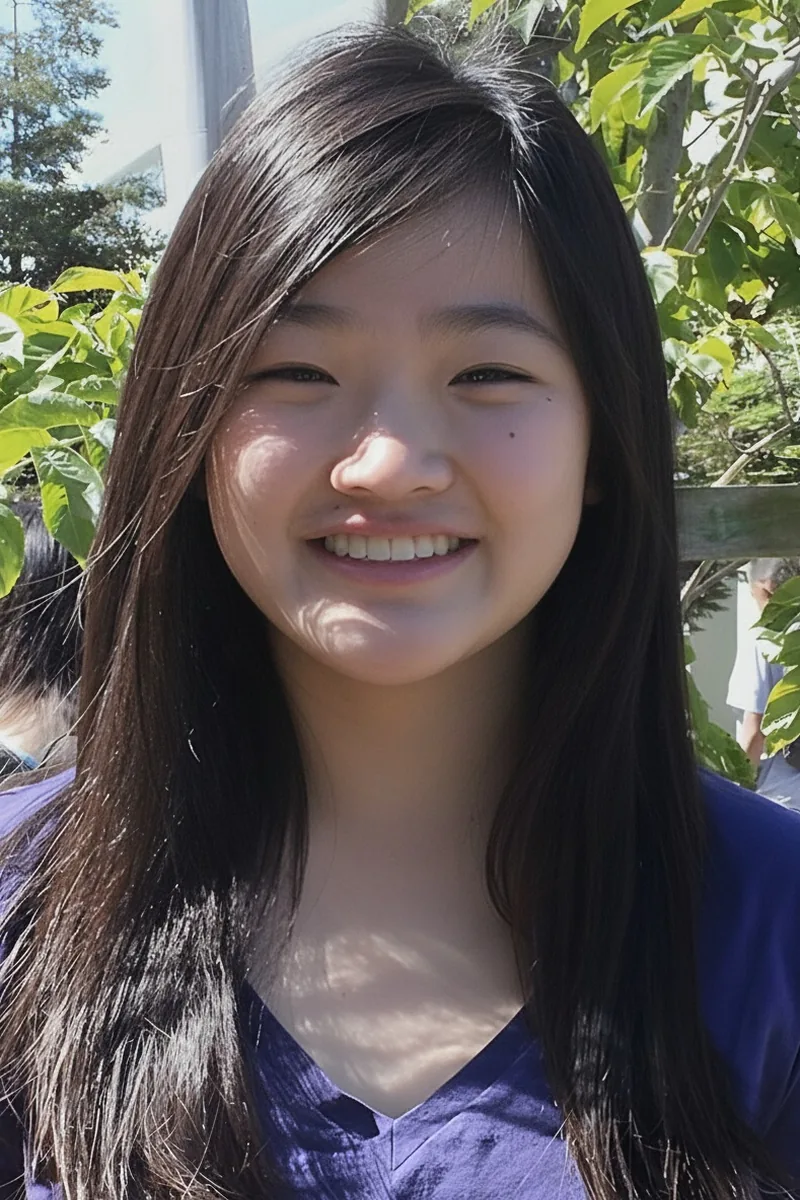
Sixth-grade math introduces fraction and decimal operations, basic exponents, and the order of operations — the building blocks everything else depends on. Julie approaches these topics with patience and precision, making sure students understand the reasoning behind each step rather than just following a procedure. Her 4.9 rating speaks to how well that approach lands with younger learners.
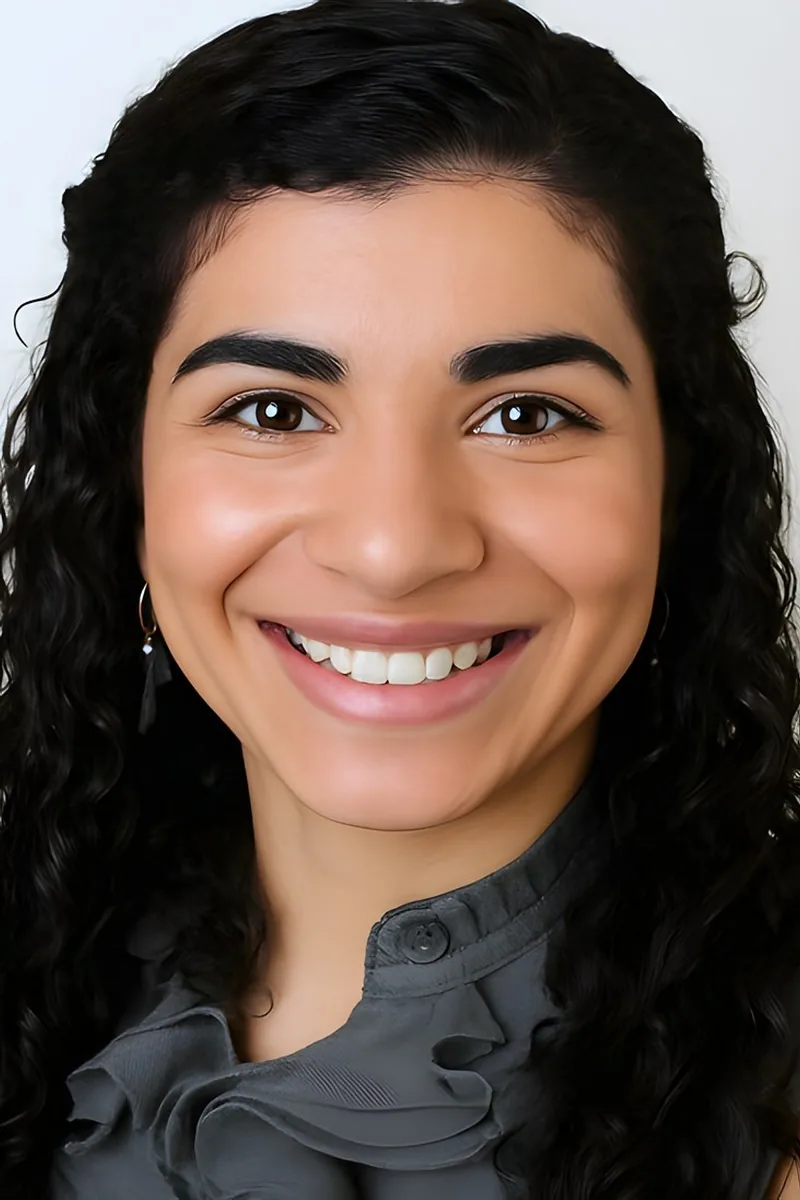
The jump into ratios, rates, and dividing fractions trips up more sixth graders than most parents expect. Paula zeroes in on the reasoning behind each operation so students aren't just memorizing flip-and-multiply tricks — they understand what division of a fraction actually means. Her broad academic background across psychology and communication also means she's skilled at explaining ideas in ways that click for different learners.
The jump into 6th grade math — dividing fractions, evaluating expressions with variables, plotting on the coordinate plane — is the first time many students feel like math has changed on them. Molly spent three years as a classroom teacher in elementary grades, so she understands the exact skills a student needs to have locked in before these new concepts click. She's rated 5.0 by families she's worked with.
Ratios, rates, and the coordinate plane are the big new ideas in 6th grade, and they set the trajectory for everything that comes next in middle school math. Li teaches these concepts with a structured, step-by-step approach — she walks through how dividing fractions actually works rather than just drilling the "flip and multiply" shortcut.
Sixth grade is where fractions, decimals, and percents all collide, and students who never fully grasped fraction operations start to struggle visibly. Allan unpacks these relationships by showing how they're really the same idea expressed differently — converting between forms until students see the connections on their own. He keeps sessions structured but low-pressure, which matters a lot for kids adjusting to middle school math expectations.
Sixth-grade math introduces fraction operations, decimal arithmetic, and early algebraic expressions — topics that need to feel intuitive, not mechanical. Eric makes these concepts stick by encouraging students to explain their reasoning out loud and catch their own mistakes. His background spans three bachelor's degrees, so he knows firsthand how to break down unfamiliar material into something manageable.
Fractions, decimals, and early algebraic expressions are the big hurdles in 6th grade, and each one builds directly on the others. Waleed uses a patient, step-by-step method that makes converting between fractions and decimals or evaluating simple expressions feel intuitive. His 5.0 student rating speaks to how well that approach lands with younger learners.
Ratios, rates, and that first real encounter with dividing fractions — 6th grade math introduces ideas that students will rely on for years. Hasan's daily work as a lead teacher at a classical academy in Phoenix gives him a structured, step-by-step approach to building these skills so they actually stick.
Ratios, rates, and early algebraic expressions can feel like a sudden jump for sixth graders used to straightforward arithmetic. Nima tackles that transition by showing how each new concept is really just a natural extension of skills students already have, building confidence alongside competence.
Sixth grade is when math starts asking students to think in fractions, decimals, and ratios simultaneously, and the ones who build real number sense here have a much smoother path through middle school. Greg teaches fraction operations and decimal conversions by connecting them visually — showing why dividing by a fraction means multiplying by its reciprocal, not just memorizing the rule. He's taught at this level through Vanderbilt Student Volunteers for Science and knows how to keep younger learners engaged.
Sixth grade is where math starts demanding real reasoning — ratios, integer operations, and early algebraic thinking can feel like a sudden leap. Nick breaks these concepts down using concrete, relatable examples, drawing on the same clear communication skills he honed studying theatre at Northwestern. His patient, engaging style keeps middle schoolers from shutting down when the problems get harder.
Dividing fractions, plotting on the coordinate plane, and writing simple expressions with variables — 6th-grade math introduces a lot of firsts all at once. Kenan keeps things grounded by connecting each new idea to something a student already knows, like relating fraction division to sharing problems or using coordinates to map out a room. His patient, step-by-step style keeps frustration low while understanding builds.
Ratios, rates, and early equation-solving define sixth-grade math, and each one rewards understanding over memorization. Richard connects these topics to real scenarios — unit pricing, speed calculations, simple data analysis — so the math feels purposeful rather than arbitrary. His background teaching across every grade level means he calibrates explanations to exactly what a sixth grader is ready for.
Sixth grade is when math starts demanding real precision: dividing fractions, working with ratios, and evaluating expressions with variables for the first time. Dakota digs into each of these skills one at a time, making sure a student can articulate the 'why' before moving to the next problem set. She creates a low-pressure atmosphere that still holds students accountable for doing rigorous work.
I'm pursuing a double major in Mathematics and English at Vanderbilt University. I have been tutoring math since High School and have native proficiency in Mandarin Chinese. I am dedicated to helping students explore the study methods that will fit their individual needs.
A chemistry master's degree means Shawn has spent years relying on the exact quantitative skills — proportional reasoning, working with decimals, evaluating expressions — that 6th graders are encountering for the first time. He breaks down each new concept with multiple explanations tailored to how a student actually thinks, rather than repeating the same approach louder. Rated 4.9 by his students.
Sixth grade introduces fraction operations, decimal division, and early algebraic expressions, all of which set the trajectory for the rest of middle school math. Varuna walks students through each operation step by step, making sure they understand why they're flipping a fraction or combining like terms before moving on. Her engineering training makes her especially precise about building skills in the right order.
Sixth-grade math introduces a wave of new territory — fractions operations, decimal division, and the very first taste of algebraic expressions — all at once. Sarah sequences these topics so each one reinforces the last, turning what feels like an avalanche into a clear progression. Her training in secondary education and psychology means she's deliberate about building both skill and confidence at a stage where many students start deciding whether they're "good at math."
Sixth-grade math introduces fraction and decimal operations at a level that demands real fluency, plus early work with variables and expressions. Neil zeroes in on the reasoning behind each operation — why dividing by a fraction means multiplying by its reciprocal, for instance — so students build intuition they can carry forward. His patient, structured style has earned him a 4.7 rating.
Ratios, rates, and that first real encounter with dividing fractions — 6th grade math is full of concepts that trip students up when they're taught as isolated procedures. Madeline links each topic back to visual models and real-world scenarios so the reasoning sticks. Her engineering background means she genuinely enjoys showing how numbers describe everyday situations.
The jump into fractions, decimals, and early algebraic expressions in 6th grade trips up a lot of students who were solid in elementary math. Zhaleh tackles this by connecting new operations to what students already know about whole numbers, building each skill in sequence. She's studying mechanical engineering at Carnegie Mellon and knows firsthand how critical these foundational concepts become later on.
Ratios, rates, and the coordinate plane can feel like a sudden jump in difficulty for 6th graders used to straightforward computation. Allen eases that transition by connecting new ideas to familiar ones — showing, for instance, how ratios are just a new way to talk about relationships students have been noticing since elementary school. His learning center teaching experience gives him a strong sense of pacing for this age group.
Sixth grade math is where abstract thinking starts to matter — ratios, rates, and expressions with variables can feel like a sudden leap. Jessalyn's philosophy training at UT Austin sharpened her ability to break down logical reasoning, and she applies that same step-by-step clarity to making concepts like proportional relationships and integer operations click. Rated 5.0 by students.
Sixth grade is where math starts demanding more abstraction: variables appear, fractions get divided by fractions, and order of operations becomes non-negotiable. Remington, a PhD physics student who teaches math across every grade level, knows exactly which gaps from earlier grades cause confusion here and addresses them directly before moving forward.
Because math builds on itself, a 6th grader struggling with ratios or expressions often has a gap hiding somewhere in earlier material — and Valerie's applied math training gives her the diagnostic eye to spot it fast. She rebuilds those missing connections visually and concretely before layering on new concepts, so the logic sticks rather than just the procedure. Rated 5.0 by families she's tutored.
Sixth grade is when math starts asking students to divide fractions, work with negative numbers, and write simple expressions with variables. These aren't just new topics — they're a new way of thinking, and rushing through them creates gaps that show up years later. Sarah takes the time to make each operation feel logical, connecting fraction division to real quantities and showing why the rules actually work.
Sixth grade introduces ratio thinking, negative numbers, and the coordinate plane — all concepts that feel slippery until a student sees why they work. Bobby uses visual models and real-world examples to make ideas like dividing fractions or evaluating expressions intuitive rather than mechanical. His approach keeps younger learners engaged without dumbing anything down.
Ratios, rates, and early work with expressions can feel abstract to a sixth grader encountering them for the first time. Idara tackles these concepts with visual models and structured practice that build genuine number sense — the kind of fluency that makes 7th and 8th grade math far less intimidating.
Sixth grade introduces fraction and decimal operations at a pace that can quickly spiral if gaps from earlier years go unaddressed. Yiyu's education background gives her a sharp eye for pinpointing those gaps, and she uses targeted practice with ratios, rates, and early algebraic expressions to close them before they compound.
Sixth grade math is where abstract thinking starts to matter — ratios, rates, and early equation-solving can feel like a big leap from arithmetic. Tricia spent years working alongside small groups of students at a Manhattan elementary school, building the kind of one-on-one reinforcement that makes concepts like dividing fractions or plotting on a coordinate plane click. She's especially good at bridging the gap between concrete math and the more symbolic reasoning sixth graders are expected to handle.
I am a graduate of Duke University with a degree in Health Policy and Education Policy. While at Duke University I was a student athlete, participated in the leadership of several clubs and service groups; as well as, working as a Math and Reading tutor. After graduation I spent a year pursing a business venture allotted to me through the Elevator Pitch Competition, my senior year of college, which I won in my category - Non-Profits. After that year, I joined the Teach for America Fellowship, where I fell in love with teaching. The Teach for America Fellowship is 2 years; however, after my first year due to the recognition and growth in my classroom I was invited to start a school. I spent 2 years at that school prior to getting married and moving to California, a few months ago, with my amazing, aerospace loving, husband.
Sixth grade math asks students to think about numbers in new ways — dividing fractions, plotting on coordinate planes, and reasoning about ratios for the first time. Orlando explains the 'why' behind operations like fraction division so that students aren't just memorizing flip-and-multiply tricks. He keeps sessions structured but conversational, which matters for middle schoolers still building confidence.
Sixth grade is where math starts demanding more independence — multi-step problems with fractions, decimals, and early algebraic thinking. Alexandra has tutored students as young as elementary age and knows how to build confidence without oversimplifying. She's a math major at Brown who genuinely enjoys number theory and patterns, and that enthusiasm tends to be contagious with younger learners.
Sixth-grade math introduces big ideas — ratios, dividing fractions, and the coordinate plane — that students will use for the rest of their math education. Shin explains each concept with clear, step-by-step reasoning rather than shortcuts, making sure understanding sticks before moving on. He's a Columbia engineering student who genuinely enjoys making math approachable at every level.
Ratios, percentages, and operations with decimals can feel like a jumble of disconnected rules to a sixth grader — Oluwatosin ties each concept back to real-world scenarios so the logic clicks before the procedure is memorized. His engineering background means he naturally connects arithmetic to practical problems like measurement, budgeting, and data interpretation. Rated 4.8 by students.
Sixth-grade math introduces big ideas like ratios, rates, and the coordinate plane, all while asking students to get comfortable with fractions and decimals in new contexts. Ricardo approaches each topic by making sure the underlying number sense is solid first, then layering on the new skill. As a chemistry major at Ohio State, he uses these exact quantitative reasoning skills in the lab every week.
Sixth grade math is where students first encounter ratios, rates, and proportional reasoning — concepts that either click or become a source of frustration for years. Kaitlyn breaks these ideas down using real-world examples that make abstract relationships concrete, building the number sense students need before pre-algebra. Rated 4.8 by families she's worked with.
Ratios, rates, and dividing fractions are the concepts that trip up most sixth graders, and they're also the foundation for every math class that follows. Tara zeroes in on the reasoning behind each operation so students can solve unfamiliar problems confidently, not just repeat memorized steps. Her background across both math and science means she's always ready with real-world examples that make abstract ideas concrete.
Fractions, decimals, and early algebraic expressions converge in sixth-grade math, and confusion in any one area can snowball quickly. Shahnawaz zeroes in on the specific gap — whether it's fraction division or translating word problems into expressions — and uses targeted practice to close it before moving forward.
Ratios, rates, and early algebraic expressions define the 6th grade math landscape — and they're the foundation everything in middle school builds on. Jacob's background in both biology and music at Wesleyan means he's comfortable translating abstract ideas into concrete examples, whether that's using real-world data or visual models to make division of fractions actually make sense.
Testimonials
Because the right 6th Grade Math tutor makes all the difference.
Average Session Rating – Based on 3.4M Learner Ratings
Practice 6th Grade Math
Free practice tests, flashcards, and AI tutoring for 6th Grade Math
Top 20 Math Subjects


Top 20 Subjects
Frequently Asked Questions
The jump from arithmetic to abstract thinking is significant. While 5th grade focuses on computation with whole numbers and fractions, 6th grade introduces variables, equations, and algebraic thinking. Students suddenly need to understand that a letter like 'x' represents an unknown number, not just compute answers. This conceptual leap—moving from "what's the answer?" to "what does this represent?"—trips up many students who've relied on memorizing procedures rather than understanding why those procedures work.
Word problems require students to translate real-world language into mathematical symbols and operations—a skill that's separate from computation itself. Many students can solve 3x + 5 = 20, but freeze when asked "If Maria has 5 more than 3 times as many apples as James, and she has 20 apples, how many does James have?" A tutor helps by teaching students to break problems into steps: identify what you know, what you're looking for, and which operations connect them. With practice and explicit strategy instruction, students learn to recognize problem patterns and build confidence tackling unfamiliar scenarios.
In 6th grade, showing work becomes crucial because it reveals whether a student understands the concept or just got lucky. A correct answer with no work shown could mean genuine understanding or a calculation mistake that canceled out. More importantly, middle school math builds on itself—if a student can't explain their reasoning for ratios or equations now, they'll struggle with proportional relationships and more complex algebra later. Tutors focus on clear work because it helps identify exactly where confusion lies and builds the mathematical communication skills students need for standardized tests and higher math.
Ratios introduce a new way of thinking about relationships between quantities—not just "how many total" but "how many of this compared to that." Students often mix up ratios with fractions or struggle to scale ratios up and down consistently. For example, understanding that a 2:3 ratio is the same as 4:6 or 10:15 requires flexible thinking about equivalent relationships. Tutors help by using concrete visual models (tape diagrams, ratio tables) before jumping to abstract notation, and by connecting ratios to real contexts like recipes or maps so students see why these relationships matter.
Many 6th graders memorize "negative times negative equals positive" without grasping why. Effective tutoring uses number lines and real-world contexts—like temperature, elevation, or bank accounts—to show that negative numbers represent opposite directions or quantities. When a student sees -3 + 5 on a number line (start at -3, move right 5 spaces, land on 2), they understand it conceptually rather than following a rule. This deeper understanding is essential because 6th grade negative number work is the foundation for all future algebra, and students who only memorize rules struggle when problems get more complex.
Multi-step equations like 2x + 5 = 13 require students to reverse operations in the correct order—a skill that demands both procedural fluency and conceptual understanding of equality. Many students apply operations randomly or forget that whatever they do to one side, they must do to the other. Tutors typically use a systematic approach: isolate the variable step-by-step (undo addition/subtraction first, then multiplication/division), check the solution by substituting back into the original equation, and use visual models like balance scales to reinforce that equations represent equal quantities on both sides. This builds both accuracy and the reasoning skills needed for algebra.
Math anxiety in 6th grade often stems from hitting conceptual material (variables, multi-step thinking) after years of computational success, leading students to believe they're "not a math person." Tutors create low-pressure environments where mistakes are learning opportunities, not failures. By breaking complex topics into smaller, manageable pieces and celebrating incremental progress, students rebuild confidence. Personalized instruction also means a tutor can identify exactly where understanding broke down—maybe it's fractions, maybe it's the transition to variables—and address that root cause rather than having the student feel lost in a whole-class setting. Many students discover they actually understand math once they see it explained in a way that clicks for them.
Yes, curricula differ significantly in how they introduce concepts. Eureka Math emphasizes visual models and conceptual understanding from the start, Connected Math uses investigations and real-world contexts, while traditional textbooks often follow a more procedural path. A skilled tutor understands these differences and can work with whatever approach your student's school uses—or bridge between approaches if your student needs clarification. The key is that tutors connect to your student's existing materials and classroom instruction so they're reinforcing what's being taught, not introducing conflicting methods. This alignment helps students see consistency between home tutoring and classroom learning.
Let’s find your perfect tutor
Answer a few quick questions. We’ll recommend the right plan and match you with a top 5% tutor.