Award-Winning Competition Math
Tutors
Competition Math
Tutors
Private 1-on-1 tutoring, weekly live classes for academic support, test prep & enrichment, practice tests and diagnostics, and more to elevate grades and test scores.
Based on 3.4M Learner Ratings
UniversitiesSchools & Universities
DeliveredHours Delivered
ProficiencyGrowth in Proficiency
Who needs tutoring?
No obligation. Takes ~1 minute.
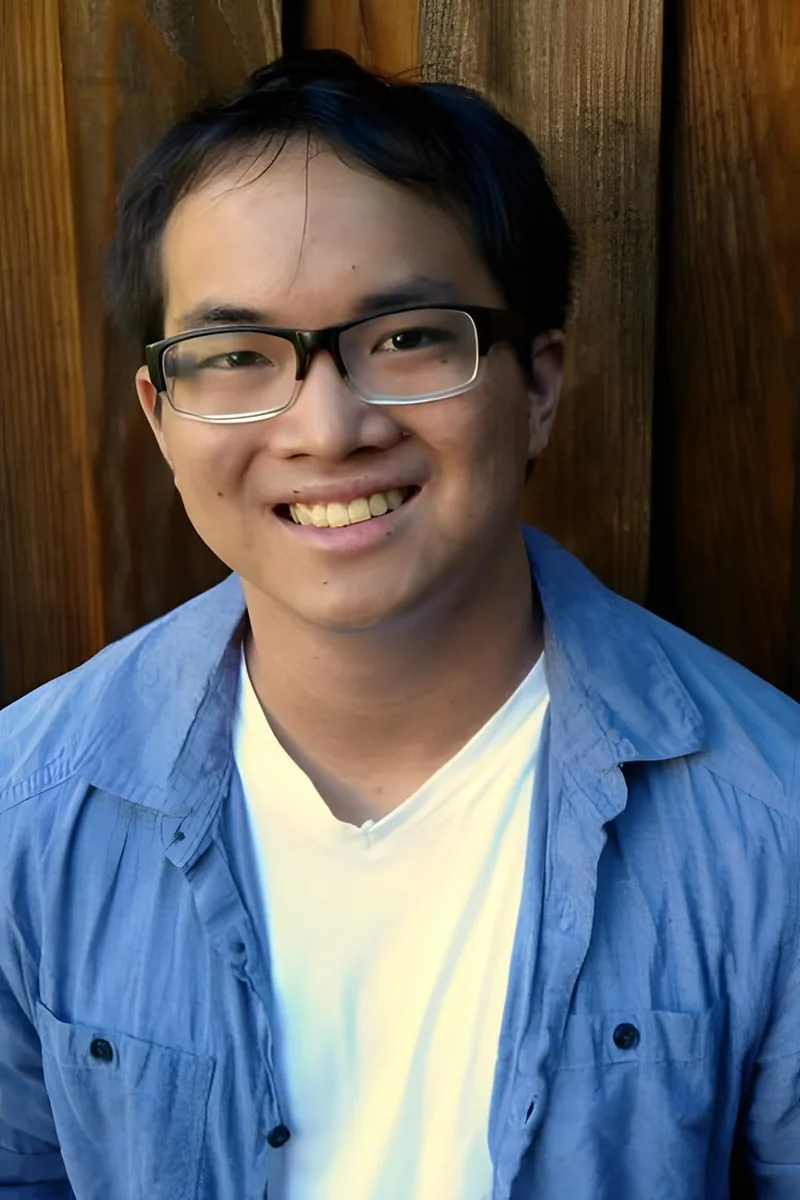
Cognitive science at Stanford trained David to think about how people solve problems — which turns out to be half the battle in contest math, where recognizing *why* you're stuck matters as much as knowing the math itself. He breaks down AMC and MATHCOUNTS problems by coaching students to notice their own reasoning patterns: when they're over-complicating a counting argument, when they're missing a symmetry, or when switching representations would unlock a cleaner path. His 1570 SAT and CS background add computational precision to that metacognitive approach.
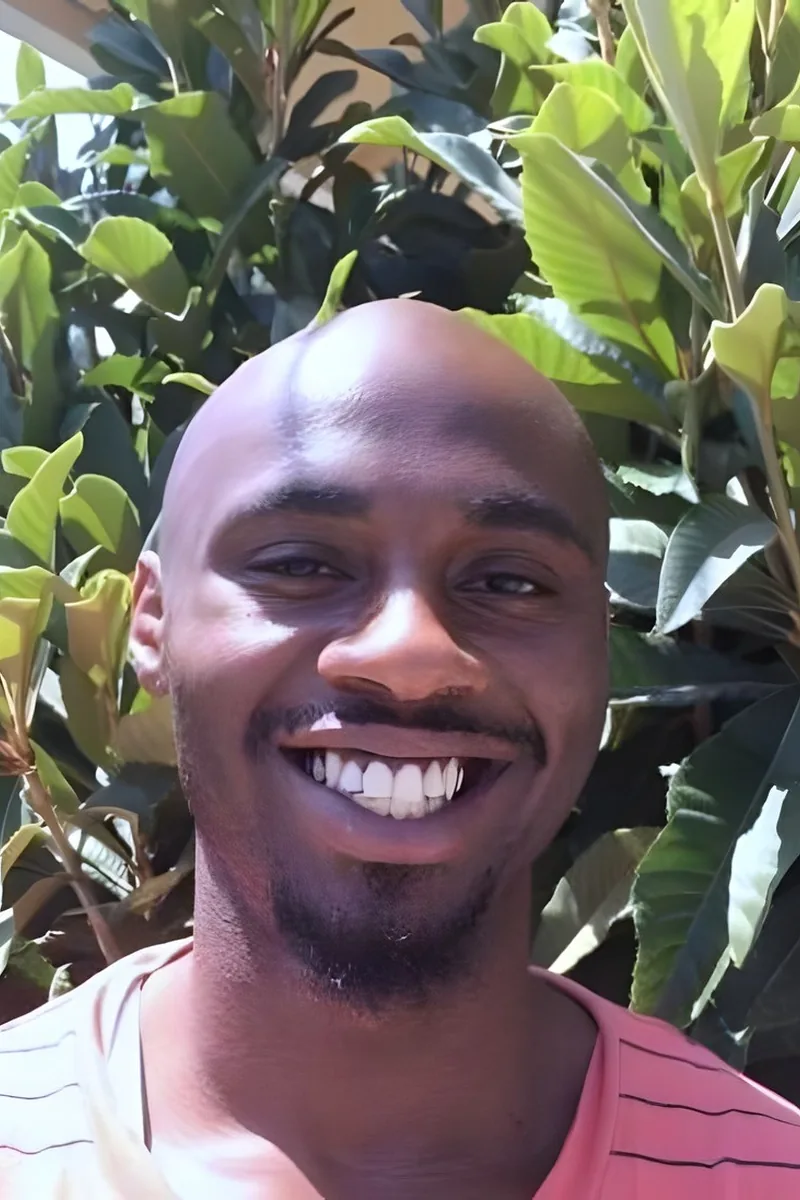
Caltech's problem sets are notorious for requiring you to synthesize ideas from multiple fields in a single solution — a habit Brian carried straight into contest math tutoring, where an AMC problem might demand algebra, number theory, and geometric intuition all at once. His dual background in economics and computer science means he naturally approaches problems through optimization and algorithmic reasoning, two lenses that crack open competition questions other strategies miss. He scored a 1580 SAT and was admitted to five of the most selective programs in the country, but contest prep is where his love of creative problem-solving really shows.
Having competed in math competitions throughout high school and scored well, Tracy knows firsthand that contest problems reward creative thinking — not just speed. She teaches the combinatorics shortcuts, number theory tricks, and proof strategies that turn a tough AMC or MATHCOUNTS problem from intimidating into solvable. Her economics background also sharpens the optimization and logic skills that competition math demands.
Physics at Yale means Ian spends most of his time translating messy real-world scenarios into precise mathematical arguments — a habit that transfers directly to contest problems, where an AMC question might bury a clever geometric insight inside what looks like straightforward algebra. His deep comfort with multivariable calculus and competition math lets him teach students to attack problems from the physics side when pure math stalls: conservation arguments, symmetry reasoning, and dimensional shortcuts that most math-only tutors wouldn't reach for.
Kevin's Stanford CS Biocomputation work — building AI systems in Python and C++ — trains exactly the kind of algorithmic thinking that shows up in contest problems disguised as combinatorics or recursive sequences. With a 35 ACT and 1590 SAT, he's no stranger to high-stakes problem-solving under time constraints, and he applies that same precision to breaking down AMC and MATHCOUNTS questions into the logical steps that make unfamiliar problems feel solvable.
Serving as a Course Assistant for Harvard's calculus program means Sanjana regularly fields questions that require thinking sideways — a skill contest math amplifies tenfold, since AMC problems routinely punish students who reach for the standard technique instead of hunting for the elegant one. Her applied math training sharpens that instinct, particularly on problems where a quick modular arithmetic observation or a well-chosen substitution collapses what looks like a ten-step computation into two lines. Rated 5.0 by students.
Dual degrees in physics and math from Yale — plus a PhD in economics — mean Anthony has spent years toggling between abstract proof-writing and applied quantitative reasoning, which is precisely the gear-shifting that AMC and MATHCOUNTS problems demand when they bury a combinatorial insight inside a physics-flavored setup or twist an algebraic identity into something unfamiliar. He teaches students to interrogate a problem's structure before reaching for any formula, building the habit of asking whether a cleverly chosen invariant or a parity argument can replace brute-force computation entirely. Rated 5.0 by students.
Three engineering degrees plus applied mathematics training means Rahi has spent years doing exactly what hard contest problems demand — pulling techniques from algebra, geometry, and number theory simultaneously and figuring out which combination actually cracks the problem. He teaches students to build that same instinct for connecting ideas across topics, which is what separates a student who solves AMC problems from one who just recognizes them.
Three separate degrees from MIT — Computer Science, Molecular Biology, and Political Science — meant Stephanie spent undergrad constantly translating between formal proofs, experimental reasoning, and argumentative logic, which is the kind of mental versatility that pays off when a contest problem disguises a combinatorics question as geometry or buries a number theory trick inside an algebraic identity. She teaches students to map each problem to the right domain before picking up a pencil, a habit that turns chaotic AMC time pressure into a structured decision process. Rated 5.0 by students.
Materials engineering at Northwestern drilled Michael in the kind of multi-step quantitative reasoning where you have to pull from geometry, algebra, and creative estimation all at once — which is exactly what a tough AMC problem feels like in condensed form. His 34 ACT and 5.0 rating back up the mathematical precision, but it's his instinct for finding elegant shortcuts through messy-looking problems that translates best to contest prep.
Molecular biology might seem far from contest math, but Agustin's 1560 SAT and deep calculus background (through AP Calculus BC) reflect the kind of precise, rapid problem-solving that AMC questions demand — especially when a problem buries a combinatorial insight inside what looks like straightforward algebra. He teaches students to stress-test their first instinct on a problem, training them to ask whether a more elegant path exists before committing to computation.
Chemical engineering coursework forced Kelly to get comfortable with the kind of multi-step, no-obvious-formula problem-solving that contest math thrives on — pulling together algebra, geometry, and creative reasoning when brute force won't cut it. She scored a 1410 SAT and holds a 5.0 rating, but what matters more for competition prep is her instinct for breaking an intimidating problem into smaller, attackable pieces under time pressure.
Neuroscience research trains a specific kind of thinking — designing experiments, spotting confounding variables, reasoning through systems with many interacting parts — and that analytical rigor translates surprisingly well to contest problems where the obvious approach is almost always a trap. Rithi applies that same discipline to AMC and MATHCOUNTS prep, teaching students to interrogate a problem's structure before committing to a strategy, especially on questions that blend combinatorics with algebraic manipulation. Her 1550 SAT and 4.9 rating speak to the precision she brings under pressure.
MIT's computer science curriculum drills the kind of algorithmic and discrete reasoning — graph theory, combinatorial proofs, recursive structures — that shows up constantly in contest problems wearing different disguises. Brice applies that training to competition prep by teaching students to decompose an intimidating AMC problem into smaller, recognizable subproblems, the same way a programmer breaks a complex function into modular pieces. His perfect 1600 SAT and 4.9 rating speak to the precision he brings to high-stakes problem-solving.
Pursuing a math degree at Yale means Tessa lives in proofs and abstractions daily, but her 36 ACT and 1590 SAT show she also thrives under rigid time constraints — both skills contest math demands simultaneously. She's especially effective at teaching students to mine a problem for hidden structure, like recognizing when a seemingly novel AMC question is really a modular arithmetic argument wearing an unfamiliar costume.
Steven's Human Development training might seem unrelated to contest math, but it gave him a sharp understanding of how students at different ages process abstract reasoning — which matters when a middle schooler and a high schooler need completely different entry points into the same MATHCOUNTS counting problem. He's strongest at building the patience and strategic persistence contest math demands, coaching students to resist grabbing the first approach that comes to mind and instead look for the structural shortcut hiding underneath. Rated 4.9 by students.
Chemical and biomolecular engineering at MIT means Natasha's daily work involves chaining together techniques from calculus, combinatorics, and creative modeling — the same skill contest problems test when they force you to combine ideas from different branches of math under a ticking clock. She's particularly sharp at spotting when a problem that looks computational is actually asking for an elegant shortcut, a habit drilled into her by years of engineering coursework where brute force simply isn't an option. Rated 4.9 by students.
Most contest problems are designed to punish students who reach for the standard classroom method first — they reward the flexible thinker who can spot when a geometry problem is actually about modular arithmetic, or when a counting question collapses with a clever algebraic substitution. Alan's math degree and years teaching across every level from pre-algebra through calculus give him the cross-topic vocabulary to show students those hidden connections. His 4.8 rating speaks to how well that approach lands with students preparing for AMC and MATHCOUNTS.
Running a high school math club where he designed challenge problems for peers gave Chris early practice with the kind of creative, multi-step reasoning that AMC and MATHCOUNTS questions demand — problems where standard formulas fail and you need to find the trick hiding beneath the surface. His biomedical engineering coursework at UCLA, especially differential equations, reinforces the habit of attacking unfamiliar problems by stripping them down to simpler cases first. Rated 4.8 by students.
Jared's PhD work in mechanical engineering means he routinely tackles problems that blend calculus, geometry, and algebraic reasoning into a single challenge — a skill set that maps directly onto the multi-step thinking AMC and MATHCOUNTS problems demand. His math minor from Bucknell gave him formal training in proof techniques and number theory beyond what most engineering students encounter, which is where contest math tends to separate strong students from top scorers. He coaches students to identify the mathematical structure hiding beneath a problem's surface before committing to a solution strategy.
Two and a half years teaching middle school math gave Jacob a front-row seat to the exact moments students start thinking creatively about numbers — the leap from following procedures to asking 'what if I tried it this way?' that competition math demands at every turn. His discrete math and linear algebra background means he can connect a tricky MATHCOUNTS problem back to the deeper structures underneath, whether that's a clever modular arithmetic shortcut or a combinatorial argument most students wouldn't think to try. Rated 5.0 by students.
Applying to PhD programs in applied mathematics means Romeo lives in the space where rigorous proof techniques meet creative problem-solving — exactly the territory AMC and MATHCOUNTS questions occupy when they demand an unexpected substitution or a clever invariant argument. His math degree gives him deep fluency across algebra, combinatorics, and number theory, so he can teach students to see the connections between branches that contest writers deliberately exploit to make problems feel harder than they are.
Dual majoring in biology and mathematics means Mrunali regularly toggles between quantitative rigor and pattern-based reasoning — the exact combination contest problems exploit when they wrap a number theory trick inside a biological-style counting scenario or demand proof-like logic under time pressure. She zeroes in on building the specific habits AMC and MATHCOUNTS reward, like testing small cases systematically before generalizing and recognizing when a problem's constraints quietly eliminate most approaches. Rated 5.0 by students.
Speech and debate competition in high school taught Kyle how to think under pressure, and he brings that same strategic mindset to competition math. He tackles problems from AMC, MATHCOUNTS, and similar contests by teaching creative problem-solving techniques — number theory shortcuts, combinatorial arguments, and clever uses of symmetry — that go well beyond the standard curriculum.
Statistics grad work builds a surprisingly useful muscle for contest math — Evan's daily training in probability, combinatorial counting, and expected value calculations maps directly onto the stochastic reasoning that AMC problems love to sneak into their trickiest questions. He teaches students to approach unfamiliar problems by identifying the underlying distribution or counting structure, then working backward to a clean solution. Rated 5.0 by students.
Pursuing a pure math PhD at Boston College means Jacob lives in the world of proofs, abstraction, and creative problem construction — exactly the terrain contest problems are designed to test. His discrete math background and graduate-level training let him show students the deeper structures behind AMC and MATHCOUNTS questions, like when a problem is secretly about invariants or when a clever modular arithmetic argument replaces pages of casework. Rated 5.0 by students.
Leaving home after freshman year to finish high school early at the Texas Academy of Mathematics and Science meant Michael was solving university-level problems while most students were still in Algebra 2 — the kind of accelerated, sink-or-swim environment that mirrors the intensity of AMC and MATHCOUNTS competitions. His statistics training at Rice sharpens his instinct for combinatorial and probability-heavy contest questions, where knowing how to count systematically separates quick solvers from students who spiral into overcounting. Rated 5.0 by students.
Psychology training sharpened Katelyn's ability to read how a student thinks through a problem — useful in any math context, but especially in contests where the mental game of staying calm, switching strategies, and managing a ticking clock matters as much as the math itself. She scored a 34 ACT and 1540 SAT, so high-stakes quantitative reasoning under pressure is familiar territory, and she channels that into teaching students to recognize when a problem is baiting them into a tedious calculation instead of rewarding a cleaner, more creative approach.
Years of actuarial work gave David a particular kind of mathematical instinct — the ability to size up a complex problem, identify what's actually being tested, and find the efficient path through it, which is precisely what AMC and MATHCOUNTS questions demand under time pressure. His Vanderbilt math degree and discrete math background mean he can teach the number theory, combinatorics, and strategic problem decomposition that separate contest math from classroom math. Rated 5.0 by students.
Having taught math across every grade level from first through twelfth, Sarah knows exactly where students' foundational gaps hide — and contest problems are ruthless at exposing them, demanding instant recall of concepts from arithmetic through algebra and geometry simultaneously. Her Secondary Education master's gives her structured methods for building the kind of flexible thinking competition math rewards, like training students to reframe a problem three different ways before committing to a solution path. Rated 5.0 by students.
Mechanical engineering at Northwestern means Zach regularly faces problems where he has to chain together calculus, geometry, and algebraic tricks before a clean solution emerges — but contest math strips away the engineering context and tests that same creative problem-solving in its purest form. He teaches students to build a mental inventory of techniques like invariants, clever counting, and modular arithmetic so they can pattern-match quickly under AMC time pressure. Holds a 5.0 rating.
Graph theory and group theory formed the core of Benjamin's master's dissertation at the University of Essex — and those are exactly the branches of mathematics that surface in contest problems demanding structural insight over raw computation. He teaches students to spot when an AMC question is secretly about symmetry groups or when a counting problem maps onto a graph, turning intimidating puzzles into territory he's mapped extensively. His linear algebra background also comes in handy for the occasional competition problem where eigenvalue thinking or vector arguments offer a cleaner path than brute-force casework.
Two chemistry doctorates might seem like an unusual path into contest math, but the deep pattern-matching Subashini honed solving complex chemical systems — where you have to see the shortcut hiding inside layers of data — transfers directly to the lateral thinking AMC and MATHCOUNTS problems demand. She zeroes in on building students' ability to translate unfamiliar problem setups into familiar mathematical structures, especially when a question blends number theory with algebraic manipulation in ways that punish formulaic approaches.
Engineering coursework at UIC forced Apoorva to constantly translate between mathematical frameworks — switching from a trigonometric identity to a combinatorial argument to a geometric insight within the same problem set — which mirrors exactly how AMC questions test whether students can pull from multiple toolkits at once. She zeroes in on building that cross-domain fluency, drilling students on recognizing when a problem that screams 'algebra' is actually begging for a clever counting approach or a modular arithmetic shortcut.
Pursuing a doctorate in mathematics at the University of Chicago means Carson lives in the world of proofs, abstractions, and creative problem-solving that contest questions are designed to test — his coursework in discrete math, algebra, and geometry maps directly onto the toolkit AMC and MATHCOUNTS problems demand. He maintains a deep bank of practice exercises and teaches students to recognize the underlying structure of a problem before choosing a strategy, whether that's a clever invariant argument or an unexpected application of modular arithmetic.
Twenty-five years of teaching physics and chemistry in Massachusetts public schools means Jacques has watched thousands of students struggle with problems that don't fit neatly into one category — which is precisely what contest math demands, since a single AMC question might weave together number theory, algebra, and geometric reasoning without telling you which is which. His Princeton chemical engineering training and graduate-level differential equations coursework built the habit of attacking problems from multiple angles simultaneously, a skill he now applies to coaching students through competition-style questions where the obvious approach is rarely the fastest one.
Nuclear engineering coursework drills a specific habit that pays off in contest math: decomposing a massive, intimidating system into smaller interactions you can actually reason about — which is exactly what a tough AMC combinatorics or number theory problem demands. Moe pairs that engineering intuition with graduate-level math depth across differential equations, discrete math, and linear algebra, giving him a wide lens for spotting which branch of mathematics a disguised problem is really testing. Rated 4.9 by students.
Taking advanced university-level math courses while still in high school — and competing in gifted programs alongside that coursework — gave Kashish early exposure to the kind of problems that don't yield to a single textbook method, which is exactly what AMC and MATHCOUNTS questions demand. She teaches students to build a mental inventory of techniques across algebra, geometry, and number theory so they can pattern-match quickly when a contest problem disguises one topic as another. Her 1570 SAT and 5.0 rating speak to the precision she brings under pressure.
Graduate-level statistics and a math degree mean Nicholas lives in the space where probability, combinatorics, and discrete reasoning overlap — which is exactly where the trickiest AMC problems land when they ask you to count arrangements or compute odds under unusual constraints. He brings a proof-oriented mindset to contest prep, teaching students to build arguments step by step rather than guessing at formulas, and his 5.0 rating suggests that rigor actually clicks with students.
Economics at Yale means Max spends his days building mathematical models and hunting for hidden structure in data — skills that translate directly to contest problems where the obvious approach is almost never the fastest one. He brings a 1580 SAT and a deep comfort with algebraic manipulation and quantitative reasoning to AMC and MATHCOUNTS prep, teaching students to strip a problem down to its core logic before reaching for any formula.
Testimonials
Because the right Competition Math tutor makes all the difference.
Average Session Rating – Based on 3.4M Learner Ratings
Top 20 Math Subjects


Top 20 Subjects
Frequently Asked Questions
Competition Math students often find combinatorics and number theory particularly challenging because they require both pattern recognition and creative problem-solving rather than formula application. Geometry proofs and coordinate geometry problems also trip up many students—they demand rigorous logical reasoning and the ability to visualize relationships that aren't always obvious from the problem statement. Additionally, students frequently struggle with problems that blend multiple topics (like using number theory within a geometry context), since competition problems reward deep conceptual connections rather than isolated skill mastery.
Competition Math tutors focus on teaching problem-solving strategies and mathematical reasoning rather than memorizing formulas or procedures. They help students learn to recognize problem patterns, work backwards from answers, and test edge cases—techniques that are essential for competition success. A strong tutor will also expose students to multiple solution approaches for the same problem, helping them develop flexibility and intuition about which strategies work best in different contexts.
Proof writing is a skill that improves dramatically with guided practice and feedback. Tutors help students understand the logical structure of proofs—how to identify what needs to be proven, what assumptions are valid, and how to build a chain of reasoning that's both mathematically sound and clearly communicated. They also teach students to recognize common proof techniques (proof by contradiction, induction, construction) and when each is most effective, which builds confidence when facing unfamiliar problems.
Tutors teach students to employ strategies like drawing diagrams to visualize relationships, testing small cases to find patterns, working backwards from the answer, using extreme cases to understand constraints, and reframing problems in different ways. For example, a combinatorics problem might become clearer if rewritten as a graph theory problem, or a number theory challenge might yield to modular arithmetic thinking. The goal is to help students develop a flexible toolkit so they can adapt their approach based on what the problem reveals.
Expert tutors ask students to explain their reasoning and show their work in detail, which quickly reveals whether gaps stem from procedural confusion or deeper conceptual misunderstandings. For instance, a student might struggle with combinatorics because they don't truly understand why permutations and combinations are different, not because they can't apply the formulas. Tutors then rebuild understanding from the ground up using concrete examples, visual representations, and guided discovery rather than re-teaching the same procedure.
Absolutely. Beginners benefit from tutoring that builds foundational problem-solving habits and introduces competition-style thinking, while intermediate students gain from focused work on their weakest topics and exposure to harder problems. Advanced competitors often use tutoring to fine-tune strategies, learn specialized techniques for specific competition formats, and develop the mental stamina needed for timed contests. Personalized instruction adapts to each student's current level and goals.
Tutors deliberately expose students to related problems across different topics, helping them recognize that a geometry insight might apply to a number theory challenge, or that a combinatorial counting technique works for probability. Through guided exploration and strategic questioning, students learn to ask "What is this problem really asking?" and "Have I seen something similar before?"—skills that transform how they approach unfamiliar problems. This pattern recognition is what separates strong competitors from those who solve problems in isolation.
Tutors build timed practice into sessions gradually, helping students develop both speed and accuracy without sacrificing strategy. They teach time management techniques like identifying which problems to attempt first, recognizing when to skip a problem and return to it, and knowing when to guess strategically. Over time, repeated exposure to competition-style problems under realistic conditions builds the mental resilience and pattern fluency that allow students to perform confidently during actual contests.
Let’s find your perfect tutor
Answer a few quick questions. We’ll recommend the right plan and match you with a top 5% tutor.