Award-Winning AP Chemistry Tutors
serving Atlantic City, NJ
AP Chemistry
Tutors in Atlantic City
Private 1-on-1 tutoring, weekly live classes for academic support, test prep & enrichment, practice tests and diagnostics, and more to elevate grades and test scores.
Based on 3.4M Learner Ratings
UniversitiesSchools & Universities
DeliveredHours Delivered
ProficiencyGrowth in Proficiency
Who needs tutoring?
No obligation. Takes ~1 minute.
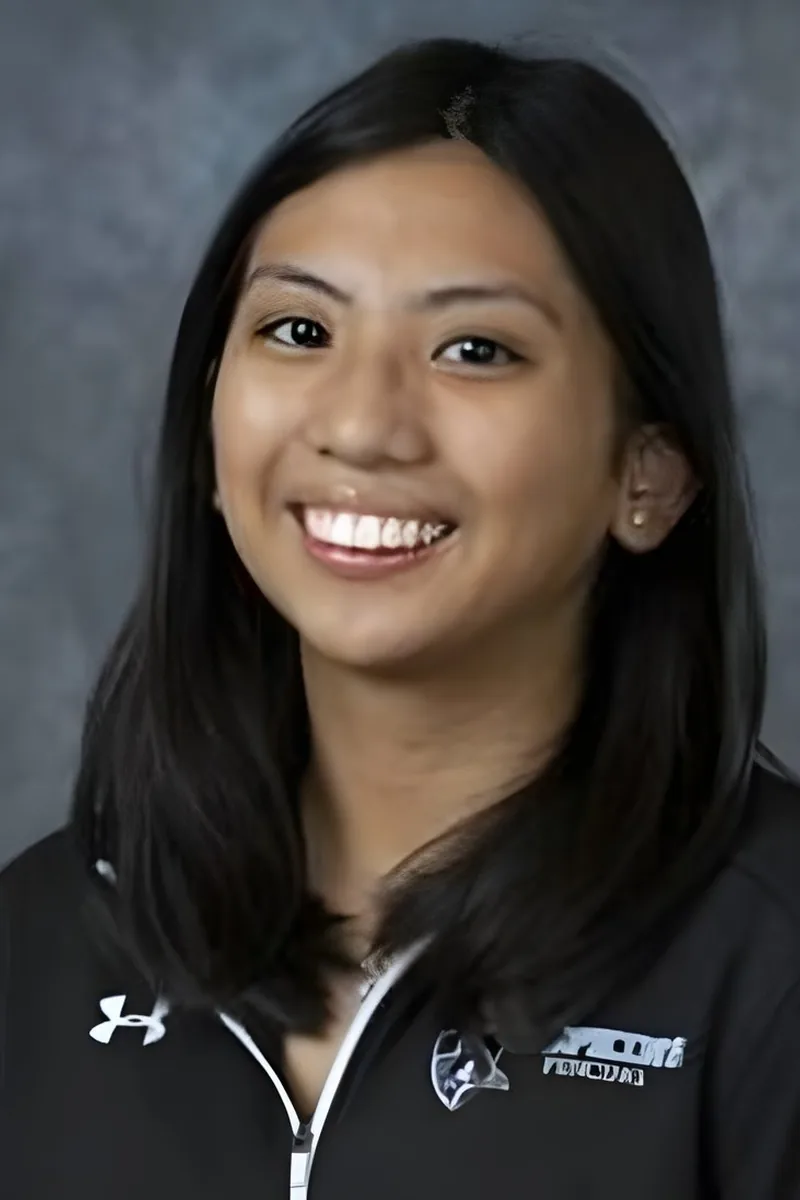
A biophysics major and premed student at Johns Hopkins, Czarina is currently deep in the college chemistry sequence that AP Chemistry is designed to preview — so she knows exactly which concepts, like molecular orbital theory and colligative properties, carry the most weight on the exam versus which ones fade into background noise. She earned a 770 on the SAT Chemistry Subject Test and teaches the subject by linking quantitative problem-solving to the physical intuition behind each reaction. Rated 5.0 by students.
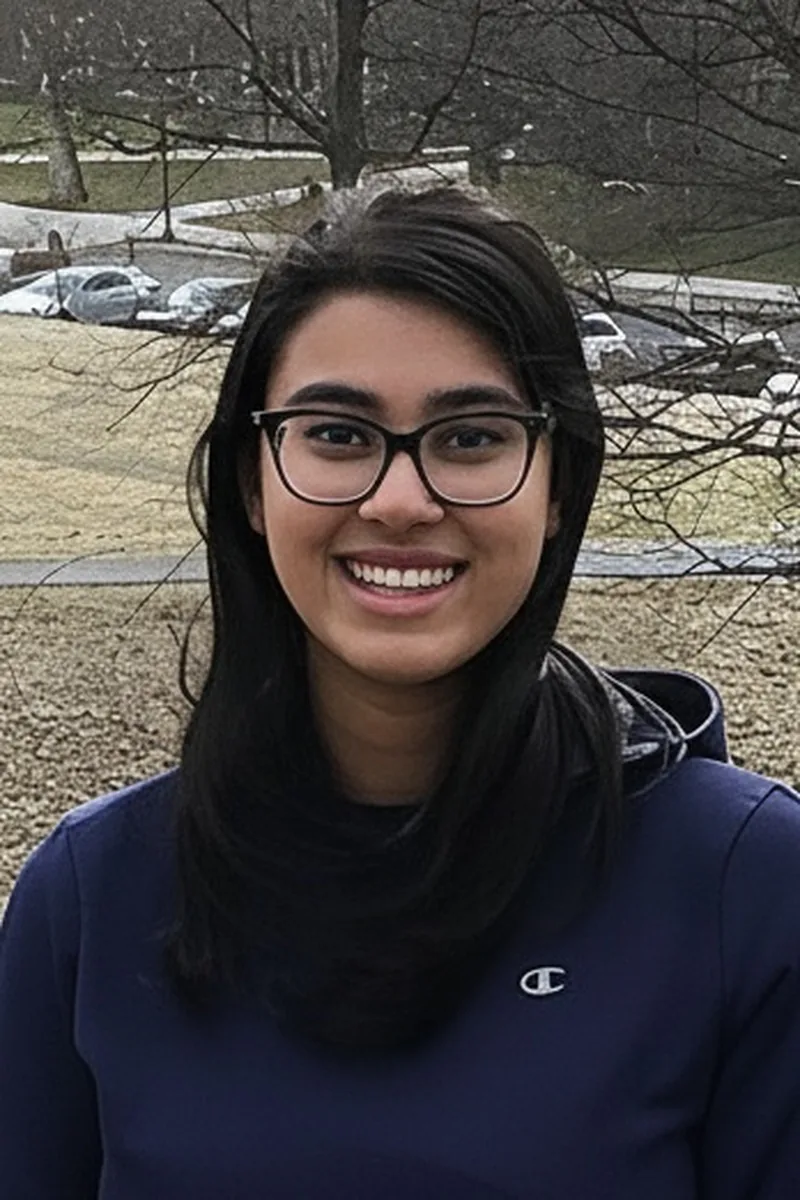
Cornell's environmental engineering program requires a chemistry sequence heavy on aqueous equilibria, redox reactions, and thermodynamics — exactly the content that dominates AP Chemistry's most demanding free-response questions. Akanksha draws on that coursework plus her experience teaching chemistry through Cornell's STEP program to walk students through topics like acid-base titrations and reaction energetics with real-world environmental applications that make the material stick. Rated 4.8 by students.
Thermodynamics, equilibrium, and electrochemistry are where most AP Chemistry students start losing their footing. Sharon tackles these topics by connecting abstract concepts to biological systems she knows inside out from medical school — like why buffer systems matter in blood pH regulation. That cross-disciplinary lens makes the toughest AP Chem material more intuitive.
Enric earned his PhD in Chemistry, which means AP Chem topics like equilibrium, thermodynamics, and kinetics aren't just exam material — they're the foundation of his professional expertise. He knows which free-response question styles the College Board favors and teaches students to connect particulate-level reasoning to macroscopic observations, the skill that separates 4s from 5s. Rated 5.0.
AP Chemistry's toughest questions ask students to connect multiple concepts — using thermodynamic data to predict equilibrium shifts, or explaining bonding models to justify a substance's physical properties. Satya's chemical engineering major at Princeton means he doesn't just remember these topics from high school; he applies them in upper-level coursework on reaction kinetics and molecular design. That depth lets him explain the 'why' behind each concept in ways that stick.
The same systematic, step-by-step thinking that makes Rishik effective in computer science — isolating variables, tracing logic, catching errors — is exactly what AP Chemistry's toughest quantitative problems demand, from ICE tables to electrochemical cell calculations. He teaches students to treat unit conversions and dimensional analysis as non-negotiable checkpoints rather than afterthoughts, building the kind of procedural discipline that prevents careless mistakes on exam day. His 1580 SAT and 4.6 rating reflect a detail-driven approach that pays off in a content-heavy course.
As a recent graduate from Cornell University with a degree in biological sciences and someone who plans to attend medical school in the future, my passion and appreciation for the sciences and medicine is something I consider integral to my identity. My favorite subjects to tutor are biology and chemistry as those are the subjects in which I have past teaching experience in the classroom setting. In particular, my teaching style focuses on rephrasing and remodeling initially daunting concepts and information into bite-sized and digestible bits of information that any student can comprehend. I firmly believe that a lot of what slows students down in the learning process is their preconceived notions of course material. My passion for helping students stems from my experiences as an undergraduate where I can remember on countless occasions feeling lost in the material with little direction on how to approach the curriculum. I can think back to the many times I would have benefitted from having someone who could have guided me through stretches of daunting coursework which led me to become a tutor myself. As a teaching assistant, I discovered my passion for helping students manage their way through courses that many considered to be very difficult. Seeing how they reacted to my assistance reminded me why I applied for the position in the first place and motivates me to help students learn more every single day.
Spending four years as a premed biochemistry major means Ved has worked through thermodynamics, equilibrium, acid-base chemistry, and kinetics at a level well beyond the AP curriculum. He unpacks each AP Chemistry topic by tying abstract principles — like why Le Chatelier's principle predicts a specific shift — back to the molecular interactions driving the behavior. His 36 ACT composite reflects the same analytical rigor he brings to science tutoring.
Equilibrium calculations, thermodynamics, and electrochemistry are the AP Chem units that separate students who memorize from students who understand, and Sophie's chemical engineering major makes her especially sharp on these topics. She digs into the reasoning behind each equation — why Le Chatelier's principle works, what Gibbs free energy actually tells you — so students can handle the exam's application-heavy free-response questions with confidence.
AP Chemistry's free-response questions demand more than memorized formulas — they require students to reason through equilibrium shifts, electrochemistry, and kinetics in writing. Darren's background synthesizing marine natural products during his Ph.D. gave him deep, hands-on understanding of the reaction chemistry that dominates the AP exam. He teaches students to think through multi-step problems the way a working chemist would, connecting each concept to the bigger picture.
Pharmacy students don't just take chemistry — they depend on it. Yinin's PharmD program at Rutgers means she's applying concepts like acid-base equilibria, reaction thermodynamics, and molecular interactions in a clinical context every semester, which gives her a practical lens for teaching AP Chemistry's most calculation-heavy topics. Rated 4.9 by students.
AP Chemistry's free-response questions demand more than knowing reactions — they require students to connect thermodynamics, equilibrium, and kinetics within a single multi-part problem. Anisha earned her aerospace engineering degree at Georgia Tech, where physical chemistry concepts like enthalpy changes and gas behavior were embedded in her core coursework. She teaches students to trace the logic between AP Chem's big ideas rather than treating each unit as isolated.
Mechanical engineering at Cornell requires a chemistry sequence where concepts like thermodynamics, reaction kinetics, and molecular bonding aren't theoretical — they're tools for understanding material properties and energy systems. Yuki brings that applied perspective to AP Chemistry, teaching students to think through problems like enthalpy calculations and equilibrium shifts by connecting the math to physical intuition about what molecules are actually doing. Her approach starts with letting students wrestle with a problem before stepping in, which builds the kind of independent reasoning the free-response section rewards.
I am a patient and passionate tutor with the belief that any student can succeed in reaching their full potential with the right tools, guidance, and practice. As an admitted medical school student, I have a strong biology/chemistry and test prep foundation.
Pratik's strongest subject is chemistry, and it shows — he tutors it at both the high school and college level from his home base as a premed biology major at Cornell. He digs into the conceptual logic behind equilibrium, thermodynamics, and electrochemistry so that students can reason through unfamiliar free-response prompts instead of relying on memorized shortcuts.
Samantha's psychology studies at Princeton might seem unrelated to AP Chemistry, but her neuropsychology focus requires understanding the chemical processes underlying brain function — neurotransmitter synthesis, ion channel dynamics, and the thermodynamics of cellular signaling all draw on the same principles tested in AP Chem. She applies that molecular-level thinking to topics like atomic structure and reaction energetics, teaching students to reason through problems rather than memorize isolated facts. Rated 4.9 by students.
Forty-plus AP and general chemistry students have worked through thermodynamics, electrochemistry, and equilibrium calculations with Amy, and her 5.0 rating speaks to the results. Her master's in environmental toxicology keeps her deeply connected to the material — she teaches AP concepts like Gibbs free energy and kinetics as tools scientists actually use, not just formulas to memorize for the exam.
Notre Dame's pre-med track put Aidan through the full college chemistry gauntlet — general and organic — where concepts like electron configuration, molecular polarity, and reaction spontaneity weren't just exam topics but prerequisites for everything that followed. He scored a 35 on the ACT, and that same precision shows up in how he teaches AP Chemistry's trickiest quantitative work, particularly gas law problems and solution chemistry where one missed conversion derails the entire calculation.
Cornell's engineering curriculum put Ravnoor through rigorous college-level chemistry, and his computer science training sharpened the algorithmic thinking that pays off when students need to systematically work through multi-step problems like limiting reagent calculations or electrochemical cell setups. He teaches AP Chemistry's quantitative sections by treating each problem like a debugging exercise — isolating variables, checking units at every step, and building toward answers methodically rather than jumping to formulas. Rated 5.0 by students.
Thermodynamics, electrochemistry, and equilibrium calculations in AP Chemistry require more than formula memorization — they demand fluency with why reactions behave the way they do. Abrahim's chemistry background spans general through physical and organic at UCLA, and his direct teaching style zeroes in on the conceptual reasoning that earns 4s and 5s on exam day.
Computational biology at Cornell means Emily lives at the intersection of quantitative reasoning and molecular science — she's worked through the same college-level chemistry that AP students are preparing for, but with the added demand of modeling chemical systems computationally. She teaches topics like equilibrium and reaction energetics by emphasizing the mathematical structure underneath, so students learn to read what equations are actually telling them about molecular behavior. Rated 4.9 by students.
Raveena's bioinformatics degree at VCU means she doesn't just know AP Chemistry's content — she applies it daily, using computational tools to analyze molecular structures and chemical data in ways that make topics like electron configuration and periodic trends feel concrete. Her 8-year direct med program has taken her well beyond the AP curriculum through organic chemistry and biochemistry, giving her a clear picture of which foundational concepts the free-response section rewards most. Rated 4.9 by students.
AP Chemistry's toughest sections — equilibrium, thermodynamics, electrochemistry — demand both conceptual understanding and fast quantitative reasoning. Brian brings strong analytical instincts from his Caltech science training, where rigorous problem-solving across disciplines was the norm. He breaks down multi-step free-response problems into the kind of logical chains that earn full credit on exam day.
Thermodynamics, electron orbitals, kinetics — AP Chemistry sits right at the intersection of Dennis's physics and math training. His research simulating turbulent plasmas and designing optical filters required deep fluency with atomic behavior and energy transfer, so he explains concepts like equilibrium and electrochemistry through the underlying physics rather than just memorized rules.
A mechanical engineering degree from WashU (Magna Cum Laude) and refinery work at ExxonMobil mean Caroline has applied thermodynamics, kinetics, and gas behavior in industrial settings where precision isn't optional — that real-world fluency translates directly to AP Chemistry's most calculation-heavy units. She teaches concepts like enthalpy changes and reaction spontaneity by connecting them to the energy systems she actually engineered, giving students a concrete anchor for abstract ideas. Rated 5.0 by students.
I am a graduate from the University of Florida, University of Pennsylvania, and University of Illinois Urbana-Champaign. I have graduated with scholarship honors in Chemical Engineering with a Bachelor of Sciences from University of Florida, Masters of Computer and Information Technology from UPenn, and a degree in Master of Business Administration from University of Illinois Urbana-Champaign. I have been a private tutor and also a Teaching Assistant for my four years of study at the University of Florida. I teach various subjects ranging from math and the sciences to test prep such as the ACT. My favorite subject to teach is Chemistry because of my overall background in the field. I enjoy working with students of all ages from grade school to college. It makes me really happy when a student is finally able to comprehend a subject they found difficult before. I am very patient with my students and I will do everything in my power to give them the best education possible.
Testimonials
Because the right AP Chemistry tutor makes all the difference.
Average Session Rating – Based on 3.4M Learner Ratings
Practice AP Chemistry
Free practice tests, flashcards, and AI tutoring for AP Chemistry
Nearby AP Chemistry Tutors
Other Atlantic City Tutors
Related Science Tutors in Atlantic City
Frequently Asked Questions
Varsity Tutors matches Atlantic City students with expert AP Chemistry tutors for 1-on-1 instruction. We pair each student with a tutor based on their specific needs, learning style, and goals.
Whether you need homework help, exam prep, or want to get ahead, our AP Chemistry tutors are ready to help.
Common challenges include gaps from earlier material, difficulty with specific concepts, and trouble applying learning to new problems. These issues can snowball quickly in AP Chemistry.
A tutor identifies where you're stuck, fills in gaps, and provides targeted practice. The 1-on-1 format means you get help exactly where you need it.
Tutors work with your student's actual coursework—homework assignments, class notes, and upcoming tests. This keeps tutoring directly relevant to what's happening in the classroom.
When you share information about your student's school and curriculum, we can match you with a tutor who has relevant experience.
All tutors complete background checks, credential verification, and teaching evaluation. Many of our AP Chemistry tutors hold advanced degrees or have years of teaching experience.
You can review tutor profiles to find someone with the right background for your student's level and needs.
Many students see improved grades within a few weeks, along with better understanding of AP Chemistry concepts and more confidence tackling challenging material.
Tutors track progress and adjust their approach to ensure continued improvement.
Most students benefit from 1-2 sessions per week. More frequent sessions help if your student is significantly behind or has an important exam coming up.
Your tutor can recommend a schedule based on your student's specific situation and goals.
Tutoring is purchased in packages of hours, with rates varying by tutor experience. Varsity Tutors offers several options to fit different budgets and needs.
You can discuss pricing during your consultation to find what works best.
Your tutor will assess where your student is, discuss goals, and start working on priority areas. Most students bring current homework or upcoming test material to focus on.
By the end, you'll have a clear sense of how the tutor can help and a plan for moving forward.
Let’s find your perfect tutor
Answer a few quick questions. We’ll recommend the right plan and match you with a top 5% tutor.