Award-Winning Data Science
Tutors
Data Science
Tutors
Private 1-on-1 tutoring, weekly live classes for academic support, test prep & enrichment, practice tests and diagnostics, and more to elevate grades and test scores.
Based on 3.4M Learner Ratings
UniversitiesSchools & Universities
DeliveredHours Delivered
ProficiencyGrowth in Proficiency
Who needs tutoring?
No obligation. Takes ~1 minute.

Firas's postdoctoral research at Princeton sits squarely at the intersection of machine learning and big data — the two pillars of modern data science. He walks students through the full pipeline, from cleaning and exploring datasets with SQL and Python to building predictive models and evaluating their performance. His industry engineering background means every lesson ties back to how data science actually gets done in production environments.
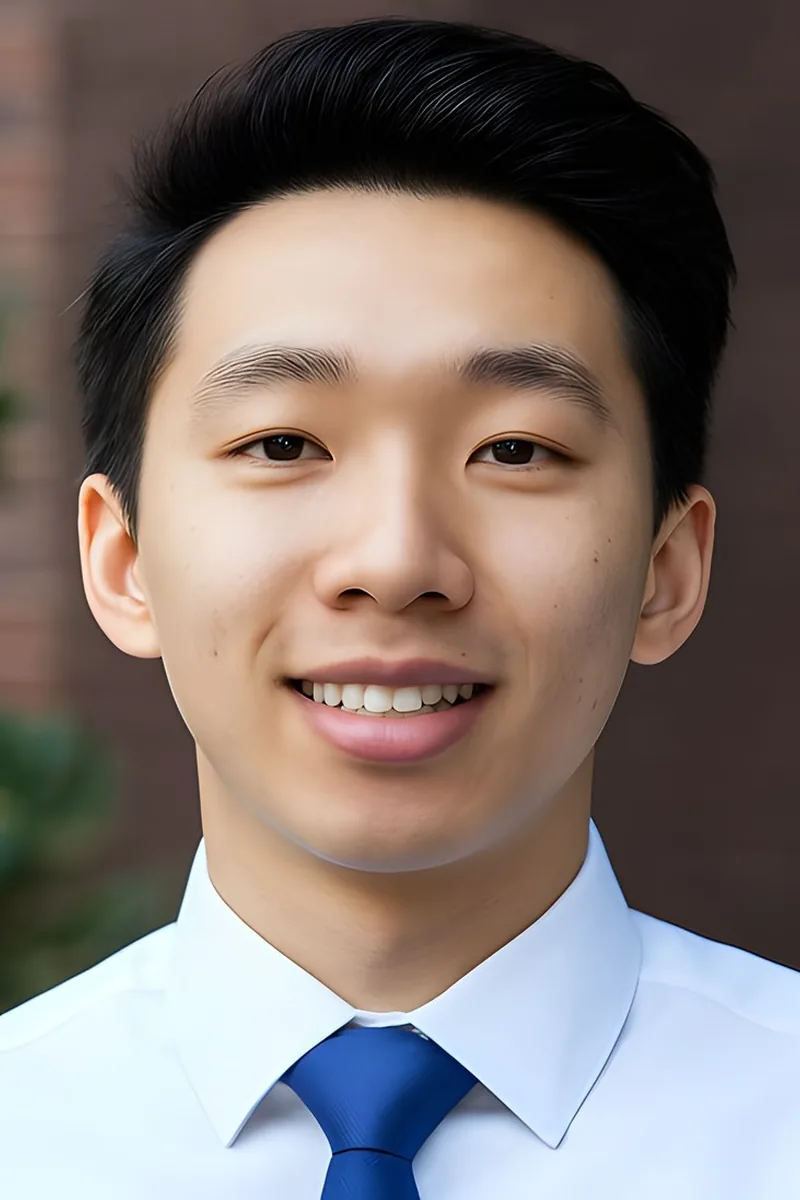
Cleaning messy datasets is where most data science students lose momentum — missing values, inconsistent formats, and ambiguous features can derail a project before any modeling begins. Bryan brings a computer science engineer's rigor to data wrangling and exploratory analysis, teaching students to think critically about their data before jumping to regression or classification.
Pursuing his master's in Interdisciplinary Data Science at Duke, Eric lives this subject — from exploratory data analysis and feature engineering to building predictive models and communicating results. His prior role as a data analyst in Puerto Rico means he can connect classroom concepts like regression, classification, and data wrangling to the messy datasets students will encounter in real work.
Penn's computer science program gave Patrick a solid grounding in the algorithmic and mathematical thinking that data science actually demands — probability, linear algebra, and the logic behind model selection. He teaches Python and SQL not as isolated tools but as parts of a larger analytical process, walking students through how to move from a vague question to a structured dataset to a defensible conclusion.
A software developer with a master's in computer science and an applied math background, Daniel brings both production-level coding skills and statistical grounding to data science concepts like model evaluation, data transformation, and algorithm selection. He teaches Python-based workflows the way he'd architect them professionally — emphasizing clean, reproducible code and understanding why a particular approach fits the problem. Rated 5.0 by students.
Courage's unusual combination of computer science and environmental science degrees means he's built data pipelines for both software systems and scientific research — two domains where the data looks very different but the analytical thinking overlaps. He teaches students to connect SQL querying, Python scripting, and statistical reasoning into a coherent workflow, emphasizing how to ask the right question before choosing a model. His additional experience with datamining and biostatistics gives him a practical edge when explaining concepts like feature selection and exploratory analysis.
Statistical reasoning is the backbone of data science, and Irene's PhD in Mathematics and Computer Science means she can teach the probability, optimization, and quantitative logic underneath the algorithms — not just the syntax for running them. Her deep background in biostatistics, graph theory, and applied math translates directly into the kind of analytical thinking that separates someone who understands a model from someone who just calls a library function. Rated 4.9 by students.
I am a recent graduate with a master's in electrical engineering from Case Western Reserve University. I won the Bill and Melinda Gates Millennium Scholarship which covers full tuition up to Ph.D. I was on the Dean's List for three consecutive years. Additionally, I won the OZY Media Genius Award in 2015 to work on high-temperature superconductors. I currently work as a Technology Analyst at Accenture. I am also seriously considering whether I should go for a Ph.D. or not.
Studying both industrial engineering and statistics gives Juan a natural entry point into data science — he regularly works with regression models, probability distributions, and exploratory data analysis. He unpacks concepts like hypothesis testing, feature selection, and data visualization so students understand not just how to run an analysis but why each step matters for drawing valid conclusions. Rated 4.9 by students.
A PhD in statistics and hands-on experience with R programming and SPSS give Bahaeddine a strong grip on the full data science pipeline — from exploratory analysis and probability modeling to regression and visualization. He breaks down concepts like feature selection, hypothesis testing, and predictive modeling in ways that connect statistical theory to practical coding workflows.
Sitting at the intersection of his mathematics degree and computer science certificate at UT Austin, data science is where Austin's two disciplines converge. He digs into the full pipeline — cleaning data in Python or R, exploratory analysis, statistical modeling, and interpreting results — with particular emphasis on the mathematical reasoning behind techniques like regression and classification.
Mehek's computer and information sciences training gives her a programmer's instinct for data science — she teaches students to clean messy datasets, write Python scripts for exploratory analysis, and interpret statistical outputs rather than just running them. Her approach connects the coding side (pandas, NumPy) to the reasoning side, so students understand what their models are actually telling them.
A Mathematical Statistics and Probability major at Smith College, Kate brings real fluency with the quantitative backbone of data science — probability distributions, hypothesis testing, and exploratory data analysis. She breaks down concepts like regression modeling and data visualization so students understand not just the code but the statistical reasoning driving every decision.
Currently pursuing a PhD in Data Science at NYU after completing an M.S. in the field at UIUC, Abhi lives inside the full data science pipeline — cleaning, exploratory analysis, statistical modeling, and machine learning deployment. He teaches students to move from raw data to actionable insight using tools like Python, SQL, and real-world datasets rather than toy examples.
Studying data science at UW-Madison, Logan lives in the intersection of Python, statistics, and real-world problem-solving every day. He unpacks core concepts like data wrangling with pandas, exploratory visualization, and building predictive models — connecting each tool to the analytical question it's designed to answer. That combination of daily practice and tutoring experience means he can translate complex workflows into clear, step-by-step explanations.
A PhD in artificial intelligence from Northwestern means Thomas has spent years knee-deep in the statistical modeling, feature engineering, and machine learning pipelines that form the backbone of modern data science. He teaches students to move from raw datasets to actionable insights using Python, SQL, and the kind of mathematical reasoning — probability distributions, linear algebra, optimization — that makes the difference between running a library and actually understanding what it does.
Econometrics is essentially data science applied to economic questions — regression modeling, hypothesis testing, cleaning messy datasets to find real signals. Chica brings that statistical rigor to lessons on R programming, exploratory data analysis, and building reproducible workflows from raw data to insight.
Sitting at the intersection of CS, statistics, and domain knowledge, data science requires someone who can explain both the math behind a model and the code that implements it. Deeptha's bioinformatics training at UAB was essentially applied data science — cleaning biological datasets, running statistical analyses, and building computational pipelines in Python and R. She tackles everything from exploratory data analysis and visualization to the mechanics of regression and classification algorithms.
A strong math foundation changes everything in data science, where statistical reasoning and algorithmic thinking matter more than just knowing a library's syntax. Joseph pairs his University of Chicago math degree with fluency in Python to teach concepts like data wrangling, exploratory analysis, and basic modeling from the ground up.
Between his economics degree, math minor, and electrical engineering minor at UT Austin, Sameeullah built fluency across the three pillars data science actually rests on: statistical reasoning, programming (Python, SQL, R), and quantitative modeling. He teaches students how econometrics techniques like regression and hypothesis testing translate directly into the data science toolkit — making the leap from academic datasets to real analytical workflows feel natural rather than overwhelming.
Cleaning messy datasets, choosing the right model, and interpreting results without overfitting — data science lives at the intersection of statistics, programming, and domain knowledge. Anders tackles all three, drawing on his machine learning expertise and daily Python work to teach everything from exploratory analysis and feature engineering to deploying a model that actually generalizes. He holds a 5.0 rating from students.
Ecological research is data science in practice: cleaning messy field data, running statistical models, and visualizing population trends over time. Darcey's graduate work at Auburn involves exactly these tasks, and she walks students through core concepts like data wrangling, exploratory analysis, and interpreting model outputs with real datasets as examples.
Having built her career at the intersection of computer science and biology — including work in bioinformatics — Samantha understands how to clean, analyze, and draw conclusions from messy real-world datasets. She teaches the full data science pipeline, from exploratory analysis and statistical modeling to visualization and communicating findings clearly.
Running genomics and biophysics analyses during her PhD at the University of Toronto, Bianca lives the full data science workflow — cleaning messy datasets, applying statistical models, building visualizations, and drawing defensible conclusions. She unpacks concepts like probability distributions, regression, hypothesis testing, and machine learning fundamentals with the rigor of someone who depends on getting them right in published research.
As a dedicated tutor with over 2 years of experience, I am passionate about fostering a supportive learning environment where students can thrive in subjects like Algebra, Business Analytics, and Data Science. Currently pursuing my Bachelor's in Informatics at the University of Washington, I incorporate real-world applications into my teaching to engage students and enhance their understanding of complex concepts. My approach emphasizes personalized learning, encouraging students to ask questions and develop critical thinking skills. I find great joy in witnessing my students' growth and success, and I strive to instill a love for learning that extends beyond the classroom.
Testimonials
Because the right Data Science tutor makes all the difference.
Average Session Rating – Based on 3.4M Learner Ratings
Top 20 Technology and Coding Subjects


Top 20 Subjects
Frequently Asked Questions
Students often find the transition from theoretical statistics to applied machine learning challenging—particularly understanding when to use classification versus regression, and how to interpret model performance metrics beyond accuracy. Many also struggle with data preprocessing and feature engineering, which can consume 60-80% of a real project but receives less emphasis in coursework. Additionally, the gap between understanding algorithms conceptually and implementing them with libraries like scikit-learn or TensorFlow trips up many learners, as does debugging models when predictions don't match expectations. A tutor can break down these concepts into digestible pieces and show the practical reasoning behind each step.
You need working knowledge of linear algebra, calculus, and probability/statistics—but not necessarily advanced pure mathematics. Most students benefit from understanding matrix operations (for neural networks), partial derivatives (for gradient descent), and probability distributions (for Bayesian methods) at a practical level rather than theoretical depth. Many students underestimate how much statistics they'll need, particularly hypothesis testing, confidence intervals, and the intuition behind distributions like normal and binomial. A tutor can identify which math gaps are actually blocking your progress and focus on the concepts most relevant to your goals, rather than trying to learn all of mathematics from scratch.
Python fluency is essential—you should be comfortable with loops, functions, data structures (lists, dictionaries), and basic object-oriented programming before diving into data science libraries. Many students underestimate this and struggle because they're simultaneously learning Python syntax and complex data manipulation with pandas, which creates cognitive overload. If your Python fundamentals are shaky, a tutor can help you build that foundation efficiently, focusing on the specific patterns used in data science (list comprehensions, working with NumPy arrays, reading documentation) rather than general programming. This targeted approach gets you productive with data science tools much faster than trying to learn Python broadly.
Model evaluation is confusing because it requires understanding multiple interconnected concepts: train/test splits, cross-validation, overfitting, underfitting, precision versus recall, ROC curves, and class imbalance—and knowing which metrics matter for your specific problem. Students often memorize definitions without grasping why accuracy alone is dangerous (especially with imbalanced data) or how a high ROC-AUC can coexist with poor precision. A tutor can walk through real examples showing how different evaluation choices lead to different conclusions, and help you develop intuition for diagnosing why a model isn't performing as expected. This practical, problem-focused approach is far more effective than abstract explanations.
Look for tutors with hands-on experience building and deploying real machine learning models—not just academic knowledge. They should be able to explain the reasoning behind algorithm choices, show you how to debug models when predictions go wrong, and guide you through the messy reality of working with imperfect data. Strong tutors also stay current with tools (Python, scikit-learn, TensorFlow, pandas) and can teach you best practices like proper train/test splitting, avoiding data leakage, and interpreting results critically. Experience with industry projects, published work, or relevant certifications (like advanced coursework or Kaggle competition participation) signals that someone understands both the theory and the practical challenges you'll face.
At the beginner level, a tutor helps you build a mental model of the data science workflow—from problem framing through evaluation—and fills gaps in math and programming that block progress. At the intermediate level, tutoring focuses on choosing appropriate algorithms for different problems, understanding why models fail, and developing intuition for hyperparameter tuning and feature engineering decisions. At the advanced level, tutors can help you tackle specialized areas like deep learning, time series forecasting, or NLP, and guide you through the ambiguity of real-world projects where the right approach isn't obvious. Personalized instruction at any level accelerates learning because a tutor can target your specific gaps rather than reviewing material you've already mastered.
Projects are essential—data science is fundamentally a practical skill, and working through real datasets teaches you things that lectures and tutorials cannot. You'll encounter unexpected data quality issues, discover that your first model approach doesn't work, and learn to iterate, which are skills you can only develop through doing. A tutor can guide you through project work by helping you frame the problem clearly, choose appropriate techniques, debug when things go wrong, and interpret results critically. This project-based learning also builds a portfolio that demonstrates your abilities to employers, making it far more valuable than completing isolated exercises.
Progress in Data Science is concrete: you should be able to build end-to-end machine learning pipelines (data loading, cleaning, modeling, evaluation), choose appropriate algorithms for different problem types, and diagnose and fix models that underperform. You'll know you're improving when you can interpret model outputs critically, spot when you're overfitting or underfitting, and explain your modeling decisions to others. For students working toward certifications or competitions, measurable progress includes passing exams like the Google Data Analytics Certificate or improving Kaggle competition scores. Most importantly, you should feel confident tackling new datasets and problems independently, knowing which tools and techniques to apply and how to validate your results.
Let’s find your perfect tutor
Answer a few quick questions. We’ll recommend the right plan and match you with a top 5% tutor.