Award-Winning Statistics Tutors
serving Chattanooga, TN
Statistics
Tutors in Chattanooga
Private 1-on-1 tutoring, weekly live classes for academic support, test prep & enrichment, practice tests and diagnostics, and more to elevate grades and test scores.
Based on 3.4M Learner Ratings
UniversitiesSchools & Universities
DeliveredHours Delivered
ProficiencyGrowth in Proficiency
Who needs tutoring?
No obligation. Takes ~1 minute.
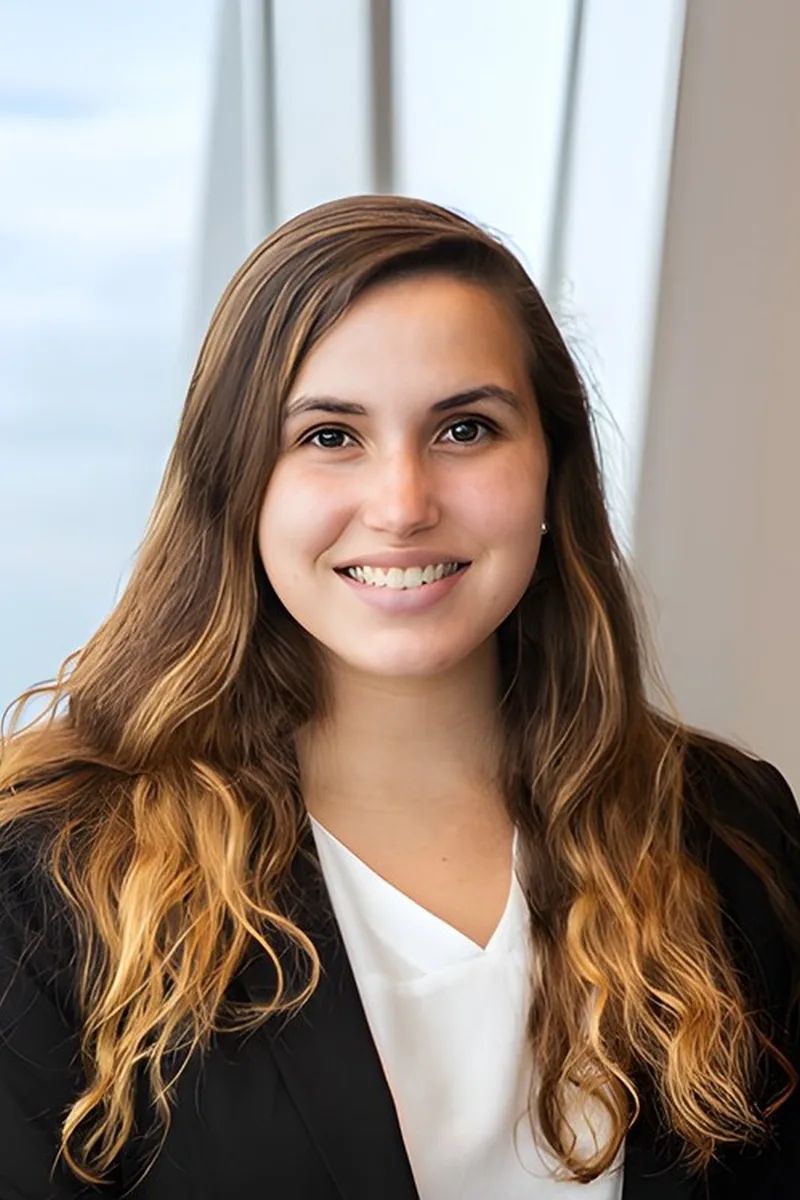
A Quantitative Methods minor at Vanderbilt means Heather spent semesters immersed in regression analysis, hypothesis testing, and probability — the exact material that trips up most statistics students. She teaches the reasoning behind each test so students can choose the right method on their own, not just follow a decision flowchart. Her 4.9 rating speaks to that approach.
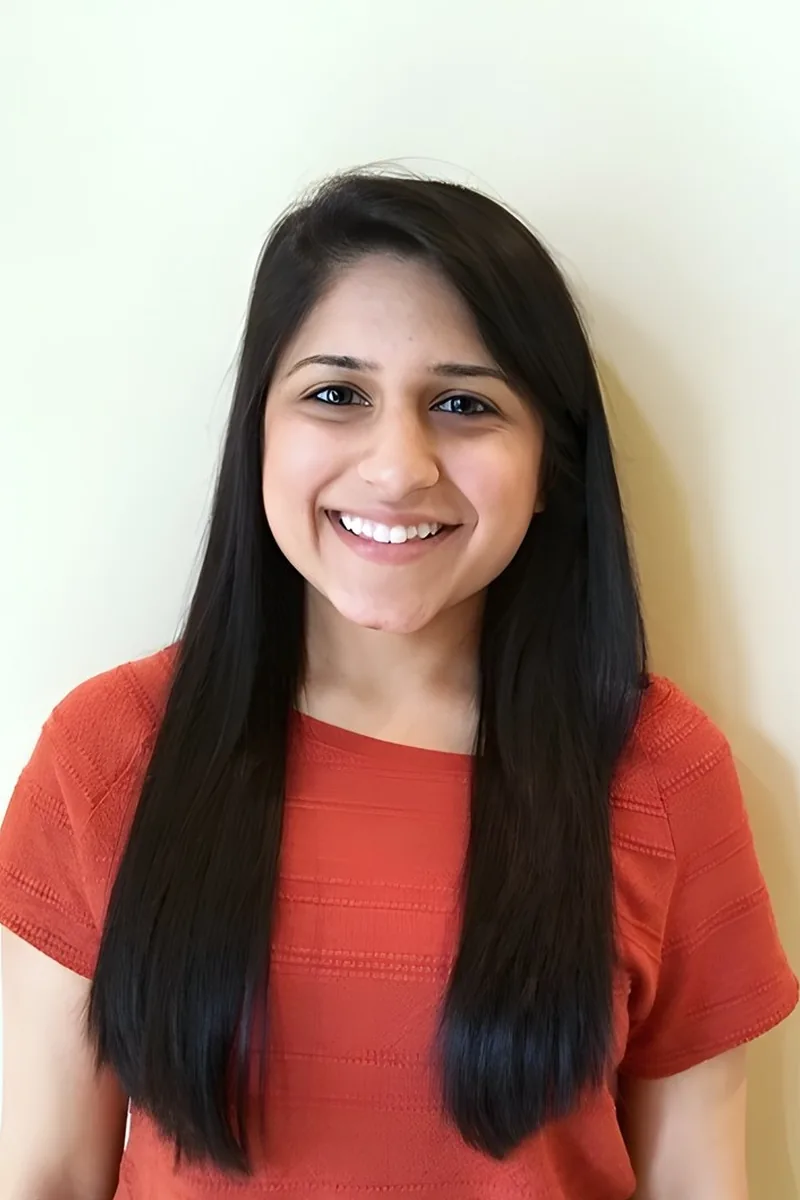
I am a rising sophomore at Emory University working towards a Bachelors of Arts degree in Psychology, as well as a minor in global health, culture, and society. I tutored in multiple subject areas in high school as a peer tutor as well as a tutor to younger students in elementary and middle school. I also tutored elementary school students in multiple subject areas during my first year at Emory. I tutor in many subjects, but have always been passionate specifically about tutoring in math. I have been tutored by peers many times throughout high school and college in different subjects, including the ACT. I found unique ways to solve problems and expand my problem solving skills through this, especially because I felt as though my peers were better able to relate to me, and therefore cater to my needs as a student. My approach is catered specifically to each student by first learning how he or she best learns, and then using tactics that will benefit them the most as they learn and grow as a student.
I attended law school at Vanderbilt University and I earned an MBA and a Ph.D. in Finance (Statistics minor) from the University of Iowa. I served for over 10+ years as a finance professor, teaching assistant, and tutor at 4 Top-40 public universities, during which time I received numerous awards for exemplary teaching. I qualified for MENSA by scoring in the 99.9th percentile on standardized tests for graduate schools: LSAT, 173 (6.0+ AWA) and GMAT, 760. I use a student-centered approach and I personalize educational plans to balance student needs based on learning styles, motivations, and interests. I have experience fostering one-on-one learning in a variety of environments, including online platforms. I guide students in identifying resources to improve their ability to succeed and monitor their progress while providing ongoing feedback. I will help you thrive in your mathematics, probability/statistics, and business courses or in your preparation for standardized tests.
Studying neuroscience means Elliot reads and produces statistical analyses constantly — from hypothesis testing to regression models to understanding what a standard deviation actually tells you about a dataset. He teaches statistics by grounding every formula in a concrete question, so students understand when to use a t-test versus a z-test and why it matters.
The jump from calculating a mean to understanding confidence intervals and hypothesis testing trips up a lot of students because statistics requires a different kind of mathematical thinking — probabilistic rather than deterministic. Lawton approaches each concept by building intuition around what a distribution actually represents before introducing formulas. His math coursework and programming skills in Python also make him a strong resource for students working with statistical software or data sets.
I'm a graduate student in Applied Statistics with experience in general math and computer programming to boot. I currently have a PhD in Applied Statistics with experience in data analytics. I've had the opportunity to do some math and statistics work for hospitals and research facilities, and I enjoy getting to share my passion for math with others to assist them in their education.
Probability distributions, hypothesis testing, and regression analysis all click faster when a student understands *why* the formulas work, not just how to punch them into a calculator. Matthew connects statistical reasoning to real-world decision-making — the kind he practiced throughout his MBA and legal training. That cross-disciplinary perspective makes abstract concepts like p-values and confidence intervals feel grounded and practical.
Public health coursework at the University of Memphis means Paul lives in statistics daily — from interpreting confidence intervals in epidemiological studies to running hypothesis tests on real population data. He teaches the logic behind each method so that choosing between a t-test and a chi-square feels intuitive, not arbitrary.
I am currently a Junior at The University of Alabama pursuing degrees in both Mathematics & Economics. After I graduate, I intend to stay at Alabama to get an M.A. in Economics. I have been tutoring both Math and ACT Prep since I was a Sophomore in High School. After 4 years of experience, I continue to enjoy tutoring these subjects, and the constant challenge of improving my abilities and techniques. I get a great sense of satisfaction in helping those I tutor improve their grades, test scores, and overall understanding of the subjects I am teaching them. Not only do I focus on the subject matter being taught, but I also focus on helping students develop the study skills and habits that are imperative to success later in their academic careers. Through my four years of tutoring, I have developed the ability to mold my tutoring style around however the student learns best whether that be visually, through examples, etc. This allows me to provide an individualized tutoring session to each person I tutor. I believe no two students should be tutored the same was; every student has different learning methods and I view it as my responsibility to modify my tutoring style to fit each individual student.
I'm from New Jersey and of Italian decent, so I naturally love cooking and all things pizza. My favorite childhood book is The Giver by Lois Lowry, and favorite high school class was physics (rockets, easy winner). I enjoy playing guitar and ride my bicycle on a sunny day.
I am currently applying for medical school and working towards a masters in public health. I have experience working with many different ages ranging from middle school to college level students. Most of my experience is with math and sciences as well as test prep for English ACT exams. I can tutor in math (pre calculus, trigonometry, algebra, geometry) sciences (biological sciences, chemistry, physics) and English. My favorite subject to tutor is algebra because it is like a puzzle, and who does not like a good puzzle? My teaching philosophy consists of learning about the students' interests and providing a way to relate their interests into the work they are doing so it can be more meaningful to them. I have found that the more a subject means to a student personally, the better they do in the subject. So, in this way it is possible to turn a subject weakness into a strength and passion.
I am a junior at Vanderbilt University studying Child Development and Art History, and I have always had a passion for tutoring and mentorship. Although most of my tutoring experience has been for elementary students in reading and math, I am most excited about tutoring middle and high schoolers because the subjects that are learned during these times are so much more detailed, dynamic, and interesting! These were also the years where my love of learning really took shape, and getting the opportunity to foster this same love and appreciation for learning in other students excites me.
I'm a recent graduate from Lehigh University where I majored in behavioral neuroscience, and I am now pursuing my Master's in Public Health with George Washington University. I am very enthusiastic about tutoring and I have three years of experience working with students of all different backgrounds in a wide variety of subjects, from middle school English to college level biology. My number one priority is to get to know you, both as a student and as a person, in order to create a solid foundation in your learning experience. I firmly believe that everyone's learning styles are different and what works for one student may not work for another. Teaching and learning is a highly collaborative process, and through open communication and understanding your learning style I strive to make the learning process fun and engaging. I can assure you that as your tutor, there is no question not worth asking and I am dedicated to making your learning experience tailored to your strengths in order to yield to most successful results!
A political science degree from Brown meant Lyall spent years interpreting polling data, regression models, and probability distributions in real research contexts. He brings that applied lens to statistics tutoring, connecting concepts like standard deviation and confidence intervals to situations where the numbers actually matter. Students get someone who treats stats as a tool for making arguments, not just a formula sheet to memorize.
Studying Statistics at NYU means Dennis doesn't just teach probability distributions and hypothesis testing from a textbook — he's actively working through these concepts in his own coursework. He's especially sharp at translating the notation-heavy language of statistics into plain English, which makes topics like confidence intervals and regression analysis far less intimidating.
As experienced and passionated educator with a Bachelor's degree in Computer Science from Rice University, I am passionate about empowering students to achieve their academic goals. With over 3 years of tutoring experience in subjects such as AP Computer Science A, Machine Learning, and SAT Math, I adapt to different learning styles and create a supportive learning environment. My teaching philosophy centers on personalized instruction, where I connect with each student to understand their unique learning styles and challenges. I take pride in guiding students through the complexities of computer science and college application essays, equipping them with the skills they need for future success. Outside of tutoring, I enjoy exploring new technologies and engaging in coding projects to improve my teaching approach.
Probability distributions, hypothesis testing, and confidence intervals make a lot more sense when you've actually used them to analyze real data. Emma applied statistical methods throughout her biology research at Duke — including fieldwork on Hawaiian monk seals — so she teaches stats as a practical tool rather than an abstract formula sheet. Rated 4.9 by students.
Designing and optimizing light filters for optical multiplexers at Norfolk State required Dennis to apply statistical methods to real engineering data — fitting distributions, quantifying uncertainty, and interpreting experimental results. He teaches statistics with that practitioner's perspective, making topics like standard deviation, probability, and regression feel like problem-solving tools rather than abstract formulas.
Understanding statistics means learning to ask the right questions about data before running any test: Is the sample random? What's the shape of the distribution? Could this result have happened by chance? Ethan's policy background gave him years of practice interrogating datasets and translating statistical output into plain-language conclusions, a skill he now brings directly to topics like hypothesis testing and regression analysis.
Probability distributions, hypothesis testing, and regression analysis all click faster when you understand the engineering problems they were designed to solve. Zora's Management Science and Engineering coursework at Stanford means she teaches statistics through real applications — modeling uncertainty, interpreting p-values, and designing experiments — not just formula sheets.
Probability distributions, hypothesis testing, and regression analysis all clicked for Crony during his neuroscience research at Brown, where he used statistics daily to interpret experimental data. He brings that applied perspective to tutoring sessions, showing students how each concept works in practice — not just on a problem set.
A neurobiology degree from Harvard meant designing experiments, interpreting data sets, and living inside statistical analysis for four years. Katherine teaches statistics with that research lens — connecting probability distributions, hypothesis testing, and confidence intervals to how they're actually used in published studies. Rated 5.0 by students.
Engineering at Dartmouth meant Rachel lived in data — running experiments, interpreting distributions, and making decisions based on probability and hypothesis testing. She brings that practical fluency to statistics tutoring, connecting concepts like standard deviation and confidence intervals to real scenarios instead of leaving them as abstract formulas.
Between her sociology research in undergrad and her MBA coursework, Krupa has run enough regressions, hypothesis tests, and probability models to know exactly where students get tripped up. She tackles the conceptual side — why you'd choose a t-test over a z-test, what a p-value actually means — so the formulas stop feeling arbitrary. Her 4.9 rating speaks to how clearly she communicates these ideas.
Understanding probability distributions or interpreting a confidence interval requires a different kind of thinking than most math classes demand. Dillon spent years applying statistics in engineering contexts — quality control, data analysis, experimental design — and he brings that applied lens to topics like standard deviation, z-scores, and regression so students see what the numbers actually tell them.
Testimonials
Because the right Statistics tutor makes all the difference.
Average Session Rating – Based on 3.4M Learner Ratings
Practice Statistics
Free practice tests, flashcards, and AI tutoring for Statistics
Nearby Statistics Tutors
Other Chattanooga Tutors
Related Math Tutors in Chattanooga
Frequently Asked Questions
Varsity Tutors matches Chattanooga students with expert Statistics tutors for 1-on-1 instruction. We pair each student with a tutor based on their specific needs, learning style, and goals.
Whether you need homework help, exam prep, or want to get ahead, our Statistics tutors are ready to help.
Common challenges include gaps from earlier material, difficulty with specific concepts, and trouble applying learning to new problems. These issues can snowball quickly in Statistics.
A tutor identifies where you're stuck, fills in gaps, and provides targeted practice. The 1-on-1 format means you get help exactly where you need it.
Tutors work with your student's actual coursework—homework assignments, class notes, and upcoming tests. This keeps tutoring directly relevant to what's happening in the classroom.
When you share information about your student's school and curriculum, we can match you with a tutor who has relevant experience.
All tutors complete background checks, credential verification, and teaching evaluation. Many of our Statistics tutors hold advanced degrees or have years of teaching experience.
You can review tutor profiles to find someone with the right background for your student's level and needs.
Many students see improved grades within a few weeks, along with better understanding of Statistics concepts and more confidence tackling challenging material.
Tutors track progress and adjust their approach to ensure continued improvement.
Most students benefit from 1-2 sessions per week. More frequent sessions help if your student is significantly behind or has an important exam coming up.
Your tutor can recommend a schedule based on your student's specific situation and goals.
Tutoring is purchased in packages of hours, with rates varying by tutor experience. Varsity Tutors offers several options to fit different budgets and needs.
You can discuss pricing during your consultation to find what works best.
Your tutor will assess where your student is, discuss goals, and start working on priority areas. Most students bring current homework or upcoming test material to focus on.
By the end, you'll have a clear sense of how the tutor can help and a plan for moving forward.
Let’s find your perfect tutor
Answer a few quick questions. We’ll recommend the right plan and match you with a top 5% tutor.