Award-Winning CLEP Calculus
Tutors
CLEP Calculus
Tutors
Private 1-on-1 tutoring, weekly live classes for academic support, test prep & enrichment, practice tests and diagnostics, and more to elevate grades and test scores.
Based on 3.4M Learner Ratings
UniversitiesSchools & Universities
DeliveredHours Delivered
ProficiencyGrowth in Proficiency
Who needs tutoring?
No obligation. Takes ~1 minute.

Scoring well on the CLEP Calculus exam means nailing limits, derivatives, and integrals under time pressure — not just knowing the theory. Rithi tutors AP Calculus AB, AP Calculus BC, and college-level calculus, so she knows exactly where students lose points on integration techniques, related rates, and the Fundamental Theorem. Her 1550 SAT and competition math background reflect the kind of speed and accuracy she teaches for timed exams.
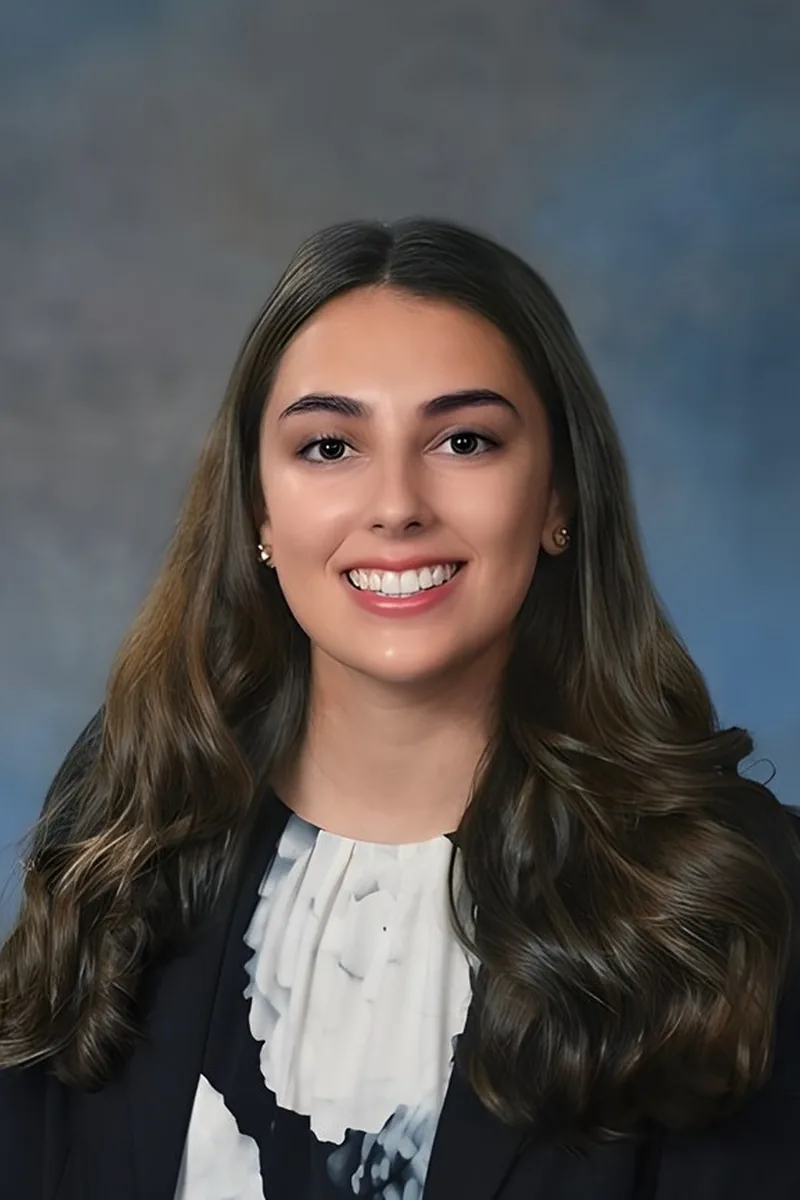
Tackling the CLEP Calculus exam means nailing limits, derivatives, and integrals under time pressure, and Amanda teaches students to recognize problem patterns quickly so they aren't re-deriving every step from scratch. Her STEM-intensive coursework at Alabama and in medical school kept calculus skills sharp well beyond the typical introductory course.
Earning 5s on both AP Calculus AB and BC gave Chris deep familiarity with the exact territory the CLEP Calculus exam covers: limits, derivatives, integration techniques, and series convergence. His UCLA engineering courses push well past that foundation, so he explains concepts like the chain rule or integration by parts with the confidence of someone who uses them daily. He tailors review around whichever calculus topics a student finds most slippery.
The CLEP Calculus exam packs limits, derivatives, integrals, and the Fundamental Theorem into a single timed sitting, so efficiency matters as much as understanding. John walks students through the high-frequency problem types — related rates, area between curves, u-substitution — and shows how to read each question for clues about which technique applies. His experience teaching AP Calculus AB translates directly to the content and rigor this exam demands.
Two years of tutoring Calculus I and II through Princeton's McGraw program means Samantha has seen every stumbling block the CLEP Calculus exam can throw at a student — from limits and the chain rule to integration by parts and series convergence. She unpacks each concept with concrete examples first, then drills the timed problem-solving strategies that turn understanding into a passing score.
I'm pursuing a double major in Mathematics and English at Vanderbilt University. I have been tutoring math since High School and have native proficiency in Mandarin Chinese. I am dedicated to helping students explore the study methods that will fit their individual needs.
Studying biological sciences at Cornell means Raphael uses calculus to model everything from population dynamics to enzyme kinetics — exactly the kind of applied derivative and integral thinking the CLEP exam tests. He teaches students to spot which technique a problem is really asking for, whether it's a chain rule setup disguised in word-problem form or an area question that hinges on choosing the right bounds. Rated 5.0 by students.
Limits, derivatives, and integrals on the CLEP Calculus exam demand more than memorized formulas — the test probes whether you actually understand what a derivative represents or why the Fundamental Theorem of Calculus works. As a condensed matter physics PhD student, Remington applies calculus as a daily working language and can unpack each concept with concrete, intuitive examples. He structures review sessions around the specific problem types the CLEP emphasizes most heavily.
The CLEP Calculus exam covers limits, derivatives, and integrals at roughly the same depth as a first-semester college course, but the multiple-choice format demands quick recognition of standard problem types. William has taught calculus concepts to both high school and college students, and his engineering coursework means he can connect each technique — chain rule, u-substitution, related rates — to practical applications that make them easier to remember on test day.
Calculus was the backbone of Sarah's chemical engineering coursework, from derivatives in reaction rate analysis to integrals in fluid dynamics. She tackles the CLEP Calculus exam by teaching students to read a problem and immediately identify which technique applies — whether that's chain rule, u-substitution, or integration by parts. Rated 4.9 by students.
Passing the CLEP Calculus exam means demonstrating real fluency with limits, derivatives, and integrals — not just recognition, but application under time pressure. Alexandra has tutored Calculus I and II at the college level while studying math at Brown, so she knows which problem types the exam emphasizes and where students most often lose points. She zeroes in on the conceptual understanding behind each technique so that unfamiliar problem setups don't cause panic.
Most CLEP Calculus questions hinge on recognizing a problem type within seconds — is this a chain rule setup, a u-substitution, or a limit definition in disguise? Tanay's mathematics major coursework at UNC Chapel Hill means he can teach the underlying logic that makes those snap judgments reliable, not just memorized. Rated 5.0 by students, he builds speed by connecting each technique back to why it works.
I am looking to tutor in the areas of: Math, English, and for test prep. I was an honors student in High School, scored very well on all my tests, and have now earned a scholarship to go to Rutgers University for the Honors Program.
The CLEP Calculus exam rewards clean technique on limits, derivatives, and integrals more than conceptual exploration, so efficient problem-solving matters. Shin teaches AP Calculus AB and BC and applies calculus daily in his Columbia engineering program, giving him a sharp sense of which integration methods and derivative rules show up most on standardized exams. He walks through each problem type with an eye toward speed and accuracy under timed conditions.
Ellyn's PhD in Mechanical Engineering required the kind of deep calculus fluency — integration techniques, series convergence, multivariable applications — that the CLEP Calculus exam tests. She breaks problems into the core reasoning step and the algebraic execution, so students learn to identify which technique applies before diving into computation. Her 5.0 rating speaks to how well that approach clicks.
The CLEP Calculus exam tests limits, derivatives, and integrals at a pace that punishes shaky fundamentals. Whitney has taken calculus through multivariable and differential equations as part of her biomedical engineering program, so she can pinpoint exactly where a concept like the chain rule or integration by parts is breaking down. She calls calculus her favorite subject to tutor — and her 5.0 rating suggests students agree.
The CLEP Calculus exam covers limits, derivatives, integrals, and the fundamental theorem — topics Adel has taught repeatedly across undergraduate and graduate-level courses. He approaches test prep by identifying which calculus concepts a student actually understands versus which ones they've only memorized procedures for, then closing those gaps efficiently before exam day.
Tackling the CLEP Calculus exam means proving college-level mastery of limits, differentiation, and integration in a single sitting. Prahith connects each concept back to its economic applications — marginal cost, consumer surplus, optimization — which gives students a second way to understand problems when pure abstraction stalls out.
Limits, derivatives, integrals, and the Fundamental Theorem of Calculus all appear on the CLEP Calculus exam, often in forms that test conceptual understanding as much as computation. Matthew doesn't just drill procedures — he explains what a derivative actually represents physically and why integration works the way it does, drawing on examples from his mechanical engineering coursework. That deeper grasp is what turns a borderline score into a confident pass.
Tackling the CLEP Calculus exam means nailing limits, derivative rules, and integral applications under time pressure, where small conceptual gaps can cascade into lost points. Samuel earned his PhD in Applied Mathematics and teaches calculus as a connected story — showing how the limit definition feeds into differentiation, which feeds into integration — so each topic reinforces the last.
The CLEP Calculus exam covers a lot of ground — limits, derivatives, integrals, and the Fundamental Theorem — but it's predictable once you know what the test emphasizes. Natalia's engineering coursework means she uses calculus daily, and she breaks each problem type into a repeatable decision process so students can move through the exam efficiently.
Giovanni's Applied Mathematics and Computer Science studies at Emory mean he's worked through calculus not just as a standalone course but as a tool woven into algorithms and statistical models — context that sharpens his instinct for which techniques the CLEP Calculus exam actually tests. He zeroes in on the decision-making layer: when to reach for u-substitution versus integration by parts, or how to spot a limit that calls for L'Hôpital's Rule before wasting time on algebra. Rated 5.0 by students, with a 33 ACT to back up his test-taking instincts.
Limits, derivatives, and integrals form the backbone of the CLEP Calculus exam, and Daiven tackles each one by building the intuition behind the formulas — why the chain rule works, what an integral actually represents geometrically. His math tutoring spans pre-algebra through college-level calculus, so he quickly spots which foundational gaps are causing errors and addresses them directly.
Sally is currently pursuing a math degree at Georgia Tech, where she's moved well beyond the limits, derivatives, and integrals that form the backbone of the CLEP Calculus exam. That advanced perspective lets her explain concepts like the chain rule or Riemann sums in multiple ways until one clicks. Rated 4.9 by students.
I am very interested in a career in the medical field, so I am apart of some pre-medical organizations. I really enjoy playing all different sports, from soccer to volleyball to tennis.
Limits, derivatives, and basic integration form the core of the CLEP Calculus exam, and Yucheng tackles each concept by grounding it in the physical intuition he developed studying mechanical engineering at UT. He emphasizes the reasoning behind differentiation rules and integral setups so students can handle unfamiliar problems, not just rehearsed ones.
Passing the CLEP Calculus exam means demonstrating fluency with limits, differentiation rules, and integration techniques in a timed setting where partial credit doesn't exist. Nikola's mathematics coursework at Tufts goes well beyond introductory calculus, so he can explain the reasoning behind each method rather than just drilling formulas. His 5.0 rating speaks to how clearly that understanding translates for students.
The CLEP Calculus exam covers a full year of college-level material in 90 minutes, so knowing the content isn't enough — students need to recognize problem types quickly and allocate time strategically. Benedetto's experience teaching across the entire calculus sequence means he can pinpoint which derivative and integral concepts carry the most weight on the exam and drill those efficiently.
I am listening to and learning about him or her as an individual. I can also discover what motivates the student during this conversation and plan for how to frame future tutoring sessions in terms of what the student already knows and enjoys.
I am currently a sophomore at the University of Notre Dame. I am majoring in Applied Mathematics and Statistics.
Earning CLEP Calculus credit means demonstrating mastery of limits, derivatives, and integrals in a single sitting — there's no partial credit for showing your work. Anna tutors both Calculus and Calculus 2, so she's comfortable moving between foundational concepts like the chain rule and more advanced integration techniques depending on where a student needs the most practice. She emphasizes understanding the logic behind each rule so students can adapt when a problem looks unfamiliar.
Passing the CLEP Calculus exam without sitting through a semester-long course demands efficient, targeted preparation — there's no time to meander through every textbook chapter. Corey zeroes in on the derivative and integral concepts that dominate the exam: chain rule applications, area-under-curve problems, and the fundamental theorem of calculus. As a nuclear engineering student at Georgia Tech, he uses calculus daily and explains it with the fluency that comes from constant application.
Tackling the CLEP Calculus exam means being fluent in limits, differentiation rules, and integration techniques under time pressure. Nicholas has completed coursework through Calculus 3 in his chemical engineering program at CUNY, so he knows which concepts the exam leans on hardest and where students typically lose points. He teaches each rule alongside the geometric intuition behind it, which speeds up problem recognition on test day.
The CLEP Calculus exam covers a full year of college-level material — limits, derivatives, integrals, and the Fundamental Theorem — in a single sitting, so knowing which problem types appear most often matters as much as knowing the math. Noah's mechanical engineering background means he's applied every one of these concepts in real coursework and can quickly identify where a student's gaps are. Rated 5.0 by students.
As an electrical engineering major at Stony Brook, Rohan uses calculus daily — from circuit analysis to signal processing — which means he knows the derivative and integral concepts on the CLEP exam as working tools, not just textbook exercises. He zeroes in on the judgment calls that trip students up, like when to reach for u-substitution versus integration by parts, and builds speed through targeted pattern drills. Rated 4.6 by students.
Limits, derivatives, and integrals can feel abstract until someone shows you what they actually describe. Susan completed calculus as part of her biochemistry program and applies it to rate-of-change and accumulation problems in ways that make the CLEP Calculus exam's questions feel more intuitive.
Architectural engineering forced James to internalize calculus as a structural design tool — calculating load distributions, modeling curves, optimizing material use — which gives him a practical grip on the derivatives and integrals the CLEP exam covers. He teaches students to build speed by recognizing problem patterns rather than rederiving every setup from scratch, an approach that pays off in a 90-minute no-partial-credit format. Rated 4.8 by students.
Passing the CLEP Calculus exam comes down to fluency with limits, derivatives, and integrals — not just knowing the formulas but recognizing which technique to apply under time pressure. Shivansh has taught calculus at multiple levels for three years and approaches each concept by building intuition around what's actually happening graphically before jumping to computation. His UBC math background gives him the depth to explain the 'why' behind every rule.
Testimonials
Because the right CLEP Calculus tutor makes all the difference.
Average Session Rating – Based on 3.4M Learner Ratings
Top 20 Test Prep Subjects


Top 20 Subjects
Frequently Asked Questions
Students preparing for CLEP Calculus most commonly struggle with limits and continuity—particularly understanding the formal definition of a limit and applying it to real problems. Derivatives also present challenges, especially when students need to move beyond memorizing rules and actually understand rates of change in applied contexts. Many test-takers also find integration conceptually difficult, particularly when deciding which integration technique to use (substitution, integration by parts, partial fractions) and recognizing when to apply them. A tutor can help by breaking these topics into smaller, more manageable pieces and connecting abstract concepts to concrete examples.
The CLEP Calculus exam has 45 questions in 90 minutes, giving you roughly 2 minutes per question—but this varies since some are straightforward while others require multiple steps. A smart strategy is to scan the entire test first, tackle easier conceptual questions and basic derivative/integral problems immediately, then return to multi-step applied problems and word problems where you'll need more time. Tutoring can help you practice this pacing through timed practice tests, so you develop a feel for which question types you can solve quickly versus which ones demand more careful work.
Start by taking a full-length practice test under timed conditions and reviewing every wrong answer—not just to see the correct solution, but to understand why you missed it (was it a conceptual gap, a careless error, or poor time management?). Group your mistakes by topic: limits, derivatives, integrals, applications, or computational skills. A tutor can then create a focused study plan targeting your specific weak areas, using targeted practice problems and mini-lessons to build confidence. This targeted approach is much more efficient than re-studying topics you already understand well.
Applied derivative problems—like optimization, related rates, and motion problems—require you to translate a real-world scenario into mathematical language, set up the derivative correctly, and interpret your answer in context. Many students can compute a derivative but struggle with the translation step. Effective tutoring focuses on building a systematic approach: carefully reading the problem, identifying what's changing and what's constant, drawing diagrams when helpful, and always checking whether your answer makes sense. Practice with diverse problem types helps you recognize patterns and build confidence in your problem-solving process.
Choosing the right integration technique is one of the biggest challenges on CLEP Calculus. The key is recognizing patterns: u-substitution works when you see a function and its derivative, integration by parts applies when you have a product of different function types, and partial fractions handle rational expressions. Rather than memorizing a decision tree, a tutor helps you develop intuition by working through many examples and learning to spot these patterns quickly. Building a personal reference sheet of technique triggers (e.g., "if I see x·e^x, think integration by parts") also helps during timed practice.
Test anxiety often stems from uncertainty—not knowing whether you'll recognize a problem type or have enough time to solve it. Tutoring builds confidence through repeated exposure to realistic problems under timed conditions, so when test day arrives, you've already solved dozens of similar questions. A tutor can also help you develop a pre-test routine (reviewing key formulas, doing a few warm-up problems) and teach you strategies for managing panic during the exam, like skipping a difficult problem and returning to it later. This combination of skill-building and mental preparation significantly reduces anxiety.
Most students benefit from 4–8 weeks of focused preparation, depending on their calculus background and starting level. A solid structure includes: weeks 1–2 reviewing limits and continuity, weeks 2–4 mastering derivatives and their applications, weeks 4–6 learning integration techniques, and weeks 6–8 practicing mixed problem sets and full-length exams. If you're starting from a weaker foundation, you may need more time on fundamentals. A tutor can customize this timeline based on your pace and can adjust emphasis if you're progressing faster in some areas than others, ensuring you're spending study time where it matters most.
A strong CLEP Calculus tutor needs deep knowledge of calculus concepts and the ability to explain them multiple ways—because what clicks for one student might not work for another. They should be familiar with the specific CLEP exam format, know which topics appear most frequently, and understand common student misconceptions (like confusing the derivative of a function with the function itself). They should also be skilled at pacing: knowing when to slow down and build conceptual understanding versus when to accelerate and practice problem-solving speed. Finally, they should be comfortable with both computation and conceptual reasoning, since CLEP Calculus tests both.
Let’s find your perfect tutor
Answer a few quick questions. We’ll recommend the right plan and match you with a top 5% tutor.