Award-Winning SAT Reading and Writing
Tutors
SAT Reading and Writing
Tutors
Private 1-on-1 tutoring, weekly live classes for academic support, test prep & enrichment, practice tests and diagnostics, and more to elevate grades and test scores.
Based on 3.4M Learner Ratings
UniversitiesSchools & Universities
DeliveredHours Delivered
ProficiencyGrowth in Proficiency
Who needs tutoring?
No obligation. Takes ~1 minute.
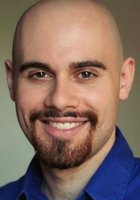
The SAT Reading section isn't really testing whether you understood the passage — it's testing whether you can find the specific lines that prove an answer choice right or wrong. John, who earned a 1420 SAT and teaches literature and reading across multiple levels, approaches each passage type differently: historical documents get one strategy, science passages another. His English and drama training sharpened the close-reading instincts that make evidence-based questions feel straightforward.
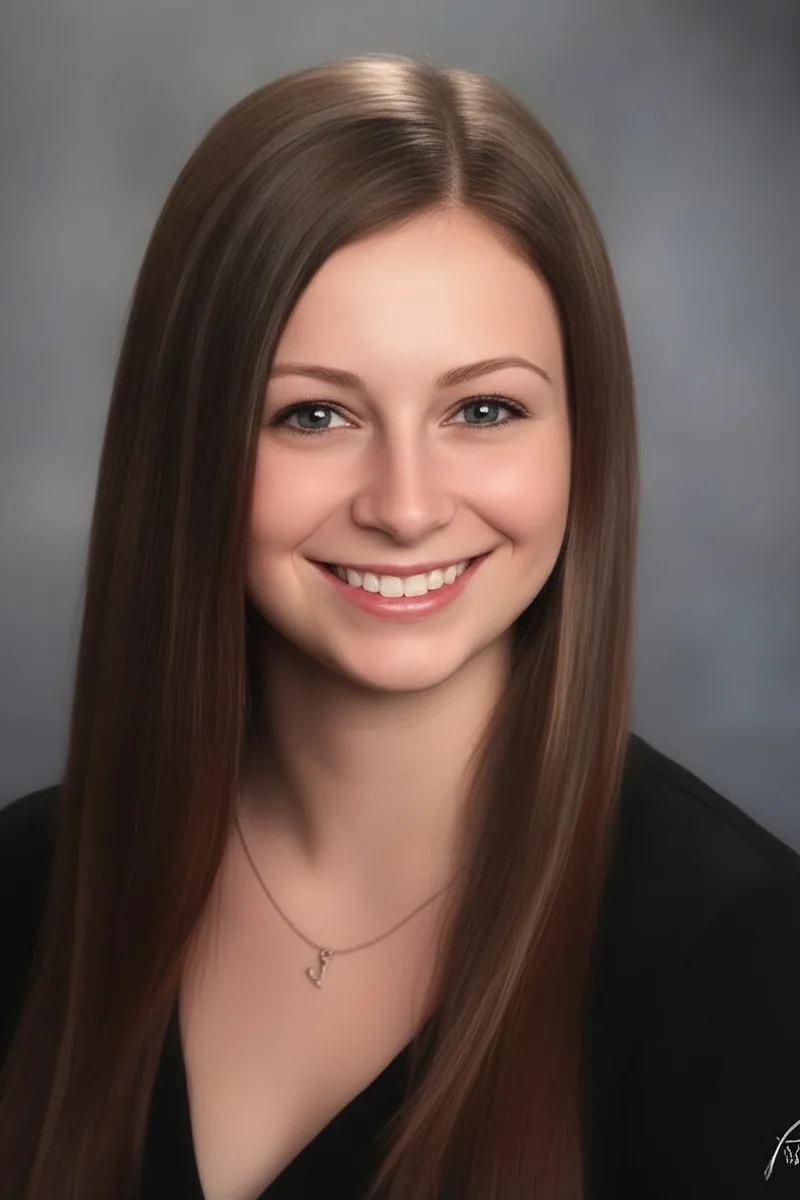
I am a recent graduate from a masters program in biostatistics at Columbia University. I received my Bachelor of Arts in biological sciences, with a focus in neurobiology at Northwestern University. In August, I will be starting a doctoral program in biostatistics at NYU. I was a teaching assistant at Columbia University in my department and also have tutored graduate students and undergraduates privately as well. My primary areas of tutoring are math and statistics coursework in addition to math sections on standardized tests such as the GRE and GMAT. I am very passionate about helping students feel more confident and excited about math. In my spare time, I enjoy running, playing piano, and spending time with friends and family.
I am currently a resident physician at Northwestern Hospital.
The SAT Reading section rewards a specific kind of discipline: finding answers that are directly supported by the passage, not the one that sounds right. Michelle, who scored a 1570 composite, walks students through evidence-pairing techniques and passage annotation methods that keep them grounded in the text. She's especially sharp on the science-based passages, given her biochemistry background.
Scoring 1540 on the SAT, Elliot knows the Reading section rewards a specific kind of discipline: answering from the text, not from intuition. He teaches students to locate concrete textual evidence before even looking at the answer choices, a method that's especially effective on the paired-passage and science-based reading sets. Rated 5.0 by students.
Medical school admissions forced Alex to master the MCAT's verbal reasoning section, which tests the same core skill as SAT Reading — tracking an author's argument through dense, unfamiliar prose and distinguishing what's stated from what's inferred. With a 1590 SAT composite and a chemical engineering background, he's especially sharp on the science passages, where students panic over technical vocabulary instead of following the straightforward logical structure underneath. Rated 4.8 by students.
The SAT Reading section is really an argument-analysis exam, and Elena — currently in law school at the University of Chicago — spends her days dissecting exactly these kinds of dense, evidence-based passages. She teaches students to identify what each question is actually asking before returning to the text, a discipline that cuts down on the second-guessing that eats up time. Her own 1600 SAT composite speaks to how well this approach works.
I'm Anna! I'm currently a student in the MD/MBA program between Northwestern University's Feinberg School of Medicine and the Kellogg School of Management, and graduated from Northwestern University as part of the Honors Program in Medical Education. I attended the Bergen County Academies in New Jersey, a selective, application-based magnet school, for high school.
I am an interdisciplinary educator with an Ed.M. from the Harvard Graduate School of Education and a B.A. from Dartmouth College. My background is primarily in integrated arts learning and museum education and I specialize in visual arts, history and art history, and object-based learning. In all subjects, I take a creative, inquiry-based and learner-centered approach, designing opportunities for each unique individual to meet their learning goals.
I'm a rising junior at Brown University studying biomedical engineering. I have lots of experience in middle school through college level instruction in STEM and SAT/ACT prep. My goal is to provide a fun and productive learning environment by only teaching subjects that I am passionate about.
The SAT Reading section rewards a specific kind of attention — knowing when the answer is buried in a subordinate clause versus when it requires synthesizing across paragraphs. Violet scored a 1550 composite and breaks each passage type (literature, history, science) into its own reading strategy so students stop second-guessing between those last two answer choices. Her approach turns the evidence-based question pairs into a reliable point source rather than a guessing game.
Scoring a perfect 1600 on the SAT means Sherry knows exactly what the Reading section rewards: identifying how authors build arguments, tracking shifts in tone, and using evidence from the passage — not outside knowledge — to justify answers. Her linguistics degree sharpens that skill further, since she's trained to analyze how language structures meaning. Students working with her learn to read strategically under time pressure rather than re-reading entire passages.
I am a Yale graduate with over 8 years experience tutoring students from a variety of backgrounds. I recently graduated from the Yale School of Public Health with a MPH concentrating in Epidemiology and Global Health. I also received my B.S. from Yale with a double major in Molecular, Cellular, and Developmental Biology and French. I have experience both leading group classes and working with students one on one. I will respond to a student's strengths, weaknesses, and learning style in order to help them succeed and make the most of our time together. I earned a perfect score of 36 on the ACT, 2280 on the SAT, and qualified as a National Merit Scholar on the PSAT. I look forward to working with you!
Studying religion and philosophy at Pomona College is essentially a four-year exercise in close reading — pulling apart ancient and modern texts where every word carries weight and arguments hinge on subtle distinctions. Miranda brings that interpretive discipline to the SAT Reading section's trickiest question types, particularly the inference and purpose questions where students need to distinguish what an author states from what they merely suggest. Her 1560 composite and 5.0 rating back up the approach.
Three degrees in Classics, Philosophy, and a 1570 SAT composite mean Austin has logged thousands of hours doing exactly what this section rewards — reading slowly, tracking an author's logical structure, and refusing to let ambiguous phrasing slide. Philosophy trained him to distinguish what a passage actually states from what it merely suggests, which is the skill that separates a 700 from a 750+ on the trickiest inference and paired-evidence questions. His Latin background also gives him an unusual advantage on vocabulary-in-context items, where recognizing roots and etymological precision often points straight to the correct answer.
The SAT Reading section isn't really about reading — it's about quickly identifying what the passage is doing and finding the one answer choice supported by specific lines of text. As a screenwriting major at USC who dissects written arguments daily, Kiersten teaches students to read for structure and evidence rather than getting lost in dense historical or scientific passages. Her 1550 SAT score speaks to how well that approach works in practice.
Scoring 1580 on the SAT gave Peter a sharp sense of what the Reading section actually tests — not whether you understood the passage, but whether you can find the specific line that proves your answer. He teaches students to eliminate trap choices by treating every question like a scavenger hunt for textual evidence, a method that turns even dense historical passages into manageable puzzles.
Scoring a 1550 SAT composite while carrying a full pre-med course load at UChicago means Rhea knows how to read fast and accurately under pressure — the exact demand of the Reading section's timed passage sets. She's especially sharp on the science passages, where her biology and chemistry background lets her cut through technical jargon that trips up students who try to understand the experiment instead of just tracking the author's argument. Rated 4.8 by students.
The SAT Reading section rewards a specific skill: finding the answer that's directly supported by the text, even when another choice sounds more sophisticated. Edward earned a 1520 SAT composite and applies a structured, evidence-first approach to each passage type — whether it's a historical document, a science excerpt, or paired passages. He walks students through how to annotate efficiently and eliminate wrong answers with confidence rather than guesswork.
Most students lose SAT Reading points not because they can't read, but because they pick answers that sound right instead of answers the passage actually supports. Eric, who scored a 1570 SAT and reads voraciously in his spare time, teaches a concrete evidence-matching method: find the claim, locate the lines, eliminate what the text doesn't say. It's a disciplined approach that works across fiction, history, and science passages alike.
I am a graduate of Columbia University with a degree in Drama and Theatre Arts. I taught math and essay writing to my peers in high school and college, and have tutored a close friend in her mathematics courses since junior year of high school. I am most comfortable and passionate about tutoring SAT prep, particularly the Math section and subject tests. I believe in supporting and encouraging my students and making material as accessible as possible, breaking down what may be difficult subject matter into terms and concepts that they already understand. I firmly believe in the potential of every student to grasp material that they may think is out of reach, and aim to reduce the stress factor of studying as much as possible. Outside of tutoring, I am a professional actor and playwright, and in my free time (a rare, mystical thing these days) I enjoy playing guitar and mandolin, practicing yoga, and my PS4.
I am currently attending New York University where I am pursuing a degree in Finance and Statistics. I have previous experience tutoring individuals in math, a subject I have always excelled at academically. My knowledge and interest in mathematics, makes it easy for me to frame and deconstruct seemingly complicated concepts and theories in ways students will be able to understand and remember. Outside of academia I enjoy playing tennis, going to movies, and spending time with friends and family.
I am an incoming medical student at the University of Miami Miller School of Medicine. I graduated from Rice University in 2025 with a Bachelor of Science in Biology with minors in Medical Humanities and Business.
Scoring a 1580 on the SAT meant Nishad had to master the Reading section's trickiest question types — inference pairs, command of evidence, and passages dense with historical rhetoric. He teaches students to identify what each question is actually asking before they even look at the answer choices, a habit that eliminates the "down to two" guessing trap. His approach turns the Reading section into a systematic process rather than a subjective one.
I'm eager to teach students how to make connections and understand any part of the world they need!
Most students lose SAT Reading points not because they can't read, but because they second-guess themselves on evidence-pairing questions — picking an answer that feels right instead of one the text actually supports. Tracy's economics training, which demands extracting precise claims from data-heavy passages, gives her a no-nonsense approach to the science and social science excerpts where students tend to over-interpret. Her 1540 composite and 4.9 student rating back up that approach.
I am a rising sophomore at Cornell University, studying Human Biology, Health and Society. I am on the premed track and am pursuing a minor in South Asian Studies. I was born in India and grew up in Singapore and Buffalo, NY, where I currently live. This past semester, I tutored middle and high school students in math, biology, and chemistry in Ithaca. I also particularly enjoy tutoring for standardized tests such as the ACT, as I feel it is where students are able to make a lot of progress quickly, and it also tends to be the most rewarding for both the students and for me! As someone who loves making organized and detailed plans, I believe having a clear set of goals for one's future is the key to success, and this can be applied to anything, from a single test to one's entire career. I would love to help my students with setting goals and making plans in their high school and/or college careers, in addition to tutoring a specific subject! In college, I am most involved with Cornell's Hindu Student Council and SPICMACAY, an Indian classical music and dance organization. Outside of academia, I sing South Indian classical music and play many different genres of the piano.
I am an undergraduate at Washington University in St. Louis majoring in Philosophy-Neuroscience-Psychology on the Premed track. I have two years worth of experience peer tutoring. I feel the most confident tutoring ACT preparation. During my time as a high school student, I worked from an ACT score of 25 to a 36 and developed many effective strategies that I will tailor to the students I tutor and understand the ins and outs of the test. In addition to working with high school peers, I have also enjoyed teaching private piano and violin lessons for elementary students. Helping people knock down their roadblocks is a passion of mine. Standardized tests and basic education may feel removed from our passions, but developing those foundations are essential for opening up opportunities and becoming capable of taking on our pursuits.
The SAT Reading section isn't really about reading speed — it's about knowing what the question is actually asking and finding the one answer choice fully supported by the text. Rachel, who scored a perfect 1600, approaches each passage type differently: paired passages get a compare-contrast framework, science passages get a data-argument lens, and literature passages get close attention to tone shifts and narrative perspective.
I am a BS/MS student at Columbia University studying Electrical engineering and also following the premed curriculum. After my undergraduate, I hope to pursue an MD-PhD and work in a teaching/research hospital as a physician-engineer.
I'm a recent college graduate with degrees in Biological Sciences and Russian from Ohio University. During my time there, I tutored students in a variety of subjects, including biology, chemistry, and Spanish. In addition, I worked as both a peer advisor and teaching assistant, which gives me insight into the learning strategies and study skills that students need to succeed. As a tutor, I like to focus on doing actual problems with students because it is the most effective way to immediately identify their strengths and weaknesses and to address them. In my free time, I like to lift weights, read books, and spend time with my friends.
I am a student at Cornell University pursuing a double major in Biological Sciences, concentrating in computational biology, and Computer Science. I have tutored math, biology, physics, and French to middle school and high school students. I have also facilitated group discussion sessions for English language learners. I love learning new things and helping others understand these concepts as well.
I am a patient, intellectual, and calm college student at the University of Michigan passionate about tutoring others to improve their proficiency in a wide variety of subjects. I teach students by creating individualized plans that cater to the strengths and weaknesses of the student. I work hard and as long as it takes to ensure that the student derives maximum benefit. I love teaching a wide variety of subjects, and have a speciality in standardized tests.
Scoring 1580 on the SAT taught Sreya that the Reading section rewards a very specific skill: finding the exact line in the passage that proves an answer, not the one that merely sounds right. She drills evidence-pairing questions and passage-mapping techniques that cut down on second-guessing, especially on the dual-passage sets students tend to dread.
I am a rising sophomore at Case Western Reserve University studying engineering. I have taken most high-school level standardized tests, and have scored consistently above the 95th percentile. I have tutored small groups of students throughout high school, and also have experience as a private tutor. Outside of the classroom, I enjoy playing Ultimate Frisbee with my college club team.
Comparative literature programs train you to do one thing relentlessly — read a passage, figure out exactly what the author is doing with language, and defend that reading with textual evidence. Cassandra's degree in comp lit from that tradition, paired with a perfect 1600 SAT composite, means she tackles the Reading section the way she'd tackle a close reading of Borges or Calvino: tracking structure, tone shifts, and how an author's word choices quietly steer the argument. She's especially sharp on the literature and paired-passage sets, where students who read casually get punished for missing subtle moves in the text.
I am 22 years old and just graduated from the University of Kentucky with a double degree in French and Biochemistry. I have been a tutor for over a year now at UK's tutoring center. I believe that anyone can learn anything with enough practice and encouragement, and I love helping students overcome challenges and gain more self-confidence!
I'm not tutoring or buried in my textbooks, you will either find me rock climbing at the Triangle Rock Club, playing Ultimate Frisbee, working on my car, or enjoying the great outdoors (beaches, mountains, forests--you name it, I love it). On rainy weekends I enjoy tinkering with computers and old electronics, playing Pokemon, or picking at my guitar.
Creative writing workshops at Carnegie Mellon — where Sydney earned induction into Sigma Tau Delta, the English honors society — are essentially reverse-engineering exercises: you learn to build arguments and narratives by first learning to take them apart at the sentence level. That skill transfers directly to SAT Reading's command-of-evidence and author-purpose questions, where spotting how a passage is constructed matters more than speed-reading it. Her 1600 SAT composite backs up the close-reading instincts she brings to every passage type.
Every SAT Reading question has its answer somewhere in the passage, but finding it under time pressure requires a deliberate strategy. Daniela, who earned a 1560 SAT composite, walks students through how to handle paired evidence questions, vocabulary-in-context traps, and the data interpretation sets that catch humanities-minded test-takers off guard.
Testimonials
Because the right SAT Reading and Writing tutor makes all the difference.
Average Session Rating – Based on 3.4M Learner Ratings
Practice SAT Reading and Writing
Free practice tests, flashcards, and AI tutoring for SAT Reading and Writing
Top 20 Test Prep Subjects


Top 20 Subjects
Frequently Asked Questions
SAT Reading and Writing builds critical thinking and problem-solving skills that apply across academics and careers. A strong foundation in SAT Reading and Writing opens doors to advanced coursework and prepares students for standardized tests.
Many students find that success in SAT Reading and Writing boosts their confidence in related subjects too.
Common challenges include gaps from earlier material, difficulty with specific concepts, and trouble applying what's learned to new problems. These issues compound quickly in SAT Reading and Writing because topics build on each other.
A tutor identifies exactly where you're stuck, fills in gaps, and gives you targeted practice until the concepts click. That 1-on-1 attention makes a big difference.
Look for someone with strong SAT Reading and Writing knowledge who can explain concepts in multiple ways until you understand. Patience and the ability to adapt to your learning style matter as much as expertise.
Varsity Tutors vets all tutors through background checks, credential review, and teaching evaluation—so you can focus on finding the right personality and teaching approach fit.
For students who are struggling, stuck, or want to excel, tutoring often pays off in better grades, stronger test scores, and reduced stress. The 1-on-1 format lets you move at your own pace and focus on what you actually need.
Many students also develop better study habits that serve them in other subjects.
Most students benefit from 1-2 sessions per week. If you're significantly behind or have a major exam coming up, more frequent sessions can help you catch up faster.
Your tutor can recommend a schedule based on your goals and timeline.
Yes—both are core parts of tutoring. Tutors help you work through challenging homework problems while teaching the underlying concepts, so you're not just getting answers but actually learning.
For exams, tutors provide targeted review, practice problems, and test-taking strategies specific to SAT Reading and Writing.
Tutoring is typically purchased in hour packages, with rates varying by tutor experience and subject complexity. Varsity Tutors offers several package options.
You can discuss pricing during your consultation to find an option that fits your budget and goals.
Your tutor will assess where you are, discuss your goals, and start working on areas where you need the most help. Many students bring current homework or upcoming test material to focus on.
By the end of the session, you'll have a plan for moving forward and a sense of how your tutor approaches teaching SAT Reading and Writing.
Let’s find your perfect tutor
Answer a few quick questions. We’ll recommend the right plan and match you with a top 5% tutor.