Award-Winning AP Physics C: Electricity and Magnetism Tutors
serving Austin, TX
AP Physics C: Electricity and Magnetism
Tutors in Austin
Private 1-on-1 tutoring, weekly live classes for academic support, test prep & enrichment, practice tests and diagnostics, and more to elevate grades and test scores.
Based on 3.4M Learner Ratings
UniversitiesSchools & Universities
DeliveredHours Delivered
ProficiencyGrowth in Proficiency
Who needs tutoring?
No obligation. Takes ~1 minute.

E&M is where most AP Physics students hit their ceiling — Gauss's law, Ampère's law, and Faraday's law demand spatial reasoning and calculus fluency at the same time. Bidyut's biomedical engineering curriculum at Johns Hopkins required extensive work with electromagnetic theory, from circuit analysis to field modeling. He unpacks each law by building the physical picture first, then layering in the math so the integrals actually make sense.
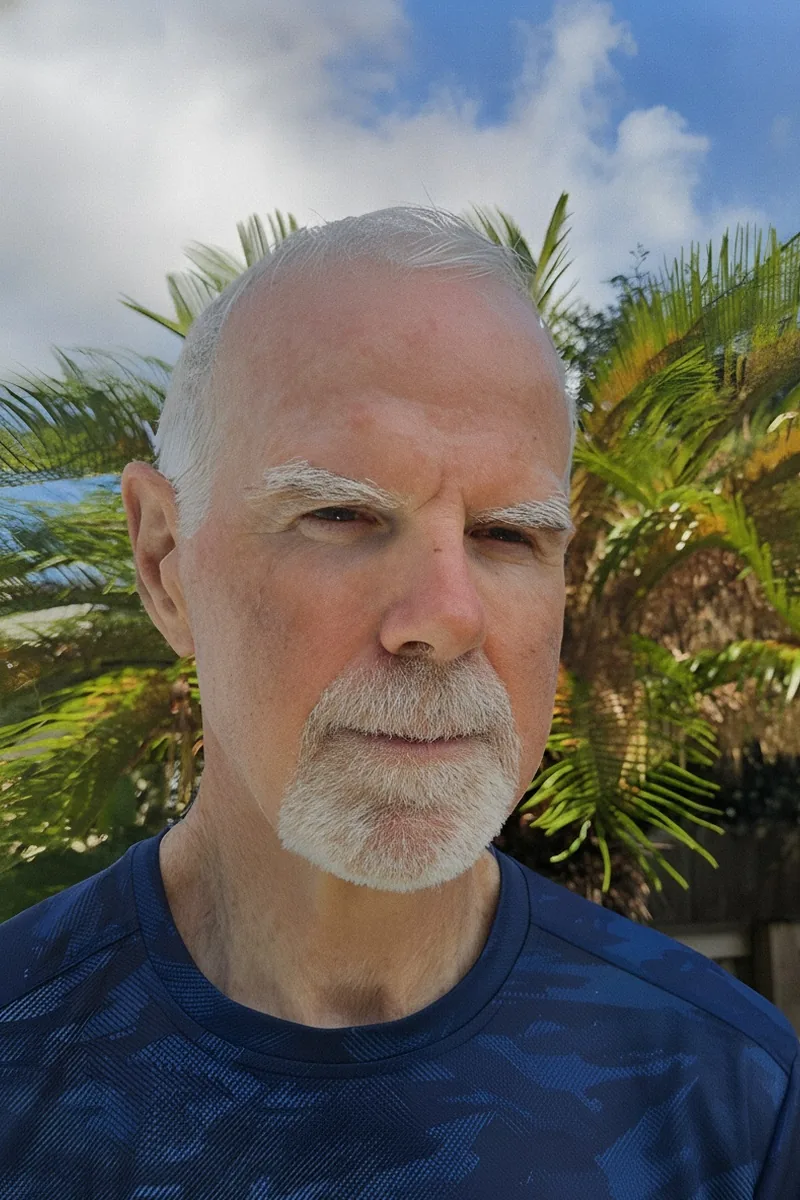
Gauss's law, Ampère's law, Faraday's law — AP Physics C: E&M asks students to wield vector calculus inside electromagnetic theory, which is a steep jump from most prior coursework. Steven approaches each topic by first explaining the physical picture, then showing the mathematical framework, then working through a practical example that ties both together. His PhD in chemical engineering required deep work with electromagnetic principles and multivariable calculus alike.
Gauss's Law, Ampère's Law, Faraday's Law — E&M asks students to think in three dimensions about invisible fields, which is a genuinely different skill from anything in Mechanics. Lila tackles this by grounding each law in a concrete setup (a charged sphere, a solenoid, a changing flux through a loop) before generalizing, so the vector calculus feels like a tool rather than an obstacle.
AP Physics C: E&M is where calculus and physics collide — Gauss's law integrals, Faraday's law, RC circuits, and Maxwell's equations all demand fluency in both. As a mechanical engineering student at Purdue, Austin uses these concepts daily and can unpack the vector calculus behind electromagnetic fields in a way that makes the math feel purposeful. Rated 4.9 by students.
AP Physics C: E&M is where calculus and electromagnetism collide, and most of the difficulty lives in translating physical setups — Gaussian surfaces, Amperian loops, RC circuits — into the right integral or differential equation. Megan's applied mathematics degree gives her deep comfort with the vector calculus and differential equations that make this course so demanding. She breaks down Gauss's law and Faraday's law problems step by step, connecting the math to the physical intuition behind each result.
Gauss's law, Ampère's law, Faraday's law — AP Physics C: E&M asks students to set up and evaluate integrals over charge distributions and magnetic fields, which is a steep jump from mechanics. Rami tackles these problems by first making the geometry visual, then translating it into the calculus, drawing on his daily work in both subjects at UT Austin. His 4.9 rating speaks to how well that approach lands.
AP Physics C: E&M is where many students hit a wall — Gauss's law, Ampère's law, and Faraday's law all demand comfort with vector calculus and physical reasoning at the same time. As a math and physics major at MIT, Bereket tackles these topics daily and knows how to unpack the interplay between the integral formulations and the physical setups the AP exam loves to test.
Gauss's law, Ampère's law, RC circuits — AP Physics C: E&M piles abstract vector calculus on top of already counterintuitive electromagnetic concepts. Victoria unpacks each topic by building physical intuition first, like visualizing electric field lines before setting up a flux integral, so the math serves the physics instead of obscuring it. Her background in medical imaging gives her real-world examples of how electromagnetic principles show up beyond the textbook.
Gauss's law, Ampère's law, Faraday's law — AP Physics C: E&M asks students to choose the right symmetry argument and execute a surface or line integral under time pressure. Yurok tackles this by drilling the geometric reasoning behind each law so students can recognize which tool applies before they start calculating. His physics and mathematics background at Emory keeps the vector calculus from becoming a bottleneck.
I am working towards a Bachelor of Arts in Pure and Applied Mathematics as well as a Bachelor of Arts in Astronomy and Physics. I have enjoyed studying math and science since I was in elementary school. I would always help my friends out by answering their questions about the material. For about the last five years, I have had my own tutoring business where I have tutored a wide variety of math courses from elementary school math to pre-calculus and calculus. I like to make sure my students have a complete understanding of the core concepts before going into practice questions. I have also had experience helping my peers with physics and computer science courses.
This is Michael's home turf. As an electrical and computer engineering major at Northwestern specializing in robotics and control systems, he lives in the world of Gauss's law, Faraday's law, and RC/RL circuits every semester. He unpacks Maxwell's equations and circuit analysis in ways that connect the abstract math to real systems — like the power electronics he builds for Northwestern's solar car.
AP Physics C: E&M is where calculus and physics truly merge — Gauss's law, Ampère's law, and Faraday's law all require setting up and evaluating integrals that many students haven't encountered in their math classes yet. Eitan's physics degree means he can teach both the physical intuition behind electric and magnetic fields and the vector calculus needed to solve the problems. Rated 5.0 by students.
AP Physics C: E&M is where calculus and electromagnetism collide — Gauss's law in integral form, Faraday's law, RC and RL circuits all demand comfort with both the physics and the math simultaneously. Serdar's physics teaching degree paired with his current nuclear engineering graduate work means he lives in the calculus-heavy side of physics daily. Rated 5.0 by students, he breaks down intimidating vector calculus applications into step-by-step reasoning.
AP Physics C: E&M is widely considered the hardest AP science exam, demanding fluency with vector calculus, Gauss's law, Faraday's law, and RC/RL circuit analysis under serious time pressure. Nima is a physics major at Duke who earned a 1580 SAT, and he unpacks these topics by deriving results from Maxwell's equations so students understand the structure behind each problem type rather than pattern-matching from examples.
Gauss's law, Ampère's law, RC circuits, electromagnetic induction — AP Physics C: E&M is where most students hit a wall because the math and the physical intuition have to work together simultaneously. Dennis's research designing optical-electronic multiplexers required him to model electromagnetic wave behavior at a professional level, and he brings that fluency to breaking down the toughest problems on the exam.
Gauss's law, Faraday's law, RC circuits — AP Physics C: E&M asks students to visualize invisible fields and then describe them with calculus, which is a genuinely difficult skill to develop. Satvik's aerospace engineering training at Georgia Tech keeps him immersed in electromagnetism, and his 800 on the Physics SAT Subject Test reflects a command of fundamentals that makes abstract field concepts concrete. He earned a 5.0 rating by meeting each problem at the exact point where a student gets stuck.
Gauss's law, Ampère's law, Faraday's law — AP Physics C: E&M asks students to think in vector fields and surface integrals, which is a major leap from mechanics. As an astrophysics and chemistry double major at CU Boulder, Graham works with electromagnetic theory as a core part of his studies and breaks down each law into the physical picture behind the math. He holds a 5.0 rating from students.
Electricity and Magnetism trips students up because it layers vector calculus onto already-abstract concepts like electric flux, Gauss's law, and electromagnetic induction. Rachel's calculus expertise gives her a solid handle on the integral and differential equations that drive E&M problem-solving. She's upfront that this is one of the toughest AP courses offered, and she approaches it by making sure the math never becomes the bottleneck.
Gauss's Law, Ampère's Law, and Faraday's Law each require setting up integrals over surfaces and paths that most students have never visualized before — it's arguably the hardest AP course offered. Grant's mechanical engineering background gives him hands-on familiarity with electric fields, circuits, and magnetic flux, and he unpacks the vector calculus behind each law by connecting it to physical setups students can actually picture. He's especially effective at teaching how to choose the right Gaussian surface or Amperian loop for a given problem.
Testimonials
Because the right AP Physics C: Electricity and Magnetism tutor makes all the difference.
Average Session Rating – Based on 3.4M Learner Ratings
Practice AP Physics C: Electricity and Magnetism
Free practice tests, flashcards, and AI tutoring for AP Physics C: Electricity and Magnetism
Nearby AP Physics C: Electricity and Magnetism Tutors
Other Austin Tutors
Related Science Tutors in Austin
Frequently Asked Questions
AP Physics C: Electricity and Magnetism covers electrostatics, conductors and insulators, electric potential, capacitance, current and resistance, magnetic fields, electromagnetic induction, and Maxwell's equations. The course emphasizes calculus-based problem-solving and typically requires strong foundational knowledge of algebra, trigonometry, and calculus. Many Austin students find the transition from algebra-based physics to calculus-based E&M particularly challenging, especially when dealing with vector fields and flux concepts.
Students often struggle most with Gauss's Law, electromagnetic induction (Faraday's Law), and Maxwell's equations because they require visualizing abstract field concepts and applying calculus in unfamiliar ways. The right-hand rule for magnetic forces and understanding the relationship between electric and magnetic fields also trip up many students. Personalized 1-on-1 instruction can help break down these conceptual barriers by working through problems at your own pace and addressing specific misconceptions.
Score improvement depends on your starting point and consistency with practice, but students typically see meaningful gains—often 1-3 points on the 5-point AP scale—within 8-12 weeks of focused preparation. The key is identifying weak areas early through practice tests and then drilling those specific topics with targeted problem-solving. Varsity Tutors connects you with expert tutors who can create a personalized study plan based on your diagnostic results and timeline.
The exam is split between multiple-choice (45 minutes) and free-response (45 minutes), so time management is critical. For multiple-choice, eliminate obviously wrong answers first and flag difficult questions to return to later. On free-response, show all work clearly—partial credit is awarded for correct methodology even if your final answer is wrong. Practice under timed conditions regularly to build confidence with pacing, and learn to quickly identify which equations and approaches apply to each problem type.
A solid preparation timeline spans 8-12 weeks and should include weekly problem sets on each unit, monthly full-length practice tests, and targeted review of weak areas. Spacing out your practice over time is more effective than cramming, and mixing problem types (conceptual, calculation-based, and experimental design) strengthens understanding. A tutor can help you track progress through practice tests, identify which topics need more work, and adjust your study plan as the exam approaches.
Varsity Tutors connects Austin students with expert tutors who have deep knowledge of AP Physics C: Electricity and Magnetism and understand the specific challenges of the curriculum. When you get matched with a tutor, you can discuss your current level, target score, and preferred learning style so they can tailor instruction to your needs. Most tutors offer flexible scheduling and personalized lesson plans that align with your school's pacing and your exam timeline.
Your first session is typically a diagnostic conversation where the tutor assesses your current understanding of key E&M concepts, reviews your recent test scores or practice problems, and learns about your goals and timeline. You'll likely work through a few problems together to identify knowledge gaps and misconceptions, then create a personalized study plan. This foundation helps ensure that every future session builds directly on your needs rather than covering material you've already mastered.
Much of test anxiety comes from feeling unprepared or uncertain about problem-solving approaches. Regular tutoring builds confidence through repeated practice with feedback, exposure to a wide variety of problem types, and clear explanations of concepts that previously felt confusing. Working through timed practice tests with a tutor also helps you develop realistic expectations about pacing and builds familiarity with the exam format, which reduces anxiety on test day.
Let’s find your perfect tutor
Answer a few quick questions. We’ll recommend the right plan and match you with a top 5% tutor.