Award-Winning AP Physics C: Electricity and Magnetism Tutors
serving San Antonio, TX
AP Physics C: Electricity and Magnetism
Tutors in San Antonio
Private 1-on-1 tutoring, weekly live classes for academic support, test prep & enrichment, practice tests and diagnostics, and more to elevate grades and test scores.
Based on 3.4M Learner Ratings
UniversitiesSchools & Universities
DeliveredHours Delivered
ProficiencyGrowth in Proficiency
Who needs tutoring?
No obligation. Takes ~1 minute.

E&M is where most AP Physics students hit their ceiling — Gauss's law, Ampère's law, and Faraday's law demand spatial reasoning and calculus fluency at the same time. Bidyut's biomedical engineering curriculum at Johns Hopkins required extensive work with electromagnetic theory, from circuit analysis to field modeling. He unpacks each law by building the physical picture first, then layering in the math so the integrals actually make sense.
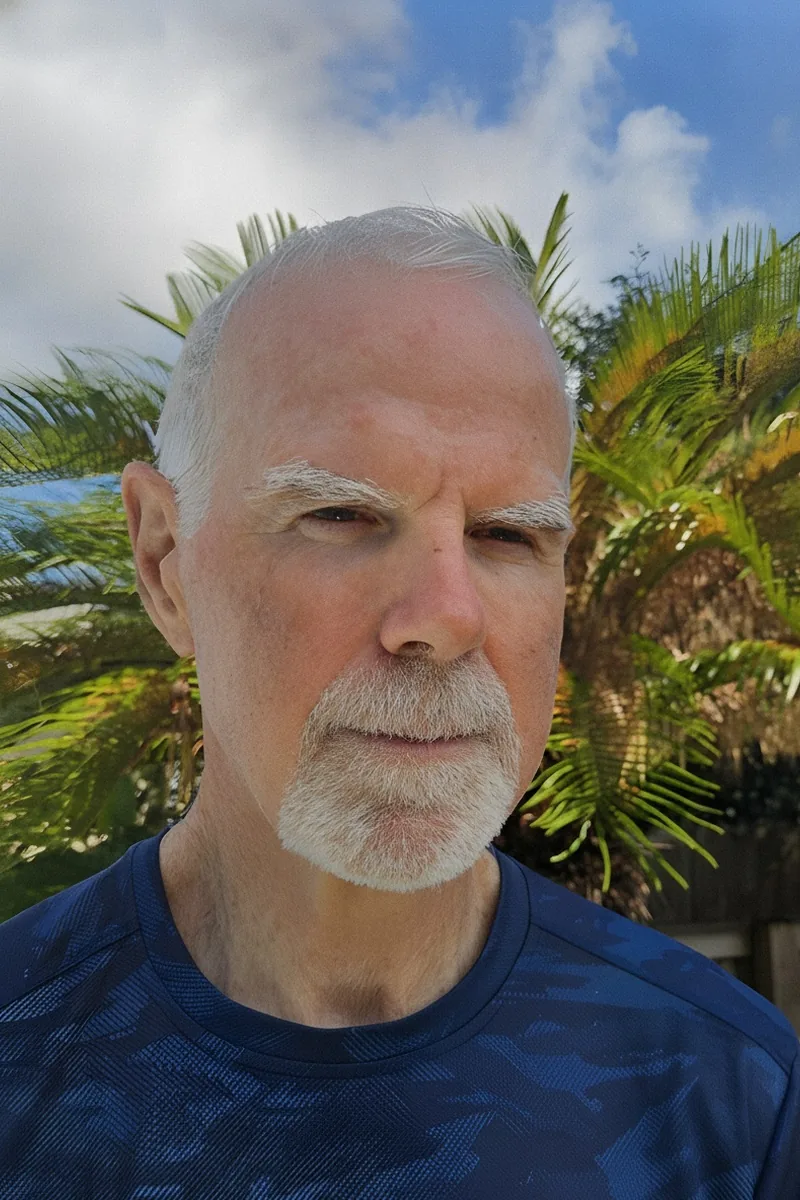
Gauss's law, Ampère's law, Faraday's law — AP Physics C: E&M asks students to wield vector calculus inside electromagnetic theory, which is a steep jump from most prior coursework. Steven approaches each topic by first explaining the physical picture, then showing the mathematical framework, then working through a practical example that ties both together. His PhD in chemical engineering required deep work with electromagnetic principles and multivariable calculus alike.
Gauss's Law, Ampère's Law, Faraday's Law — E&M asks students to think in three dimensions about invisible fields, which is a genuinely different skill from anything in Mechanics. Lila tackles this by grounding each law in a concrete setup (a charged sphere, a solenoid, a changing flux through a loop) before generalizing, so the vector calculus feels like a tool rather than an obstacle.
AP Physics C: E&M is where calculus and physics collide — Gauss's law integrals, Faraday's law, RC circuits, and Maxwell's equations all demand fluency in both. As a mechanical engineering student at Purdue, Austin uses these concepts daily and can unpack the vector calculus behind electromagnetic fields in a way that makes the math feel purposeful. Rated 4.9 by students.
AP Physics C: E&M is where calculus and electromagnetism collide, and most of the difficulty lives in translating physical setups — Gaussian surfaces, Amperian loops, RC circuits — into the right integral or differential equation. Megan's applied mathematics degree gives her deep comfort with the vector calculus and differential equations that make this course so demanding. She breaks down Gauss's law and Faraday's law problems step by step, connecting the math to the physical intuition behind each result.
Gauss's law, Ampère's law, Faraday's law — AP Physics C: E&M asks students to set up and evaluate integrals over charge distributions and magnetic fields, which is a steep jump from mechanics. Rami tackles these problems by first making the geometry visual, then translating it into the calculus, drawing on his daily work in both subjects at UT Austin. His 4.9 rating speaks to how well that approach lands.
AP Physics C: E&M is where many students hit a wall — Gauss's law, Ampère's law, and Faraday's law all demand comfort with vector calculus and physical reasoning at the same time. As a math and physics major at MIT, Bereket tackles these topics daily and knows how to unpack the interplay between the integral formulations and the physical setups the AP exam loves to test.
AP Physics C: E&M is where calculus and physics collide — Gauss's law integrals, Faraday's law, and RC/RL circuit analysis all demand fluency in both. Jared's mechanical engineering PhD work at Lehigh means he uses Maxwell's equations and vector calculus daily, so he can unpack the math behind each concept rather than just handing students formulas to memorize.
Gauss's law, Ampère's law, Faraday's law — AP Physics C: E&M asks students to wield vector calculus in physical contexts that feel deeply abstract. Shira tackles this by grounding each law in a concrete scenario first (a charged sphere, a solenoid, a changing magnetic flux) before layering on the integral setup, so students build physical intuition alongside mathematical fluency.
Gauss's law, Ampère's law, Faraday's law — AP Physics C: E&M asks students to wield vector calculus inside electromagnetic theory, which is a steep jump from mechanics. Richard's electrical and computer engineering background at the University of Tulsa means he's worked through these derivations extensively and can connect abstract field equations to tangible circuits and real devices. He breaks down each Maxwell equation into physical intuition first, then builds toward the math.
I have a Master's degree in Chemical Engineering, with additional graduate studies in Chemical Engineering and Computer Science, and over 10 years of experience teaching and tutoring STEM subjects. I work with students of different ages, backgrounds, and learning styles in mathematics, physics, chemistry, and related subjects. I believe the best tutoring starts with understanding how each student thinks. My goal is to identify where a concept becomes unclear, explain it from the student's perspective, and help them build both understanding and confidence. I want my students to learn not just how to find the right answer, but why it is the right answer and how to approach similar problems independently. I believe there is always learning in teaching, and that is one of the reasons I continue to enjoy working with students after all these years.
Gauss's law, Ampère's law, Faraday's law — AP Physics C: E&M is essentially a calculus course disguised as a physics course. Yuxuan's chemical biology studies at Berkeley required heavy overlap between multivariable calculus and electromagnetism, so he tackles problems by connecting the physical intuition (what the field actually looks like) to the integral setup students need on the exam.
Gauss's law, Ampère's law, Faraday's law — E&M asks students to visualize invisible fields and then describe them with surface and line integrals. Bryan breaks each problem into two stages: building geometric intuition about what the field looks like, then choosing the right mathematical tool to exploit symmetry. His physics degree and 5.0 student rating back up that structured approach.
This is Michael's home turf. As an electrical and computer engineering major at Northwestern specializing in robotics and control systems, he lives in the world of Gauss's law, Faraday's law, and RC/RL circuits every semester. He unpacks Maxwell's equations and circuit analysis in ways that connect the abstract math to real systems — like the power electronics he builds for Northwestern's solar car.
Gauss's law, Ampère's law, Faraday's law — E&M asks students to visualize invisible fields and then describe them with vector calculus. David approaches each topic by first making the field geometry concrete, using symmetry arguments and sketches before diving into surface or line integrals. His physics coursework gives him firsthand familiarity with the exact problem types and conceptual traps the AP exam targets.
During his physics PhD, Jonathan taught E&M at the university level — not just the conceptual overview, but the full calculus-heavy treatment of Maxwell's equations, dielectric materials, and magnetic induction that AP Physics C demands. He walks students through the reasoning behind each problem setup, showing how to identify symmetry, choose the right integration path, and connect the math back to what the fields are actually doing. Rated 5.0 by students.
Gauss's law, Ampère's law, Faraday's law — AP Physics C: E&M asks students to wield vector calculus in three dimensions, often before they've fully internalized what a flux integral actually means. Rishik unpacks each law by starting with the geometry of the field before jumping into the math, so the integral setup feels logical rather than memorized. His parallel background in calculus and computer science gives him multiple ways to visualize abstract electromagnetic concepts.
Gauss's law, Ampère's law, Faraday's law — AP Physics C: E&M asks students to wield vector calculus in ways that feel nothing like their math class. Hossein unpacks each law by building intuition for the underlying fields before diving into the surface and line integrals. His PhD research in mechanical engineering required extensive electromagnetic analysis, so he knows exactly where students' conceptual gaps tend to hide.
AP Physics C: E&M is where calculus meets abstract field theory, and most students struggle not with the math itself but with visualizing what's happening inside capacitors, inductors, and current-carrying loops. Aleksandar pairs his UPenn physics coursework with a structured problem-solving method — breaking each scenario into a diagram, an equation selection, and a calculus setup — that turns intimidating free-response questions into repeatable steps.
Testimonials
Because the right AP Physics C: Electricity and Magnetism tutor makes all the difference.
Average Session Rating – Based on 3.4M Learner Ratings
Practice AP Physics C: Electricity and Magnetism
Free practice tests, flashcards, and AI tutoring for AP Physics C: Electricity and Magnetism
Nearby AP Physics C: Electricity and Magnetism Tutors
Other San Antonio Tutors
Related Science Tutors in San Antonio
Frequently Asked Questions
AP Physics C: Electricity and Magnetism focuses on electrostatics, conductors and dielectrics, electric circuits, magnetic fields, and electromagnetic induction. The exam emphasizes quantitative problem-solving using calculus, including applications of Gauss's law, Ampère's law, and Faraday's law. Students typically spend about half the AP Physics C course on this material, making it essential to build strong conceptual understanding alongside computational skills.
Many students struggle with visualizing abstract concepts like electric and magnetic fields, especially when applying vector calculus to three-dimensional problems. Pacing is another major challenge—the course moves quickly through dense material, and falling behind on foundational topics like Coulomb's law makes later concepts like electromagnetic induction much harder to grasp. Additionally, distinguishing between when to use different approaches (Gauss's law vs. Coulomb's law, for example) requires both conceptual clarity and practice with varied problem types.
Improvement depends on your starting point and consistency, but personalized 1-on-1 instruction typically helps students identify and close specific knowledge gaps much faster than studying alone. Many students who work with tutors report gaining confidence in problem-solving strategies and exam pacing, which directly translates to higher scores. The key is starting early enough to work through challenging topics methodically rather than cramming before the exam in May.
Practice tests are critical—they help you identify weak areas, build stamina for the 90-minute exam, and get comfortable with the specific question formats and pacing required. Taking full-length practice exams under timed conditions reveals whether you understand concepts or just recognize them in textbook examples. A tutor can help you analyze your practice test results to pinpoint whether errors stem from conceptual misunderstanding, calculation mistakes, or time management issues.
Building genuine confidence through mastery of problem-solving strategies is the most effective antidote to test anxiety. Working with a tutor on timed practice problems helps you develop a reliable approach to tackling unfamiliar questions, which reduces panic on exam day. Additionally, understanding the exam format deeply—knowing what to expect in both the multiple-choice and free-response sections—removes uncertainty and lets you focus on applying your physics knowledge.
Look for tutors with strong backgrounds in physics, ideally with experience teaching or tutoring AP Physics C specifically. They should understand both the conceptual foundations and the calculus-based problem-solving required by the exam, and be able to explain why certain approaches work rather than just showing you how to solve problems. For students in San Antonio, Varsity Tutors connects you with expert tutors who can tailor instruction to your learning style and pace.
Your first session is typically a diagnostic conversation where a tutor assesses your current understanding, identifies your strongest and weakest topics, and learns about your goals and timeline. They'll likely work through a few representative problems with you to understand your problem-solving approach and where breakdowns occur. This foundation helps the tutor design a personalized study plan focused on the areas where you'll gain the most improvement before the exam.
Ideally, you should begin tutoring support early in the school year rather than waiting until spring, especially if you find the material challenging. Starting in fall or early winter gives you time to build conceptual understanding and work through practice problems systematically rather than rushing through material in the final weeks. If you're already in spring, even a few weeks of focused tutoring can help you refine problem-solving strategies and boost confidence before the May exam.
Let’s find your perfect tutor
Answer a few quick questions. We’ll recommend the right plan and match you with a top 5% tutor.