Award-Winning Physical Chemistry Tutors
serving San Antonio, TX
Physical Chemistry
Tutors in San Antonio
Private 1-on-1 tutoring, weekly live classes for academic support, test prep & enrichment, practice tests and diagnostics, and more to elevate grades and test scores.
Based on 3.4M Learner Ratings
UniversitiesSchools & Universities
DeliveredHours Delivered
ProficiencyGrowth in Proficiency
Who needs tutoring?
No obligation. Takes ~1 minute.
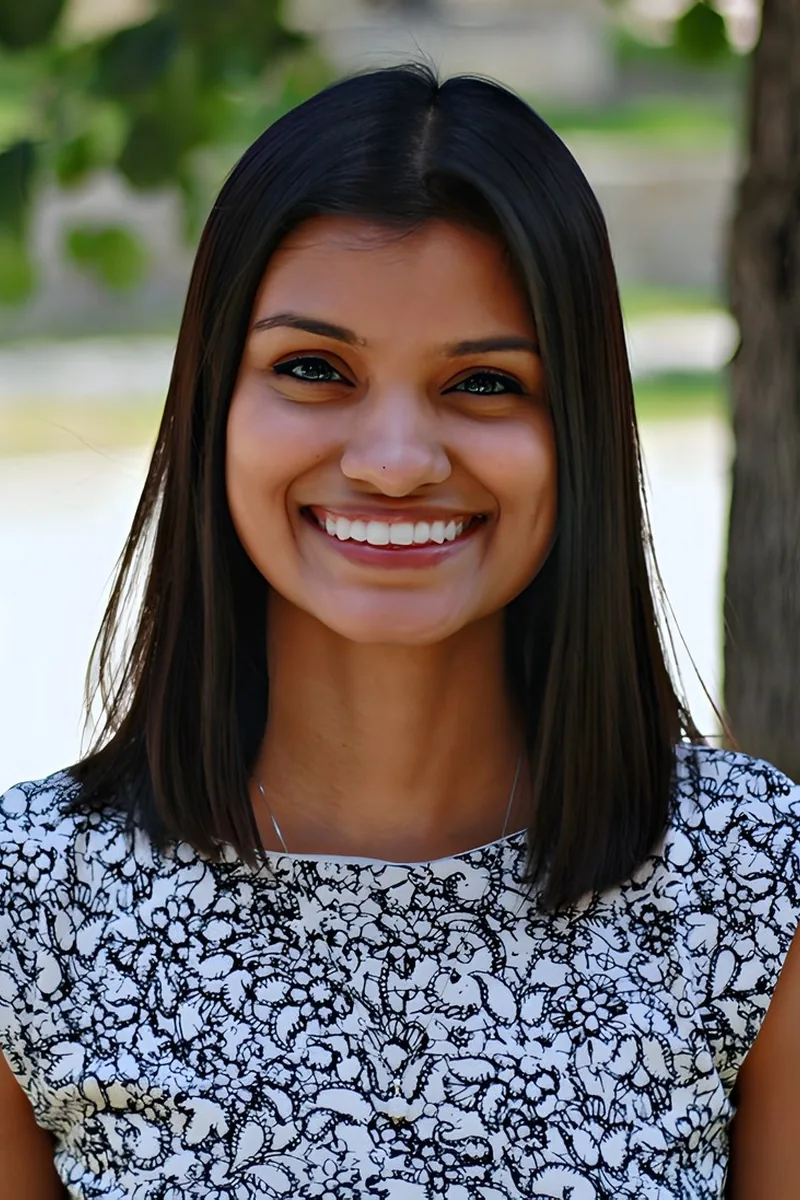
Studying biochemistry and cell biology at Rice means Sugi already had to internalize the thermodynamic and kinetic principles that drive cellular processes — free energy calculations for metabolic reactions, equilibrium constants governing binding events — before tackling them in their pure mathematical form. She unpacks p-chem derivations by linking each variable back to the molecular behavior it quantifies, turning something like a chemical potential expression into a description of what molecules are actually doing at a phase boundary. Rated 5.0 by students.
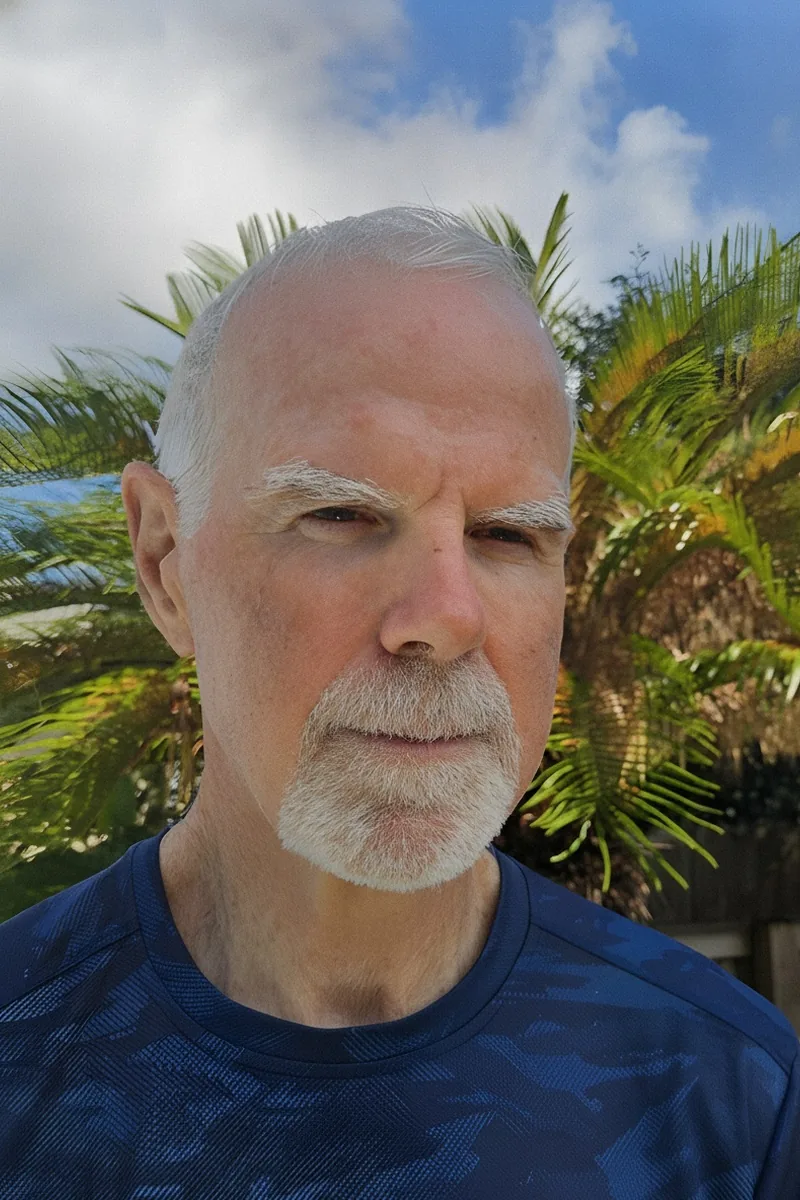
Decades as a PhD chemical engineer meant Steven was solving Clausius-Clapeyron problems, reaction kinetics models, and energy balance derivations long before they were textbook exercises — they were daily work. He breaks down p-chem's toughest material by explaining a concept one way, re-explaining it from a different angle, then grounding it in a real engineering application where the math actually matters. Rated 4.9 by students.
I am most passionate about biology and chemistry. I am a firm proponent of education, believing it to be absolutely necessary for an improved quality of life, and I try to impart this appreciation to all of my students.
Rice's chemistry curriculum put Asad through the full p-chem gauntlet — thermodynamics, quantum mechanics, kinetics — and his path to medical school at UT Houston means he's had to internalize concepts like enthalpy, entropy, and equilibrium well enough to apply them in biological and clinical contexts. That dual pressure of rigorous chemistry coursework and MCAT preparation sharpened his ability to explain why a derivation works, not just how to grind through the math.
Mechanical engineering at Rice means Aleksey has been solving thermodynamic cycles, heat transfer problems, and differential equations for years — the exact mathematical toolkit that p-chem throws at students in a chemistry wrapper. He breaks down topics like entropy, enthalpy, and phase equilibria by treating them as engineering problems first, then layering in the molecular-level chemistry that gives each variable its meaning. Rated 5.0 by students.
Environmental statistics at Rice required Alex to work extensively with the same calculus-heavy quantitative methods — differential equations, statistical modeling, multivariable analysis — that students encounter in thermodynamics and kinetics derivations throughout a p-chem sequence. His geography background adds a surprising edge: understanding energy balances and phase transitions in Earth systems translates directly to making sense of state functions and equilibrium in a chemistry context.
Pre-med coursework at Rice plus dual degrees in environmental sciences and ecology meant Daniel was solving energy balance problems and applying thermodynamic reasoning to natural systems well before encountering p-chem's formal derivations. His lab technician work at Rice keeps the quantitative skills sharp — setting up calculations involving enthalpy, equilibrium, and kinetic models is part of the daily routine, not a distant textbook memory.
Thermodynamics, quantum mechanics, and kinetics all collide in physical chemistry, and the math intensity alone can be overwhelming. As a chemistry major at TCU who's worked through p-chem coursework firsthand, Nathan breaks down derivations — partition functions, the Schrödinger equation, phase diagrams — into manageable logical steps. He connects the heavy math back to the physical meaning so equations stop feeling arbitrary.
Studying chemistry at UT while simultaneously tutoring undergraduates in math, chemistry, and physics gave Joshua a feel for exactly where p-chem's conceptual layers collide — the moment a thermodynamics derivation turns into a calculus problem, or when quantum mechanical notation obscures an otherwise intuitive idea about molecular behavior. He rebuilds those trouble spots by connecting the formalism back to the underlying chemistry, whether the topic is chemical kinetics, phase equilibria, or statistical mechanics.
Chemical engineering at McCombs drilled Mahan in the thermodynamics, reaction kinetics, and differential equations that form the backbone of any p-chem course — he solved energy balances and rate problems daily before ever seeing them dressed up in physical chemistry notation. That engineering instinct for tracking units and boundary conditions through a long derivation pays off when students hit walls with concepts like chemical potential or the Clausius-Clapeyron equation, where one misplaced variable can unravel an entire problem.
Eight years as a chemistry professor at Trinity College meant Maria taught p-chem repeatedly — not just lecturing on thermodynamic state functions and quantum mechanical models, but sitting with students in office hours untangling the specific derivation step where they got lost. That Ph.D.-level command of the subject, combined with a 5.0 rating, reflects someone who knows exactly which Maxwell relation or partition function integral is about to cause trouble and can rework it on the spot.
Two years as an organic chemistry lab TA at the college level gave Maha hands-on experience with the reaction kinetics and thermodynamic reasoning that form the backbone of any p-chem sequence. Now pursuing graduate work in public health at Johns Hopkins, she approaches topics like equilibrium constants and energy diagrams through the lens of someone who's had to apply them in real experimental settings, not just derive them on paper. Rated 5.0 by students.
Differential equations, calculus, and organic chemistry all sit in Nate's regular teaching rotation, which means he's constantly moving between the math and the chemistry that p-chem smashes together — and he knows exactly where students lose the thread between the two. He zeroes in on building intuition around concepts like chemical potential and equilibrium thermodynamics by tying each derivation back to the reaction behavior students already recognize from general and organic chemistry. Rated 5.0 by students.
Scoring in the 98th percentile on the MCAT required Nishant to internalize the thermodynamic and kinetic reasoning that p-chem makes rigorous — enthalpy diagrams, equilibrium constants, and rate law derivations all showed up under intense time pressure before he encountered them in their full mathematical form as a medical student at Case Western. He teaches a physics TA's instinct for applied problem-solving to the calculus-dense material, breaking a topic like a Maxwell relation or a phase diagram into the physical question it's actually answering.
A biology degree paired with a 34 ACT and coursework heavy in chemistry — including AP Chemistry and college-level physical chemistry — means Joshua already knows what it feels like when the calculus in a derivation starts drowning out the chemistry it's supposed to describe. He tackles topics like partition functions, chemical kinetics, and thermodynamic state variables by rebuilding each derivation from its physical intuition outward, so students can follow not just the math but the molecular story it tells. Rated 4.8 by students.
A physics degree gives Cory something many p-chem tutors lack — native comfort with the quantum mechanics and statistical mechanics that chemistry students often encounter for the first time in this course. He treats topics like wave functions, partition functions, and thermodynamic state variables as extensions of the physics he already thinks in, then builds the chemical context around them. Rated 4.9 by students.
Medical school at the Medical College of Wisconsin means Abrahim encounters p-chem's core concepts daily — reaction kinetics in pharmacology, thermodynamic energy balances in physiology, and the quantum mechanical principles behind spectroscopic diagnostics. His UCLA biology degree and 34 ACT demonstrate the mathematical fluency needed to work through derivations involving state functions, equilibrium constants, and entropy calculations without losing sight of what the chemistry actually describes. Rated 5.0 by students.
A PhD in chemical engineering means Alexander spent years deriving and applying the exact thermodynamic frameworks — equations of state, phase equilibria, transport phenomena — that p-chem students encounter stripped of their engineering context. His biosystems engineering background adds a second layer, connecting statistical mechanics and kinetics to real molecular systems rather than leaving them as abstract formalisms. Rated 4.9 by students.
I graduated from Saint Louis University with a Bachelor of Science Degree in Biology. Since then, I took the DAT exam and received a very high score, which allowed me to secure interviews from multiple Dental Schools across the country. I'm ready and willing to share the studying skills I acquired during my academic career to make my students' lives easier and achieve success. I was a biology and chemistry tutor at St. Louis Community College, where I led both group study sessions and 1-on-1 tutoring sessions. Every student on this campus had different learning styles and academic backgrounds. Therefore, I adapted my teaching styles to suit each student and make the sessions as efficient as possible. I also have experience tutoring children, including those with learning disabilities. I enjoy tutoring science the most. I love seeing the twinkle in the eye when my students have an "Aha" moment after understanding a new concept, which is which I love my job as a tutor. During my free time, I go to community services, watch soccer, and play guitar.
Neuroscience at the undergraduate level means Amy has already tangled with the thermodynamics and kinetics that p-chem formalizes — Nernst equation derivations, membrane energetics, and the statistical behavior of ion channels all demand that same calculus-heavy reasoning. She uses those biological touchpoints to make abstract topics like entropy and equilibrium constants feel grounded in systems students can actually picture. Rated 5.0 by students.
Enric holds a PhD in Chemistry, which means p-chem wasn't just a course requirement — it was the foundation his entire research career was built on, from quantum mechanical modeling to thermodynamic analysis at the graduate level. He teaches the subject by slowing down at the exact calculus step where a derivation goes from followable to opaque, rebuilding the physical reasoning behind each manipulation before moving forward. Rated 5.0 by students.
Testimonials
Because the right Physical Chemistry tutor makes all the difference.
Average Session Rating – Based on 3.4M Learner Ratings
Nearby Physical Chemistry Tutors
Other San Antonio Tutors
Related Science Tutors in San Antonio
Frequently Asked Questions
Physical chemistry bridges chemistry and physics, focusing on the behavior of molecules, energy transformations, and reaction rates—concepts that are highly abstract and mathematical. Many students struggle because it requires understanding both theoretical principles (like thermodynamics and quantum mechanics) and their practical applications simultaneously, plus strong math skills for problem-solving.
Students typically struggle with visualizing molecular behavior and quantum concepts, balancing complex equations, unit conversions across different systems, and connecting abstract theory to real lab work. Many also find the heavy math component—including calculus and logarithms—intimidating when combined with chemistry content.
Personalized 1-on-1 instruction allows tutors to slow down on difficult concepts, use visual models to make abstract ideas concrete, and work through problem-solving strategies step-by-step. Tutors can also help you understand the 'why' behind equations rather than just memorizing them, which is essential for physical chemistry success.
Yes. Expert tutors can help you understand how theoretical concepts like enthalpy, entropy, and reaction kinetics show up in actual lab work, making experiments more meaningful. This connection strengthens both your conceptual understanding and your ability to interpret experimental results critically.
Your first session is a chance for the tutor to assess your current understanding, identify specific pain points (whether that's thermodynamics, kinetics, or quantum mechanics), and learn your learning style. From there, you'll develop a personalized plan focused on the concepts and skills you need most.
Varsity Tutors connects you with tutors who have deep expertise in physical chemistry and understand how to teach abstract concepts effectively. You can specify your needs—whether you're preparing for an exam, working through a specific unit, or strengthening your overall foundation—and get matched with someone who's a great fit for your goals.
Absolutely. Tutors can help you master high-yield topics, practice problem-solving under timed conditions, review past exams, and build confidence in areas where you typically struggle. For AP Chemistry, this includes both the conceptual understanding and the math skills needed to score well.
Physical chemistry is fundamentally about understanding—memorizing equations without grasping the concepts behind them won't help you solve novel problems or apply knowledge to new situations. Tutors focus on building genuine understanding so you can tackle unfamiliar problems confidently and see how different concepts connect.
Let’s find your perfect tutor
Answer a few quick questions. We’ll recommend the right plan and match you with a top 5% tutor.