Award-Winning SAT Math Tutors
serving Kennewick, WA
SAT Math
Tutors in Kennewick
Private 1-on-1 tutoring, weekly live classes for academic support, test prep & enrichment, practice tests and diagnostics, and more to elevate grades and test scores.
Based on 3.4M Learner Ratings
UniversitiesSchools & Universities
DeliveredHours Delivered
ProficiencyGrowth in Proficiency
Who will be getting tutoring?
No obligation. Takes ~1 minute.
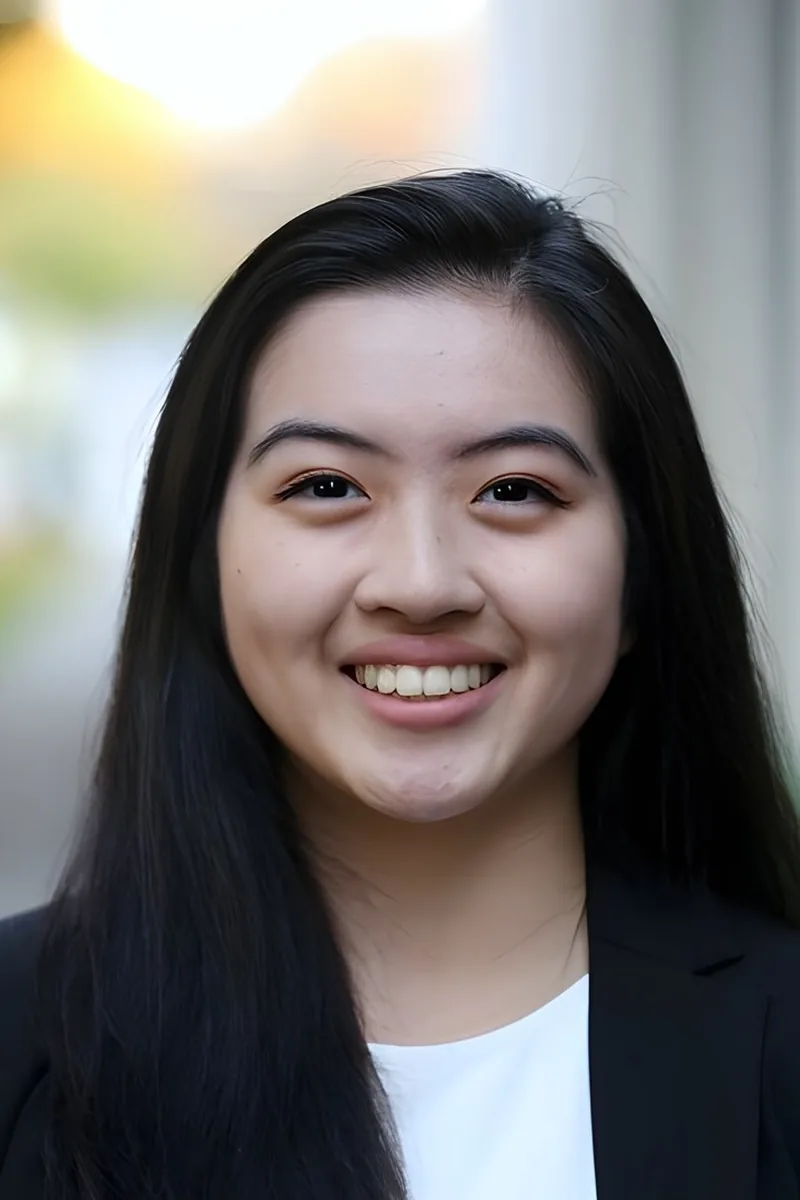
Alice earned a 1550 SAT, and her strength in the Math section comes from years of genuine enthusiasm for problem-solving across algebra, geometry, and data analysis. She zeroes in on the specific question styles College Board uses — like multi-step word problems that bury the actual question — and teaches students to decode them systematically before picking up a pencil.

I am expecting to complete my PhD within the year. I offer tutoring for English or AP English classes, and writing assignments for any class at any level, as well as SAT, GRE and GRE Literature preparation.
I am beginning work as a management consultant in the engineering space this summer (2020).
An SAT Math score is often less about what a student knows and more about how quickly they recognize which tool to use — is this a systems problem, a quadratic in disguise, or a ratio setup? Grant, who scored 1530 on the SAT, unpacks the test's recurring question structures so students spend less time deliberating and more time solving.
Sameer's strength on SAT Math comes from seeing the same core algebra and precalculus concepts from multiple angles — as a UW computer science student, he thinks about functions, systems of equations, and data analysis both abstractly and computationally. He teaches students to recognize which tool a problem is really asking for, whether that's back-solving, graphing mentally, or setting up a quick equation, so they stop burning time on brute-force approaches.
Angela breaks SAT Math into its highest-value skill clusters — linear equations, quadratic behavior, and data analysis — and builds each student's speed by emphasizing algebraic shortcuts over calculator dependence. Her 1500 SAT and quantitative coursework in environmental science give her fluency with the applied math problems that trip up students in the later, harder modules. She holds a 5.0 rating from the students she's worked with.
After earning a 1490 SAT composite, Elizabeth developed a clear sense of which math concepts the College Board tests hardest — linear modeling, quadratic behavior, and ratio reasoning show up far more than students expect. She teaches students to recognize problem types quickly so they spend their time solving, not figuring out what's being asked.
Scoring 1450 on the SAT gave Xiansheng firsthand insight into the exam's structure, especially the way SAT Math layers algebra, data analysis, and passport-to-advanced-math questions with increasing complexity. He breaks down multi-step word problems into recognizable patterns so students stop second-guessing themselves and start finishing sections with time to spare.
I am a professional scientist with multiple years of experience in the biopharmaceutical field. I have spent time in the classroom with elementary aged students and am comfortable with this age group. I am also familiar with AP classes and ACT/SAT preparation. I look forward to sharing my love of learning with students and helping them achieve academic goals!
Running a dual-language tutoring program in Mandarin and English sharpened Antonia's ability to explain math concepts multiple ways — a skill that pays off on SAT Math when a student's first approach to a systems-of-equations or ratio problem isn't clicking. She's tutored math from elementary through test prep and knows how to trace SAT mistakes back to the foundational gaps (especially in fraction operations and proportional reasoning) that quietly cost points across the entire section.
I'm a biochemistry major at Northeastern University. I love math and science, and like to work with kids and teens on those subjects. I have also worked in an ESL classroom, and am available to help with reading and writing skills. I look forward to working with you!
I am a Yale graduate with over 8 years experience tutoring students from a variety of backgrounds. I recently graduated from the Yale School of Public Health with a MPH concentrating in Epidemiology and Global Health. I also received my B.S. from Yale with a double major in Molecular, Cellular, and Developmental Biology and French. I have experience both leading group classes and working with students one on one. I will respond to a student's strengths, weaknesses, and learning style in order to help them succeed and make the most of our time together. I earned a perfect score of 36 on the ACT, 2280 on the SAT, and qualified as a National Merit Scholar on the PSAT. I look forward to working with you!
Scoring a 1570 on the SAT, Joey knows the Math section inside and out — from the no-calculator questions that test algebraic fluency to the data-analysis problems that reward careful reading. He teaches students to recognize question patterns and avoid common traps, turning timed practice into a strategic exercise rather than a frantic race.
Most SAT Math mistakes aren't about not knowing the math — they're about misreading what the problem is setting up. Sreya, who scored 1580 on the SAT and studies chemistry and computer science at Michigan, zeroes in on the algebra and data analysis questions that account for the bulk of the test. She walks through how to spot which tool a problem actually requires, from systems of equations to quadratic modeling.
John's approach to SAT Math zeroes in on the difference between knowing algebra and knowing how the SAT tests algebra — things like rewriting equations to match answer choices or catching unit conversion traps in word problems. With a 1420 SAT and deep experience across calculus, geometry, and college algebra, he connects each practice problem to the specific concept being tested so students build real recognition, not just test-day luck.
I am a lifelong learner, teacher, and researcher in the field of physics. I received a PhD in Physics from the University of Michigan and a BS in Physics from Rice University. I have four years of physics teaching experience at the University of Michigan, primarily undergraduate laboratory courses with an emphasis on electromagnetism, circuits, waves, optics, and real-world applications of these and other physical phenomena. Many of these courses, including one I helped design, focused on helping non-STEM students master physics concepts that may be difficult to grasp in a standard classroom setting. I have tutored in a variety of subjects since high school, but most recently I have spent several years helping students understand concepts and succeed in coursework throughout a large variety of college-level physics topics, from basic mechanics to advanced electrodynamics and special relativity.
Creative writing might seem unrelated to SAT Math, but Sydney's 1600 SAT score speaks for itself — and her approach to the math section mirrors how she tackles a draft: strip every problem down to what it's actually asking, then build the solution step by step. She's especially sharp on the algebra-heavy word problems where students who can do the math still lose points because they misread the setup, a reading-comprehension trap her writing background makes her uniquely good at catching. Rated 4.9 by students.
Scoring a 1590 SAT means Anna has already dissected every question type the Math section throws at students — from no-calculator algebra and systems of equations to data analysis and passport-to-advanced-math problems involving polynomials and exponentials. She teaches efficient strategies for avoiding trap answers and managing pacing across both calculator and no-calculator modules.
I am 22 years old and just graduated from the University of Kentucky with a double degree in French and Biochemistry. I have been a tutor for over a year now at UK's tutoring center. I believe that anyone can learn anything with enough practice and encouragement, and I love helping students overcome challenges and gain more self-confidence!
Getting past 700 on SAT Math usually comes down to a handful of concept areas: advanced function behavior, systems of equations with no solution, and data analysis questions that blend statistics with algebra. Rhea earned a 1550 SAT and pinpoints exactly which of these areas are costing a student points, then drills those gaps with real College Board problems rather than generic practice sets. Her biology and pre-med coursework at UChicago keeps her math skills sharp through daily quantitative work.
Scoring a 1570 on the SAT, Perry knows exactly where the math section tries to trip students up — especially on quadratic and exponential word problems that test conceptual understanding rather than computation speed. He teaches efficient strategies for data analysis and passport-to-advanced-math questions that turn tricky phrasing into straightforward algebra. Rated 5.0 by students.
I am currently pursuing a Bachelors of Science in Aerospace Engineering at the Georgia Institute of Technology. I am also a graduate of the high school International Baccalaureate Program. I have informal experience tutoring high school physics, but am most passionate about tutoring students for the ACT standardized test, having had extensive experience preparing for standardized tests throughout high school. I am eager to aid students in boosting their scores before their upcoming college applications, an important milestone in many students' lives. In my free time, I also enjoy playing tennis.
I'm a recent college graduate with degrees in Biological Sciences and Russian from Ohio University. During my time there, I tutored students in a variety of subjects, including biology, chemistry, and Spanish. In addition, I worked as both a peer advisor and teaching assistant, which gives me insight into the learning strategies and study skills that students need to succeed. As a tutor, I like to focus on doing actual problems with students because it is the most effective way to immediately identify their strengths and weaknesses and to address them. In my free time, I like to lift weights, read books, and spend time with my friends.
Testimonials
Because the right SAT Math tutor makes all the difference.
Average Session Rating – Based on 3.4M Learner Ratings
Practice SAT Math
Free practice tests, flashcards, and AI tutoring for SAT Math
Other Kennewick Tutors
Related Test Prep Tutors in Kennewick
Frequently Asked Questions
Varsity Tutors matches Kennewick students with expert SAT Math tutors for 1-on-1 instruction. We pair each student with a tutor based on their specific needs, learning style, and goals.
Whether you need homework help, exam prep, or want to get ahead, our SAT Math tutors are ready to help.
Common challenges include gaps from earlier material, difficulty with specific concepts, and trouble applying learning to new problems. These issues can snowball quickly in SAT Math.
A tutor identifies where you're stuck, fills in gaps, and provides targeted practice. The 1-on-1 format means you get help exactly where you need it.
Tutors work with your student's actual coursework—homework assignments, class notes, and upcoming tests. This keeps tutoring directly relevant to what's happening in the classroom.
When you share information about your student's school and curriculum, we can match you with a tutor who has relevant experience.
All tutors complete background checks, credential verification, and teaching evaluation. Many of our SAT Math tutors hold advanced degrees or have years of teaching experience.
You can review tutor profiles to find someone with the right background for your student's level and needs.
Many students see improved grades within a few weeks, along with better understanding of SAT Math concepts and more confidence tackling challenging material.
Tutors track progress and adjust their approach to ensure continued improvement.
Most students benefit from 1-2 sessions per week. More frequent sessions help if your student is significantly behind or has an important exam coming up.
Your tutor can recommend a schedule based on your student's specific situation and goals.
Tutoring is purchased in packages of hours, with rates varying by tutor experience. Varsity Tutors offers several options to fit different budgets and needs.
You can discuss pricing during your consultation to find what works best.
Your tutor will assess where your student is, discuss goals, and start working on priority areas. Most students bring current homework or upcoming test material to focus on.
By the end, you'll have a clear sense of how the tutor can help and a plan for moving forward.
Let’s find your perfect tutor
Answer a few quick questions. We’ll recommend the right plan and match you with a top 5% tutor.