Award-Winning Physical Chemistry Tutors
serving Phoenix, AZ
Physical Chemistry
Tutors in Phoenix
Private 1-on-1 tutoring, weekly live classes for academic support, test prep & enrichment, practice tests and diagnostics, and more to elevate grades and test scores.
Based on 3.4M Learner Ratings
UniversitiesSchools & Universities
DeliveredHours Delivered
ProficiencyGrowth in Proficiency
Who needs tutoring?
No obligation. Takes ~1 minute.

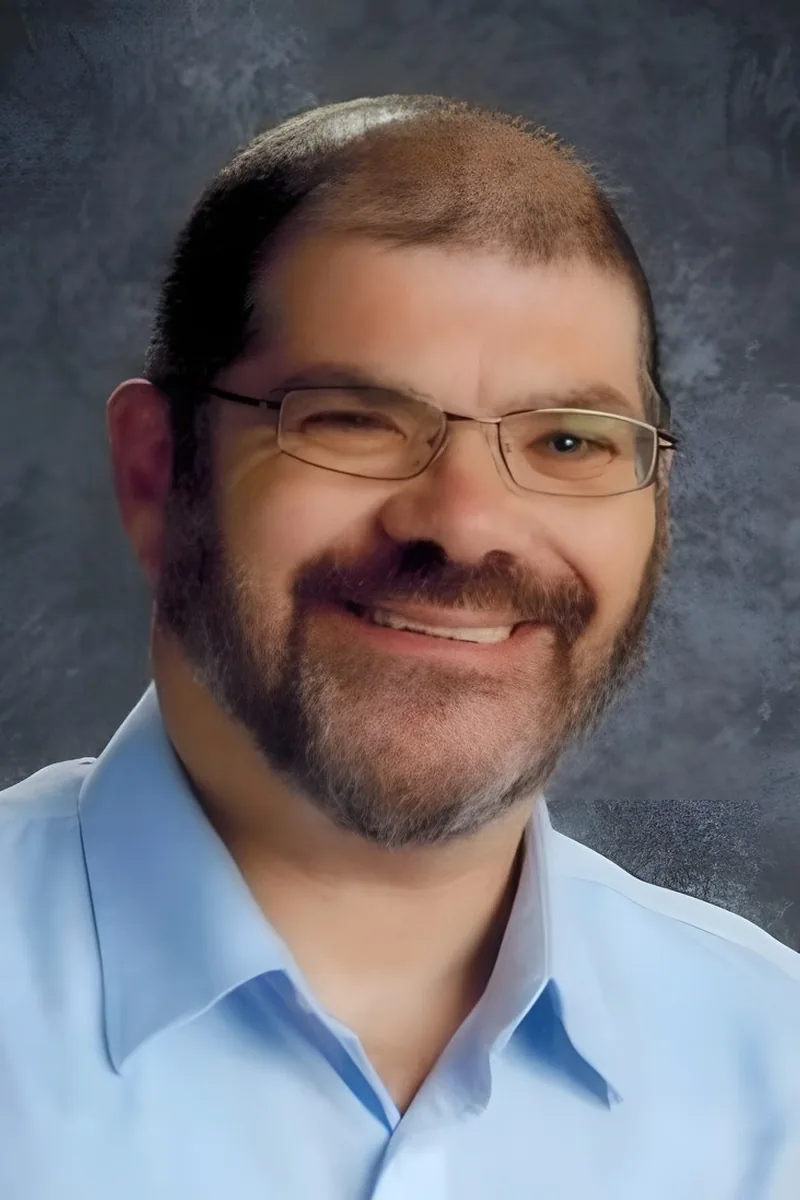
Maurice's teaching background in special education sharpens his ability to break down the layered abstractions in p-chem — when a student is lost inside a Gibbs free energy derivation, he isolates exactly which conceptual step broke down and rebuilds from there. His coursework across calculus, statistics, and chemistry gives him enough quantitative range to walk through the thermodynamic and kinetic formalisms, even if p-chem isn't his deepest specialty.
Co-teaching an organic chemistry lab at UC Berkeley and holding review sessions for general chemistry gave Yuxuan firsthand experience breaking down reaction energetics and equilibrium — concepts that p-chem revisits with far more mathematical rigor. His biochemistry training means he's already worked through the thermodynamic and kinetic frameworks underlying enzyme behavior and molecular interactions, so he can trace a derivation back to the chemistry it actually describes. Rated 4.9 by students.
Conservation biology at ASU gave River a working familiarity with the thermodynamic and kinetic principles that p-chem puts under a mathematical microscope — energy flows in ecosystems, reaction energetics in biochemical cycles, and the statistical behavior of molecular populations. That biology-first perspective lets River approach topics like Gibbs free energy and equilibrium constants by starting with the physical intuition before wading into the calculus. Rated 4.8 by students.
Studying biochemistry and cell biology at Rice means Sugi already had to internalize the thermodynamic and kinetic principles that drive cellular processes — free energy calculations for metabolic reactions, equilibrium constants governing binding events — before tackling them in their pure mathematical form. She unpacks p-chem derivations by linking each variable back to the molecular behavior it quantifies, turning something like a chemical potential expression into a description of what molecules are actually doing at a phase boundary. Rated 5.0 by students.
I am currently a graduate student in Chemical Engineering at the University of Delaware. I am working on using magnetic and flow fields to create advanced materials by directing the self-assembly process of nanoparticles . I have tutored students in Chemistry, Physics and Math all throughout undergraduate and graduate work. I truly enjoy breaking material down into its core components that allows the students to understand complicated information.
Biology research through the American Museum of Natural History and pre-med coursework at Cornell gave Krishna hands-on exposure to the thermodynamic and kinetic principles that p-chem formalizes — energy changes in biological systems, reaction rates, equilibrium behavior. She uses that life-science grounding to make topics like Gibbs free energy and rate laws feel like descriptions of real molecular events rather than pure derivation exercises.
Neuroscience at the undergraduate level means Amy has already tangled with the thermodynamics and kinetics that p-chem formalizes — Nernst equation derivations, membrane energetics, and the statistical behavior of ion channels all demand that same calculus-heavy reasoning. She uses those biological touchpoints to make abstract topics like entropy and equilibrium constants feel grounded in systems students can actually picture. Rated 5.0 by students.
Pre-med coursework at Rutgers — graduating summa cum laude with a 4.0 — put Sam through the gauntlet of thermodynamics, kinetics, and quantum chemistry that p-chem demands, all while building the calculus fluency needed to survive dense derivations. He approaches topics like enthalpy, entropy, and rate laws by stripping each equation back to the physical scenario it models, making the leap from math to molecular meaning less painful.
Two biomedical engineering degrees mean Allyson has been doing the calculus-heavy thermodynamics and kinetics work that p-chem formalizes — modeling energy transfer in biological systems, working through rate equations for physiological processes — since undergrad. She zeroes in on the specific mathematical step where a derivation goes from followable to opaque, whether that's a tricky partial derivative in a Maxwell relation or the statistical reasoning inside a Boltzmann distribution. Rated 4.9 by students.
Differential equations, calculus, and organic chemistry all sit in Nate's regular teaching rotation, which means he's constantly moving between the math and the chemistry that p-chem smashes together — and he knows exactly where students lose the thread between the two. He zeroes in on building intuition around concepts like chemical potential and equilibrium thermodynamics by tying each derivation back to the reaction behavior students already recognize from general and organic chemistry. Rated 5.0 by students.
P-chem is where thermodynamics, quantum mechanics, and kinetics collide, and most students feel overwhelmed by the math intensity alone. Jacob's biochemistry-emphasis BS in Chemistry means he tackled these derivations firsthand — from partition functions to the Schrödinger equation — and he's skilled at unpacking the physical meaning behind each equation so the math stops feeling arbitrary. Rated 5.0 by students.
Teaching high school chemistry daily means Kathleen regularly translates thermodynamic concepts like enthalpy, entropy, and equilibrium into language that clicks — a skill that carries directly into the more calculus-heavy treatment those same ideas get in a p-chem course. Her M.S.Ed from Penn and chemistry degree give her both the content depth and the instinct for spotting exactly where a derivation stops making sense to a student. Rated 5.0 by students.
A bio-organic chemistry degree means Alex spent serious time with thermodynamic cycles, kinetics derivations, and the quantum mechanical underpinnings of molecular behavior — the core of any p-chem course. He approaches the subject by tying each derivation back to the organic and biochemical systems students already recognize, so an intimidating equation like the Arrhenius expression becomes a story about why reactions speed up at the molecular level.
Nicholas studied biology with enough chemistry and physics depth to encounter the thermodynamic and kinetic frameworks that p-chem builds on — enzyme energetics, gas laws, equilibrium — before they get buried under pages of calculus. His 33 ACT reflects strong quantitative reasoning, and he leans on that cross-disciplinary perspective to clarify why a concept like enthalpy or a phase transition behaves the way it does at the molecular level, not just how to push through the derivation.
Garrett's biology degree means he already thinks in terms of systems — enzyme kinetics, membrane potentials, metabolic energy flow — which gives him a concrete anchor for the abstract math that makes p-chem so intimidating. He teaches thermodynamic and kinetic concepts by connecting derivations to the biological and chemical phenomena they describe, so something like a Gibbs free energy calculation feels like a tool rather than an exercise in symbol-pushing.
Testimonials
Because the right Physical Chemistry tutor makes all the difference.
Average Session Rating – Based on 3.4M Learner Ratings
Other Phoenix Tutors
Related Science Tutors in Phoenix
Frequently Asked Questions
Physical Chemistry bridges chemistry and physics, focusing on the molecular-level explanations for chemical behavior. Core topics typically include thermodynamics (energy, enthalpy, entropy), kinetics (reaction rates and mechanisms), equilibrium, electrochemistry, and quantum mechanics fundamentals. Many courses also cover spectroscopy, phase diagrams, and colligative properties. For students in Phoenix, connecting these abstract concepts to real-world applications—like how battery chemistry relates to electrochemistry principles or how industrial processes optimize reaction rates—helps make the material more tangible and memorable.
Physical Chemistry requires visualizing molecular-level phenomena that we can't directly observe, which is challenging for many students. Personalized tutoring helps by using multiple representations—3D models, diagrams, animations, and worked examples—to build your mental models. A tutor can also connect quantum concepts to observable outcomes (like why certain compounds are colored or magnetic), making the theory feel less abstract. Varsity Tutors connects you with tutors who specialize in breaking down these difficult visualizations into digestible pieces that stick with you.
Balancing equations and mastering unit conversions are foundational skills that trip up many Physical Chemistry students. Rather than memorizing steps, understanding the why behind the method—conservation of atoms, dimensional analysis logic—makes these skills transferable to new problems. Tutors work with you on problem-solving strategies, not just answers, so you develop confidence tackling unfamiliar stoichiometry or thermodynamic calculations. With consistent practice and targeted feedback on your approach, these technical skills become automatic, freeing up mental energy for the conceptual reasoning Physical Chemistry demands.
Physical Chemistry labs require more than following procedures—you need to analyze data, connect experiments to theory, and explain results using scientific reasoning. Personalized 1-on-1 instruction helps you understand not just what your experiment showed, but why it happened and how to interpret deviations from theory. Tutors guide you through scientific thinking: forming hypotheses, troubleshooting unexpected results, and communicating findings clearly. This deeper engagement with the experimental process improves both your lab reports and your conceptual understanding of the course material.
Thermodynamics and equilibrium are interconnected—struggling with one often reflects gaps in the other. These topics require understanding energy flow (thermodynamics), molecular behavior (kinetics), and system stability (equilibrium), which builds on multiple prior concepts. Starting with a diagnostic conversation about which specific ideas feel unclear (Is it entropy? Le Chatelier's Principle? Gibbs free energy?) allows a tutor to target your exact knowledge gaps. Varsity Tutors connects you with tutors experienced in Physical Chemistry who can scaffold these foundational ideas before moving to problem-solving and applications.
Physical Chemistry exams test both conceptual understanding and problem-solving ability, so effective prep balances multiple study approaches. Most students benefit from spacing their review across several weeks—mixing concept review, practice problem sets, and practice exams—rather than cramming. With an average student-teacher ratio of 17.6:1 in Phoenix schools, many students don't have enough classroom time for targeted exam prep. Personalized tutoring in the weeks leading up to an exam helps you identify weak areas, master high-yield topics, and build test-taking strategies specific to your course's exam style.
Physical Chemistry demands tutors with strong backgrounds in both chemistry and physics, plus experience explaining difficult abstract concepts. Varsity Tutors connects you with expert tutors who have proven mastery of Physical Chemistry and experience helping students build conceptual understanding. When getting matched with a tutor, you can discuss their teaching approach, experience with your specific course topics, and how they make abstract concepts concrete. A good fit means your tutor can guide you toward understanding rather than just providing answers—the kind of personalized instruction that transforms how you think about Physical Chemistry.
Let’s find your perfect tutor
Answer a few quick questions. We’ll recommend the right plan and match you with a top 5% tutor.