Award-Winning Physical Chemistry Tutors
serving Mesa, AZ
Physical Chemistry
Tutors in Mesa
Private 1-on-1 tutoring, weekly live classes for academic support, test prep & enrichment, practice tests and diagnostics, and more to elevate grades and test scores.
Based on 3.4M Learner Ratings
UniversitiesSchools & Universities
DeliveredHours Delivered
ProficiencyGrowth in Proficiency
Who needs tutoring?
No obligation. Takes ~1 minute.

Conservation biology at ASU gave River a working familiarity with the thermodynamic and kinetic principles that p-chem puts under a mathematical microscope — energy flows in ecosystems, reaction energetics in biochemical cycles, and the statistical behavior of molecular populations. That biology-first perspective lets River approach topics like Gibbs free energy and equilibrium constants by starting with the physical intuition before wading into the calculus. Rated 4.8 by students.
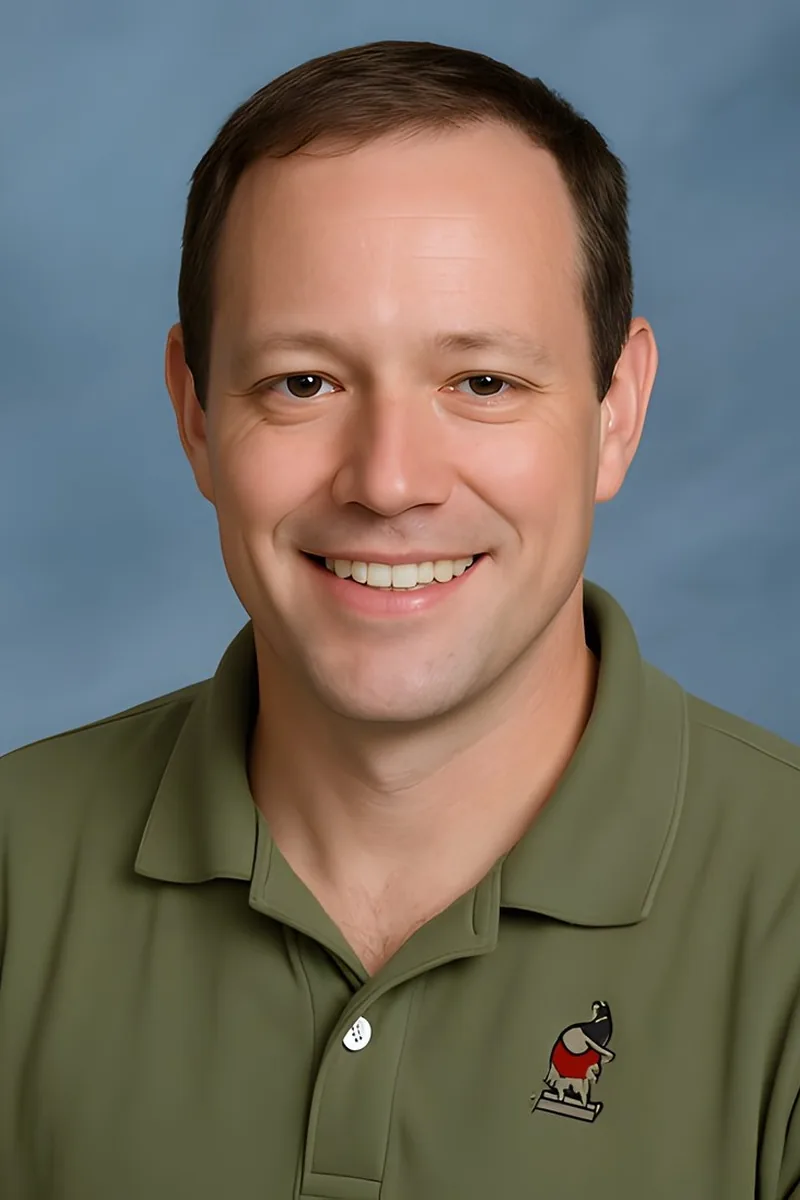
Maurice's teaching background in special education sharpens his ability to break down the layered abstractions in p-chem — when a student is lost inside a Gibbs free energy derivation, he isolates exactly which conceptual step broke down and rebuilds from there. His coursework across calculus, statistics, and chemistry gives him enough quantitative range to walk through the thermodynamic and kinetic formalisms, even if p-chem isn't his deepest specialty.
Co-teaching an organic chemistry lab at UC Berkeley and holding review sessions for general chemistry gave Yuxuan firsthand experience breaking down reaction energetics and equilibrium — concepts that p-chem revisits with far more mathematical rigor. His biochemistry training means he's already worked through the thermodynamic and kinetic frameworks underlying enzyme behavior and molecular interactions, so he can trace a derivation back to the chemistry it actually describes. Rated 4.9 by students.
Medical school at the Medical College of Wisconsin means Abrahim encounters p-chem's core concepts daily — reaction kinetics in pharmacology, thermodynamic energy balances in physiology, and the quantum mechanical principles behind spectroscopic diagnostics. His UCLA biology degree and 34 ACT demonstrate the mathematical fluency needed to work through derivations involving state functions, equilibrium constants, and entropy calculations without losing sight of what the chemistry actually describes. Rated 5.0 by students.
Nicholas studied biology with enough chemistry and physics depth to encounter the thermodynamic and kinetic frameworks that p-chem builds on — enzyme energetics, gas laws, equilibrium — before they get buried under pages of calculus. His 33 ACT reflects strong quantitative reasoning, and he leans on that cross-disciplinary perspective to clarify why a concept like enthalpy or a phase transition behaves the way it does at the molecular level, not just how to push through the derivation.
Earning a B.S. in Chemistry means Uttam has worked through the thermodynamics, kinetics, and quantum mechanics sequence firsthand — he knows exactly where a derivation like the Clausius-Clapeyron equation starts losing students and how to rebuild the logic step by step. His broad teaching range across calculus, algebra, and multiple chemistry levels keeps him sharp at bridging the math-chemistry gap that makes p-chem uniquely difficult.
Between biochemistry, organic chemistry, and physical chemistry, Samantha sits at the intersection where biology meets the math-heavy formalism of thermodynamics and kinetics — she understands both the molecular systems and the derivations that describe them. She breaks apart intimidating topics like Gibbs free energy or chemical equilibria by tying each variable back to the biological and chemical processes students already recognize from earlier coursework. Rated 5.0 by students.
I am a public school teacher (Chemistry and Living Environment) but can tutor most sciences. I truly believe in differentiated learning and once I know the learning style of a student, I tailor my teaching style for optimum time usage. I love to utilize stories from my real life experiences in labs to help students understand the implications of their science education.
Two biomedical engineering degrees mean Allyson has been doing the calculus-heavy thermodynamics and kinetics work that p-chem formalizes — modeling energy transfer in biological systems, working through rate equations for physiological processes — since undergrad. She zeroes in on the specific mathematical step where a derivation goes from followable to opaque, whether that's a tricky partial derivative in a Maxwell relation or the statistical reasoning inside a Boltzmann distribution. Rated 4.9 by students.
A physics degree gives Cory something many p-chem tutors lack — native comfort with the quantum mechanics and statistical mechanics that chemistry students often encounter for the first time in this course. He treats topics like wave functions, partition functions, and thermodynamic state variables as extensions of the physics he already thinks in, then builds the chemical context around them. Rated 4.9 by students.
Biology coursework builds a surprising amount of p-chem intuition — enzyme kinetics, membrane energetics, and metabolic thermodynamics all run on the same free energy and rate equations that dominate a physical chemistry sequence. Ade uses that biological grounding to make abstract derivations tangible, turning something like a Boltzmann distribution into a concrete picture of how molecules actually partition energy across states.
Decades as a PhD chemical engineer meant Steven was solving Clausius-Clapeyron problems, reaction kinetics models, and energy balance derivations long before they were textbook exercises — they were daily work. He breaks down p-chem's toughest material by explaining a concept one way, re-explaining it from a different angle, then grounding it in a real engineering application where the math actually matters. Rated 4.9 by students.
Pursuing a dual Ph.D./Pharm.D. at UConn with graduate work in medicinal chemistry means Xhesika encounters the thermodynamic and kinetic formalism of p-chem as daily working tools — calculating drug stability, modeling reaction pathways, predicting how molecular interactions shift with temperature and pressure. She teaches derivations like Maxwell relations and Clausius-Clapeyron by tying each variable back to the pharmacological systems where she actually uses them, so the math carries chemical weight instead of feeling like abstract symbol-pushing.
A PhD in biophysics and a master's in organic chemistry mean Amin has worked through the quantum mechanics, statistical mechanics, and thermodynamics of p-chem from both the physical and molecular sides — deriving partition functions in one course, then applying free energy calculations to real chemical systems in the next. That dual perspective lets him teach a topic like the Boltzmann distribution or a phase diagram by moving fluidly between the mathematical formalism and the chemistry it's actually describing.
A chemistry B.S. means Edward didn't just pass p-chem — he built his degree around it, working through the thermodynamic derivations, quantum mechanical models, and kinetics frameworks that the course demands at full rigor. That direct grounding in the subject lets him zero in on where a student's understanding breaks, whether it's a shaky grasp of partial derivatives in a Maxwell relation or confusion about what a wave function actually represents. Rated 5.0 by students.
Testimonials
Because the right Physical Chemistry tutor makes all the difference.
Average Session Rating – Based on 3.4M Learner Ratings
Other Mesa Tutors
Related Science Tutors in Mesa
Frequently Asked Questions
Physical Chemistry bridges chemistry and physics by studying how matter behaves at the molecular level—covering thermodynamics, kinetics, quantum mechanics, and equilibrium. It's challenging because it requires both strong math skills and the ability to visualize abstract molecular concepts, making it one of the most demanding chemistry courses. Many students struggle with connecting equations to real-world phenomena and applying mathematical models to chemical systems.
Students typically find thermodynamics (entropy, enthalpy, Gibbs free energy), quantum mechanics (wave functions, orbitals, probability), and kinetics (reaction rates, mechanisms, rate laws) most difficult. Balancing complex equations, unit conversions, and understanding why certain mathematical relationships matter in chemistry also trip up many learners. Personalized tutoring helps break these concepts into manageable pieces and connects the math to actual chemical behavior.
During your first session, a tutor will assess your current understanding of key concepts, identify specific areas where you're struggling (whether it's thermodynamics, equilibrium, or problem-solving approach), and learn about your learning style. They'll then create a personalized plan that targets your weaknesses while building on your strengths, ensuring each session focuses on what matters most for your success.
Yes. Tutors help you understand the theory behind lab experiments, interpret data correctly, and connect your results to Physical Chemistry principles. They can also guide you through lab report writing, help you troubleshoot unexpected results, and explain how experimental procedures relate to the concepts you're learning in lecture—strengthening both your practical and conceptual skills.
Physical Chemistry is math-intensive, but tutoring works whether you're confident in math or not. Tutors can review calculus, algebra, and problem-solving techniques alongside chemistry concepts, ensuring you understand both the mathematical tools and how to apply them to chemical problems. Many students find that working through equations with a tutor makes the math feel less intimidating and more connected to real chemistry.
Tutors use diagrams, molecular models, energy level drawings, and step-by-step walkthroughs to make invisible concepts visible. For example, they might sketch out how entropy changes in a system, draw orbital shapes, or map out reaction mechanisms to help you see what's happening at the molecular level. This visual approach helps bridge the gap between equations on paper and the actual chemistry happening in nature.
Tutors develop targeted exam prep strategies by reviewing past exams, identifying question patterns, and drilling problem-solving techniques under timed conditions. They help you master both conceptual understanding and calculation speed, teach you how to approach unfamiliar problems using core principles, and build confidence so you can apply what you've learned rather than just memorizing formulas.
Varsity Tutors connects you with expert tutors in Mesa who specialize in Physical Chemistry and understand the specific curriculum you're studying. Simply tell us about your goals, current challenges, and schedule preferences, and we'll match you with a tutor who fits your needs. Your first session is a chance to see if the fit works before committing to ongoing instruction.
Let’s find your perfect tutor
Answer a few quick questions. We’ll recommend the right plan and match you with a top 5% tutor.