Award-Winning Business Calculus
Tutors
Business Calculus
Tutors
Private 1-on-1 tutoring, weekly live classes for academic support, test prep & enrichment, practice tests and diagnostics, and more to elevate grades and test scores.
Based on 3.4M Learner Ratings
UniversitiesSchools & Universities
DeliveredHours Delivered
ProficiencyGrowth in Proficiency
Who needs tutoring?
No obligation. Takes ~1 minute.

I am a graduate of Cornell University's College of Arts and Sciences. I received my Bachelor of Arts in Chemistry with Distinction in 2015. Since graduation, I was a physics/chemistry teacher and soccer coach at a private school in Virginia for a year, where I led the soccer team to an undefeated season. Before teaching and coaching professionally, I was a Teaching Assistant for the Cornell Math and Physics Departments, where I taught many subjects including calculus, mechanics, electromagnetism. Throughout my time at Cornell and as a teacher, I tutored subjects ranging from the SAT to AP Physics and Algebra II, which is where my true talents lie: in small group or one-on-one settings where I can give students the full attention they deserve and tailor my approach specifically to their learning styles. This is why I am now pursuing tutoring as a part-time occupation at Varsity Tutors. I embrace teaching all math and science subjects, especially physics and calculus, at both the college and high school level and will go above and beyond to make sure all of my students succeed, according to their definition of success. In my spare time, I enjoy playing league soccer, basketball, tennis and guitar, and also like to travel and see as much of the world as I can.
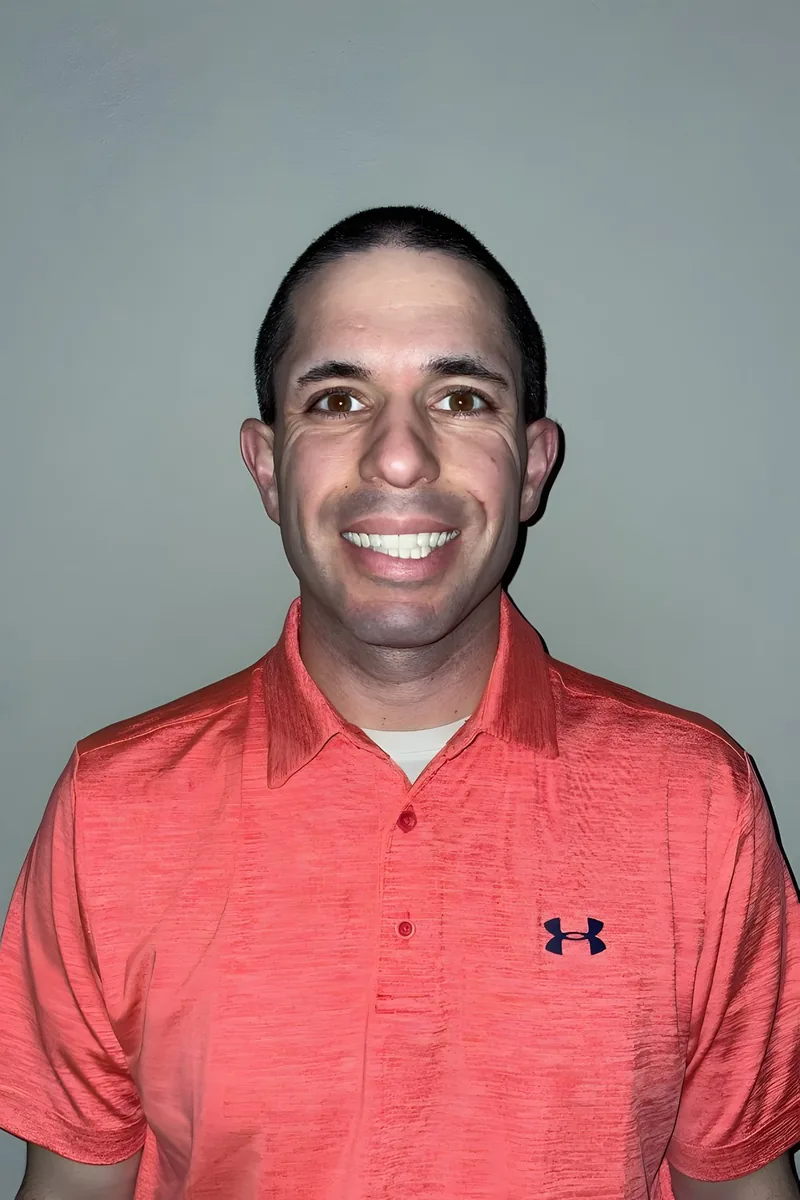
I love helping people! Whether it's learning math, writing, reading, etc. or playing sports, I really enjoy seeing other succeed via my assistance. I try to relate to students in whatever they enjoy and in doing so, apply concepts to our like interests to work through difficult subjects as well as to help foster a good, professional relationship. I have tutored several students in both math and English in the past and they have enjoyed resounding success and continue to reach out for my assistance. I look forward to working with and meeting many students and parents while helping them succeed in any way I can. When I am not tutoring, I enjoy playing sports (golf, basketball, softball, volleyball), playing with my dog, and hanging out with my wife. In addition, I am a meteorologist and oceanographer following my graduation at Penn State University with a BS in Meteorology. Finally, I am presently a student at MIT pursuing a Master's degree in Physical Oceanography.
Industrial engineering is essentially optimization under constraints — minimizing cost, maximizing throughput, allocating resources — which means Juan's UF coursework overlaps directly with the core problems business calculus students face. He teaches derivatives and integrals through the lens of real decision-making: where a cost function hits its minimum, how revenue changes at the margin, and what an integral actually tells you about total profit. Rated 4.9 by students.
Having tutored for both the economics and mathematics departments at TCU, Mason knows the exact moment business calculus students stumble — when a derivative stops being a slope and starts being marginal revenue, or when an integral becomes total cost over an interval. His economics training means he speaks both languages fluently, translating the calculus mechanics into the business intuition professors actually test on.
Drisana's applied mathematics degree means she treats every derivative and integral as a tool with a specific job — and in business calculus, that job is usually answering questions about cost, revenue, or profit at the margin. She breaks down optimization problems and exponential growth models by starting with what the business scenario is actually asking, then building the calculus around it. Rated 5.0 by students.
Mechanical engineering coursework means Yucheng spent semesters applying calculus to real systems — optimizing designs, modeling rates of change, interpreting what a derivative actually tells you about a physical or financial situation. That applied mindset translates directly to business calculus, where the challenge isn't computing a derivative but knowing what a marginal cost or revenue function means for a decision. Rated 4.9 by students.
I attended law school at Vanderbilt University and I earned an MBA and a Ph.D. in Finance (Statistics minor) from the University of Iowa. I served for over 10+ years as a finance professor, teaching assistant, and tutor at 4 Top-40 public universities, during which time I received numerous awards for exemplary teaching. I qualified for MENSA by scoring in the 99.9th percentile on standardized tests for graduate schools: LSAT, 173 (6.0+ AWA) and GMAT, 760. I use a student-centered approach and I personalize educational plans to balance student needs based on learning styles, motivations, and interests. I have experience fostering one-on-one learning in a variety of environments, including online platforms. I guide students in identifying resources to improve their ability to succeed and monitor their progress while providing ongoing feedback. I will help you thrive in your mathematics, probability/statistics, and business courses or in your preparation for standardized tests.
A PhD in Mathematics and Computer Science means Irene can trace every business calculus concept back to its roots — but more importantly, she knows when not to. She zeros in on the applied side: setting up profit functions, interpreting what a derivative actually tells a manager about changing costs, and using integration to model accumulated revenue. Rated 4.9 by students, she brings decades of teaching experience to a subject where clear, no-nonsense explanation matters most.
As a data analyst with a finance master's degree, Alexandra lives in the applied math that business calculus actually tests — she uses derivatives and optimization models daily to analyze costs, revenue trends, and financial projections. That real-world fluency means she can unpack a profit-maximization problem or an exponential growth function by tying the calculus directly to the business logic behind it, not just the mechanics of solving it.
Riley's math background spans from abstract algebra to elementary arithmetic, which means business calculus sits right in a sweet spot — rigorous enough to demand real calculus skills, applied enough to keep things grounded. Rather than rushing through formulas, Riley digs into why a particular function models a business scenario the way it does, making the leap from "take the derivative" to "find the production level that actually minimizes cost" feel intuitive.
An economics degree from Brown gives Bryan a natural advantage when teaching business calculus — he already thinks in terms of cost functions, demand curves, and optimization because those were core to his own coursework. He breaks down derivatives and integrals by anchoring each one to the economic model it serves, so a profit-maximization problem reads like a business question first and a math problem second. Rated 5.0 by students.
Chemical engineering trained Cory to treat calculus as a decision-making tool — optimizing processes, modeling rates of change, interpreting what a function's behavior actually means in practical terms. That engineering instinct translates directly to business calculus, where every derivative and integral ties back to profit margins, cost curves, or demand elasticity. Rated 4.9 by students.
I am a firm believer of this and, as such, I do not spoon feed students during sessions but rather guide them to figure out how to answer their own questions and solve their own problems. Thus, I focus not only on what to do, but how and why to do it. One of the most significant drivers of independent learning is curiosity, and this is one of the primary traits I aim to cultivate in students.
Most business calculus students don't struggle with the mechanics of differentiation — they struggle with translating a word problem about profit margins or demand curves into the right equation to solve. Professor Florence's applied math degree from UCLA and PhD-level engineering work mean she's spent years moving between abstract formulas and real-world modeling, which is exactly the skill business calc demands. She teaches students to read an optimization problem the way a business analyst would, then execute the calculus cleanly.
Mechanical engineering at Carnegie Mellon meant Ryan spent four years applying calculus to real systems — cost modeling, optimization under constraints, rate-of-change problems with physical and financial stakes. That engineering instinct for asking "what does this derivative actually tell us?" translates directly to business calculus topics like profit maximization and marginal analysis. Rated 4.8 by students.
Having studied both economics and computer science at Caltech, Brian thinks about calculus the way business students need to — as a tool for modeling decisions, not as an exercise in proofs. He teaches derivatives through the lens of marginal analysis and optimization problems pulled from actual econ coursework, so concepts like cost minimization and revenue maximization click on the first pass.
Most business calculus students don't struggle with the mechanics of taking a derivative — they struggle with translating a word problem about profit margins or demand curves into the right setup. Alex's applied mathematics training at Stanford means he can bridge that gap, turning vague business scenarios into clean functions students know how to optimize. Rated 4.8 by students.
I love helping students in topics related to math, to finance (public and private equity) and to engineering. I believe that if I can't explain concept, then I don't understand it. By that same token, if a student can't explain a concept back to me, then they don't understand it even if they say they do. I believe in getting to know all students, as their background is intricately connected with how they learn.
Three engineering degrees — including one in applied mathematics — mean Rahi has worked through calculus from every angle, pure and applied. For business calculus students, he zeroes in on translating derivative and integral mechanics into the language of profit maximization, cost analysis, and demand elasticity, bridging the gap between the math they're learning and the business decisions it models.
Where most business calculus students stumble isn't the differentiation itself — it's translating a word problem about profit margins or demand curves into the right function to differentiate. Jhonatan's biology and neuroscience training gave him years of practice applying calculus to real systems, from modeling population growth to analyzing rates of change in physiological data. That applied mindset, rated 5.0 by students, carries directly into breaking down optimization and marginal analysis problems.
During my Bachelor's studies at the University of Michigan-Dearborn, I was a mathematics and statistics tutor for a year, which I greatly enjoyed. I am currently a fourth-year Ph.D. student studying mathematics at the University of Florida. During my Ph.D. at the University of Florida, I was a teaching assistant for Calculus I, Calculus II, and Precalculus, and I was an instructor for a section of Calculus I. These experiences helped me develop my tutoring skills. Many students see math as a set of formulas that they can apply to the problems on their exams and homework. However, I feel that this way of thinking not only stifles true understanding, but also makes students' lives harder. My teaching philosophy is that if a strong conceptual understanding is built, then students will be well-equipped to answer any question that they can be asked. When I tutor, I make sure that students develop this foundation first and foremost.
Most business calculus students aren't struggling with the mechanics of taking a derivative — they're struggling to connect that derivative to what's actually happening with cost, revenue, or demand. David's background spanning computer science, history, and graduate work at Columbia and Chicago trained him to translate between abstract frameworks and applied contexts, which is exactly the skill business calc requires. Rated 4.9 by students.
Pryce studied both economics and math at the University of Pennsylvania, which means he's spent years working with the exact functions business calculus revolves around — cost curves, demand equations, optimization models. When a problem asks what happens to profit at the margin or how to minimize average cost, he can walk through both the calculus mechanics and the economic reasoning behind the answer. Rated 5.0 by students.
Scoring in the 99th percentile on the GMAT quantitative section while working as a cross-border business consultant gave Jing a dual fluency that's hard to find — she handles the calculus and understands the business scenarios it's being applied to. She breaks down optimization and marginal analysis problems by grounding them in real decisions companies face around cost, pricing, and growth. Rated 5.0 by students.
Dana's statistics degree and economics research background mean she teaches business calculus the way it actually gets used — setting up cost and revenue functions from word problems, then interpreting what the derivative or integral tells you about a real decision. That translation step from scenario to math is where most business students get stuck, and it's where her econ training makes the biggest difference. Rated 4.8 by students.
A physics degree builds an unusual skill for business calculus: the habit of translating real scenarios into functions and then interpreting what the math actually says. Cory applies that same thinking to cost curves, profit maximization, and demand elasticity — walking students through how to set up the problem from a word-heavy prompt, not just how to differentiate once the equation is already written. Rated 4.9 by students.
Finance majors often breeze through the business concepts in business calculus but hit a wall when they actually have to differentiate and integrate cost or revenue functions. Jonathan's finance degree means he speaks the business language fluently, so he spends his time on the calculus mechanics — setting up optimization problems, applying the chain rule to compound-interest models, and interpreting what a derivative actually tells you about profit at a given output level.
Engineering graduate work is essentially applied calculus — Ellyn spent years using derivatives and integrals to model real systems, optimize designs, and interpret physical data, which maps directly onto the cost, revenue, and marginal analysis problems in a business calculus course. Her PhD in mechanical engineering means she can unpack why an optimization technique works and show students how to set up the problem from scratch, not just mimic a textbook example. Rated 5.0 by students.
Tyler is finishing dual degrees in engineering and finance, which means he lives at the intersection of calculus and business decision-making every day. He breaks down optimization and marginal analysis problems by tying the math directly to the finance concepts students are learning in their other courses — so a derivative isn't just a slope, it's a tool for evaluating cost and revenue tradeoffs. Rated 5.0 by students.
Daniel's dual accounting and finance coursework at UNF means he's already used calculus to solve the exact problems business students encounter — building cost functions from accounting data, then differentiating to find where marginal cost meets marginal revenue. That fluency in both the math and the business language behind it lets him explain not just how to take a derivative, but what the answer actually means on an income statement. Rated 4.9 by students.
I am a graduate student at University of Windsor. I received my Bachelor of Engineering (BENG) in Mechanical Engineering. I have experience in tutoring Mathematics, Physics and Chemistry for over a decade. I use very simple methodologies and real life illustration in teaching physical principles. With my lessons, topics like calculus, functions, trigonometry, algebra, and other maths topics will no longer be a challenge. As a tutor with 10 years of experience, my style of teaching is apt for all categories of students including slow learners. Students who have challenges in Mathematics, Physics and Chemistry should worry no more. With my many years of experience in teaching maths, I have formulated very easy steps for students in understanding all topics in mathematics from the basics to the complex aspects. In my spare time, I enjoy reading books which enriches my life, playing table table tennis and swimming.
A PhD in applied mathematics means Samuel doesn't just know how to differentiate a profit function — he understands the modeling assumptions underneath it, which is exactly what trips up business calculus students when they're asked to interpret results rather than just compute them. He breaks down optimization and marginal analysis by starting with what the function actually represents in a business scenario, then building the calculus around that meaning. Rated 5.0 by students.
Thomas studied mathematics and statistics while grading college math assignments for several years, which means he's seen exactly where business calculus students tend to stumble — usually at the point where a derivative stops being a formula and needs to become a decision about cost, revenue, or growth. His upcoming economics master's program reinforces the applied lens he brings to topics like optimization and rate-of-change problems in financial contexts. Rated 4.9 by students.
I am qualified to tutor many subjects, my favorite subject by far is math, specifically calculus. Math is a subject almost universally hated, and I believe that is mainly due to the narrow way in which it is taught. I have ADHD, and I often don't understand things the first time they are explained to me, meaning over the years I have had to figure out different ways of looking at information. Oftentimes, all a student needs is for something to be explained in a different way, and I love watching people finally understand a concept. Everyone learns differently, but everyone can learn.
An economics degree gives Arthur a real advantage in business calculus — he already thinks in terms of cost functions, marginal analysis, and optimization because those are the frameworks economists use daily. When a problem asks students to find the production level that maximizes profit or interpret what a derivative means for revenue, he connects the calculus to economic reasoning rather than treating it as a purely mechanical exercise. He scored a 36 on the ACT.
Studying finance and accounting at NYU Stern while simultaneously taking rigorous quantitative coursework gives Sean a daily, practical connection to the exact problems business calculus covers — he's actively using derivatives to analyze cost behavior and optimization in his own finance classes. That real-time fluency means he can walk through marginal revenue, profit maximization, and rate-of-change problems with the business vocabulary already baked in. Rated 5.0 by students.
Computational biology graduate work means Levi spends his days building mathematical models from real data — the same skill business calculus demands when students need to set up a cost function or interpret what a derivative says about profit. His biology-to-data-science path gives him a knack for translating messy word problems into clean calculus steps, which is usually the part that trips business majors up. Rated 4.9 by students.
Akio's computer engineering training at Purdue leaned heavily on calculus for modeling systems — the same skills that show up in business calculus when students need to find where a cost function bottoms out or how revenue shifts at different production levels. As a teaching assistant across multiple STEM courses, he got practiced at spotting exactly where someone's setup goes wrong and walking them through the fix. Rated 4.8 by students.
When I was in high school, I remember seeing the joy of my math teachers when they would teach in class. This inspired me to become a high school math teacher. The first step was becoming a peer tutor to my classmates. This lead to tutoring math to college students. Then tutoring students while working as a TA. Then I worked as a data scientist which not only did I understand more how to apply math in the workspace, but also learned how to explain math concepts to coworkers without a strong math background. This helped me to shape my tutoring philosophy to relate to the person being tutored and this opened the door to me teaching high school calculus 1 & calculus 2! I am currently teaching precalculus at a community college.
Most business calculus students don't struggle with the math itself — they struggle with translating word problems about cost, revenue, and profit into the right derivative or integral setup. Rosemarie's IT background gives her a systematic, step-by-step approach to breaking down applied problems, teaching students to identify what a function represents before jumping into computation. Rated 4.9 by students.
Testimonials
Because the right Business Calculus tutor makes all the difference.
Average Session Rating – Based on 3.4M Learner Ratings
Top 20 Business Subjects


Top 20 Subjects
Frequently Asked Questions
Students often find derivatives and their business applications most challenging—particularly understanding why the derivative represents marginal cost, revenue, or profit, and how to interpret that meaning in context. Related rates problems and optimization (finding maximum profit or minimum cost) also trip up many students because they require translating real business scenarios into mathematical equations. Additionally, understanding when to use derivatives versus integrals, and applying the second derivative test to determine whether a critical point is a maximum or minimum, tends to require more conceptual work than students expect.
A skilled tutor breaks down the translation process: identifying what quantity is changing (the variable), what rate of change matters (the derivative), and what the business context is asking for. For example, in a problem about maximizing profit, the tutor helps students recognize that they need to find where the derivative equals zero, then verify it's a maximum using the second derivative or context clues. Tutors also teach students to sketch quick diagrams or set up a clear variable list before jumping into calculations, which prevents the common mistake of setting up the wrong equation entirely.
Business Calculus requires moving beyond "plug and churn" to actually understand what derivatives and integrals represent in a business context. A student might correctly compute a derivative using the power rule but have no idea what that number means for a company's production decisions. Tutors help bridge this gap by consistently connecting the math to the story: "This derivative tells us the marginal cost—how much an additional unit will cost to produce." Without that conceptual layer, students can't set up problems independently or recognize when an answer doesn't make business sense.
Business Calculus uses notation like C(x) for cost function, R(x) for revenue, and dC/dx for marginal cost—which can feel overwhelming alongside traditional calculus symbols. Students sometimes confuse whether they're looking at a function value (the total cost) or a rate of change (the marginal cost per unit). Tutors clarify these distinctions by consistently using the notation in context and having students practice translating between words, symbols, and graphs. This repetition builds automaticity so students can focus on the problem-solving strategy rather than decoding notation.
In Business Calculus, showing work means documenting not just the algebraic steps, but also the reasoning: identifying the function you're working with, stating what you're solving for, and interpreting your final answer in business terms. For instance, if you find that a derivative equals zero at x = 50, you should write "This means marginal cost is zero when 50 units are produced" rather than just stating the number. Tutors emphasize this because professors want to see that you understand the business meaning, not just that you can execute calculus mechanics. It also helps you catch errors—if your answer doesn't make sense in context, you know to reconsider.
Graphing transforms abstract calculus into visual intuition. When you sketch a cost or profit function, you can literally see where the function is increasing (positive derivative) or decreasing (negative derivative), and where it reaches a peak or valley. For optimization problems, a graph shows why the maximum profit occurs where marginal revenue equals marginal cost—you can see the intersection point. Tutors use graphing as a checking tool: if your algebra says profit is maximized at a negative number of units, the graph immediately reveals the error. This visual-algebraic connection helps students move from memorizing procedures to truly understanding when and why to apply calculus techniques.
Beyond solid calculus skills, an effective Business Calculus tutor should understand business concepts like profit, cost, revenue, and elasticity so they can explain why the math matters. They should be comfortable translating between real-world scenarios and mathematical notation, and skilled at recognizing where a student's confusion lies—is it the calculus itself, the business interpretation, or the algebra underneath? The best tutors also know common textbook approaches (Stewart, Larson, etc.) and can adapt their explanations to match how your course presents the material, whether it emphasizes applications, theory, or a balance of both.
Math anxiety in Business Calculus often stems from feeling like you should already understand derivatives and integrals from precalculus, combined with pressure to apply them immediately to unfamiliar business problems. A tutor breaks this into manageable pieces: reviewing prerequisite skills without judgment, explaining each new concept thoroughly before moving to applications, and celebrating small wins (like correctly setting up an optimization problem). By working through problems at your pace and having a safe space to ask "why" repeatedly, you build confidence that you can actually understand this material—not just memorize it. Many students find that once they grasp the core idea of a derivative as a rate of change, the rest clicks into place.
Let’s find your perfect tutor
Answer a few quick questions. We’ll recommend the right plan and match you with a top 5% tutor.