Award-Winning Spelling Bee
Tutors
Spelling Bee
Tutors
Private 1-on-1 tutoring, weekly live classes for academic support, test prep & enrichment, practice tests and diagnostics, and more to elevate grades and test scores.
Based on 3.4M Learner Ratings
UniversitiesSchools & Universities
DeliveredHours Delivered
ProficiencyGrowth in Proficiency
Who needs tutoring?
No obligation. Takes ~1 minute.

Competition-level spelling rewards the same pattern recognition Brian honed studying computer science at Caltech — identifying Latin and Greek roots, language-of-origin rules, and phonetic structures that make unfamiliar words predictable. He teaches systematic strategies for breaking words into components rather than relying on brute-force memorization.
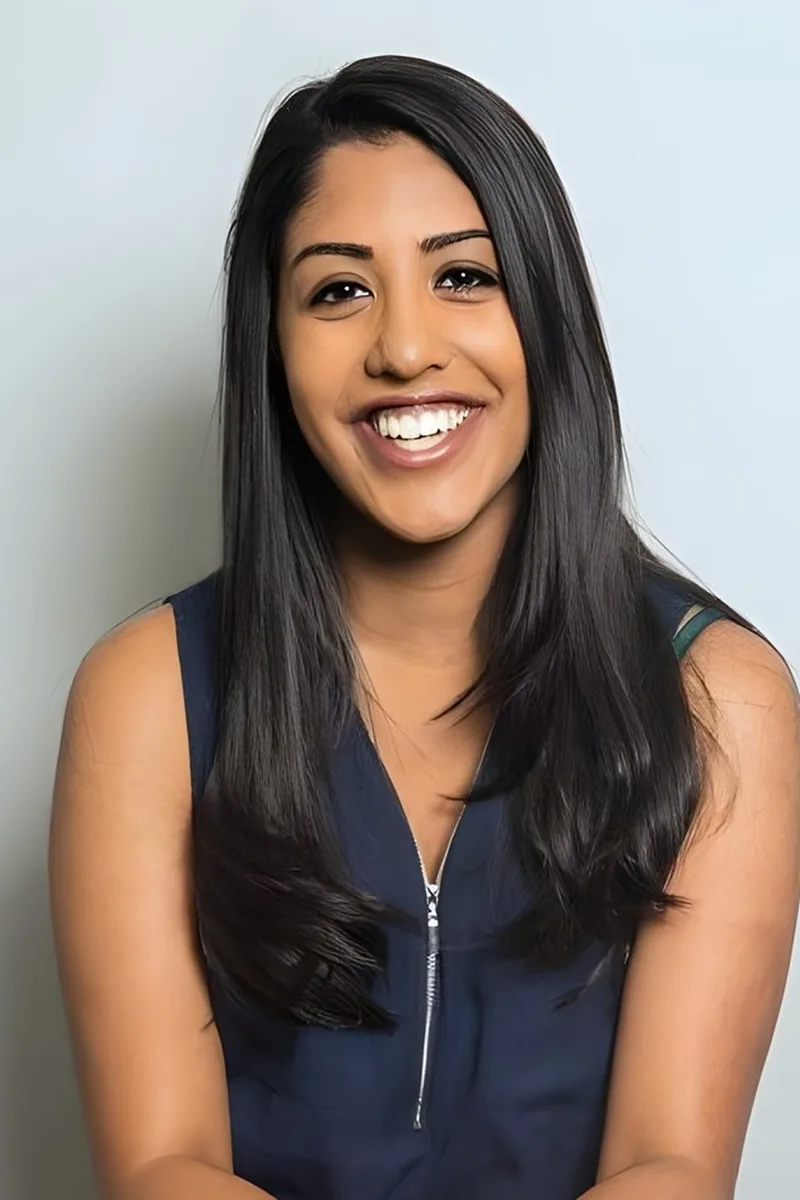
Growing up at a selective magnet school in New Jersey and scoring a 1590 SAT, Anna developed the kind of precise, detail-obsessed relationship with language that competition spellers thrive on — catching the difference between "-ance" and "-ence" or knowing when a word's Latin medical root dictates an unexpected double consonant. Her medical education means she encounters Greek and Latin terminology daily, giving her a natural reservoir of the high-difficulty vocabulary that appears in advanced rounds. Rated 5.0 by students.
Spelling bees reward the same kind of pattern recognition that Vivian uses daily as a musician: once you internalize the rules — Latin roots, Greek combining forms, French-derived silent letters — unfamiliar words become puzzles you can solve logically. She drills etymology and language-of-origin cues alongside word lists so students can reason through words they've never seen before.
Michelle's background in journalism and literary analysis means she's spent years immersed in language — etymology, word roots, and the patterns that connect Latin and Greek prefixes to modern English. She teaches spellers to decode unfamiliar words by identifying structural clues rather than relying on rote memorization alone.
I'm a current PhD student in the history department at Georgetown University who is also an experienced instructor with Varsity Tutors. As a recipient of several degrees, the most recent being a BA in history from Hillsdale College and a MA in Russian, East European, and Eurasian Studies from Stanford University, I have long sought to make teaching my profession. Meanwhile, as a volunteer grade school teacher and a tutor with this company, I have many years' experience helping students reach their full potential. I am capable of teaching students in many subjects, including reading, mathematics, test prep, Latin, and especially writing, history, and literature. In practice, I am comfortable adapting to different learning styles and specific student preferences. Outside of my academic and career endeavors, I enjoy cooking, reading, and listening to and making music.
Spelling bees reward more than memorization; they reward pattern recognition — knowing Latin roots, Greek prefixes, and the language of origin behind tricky vowel combinations. Andrew builds systematic study methods that turn an overwhelming word list into manageable families of related terms. His structured, detail-oriented approach (honed through a 3.88 GPA at Cornell) translates naturally to competition prep.
Graduating from Thomas Jefferson High School for Science and Technology — one of the most academically competitive environments in the country — Rhamy spent years surrounded by peers drilling technical vocabulary drawn from engineering, physics, and computer science, building the kind of precise spelling instincts that come from daily immersion in complex terminology. His Arabic language background adds another layer, since many English words trace back to Arabic roots (think "algorithm," "algebra," "cipher"), giving him a decoding angle most spelling coaches can't offer. Rated 5.0 by students.
A neuroscience and chemistry background means Saniya has spent years absorbing Latin and Greek roots — the same roots that unlock thousands of English words in competition-level spelling. She teaches spellers to decode unfamiliar words by identifying etymology, language of origin, and morphological patterns rather than relying on rote memorization alone.
Spelling bees reward more than rote memorization; top competitors learn Latin and Greek roots, language-of-origin patterns, and phonetic rules that make unfamiliar words decodable. Peter's journalism and English training gave him a deep familiarity with etymology and word structure, which he uses to teach spellers systematic strategies for tackling words they've never seen before.
Three science degrees and a neuroscience specialization mean Rithi has spent years memorizing and correctly spelling terms like "acetylcholinesterase," "oligodendrocyte," and "proprioception" — words built from the same Greek and Latin roots that dominate advanced spelling bee rounds. She teaches competitors to break intimidating words into predictable morphological chunks, using the prefix-root-suffix logic that scientific naming conventions follow religiously. Her 4.9 rating speaks to how well that structured, analytical approach clicks with students.
I am most passionate about biology and chemistry. I am a firm proponent of education, believing it to be absolutely necessary for an improved quality of life, and I try to impart this appreciation to all of my students.
Biology students encounter words like "phosphorylation," "glycolysis," and "homeostasis" daily — and Victoria's pre-med coursework at Dartmouth means she can trace those Greek and Latin roots back to the spelling rules that govern them. She uses scientific vocabulary as a training ground for competition spellers, teaching them to decompose intimidating words into predictable morphemes they can reassemble under pressure. Rated 5.0 by students.
Olivia's fluency in French and Spanish gives her an unusual edge for spelling bees — she can trace English words back to their Latin, French, or Germanic roots, turning unfamiliar words into logical puzzles. She teaches spellers to recognize common prefixes, suffixes, and language-of-origin patterns so they can decode words they've never seen before.
I'm a student at Brown University with an eclectic set of interests. I am trilingual, analytical, and creative and look forward to tutoring you! :)
A background in English and psychology turns out to be surprisingly useful for spelling bees — Kahini teaches competitors to recognize Latin and Greek roots, language-of-origin patterns, and morphological clues that make unfamiliar words decodable. She builds systematic strategies for retention so students aren't relying on rote memorization alone.
Spelling bees reward more than rote memorization — they reward pattern recognition, etymology, and an ear for how language families shape English words. Annelisa's study of French gives her a practical handle on Latin and Romance-language roots, which account for a huge chunk of competition-level words. She teaches spellers to decode unfamiliar words by breaking them into prefix, root, and suffix rather than relying on pure recall.
Spelling bees reward more than rote memorization — students who understand Latin and Greek roots, common prefixes, and language-of-origin patterns can reason through unfamiliar words instead of relying solely on memory. Amy's science vocabulary from her biochemistry studies at Notre Dame gives her deep familiarity with these root systems, and she uses them to build a student's ability to decode words they've never seen before.
Spelling bees reward more than rote memorization — they reward understanding roots, prefixes, and language origins. Anniessa's fluency in French and her study of Arabic and Spanish give her an unusual advantage in breaking down English words by their etymological building blocks, making unfamiliar words feel predictable.
Spelling bees reward more than memorization — they reward pattern recognition, and that's where Evan's analytical mindset shines. He teaches students to break unfamiliar words into Latin and Greek roots, identify language-of-origin spelling conventions, and build systematic practice routines that make retention stick over months of preparation.
Giovanna's linguistics background and fluency in three languages — English, Spanish, and French — give her an unusual advantage for spelling bee prep. She teaches students to identify Latin, Greek, and Romance-language roots, recognize common morphological patterns, and use etymology as a decoding strategy when a word looks completely unfamiliar.
Alison's Master's in Curriculum and Instruction means she knows how to sequence a massive word list into a structured study plan — grouping by phonetic rule, then root family, then difficulty tier — so competitors build real retention instead of surface-level cramming. Her English composition background and years teaching phonics and reading give her a working knowledge of how letter patterns behave across Anglo-Saxon, Latin, and French-origin words, which is exactly what spellers need when a pronouncer's language-of-origin cue has to translate into correct letters in real time.
A linguistics background is a secret weapon for spelling bees. Mollie's University of Chicago training in morphology and etymology means she can teach spellers to decode unfamiliar words by recognizing Greek and Latin roots, language-of-origin patterns, and prefix-suffix relationships instead of relying on brute-force memorization.
Abigail's pre-health biology coursework loads her daily reading with the same Greek and Latin medical terminology that dominates upper-level competition word lists — terms like "hemorrhage," "obstetric," and "gynecological" that follow predictable root-and-suffix construction rules. She also coaches young women through the Distinguished Young Women interview program, which sharpened her ability to break complex preparation into calm, repeatable routines — a skill that translates directly to stage composure during oral spelling rounds.
A licensed English teacher with a literature degree from Vanderbilt, Karen has the kind of deep, daily relationship with words that competition spellers benefit from — she reads voraciously, writes constantly, and notices spelling patterns most people gloss over. She drills students on visual memory techniques and syllable segmentation, turning long study lists into manageable chunks organized by word families and phonetic logic.
Madhura's chemistry background means she's spent years decoding words built from Greek and Latin scientific roots — prefixes like "hyper-" and "hypo-," suffixes like "-ase" and "-ose" — which are exactly the building blocks that trip up competitors in advanced rounds. She teaches spellers to treat unfamiliar words as chemical formulas of sorts, breaking them into predictable root components that reveal the correct letter sequence. Her 4.7 rating speaks to an approach that makes even intimidating vocabulary feel systematic.
Spelling bees reward a very particular kind of preparation: learning roots, prefixes, and language-of-origin patterns so that unfamiliar words become decodable puzzles. Madison's background in ESL and phonics instruction means she already thinks about English spelling as a system with learnable rules — Latin roots behave differently from Greek ones, and French-derived words follow their own logic. She builds study routines around etymology and word families rather than brute-force memorization.
Studying both mathematics and German alongside her psychology major gives Hailey an unusual double advantage for spelling prep — she thinks in systematic patterns and has daily exposure to a language whose compound-word construction and consistent phonetic rules map directly onto many English borrowings. She teaches competitors to recognize Germanic letter sequences (think "sch," "ei" vs. "ie," silent initial "k") that trip up spellers who've only studied Latin and Greek roots. Rated 5.0 by students.
Spelling bees reward more than rote memorization; competitors who understand Latin and Greek roots, common prefixes, and language-of-origin patterns can reason through unfamiliar words on stage. Varun's background in media studies and literature exposed him to a wide vocabulary across registers, and he teaches students to decode spelling through etymology and phonetic rules rather than brute-force flashcard drilling.
Microbiology coursework gave Felix years of practice with words most people never encounter — genera names, enzyme terminology, and Greek- and Latin-rooted vocabulary that follows the same construction rules competition spellers need to master. He teaches competitors to treat unfamiliar words as assemblies of recognizable parts, using prefix, suffix, and root-family logic to spell confidently under pressure. Rated 5.0 by students.
Erica's graduate literature work and psychology training mean she's spent years absorbing vocabulary from two fields with wildly different etymological traditions — Latinate clinical terminology on one side, French and German literary criticism on the other. She uses that cross-disciplinary word exposure to teach competitors how suffixes and root patterns shift depending on a word's academic origin, turning language-of-origin cues into reliable spelling strategies under pressure.
Spelling bees reward more than memorization; they reward pattern recognition — understanding Latin and Greek roots, common prefixes, and language-of-origin rules that make unfamiliar words decodable. Janki's science vocabulary is built almost entirely on those same roots, and she uses that knowledge to teach spellers systematic strategies for breaking down words they've never seen before.
Medical terminology gave Robin a deep familiarity with Greek and Latin roots — the same building blocks that unlock spelling patterns in competition-level words. She breaks words into prefixes, roots, and suffixes so students can decode unfamiliar terms on the spot rather than relying on rote memorization of word lists.
Spelling bees reward a specific kind of pattern recognition — knowing Latin roots, Greek prefixes, and the quirks of English borrowings from French, German, and beyond. Mia's Religious Studies coursework at Yale has her reading texts rooted in Hebrew, Latin, and Greek etymology daily, which gives her a practical sense of how word origins predict spelling. She teaches competitors to decode unfamiliar words by breaking them into recognizable parts rather than relying on rote memorization.
Alex's background in Spanish and ESL tutoring gave him a deep familiarity with word roots, Latin and Greek prefixes, and the etymological patterns that power competitive spelling. He teaches spellers to break unfamiliar words into recognizable components — turning a daunting word list into a system of logical connections rather than brute memorization.
Teaching Spanish in Baltimore City public schools means Michael lives inside language-of-origin questions every day — tracing English words back through Latin, French, and Spanish roots is second nature when you teach a Romance language for a living. That cross-linguistic instinct is exactly what gives competition spellers an edge on words derived from Spanish and French, which make up a significant chunk of upper-level word lists. He drills students on cognate patterns and sound-to-spelling rules that carry across languages, turning his multilingual background into a practical decoding tool.
Spelling bees reward more than memorization — competitors need to recognize Latin and Greek roots, understand language-of-origin patterns, and decode unfamiliar words on the spot. Subashini's chemistry background means she's already fluent in etymology-heavy scientific vocabulary, and she teaches spellers systematic strategies for breaking down words they've never seen before.
Spelling bees reward more than memorization — they reward understanding how words are built from Latin, Greek, and Anglo-Saxon roots. Victoria's anthropology studies at Carleton College give her a natural feel for etymology and linguistic patterns, which she uses to teach spellers how to decode unfamiliar words by breaking them into recognizable parts. Rated 5.0 by students.
Elise's special education training taught her something most spelling coaches overlook — that different learners encode words through different channels, whether visual, auditory, or kinesthetic. She builds individualized drill routines that match how each competitor actually retains letter sequences, using phonics breakdowns for some spellers and whole-word visualization for others. Rated 5.0 by students.
Mubariz's chemistry studies at WashU mean he's constantly spelling out compounds, reagents, and nomenclature rooted in Greek and Latin — the same etymological layer that produces the trickiest words in competition rounds. His debate background at Pembroke Hill also trained him to think on his feet under pressure, a skill he now applies to coaching spellers through the nerve-wracking process of working through an unfamiliar word at the microphone. His 34 ACT reflects the kind of precise, detail-driven reading that catches a misplaced vowel before it becomes a mistake.
An English degree builds an unusual advantage for spelling: understanding Latin and Greek roots, recognizing how etymology shapes letter patterns, and spotting the logic hiding inside words that seem impossible. Jamie teaches spellers to decode unfamiliar words by breaking them into morphemes — prefixes, roots, suffixes — turning memorization into a system.
Testimonials
Because the right Spelling Bee tutor makes all the difference.
Average Session Rating – Based on 3.4M Learner Ratings
Top 20 English Subjects


Top 20 Subjects
Frequently Asked Questions
Success in spelling bees requires more than memorizing word lists. You'll need strong phonetic awareness to break down unfamiliar words into their component sounds, knowledge of common spelling patterns and word roots (especially Latin and Greek prefixes/suffixes), and the ability to think strategically under pressure. Understanding word etymology—where words come from and how that shapes their spelling—helps you recognize patterns across hundreds of words rather than memorizing each one in isolation.
Personalized spelling bee tutoring focuses on your specific weak areas rather than generic word lists. A tutor can help you develop systematic strategies for tackling unfamiliar words, teach you to identify and master common letter patterns and etymological roots, and provide targeted practice with words at your competition level. You'll also get feedback on your pronunciation, build confidence in high-pressure situations, and create a study plan that builds momentum toward competition day.
Effective spelling bee preparation uses spaced repetition rather than cramming—revisiting words over time strengthens retention far better than last-minute studying. Group words by their etymology, letter patterns, or difficulty level rather than studying them randomly. Active recall practice (spelling words aloud without looking at them) is more effective than passive reading. A tutor can help you organize words into meaningful categories, create personalized practice routines, and identify which words deserve extra attention based on your performance.
Part of spelling bee success is developing problem-solving strategies for unfamiliar words. Ask for the word's definition, language of origin, and use it in a sentence—these clues often reveal spelling patterns. Break the word into syllables and consider common letter combinations. Think about similar words you know and whether they share spelling patterns. A spelling bee tutor can teach you how to ask strategic questions, think through word structure systematically, and manage anxiety when facing an unknown word, turning uncertainty into an opportunity to reason through the spelling.
The best spelling bee tutors combine deep knowledge of etymology, phonetics, and word patterns with the ability to teach you how to think strategically about unfamiliar words. They understand competition formats and pressure situations, and they can diagnose exactly where you're struggling—whether it's with certain letter patterns, particular word origins, or test-day confidence. They tailor their approach to your learning style and create customized study plans rather than relying solely on pre-made word lists.
Absolutely. Many successful spelling bee competitors are English language learners who leverage their awareness of language structure and patterns. Your linguistic background may actually give you an advantage in recognizing word origins and patterns. A tutor can help you build confidence with English phonetics, navigate unfamiliar words through systematic analysis, and develop strategies that work specifically for how you learn best. The key is focusing on understanding patterns and etymology rather than trying to memorize every word in isolation.
Preparation timeline depends on your competition level and starting point. Local or school-level bees might require 4-8 weeks of focused practice, while regional or national competitions typically benefit from 3-6 months of systematic preparation. However, the quality of your preparation matters much more than the raw amount of time—working with a tutor to build strong foundational strategies and target your specific gaps is far more effective than months of unfocused studying. A tutor can help you create a realistic timeline based on your current skill level and competition goals.
Let’s find your perfect tutor
Answer a few quick questions. We’ll recommend the right plan and match you with a top 5% tutor.