Award-Winning College Physics Tutors
serving Baltimore, MD
College Physics
Tutors in Baltimore
Private 1-on-1 tutoring, weekly live classes for academic support, test prep & enrichment, practice tests and diagnostics, and more to elevate grades and test scores.
Based on 3.4M Learner Ratings
UniversitiesSchools & Universities
DeliveredHours Delivered
ProficiencyGrowth in Proficiency
Who needs tutoring?
No obligation. Takes ~1 minute.
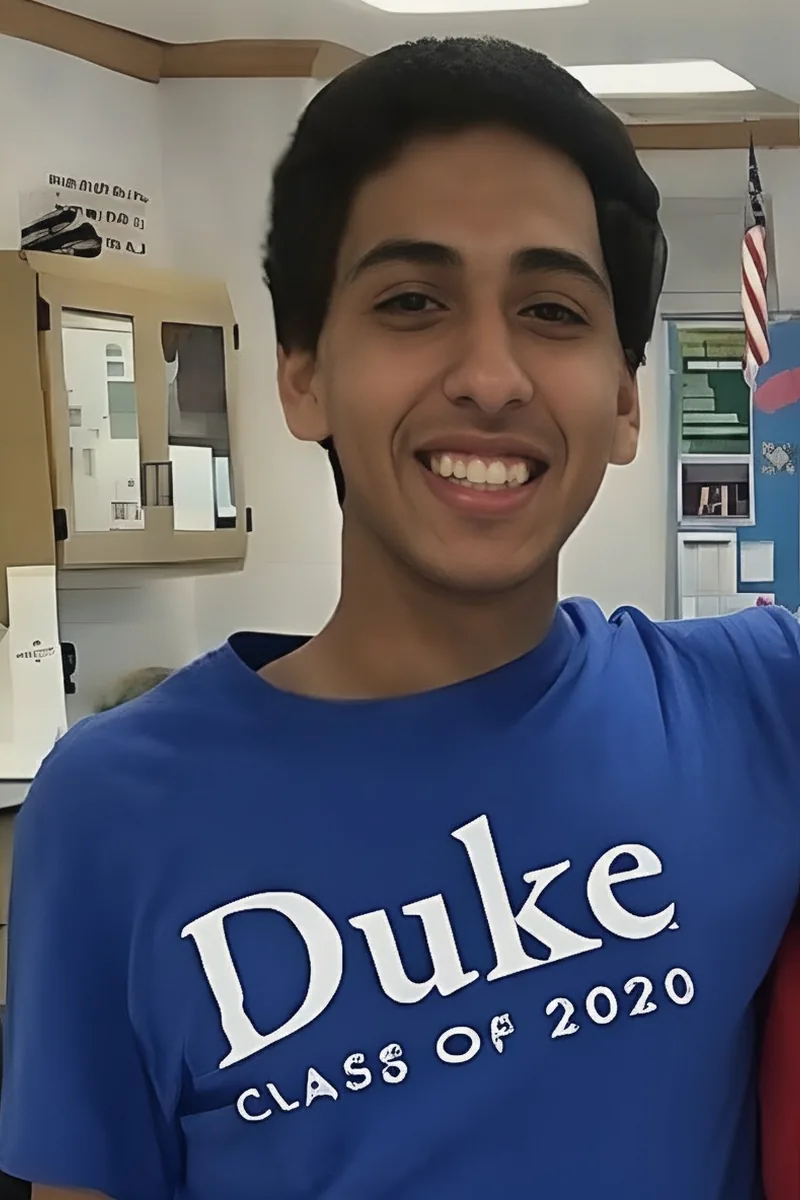
A physics degree means Nima didn't just pass college physics — he built his entire undergraduate education on top of it, from classical mechanics through electromagnetism and modern physics. He breaks down multi-step problems by teaching students to identify the governing principle first, then translate it into math, which is where a 1580 SAT and deep comfort with calculus-based reasoning pay off.
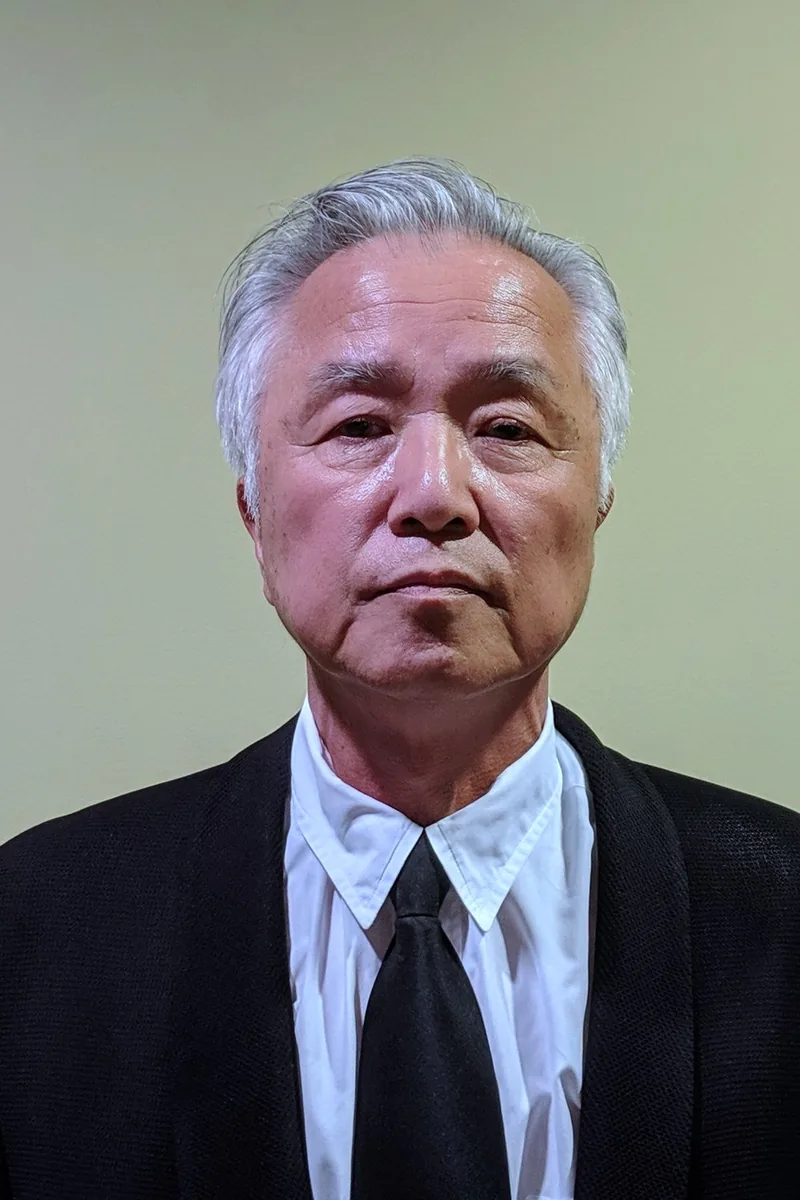
I love to teach. I love young minds and fresh brains. Those are just like clean sheets of papers I can draw anything I like. I really like to help young people to achieve their full capacities with my long experience of teaching. I am very patient and good at explaining complex concepts in simple terms. I am looking forward to meeting students who need my help.
I have spent 20 years teaching students across Singapore and North America, supporting learners in English, math, science, geography, and philosophy. I enjoy helping students who are not native English speakers understand complex concepts and terminology. I hold a BA in Criminology from Simon Fraser University, an MBA in healthcare management, and I am currently pursuing a PhD in Health Sciences at Liberty University. I also bring over 10 years of experience as a nonclinical investigator and work as a fraud analyst in the healthcare industry. My diverse background strengthens my communication, critical thinking, and problemsolving skills, all of which influence my teaching. Outside of work, I enjoy the outdoors, spending time with my family, and caring for my Bernese Mountain Dog. I am committed to helping students grow in confidence and reach their academic goals.
Hi! My name is Matt Hlavin. I am currently working on my Master's degree in Materials Science and Engineering. I would consider myself a lifelong learner. Education has always had a special place in my heart, and now I am excited to share my love for learning with you!
Three physics-related bachelor's degrees give Avram an unusually deep undergraduate perspective on the subject — he's worked through mechanics, electromagnetism, and modern physics multiple times across different programs, which means he knows exactly where the conceptual gaps tend to hide. He breaks down wave phenomena and optics problems by connecting the math back to physical intuition, so equations feel like descriptions of real behavior rather than symbols to manipulate. His 1520 SAT reflects the quantitative precision he brings to problem solving.
Engineering physics at Cornell means Daniel is taking the most mathematically demanding version of every physics course — mechanics, E&M, waves, thermo — and building the intuition to move fluidly between physical reasoning and formal derivation. He's particularly strong at teaching students how to set up problems from scratch, translating a word problem into a free-body diagram or energy equation before any numbers appear. Rated 5.0 by students.
Engineering coursework at Cornell means Abby is actively grinding through the same calculus-based physics — mechanics, wave motion, electromagnetism — that her students are tackling, which keeps her explanations grounded in the specific problem styles and pitfalls that show up on current exams. She breaks down multi-step problems by isolating the physical principle first, then translating it into the math, so students stop guessing which equation to use. Holds a 5.0 rating.
College-level physics layers calculus and more rigorous problem-solving onto the conceptual foundations from high school, and Samantha's Cornell science background means she's fluent in both the math and the theory. She breaks down topics like rotational dynamics, electric fields, and thermodynamic cycles using visual models and step-by-step dimensional analysis that keep the problem-solving process clear.
TA-ing MIT's Physics II course gave Cori front-row experience with the stumbling blocks college students face — from applying Maxwell's equations to navigating multi-step problems in mechanics and thermodynamics. She approaches each topic by building physical intuition first, then layering on the math. Her engineering background means she can also show how these principles appear in real material systems and design problems.
Environmental engineering is essentially physics with consequences — Kate's master's work required her to model fluid flow, heat transfer, and pressure systems in real infrastructure, which means she's solved the same types of problems that show up on college physics exams but with actual design constraints attached. That applied perspective makes her particularly effective at teaching students to set up force balances and energy equations from a physical scenario rather than reverse-engineering from a formula sheet. Rated 4.9 by students.
Bidyut's biomedical engineering coursework at Johns Hopkins means he tackles college physics problems — from rotational dynamics to electromagnetic induction — with the applied perspective of someone who uses these principles in lab and design work daily. He connects abstract force diagrams and circuit analyses to real engineering scenarios so the physics actually clicks. Rated 5.0 by students.
A bio-organic chemistry degree means Alex spent semesters in calculus-based physics courses where thermodynamics, electromagnetism, and mechanics weren't electives — they were prerequisites for understanding molecular behavior. That chemistry-physics overlap gives him a knack for unpacking energy conservation and electric potential in ways that click for students who think in terms of atoms and reactions rather than pulleys and ramps.
College-level physics demands comfort with calculus-based reasoning — deriving equations of motion, integrating force over a path for work, or applying differential equations to oscillations. Kathleen's math degree from Washington University and her experience teaching through multivariable calculus mean she can unpack both the physics intuition and the mathematical machinery simultaneously.
Studying computer science and applied math at Harvard means Derek uses physics constantly — from electromagnetism in circuit design to mechanics in computational modeling. He tackles college-level topics like Lagrangian dynamics and wave equations by connecting the math to physical intuition, making dense derivations feel less abstract.
Four years teaching undergraduate physics labs at the University of Michigan — especially courses designed for non-STEM majors — taught Michael how to strip intimidating topics like electromagnetism, circuits, and wave optics down to their physical intuition before layering the math back on. His PhD research deepened that fluency across the full spectrum of college physics, from introductory mechanics through advanced electrodynamics and special relativity. Rated 4.7 by students.
Thermodynamics is where Rahul lights up — it was his favorite corner of Cornell's chemical engineering program, and that enthusiasm shows when he's walking someone through heat engines, entropy, or the first and second laws in a college physics context. His engineering training means he treats every problem as a physical system first and an equation second, pushing for the conceptual reasoning behind each step rather than formula-matching. Rated 4.9 by students.
Testimonials
Because the right College Physics tutor makes all the difference.
Average Session Rating – Based on 3.4M Learner Ratings
Other Baltimore Tutors
Related Science Tutors in Baltimore
Frequently Asked Questions
College Physics introduces abstract concepts like electromagnetic fields, quantum mechanics, and relativity that can't be directly observed, making visualization difficult. Students often struggle with translating word problems into mathematical models, applying multiple formulas in sequence, and understanding why equations work rather than just memorizing them. Personalized 1-on-1 instruction helps break down these conceptual barriers by connecting theory to real-world applications and working through problems step-by-step.
Your first session focuses on understanding your specific challenges—whether that's grasping fundamental concepts, solving complex problems, or preparing for exams. A tutor will assess your current understanding, identify gaps, and create a personalized plan tailored to your course and learning style. This foundation helps ensure every session after builds on what you've learned and targets the areas where you need the most support.
Yes. Tutors can help you understand the physics principles behind lab experiments, prepare for lab reports, and develop stronger scientific reasoning skills. They can explain how experimental design connects to theory, help you analyze data, and troubleshoot when results don't match predictions. This support strengthens both your conceptual understanding and your ability to think like a scientist.
Rather than just showing you how to solve problems, tutors teach you a systematic approach: identifying what's given, determining what you need to find, selecting the right formulas, and checking if your answer makes sense. Through guided practice and feedback, you develop the reasoning skills to tackle unfamiliar problems confidently. This approach builds lasting skills that transfer across different topics and exam formats.
Unit conversions and equation manipulation require both conceptual understanding and careful attention to detail—two skills that don't always develop together. Many students memorize procedures without understanding the 'why,' which leads to errors under pressure. Personalized tutoring helps you see the logic behind these processes so conversions and manipulations become intuitive rather than something to memorize.
Ideally, starting 4-6 weeks before an exam allows time to build conceptual understanding, practice problems, and identify weak areas. However, even a few weeks of focused tutoring can significantly improve performance by helping you prioritize what to study and clarifying confusing topics. The key is consistent practice with feedback rather than last-minute cramming.
Varsity Tutors connects you with tutors who have strong backgrounds in physics—often with degrees in physics, engineering, or related fields, and real experience teaching or tutoring at the college level. Each tutor is vetted for subject expertise and teaching ability, ensuring they can explain complex concepts clearly and adapt to your learning style. You can review tutor profiles to find someone whose experience matches your specific needs.
Baltimore has strong higher education institutions offering College Physics courses, and with over 151,000 students across the city's schools, many are navigating similar challenges. Regardless of which school or program you're in, personalized tutoring adapts to your specific curriculum and instructor's expectations. Tutors familiar with Baltimore's academic environment can provide targeted support aligned with local course standards.
Let’s find your perfect tutor
Answer a few quick questions. We’ll recommend the right plan and match you with a top 5% tutor.