Award-Winning AP Chemistry Tutors
serving Baltimore, MD
AP Chemistry
Tutors in Baltimore
Private 1-on-1 tutoring, weekly live classes for academic support, test prep & enrichment, practice tests and diagnostics, and more to elevate grades and test scores.
Based on 3.4M Learner Ratings
UniversitiesSchools & Universities
DeliveredHours Delivered
ProficiencyGrowth in Proficiency
Who needs tutoring?
No obligation. Takes ~1 minute.

Christopher's molecular biology training at Johns Hopkins gave him a deep working knowledge of the chemistry that underpins life — thermodynamics, equilibrium, acid-base reactions, and molecular bonding all show up in his coursework daily. He applies that fluency to AP Chemistry by connecting abstract concepts like Le Chatelier's principle or electron orbital theory to concrete, memorable examples.
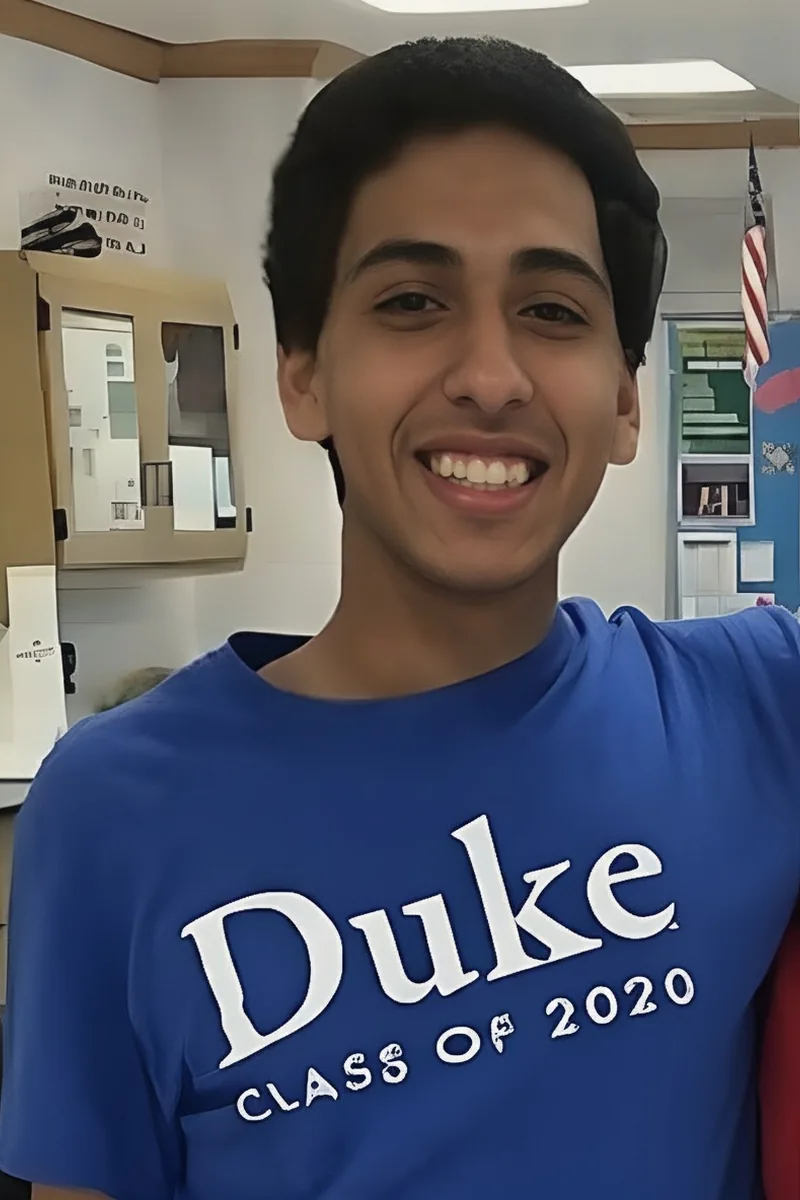
AP Chemistry's toughest problems — multi-step equilibrium calculations, thermodynamic predictions, electrochemistry — demand the kind of quantitative fluency that comes naturally to a physics major. Nima walks through these concepts by building from first principles, connecting Le Chatelier's principle or Gibbs free energy to the underlying logic rather than a memorized rule set. His 1580 SAT speaks to the precision he brings to problem-solving.
I earned my undergraduate degree in biochemistry at Brown University and my Ph.D. in immunology at the University of California, Berkeley. I have been teaching both introductory and advanced biology courses at the University of Maryland, College Park for over 10 years. For fun I enjoy reading science fiction, doing crossword puzzles, swing and ballroom dancing, and playing ultimate frisbee.
Hi there! NYU neuroscience graduate with experience teaching math, science, coding, and debate. I've tutored at Mathnasium, served as a Course Assistant for neuroscience / biology courses, taught neural networks in coding bootcamps, and coached nationally competitive debate students who reached Harvard and UPenn. My teaching philosophy uses neuroscience-backed strategies like active recall and spaced repetition. I help students deeply understand concepts, think critically, and build lasting confidence!
Eric earned his master's in inorganic chemistry and scored a 1500 on the SAT, so he knows both the content depth and the test-taking stamina that AP Chemistry demands. He digs into the trickiest parts of the exam — equilibrium calculations, electrochemistry, and thermodynamic reasoning — with the kind of precision that turns 3s into 5s. His 5.0 client rating speaks to how well that approach lands.
Cornell's engineering curriculum put Ravnoor through rigorous college-level chemistry, and his computer science training sharpened the algorithmic thinking that pays off when students need to systematically work through multi-step problems like limiting reagent calculations or electrochemical cell setups. He teaches AP Chemistry's quantitative sections by treating each problem like a debugging exercise — isolating variables, checking units at every step, and building toward answers methodically rather than jumping to formulas. Rated 5.0 by students.
Equilibrium, thermodynamics, and reaction kinetics aren't abstract concepts for Kristen — they were daily tools in her chemical-biological engineering coursework. She teaches AP Chemistry by connecting each unit back to underlying principles, so students can reason through unfamiliar free-response questions instead of relying on memorized shortcuts. Rated 4.9 by students.
Thermochemistry, equilibrium, and electrochemistry each demand a different kind of thinking, which is part of what makes AP Chem so challenging. Kate tackles each unit by connecting the math to the molecular-level story — explaining why Le Chatelier's principle works, not just how to apply it. Her engineering coursework in chemistry gives her a practical fluency that translates well to exam prep.
Few AP Chemistry tutors have actually written and graded college chemistry exams for years. Jeremy, a Yale-trained Ph.D. who has taught General Chemistry at the college level many times, knows precisely how equilibrium, thermodynamics, and kinetics questions are designed to test conceptual understanding versus rote calculation. He breaks down free-response strategies and teaches students to connect the big ideas the exam rewards.
Stoichiometry, equilibrium, and thermodynamics each require a different kind of problem-solving, and AP Chemistry expects fluency in all of them by May. Kendall approaches each unit by anchoring the math in the underlying chemical logic — why a reaction favors products, what a mole ratio actually represents — so students can reason through unfamiliar problems on the exam. She also dedicates time to the lab-based questions that many students overlook in their prep.
Premed neuroscience coursework at Rice University means Aditi has worked through college-level chemistry where concepts like electron configuration, molecular geometry, and acid-base reactions aren't optional — they're prerequisites for understanding how the brain functions at a chemical level. She unpacks AP Chemistry's conceptual questions by tying abstract ideas back to observable phenomena, making topics like periodicity and bonding theory stick. Rated 4.8 by students.
Pratik's strongest subject is chemistry, and it shows — he tutors it at both the high school and college level from his home base as a premed biology major at Cornell. He digs into the conceptual logic behind equilibrium, thermodynamics, and electrochemistry so that students can reason through unfamiliar free-response prompts instead of relying on memorized shortcuts.
AP Chemistry's free-response questions demand more than knowing reactions — they require students to connect thermodynamic principles, equilibrium shifts, and kinetic data into coherent written arguments. Andrew's molecular biology background means he understands these concepts at the research level, and his 4.8 rating shows he communicates that understanding clearly.
Raveena's bioinformatics degree at VCU means she doesn't just know AP Chemistry's content — she applies it daily, using computational tools to analyze molecular structures and chemical data in ways that make topics like electron configuration and periodic trends feel concrete. Her 8-year direct med program has taken her well beyond the AP curriculum through organic chemistry and biochemistry, giving her a clear picture of which foundational concepts the free-response section rewards most. Rated 4.9 by students.
As adjunct faculty teaching chemistry at VCU and a former bioinorganic researcher, Joel knows the AP Chemistry curriculum from both the teaching side and the lab bench. He digs into the toughest exam topics — equilibrium calculations, electrochemistry, and thermodynamic spontaneity — with the kind of conceptual depth that earns 5s, not just memorized formulas. Rated 5.0 by his students.
Rice University's biology curriculum gave Perry a college chemistry foundation built around real applications — understanding how Le Chatelier's principle governs physiological buffering, or why Gibbs free energy determines whether a metabolic pathway runs forward. He brings that applied lens to AP Chemistry's free-response questions, teaching students to reason through problems rather than pattern-match from practice sets. Rated 5.0 by students.
Testimonials
Because the right AP Chemistry tutor makes all the difference.
Average Session Rating – Based on 3.4M Learner Ratings
Practice AP Chemistry
Free practice tests, flashcards, and AI tutoring for AP Chemistry
Other Baltimore Tutors
Related Science Tutors in Baltimore
Frequently Asked Questions
Score improvement depends on your starting point and consistency with tutoring. Students who work with tutors on targeted practice typically see gains of 1-2 points on the AP scale (out of 5). The key is identifying your specific weak areas—whether that's equilibrium problems, thermodynamics, or lab calculations—and building mastery through focused practice and feedback. Most students benefit from starting tutoring 3-4 months before the exam to allow time for skill-building and full-length practice tests.
AP Chemistry students typically struggle with three main areas: (1) translating between different representations of chemical concepts (molecular, ionic, and net ionic equations), (2) quantitative problem-solving, especially with limiting reactants and stoichiometry, and (3) time management during the exam, which includes both a multiple-choice section and free-response questions. Tutors can help you develop systematic approaches to each question type and build speed through deliberate practice with actual AP problems.
Varsity Tutors connects you with expert tutors who specialize in AP Chemistry and understand the specific demands of the exam. In your first session, your tutor will assess your current understanding, identify gaps, and create a personalized study plan aligned with your timeline and goals. From there, tutoring focuses on targeted skill-building, working through challenging problem types, reviewing your practice test results, and building test-taking strategies that fit your learning style.
Practice tests are essential—they help you understand the exam format, pacing, and question types while revealing exactly where you need more work. Taking full-length practice tests under timed conditions is one of the most effective ways to build confidence and identify whether your struggles are conceptual (needing more tutoring on a topic) or strategic (needing better time management). Most students benefit from taking 3-4 full practice tests during their preparation, with tutors reviewing results to guide further study.
Test anxiety often stems from uncertainty about whether you can handle the material and the exam format. Working with a tutor builds genuine confidence through repeated success with progressively harder problems and full-length practice tests. Tutors can also teach you specific strategies like how to approach unfamiliar questions, when to skip and return to problems, and how to manage time pressure—all of which reduce anxiety on test day by giving you concrete tools and a sense of control.
The best AP Chemistry tutors have strong chemistry backgrounds (often with college-level chemistry experience or a chemistry-related degree) and specific experience teaching AP Chemistry. They should understand not just the content but also the exam itself—the types of questions asked, common student misconceptions, and effective test-taking strategies. When you connect with a tutor through Varsity Tutors, you can discuss their experience with AP Chemistry specifically and their track record helping students improve their scores.
Your first session is focused on assessment and planning. Your tutor will likely review your current chemistry knowledge, look at any recent test scores or practice test results, and discuss your goals and timeline for the AP exam. This helps the tutor understand whether you need foundational concept review, exam strategy training, or targeted work on specific topics. You'll leave the session with a clear sense of your strengths, weaknesses, and a personalized plan for moving forward.
This depends on your starting level and the exam date, but most students benefit from 1-2 sessions per week over 3-4 months leading up to the exam. If you're starting earlier in the school year, you might do fewer sessions focused on building deep understanding of challenging topics. If you're closer to the exam, more frequent sessions help you review content, work through practice problems, and refine test-taking strategies. Your tutor can recommend a schedule based on your specific needs and goals.
Let’s find your perfect tutor
Answer a few quick questions. We’ll recommend the right plan and match you with a top 5% tutor.