Award-Winning AP Physics C: Electricity and Magnetism Tutors
serving Baltimore, MD
AP Physics C: Electricity and Magnetism
Tutors in Baltimore
Private 1-on-1 tutoring, weekly live classes for academic support, test prep & enrichment, practice tests and diagnostics, and more to elevate grades and test scores.
Based on 3.4M Learner Ratings
UniversitiesSchools & Universities
DeliveredHours Delivered
ProficiencyGrowth in Proficiency
Who needs tutoring?
No obligation. Takes ~1 minute.
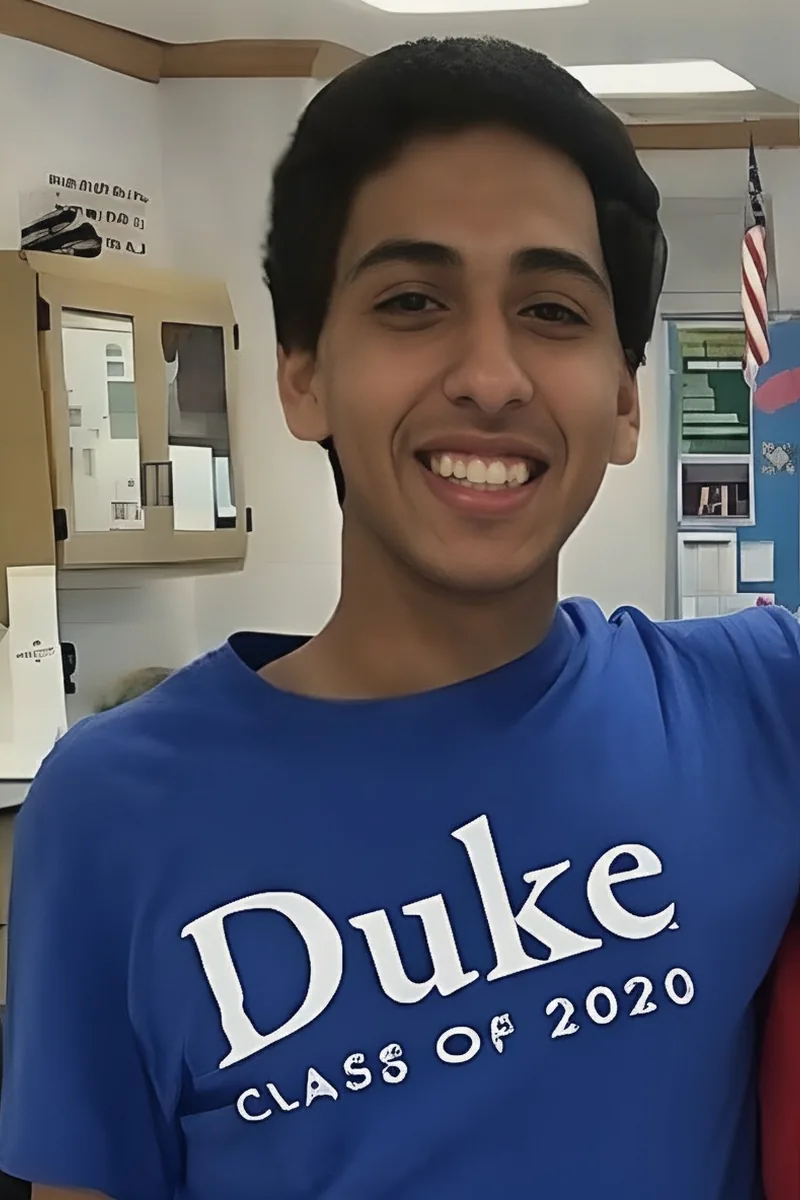
AP Physics C: E&M is widely considered the hardest AP science exam, demanding fluency with vector calculus, Gauss's law, Faraday's law, and RC/RL circuit analysis under serious time pressure. Nima is a physics major at Duke who earned a 1580 SAT, and he unpacks these topics by deriving results from Maxwell's equations so students understand the structure behind each problem type rather than pattern-matching from examples.

I love to teach. I love young minds and fresh brains. Those are just like clean sheets of papers I can draw anything I like. I really like to help young people to achieve their full capacities with my long experience of teaching. I am very patient and good at explaining complex concepts in simple terms. I am looking forward to meeting students who need my help.
Gauss's law, Ampère's law, RC circuits — AP Physics C: E&M piles abstract vector calculus on top of already counterintuitive electromagnetic concepts. Victoria unpacks each topic by building physical intuition first, like visualizing electric field lines before setting up a flux integral, so the math serves the physics instead of obscuring it. Her background in medical imaging gives her real-world examples of how electromagnetic principles show up beyond the textbook.
Hi! I'm Palmer Blackstock, a passionate tutor with a Bachelor's degree in Physics from the University of Chicago and over two years of experience in tutoring high school and college students. My primary focus is on Physics at both introductory and advanced levels, with an additional focus in math subjects like Algebra, Pre-Calculus, and AP Calculus. In my past tutoring I've helped students grasp complex concepts in mechanics, waves, and electromagnetism, as well as math concepts in trigonometry and calculus. I believe in a collaborative, student-centered approach, where I'll ask the student what they know, what they don't know, and what they want to get out of our tutoring sessions. I always tailor my lessons to meet a student's individual needs. I'm dedicated not only to enhancing a student's understanding of math and science concepts but also fostering a love of science by providing engaging content and real-world examples. In addition to my passion for education, I also love writing and journalism, especially finding engaging methods for science communication. I enjoy reading books and listening to science podcasts. But I'm also an avid video game and board game player.
I am an Applied Physics Major with an Emphasis in Mechanical Engineering at Brigham Young University. I love to share the joy I have in the sciences and math to show truly the applications are so far-reaching.
Gauss's law, Ampère's law, and Faraday's law each require students to set up integrals over surfaces and paths that feel nothing like standard calculus problems. Vishank's comfort with multivariable math and his experience teaching across physics and calculus let him bridge that gap — showing exactly how to choose a Gaussian surface or an Amperian loop and why the math works the way it does.
Gauss's law, Ampère's law, Faraday's law — AP Physics C: E&M asks students to think in three dimensions about invisible fields, which is a fundamentally different challenge than Mechanics. Charles breaks down each law by connecting the integral expressions to physical setups students can visualize, like charged shells and solenoid cross-sections. His 5.0 rating speaks to how clearly he makes these abstractions click.
AP Physics C: E&M is widely considered the hardest AP science exam, and it's also the subject closest to Sabrina's daily life as a Princeton electrical engineering student with an applied physics focus. She digs into Gauss's law, Ampère's law, RC circuits, and Faraday's law with the fluency of someone who uses Maxwell's equations in her own research and coursework. Her physics research at a Max Planck Institute adds another layer of depth to her explanations.
Gauss's law, Ampère's law, Faraday's law — E&M asks students to visualize invisible fields and then do calculus on them, which is a uniquely difficult combination. Ava's engineering training at Washington University in St. Louis gave her deep practice with vector calculus and electromagnetic theory in applied settings like circuit analysis and energy systems. She unpacks each law by grounding it in a physical scenario before touching the math, so the integrals actually make sense.
AP Physics C: E&M is one of the toughest AP exams because it layers calculus on top of already abstract concepts like Gauss's law, Faraday's law, and RC circuits. Ian's chemical engineering program at Cornell covers electromagnetism in depth, so he can unpack Maxwell's equations and walk through the calculus-heavy derivations the exam demands. He treats each problem as a chance to build physical intuition, not just grind through integrals.
AP Physics C: E&M is where most students first encounter vector calculus applied to real physical systems — Gauss's law in integral form, Ampère's law with displacement current, Faraday's law across non-trivial geometries. Burhanuddin's coursework at Georgia Tech goes deep into these topics daily, and he breaks down the connection between the math and the physics so that problems involving capacitors, inductors, and RC/RL circuits stop feeling like guesswork.
Gauss's law, Ampère's law, Faraday's law — AP Physics C: E&M throws a wall of abstract vector calculus at students who were just getting comfortable with mechanics. Lillian tackles each law by grounding it in a concrete physical scenario first, then layering in the math. Her systematic approach to problem-solving, sharpened through years of STEM coursework, translates well to navigating complex circuit and field problems.
Electromagnetism was the centerpiece of Michael's teaching at the University of Michigan, where he designed and led undergraduate lab courses on circuits, fields, and waves. AP Physics C: E&M demands comfort with Gauss's law, Ampère's law, Faraday's law, and RC/RL circuit analysis — all topics he's taught extensively at the college level. He knows exactly where the conceptual gaps tend to open up, especially around flux integrals and the superposition of electric fields.
Gauss's law, Ampère's law, RC circuits — AP Physics C: E&M demands comfort with vector calculus applied to invisible fields, which is a steep jump for most students. David's engineering coursework at UCLA keeps him immersed in this material, and he excels at translating abstract field equations into concrete, visual reasoning.
Testimonials
Because the right AP Physics C: Electricity and Magnetism tutor makes all the difference.
Average Session Rating – Based on 3.4M Learner Ratings
Practice AP Physics C: Electricity and Magnetism
Free practice tests, flashcards, and AI tutoring for AP Physics C: Electricity and Magnetism
Other Baltimore Tutors
Related Science Tutors in Baltimore
Frequently Asked Questions
AP Physics C: E&M covers electrostatics, conductors and dielectrics, electric circuits, magnetic fields, and electromagnetic induction. The exam focuses heavily on problem-solving using calculus-based approaches, with about 50% of the test dedicated to circuits and magnetic fields. Understanding Coulomb's Law, Gauss's Law, Ampere's Law, and Faraday's Law is essential, as these concepts form the foundation for nearly every question on the exam.
Score improvement depends on your starting point and commitment level. Students who work consistently with a tutor typically see gains of 1-3 points on the 5-point AP scale, with the largest improvements coming from students who identify specific weak areas (like circuit analysis or magnetic field calculations) and focus on targeted practice. The key is consistent problem-solving practice combined with conceptual understanding—tutors help you move beyond memorization to genuine mastery of the material.
Students typically struggle most with Gauss's Law applications, understanding magnetic force directions (using the right-hand rule consistently), and circuit analysis involving capacitors and inductors. Many students also find the transition from electrostatics to magnetism conceptually difficult, and pacing becomes an issue—the exam requires quick problem-solving without a calculator on the multiple-choice section. Tutors can help you develop systematic approaches to these topics and build the speed needed for test day.
Practice tests are critical for AP Physics C: E&M because the exam rewards both conceptual understanding and problem-solving speed. Working through full-length practice exams under timed conditions helps you identify timing weaknesses and recognize question patterns. Most successful students complete at least 3-5 full practice tests before exam day, plus targeted problem sets on weak topics. A tutor can help you analyze your practice test results to pinpoint exactly where you're losing points and create a focused study plan.
An effective AP Physics C: E&M tutor should have strong physics content knowledge, ideally with experience teaching or tutoring calculus-based physics at the college or AP level. They should understand the specific demands of the AP exam format and be able to explain complex concepts like field theory and electromagnetic induction clearly. Varsity Tutors connects you with expert tutors in Baltimore who have proven success helping students master this challenging material and improve their AP scores.
Pacing on AP Physics C: E&M requires both speed and accuracy, which comes from solving similar problems repeatedly until you develop efficient solution strategies. The multiple-choice section (45 minutes for 35 questions) demands quick problem-solving without a calculator, while the free-response section allows more time for detailed work. Tutors help you practice strategic approaches—knowing when to use shortcuts versus detailed calculations, and how to manage time across different question types. Regular timed practice is essential for building the confidence and speed needed on test day.
During your first session, a tutor will assess your current understanding of key E&M concepts, identify which topics are strongest and which need the most work, and learn about your specific goals (improving overall score, mastering one section, or building confidence). This diagnostic approach helps create a personalized study plan tailored to your needs. You'll likely work through a few practice problems together to establish your problem-solving style and see where the tutor can add the most value.
Baltimore's 359 schools include many with strong AP Physics programs, and the city's average student-teacher ratio of 14.8:1 means classroom instruction is fairly accessible. However, personalized 1-on-1 tutoring provides the focused attention needed to master calculus-based physics at the AP level. Varsity Tutors connects Baltimore students with expert tutors who can supplement classroom learning, work around your schedule, and provide the customized instruction that helps you move from struggling with concepts to confidently solving complex problems on the exam.
Let’s find your perfect tutor
Answer a few quick questions. We’ll recommend the right plan and match you with a top 5% tutor.