Award-Winning Organic Chemistry Tutors
serving Baltimore, MD
Organic Chemistry
Tutors in Baltimore
Private 1-on-1 tutoring, weekly live classes for academic support, test prep & enrichment, practice tests and diagnostics, and more to elevate grades and test scores.
Based on 3.4M Learner Ratings
UniversitiesSchools & Universities
DeliveredHours Delivered
ProficiencyGrowth in Proficiency
Who needs tutoring?
No obligation. Takes ~1 minute.

Lee's physics research background at the University of Maryland means he understands organic chemistry from the energy and electron-density side — why certain orbitals overlap to form bonds, what drives a reaction thermodynamically versus kinetically, and how molecular geometry dictates reactivity. He teaches arrow-pushing by connecting it to the physical forces students can reason about, turning mechanism problems into logic exercises rather than pattern-matching drills.
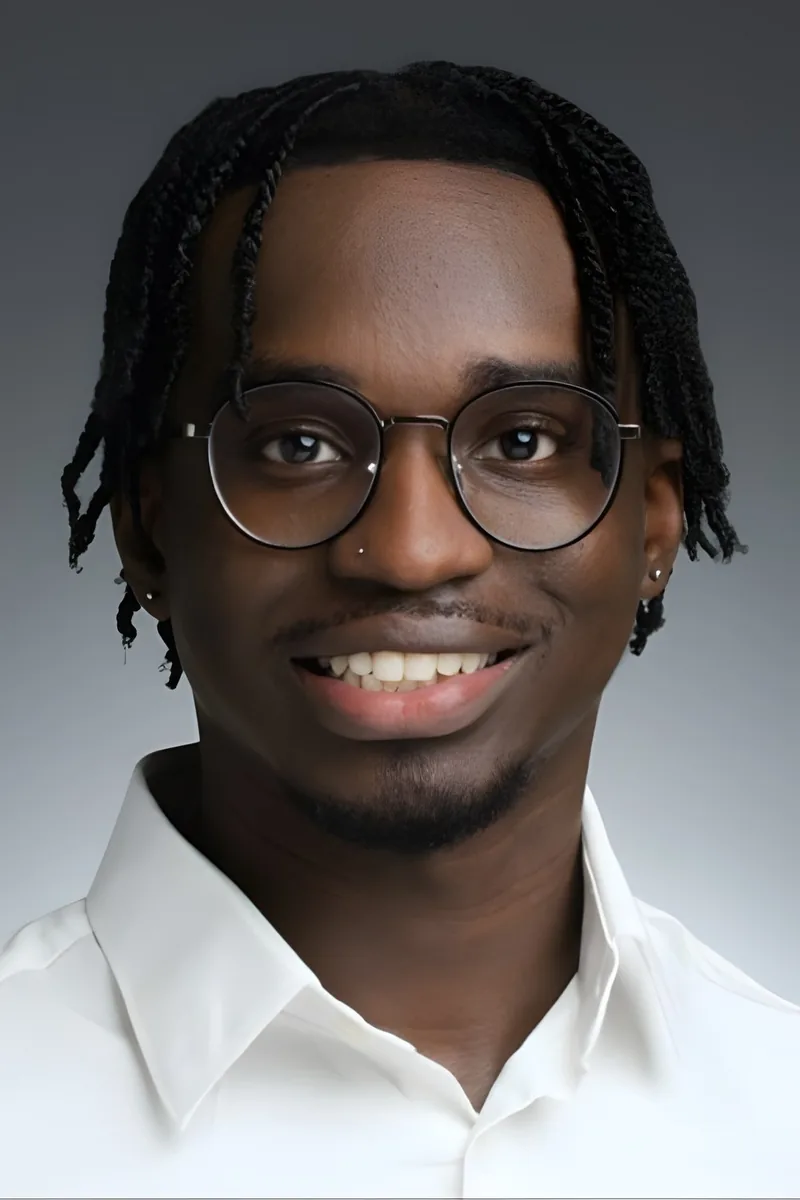
Hi there! NYU neuroscience graduate with experience teaching math, science, coding, and debate. I've tutored at Mathnasium, served as a Course Assistant for neuroscience / biology courses, taught neural networks in coding bootcamps, and coached nationally competitive debate students who reached Harvard and UPenn. My teaching philosophy uses neuroscience-backed strategies like active recall and spaced repetition. I help students deeply understand concepts, think critically, and build lasting confidence!
Reaction mechanisms are the language of organic chemistry — if you can't follow electron movement through a nucleophilic substitution or an elimination, every new reaction feels like something to memorize from scratch. Cassandra teaches students to recognize the patterns that repeat across seemingly different reactions: leaving group quality, steric effects, acid-base behavior. That pattern-recognition approach, sharpened by her biology and biochemistry background, turns a notoriously overwhelming course into something students can actually reason through.
Most organic chemistry struggles come down to not recognizing patterns — why a nucleophile attacks here and not there, or how electron-pushing arrows predict a product. Eric's graduate training in chemistry means he teaches reaction mechanisms as a connected framework of electronic and steric principles rather than a list of isolated reactions. Students rated him 5.0.
Four years of tutoring organic chemistry at Yale — while simultaneously doing pre-med coursework — gave Marcus a sharp sense of where students get stuck, particularly with carbonyl reactivity and multi-step synthesis planning. His current research at the Hospital for Special Surgery keeps him actively applying these concepts, so he teaches functional group transformations as interconnected tools rather than an isolated reaction catalog.
Reaction mechanisms are the language of organic chemistry, and David treats them that way — once a student can read electron flow through curved arrows, predicting products for substitution, elimination, and addition reactions becomes systematic rather than overwhelming. His Yale neuroscience training required two semesters of organic chemistry, and he still uses those fundamentals daily in his bioethics graduate work.
Penn's pre-health track put Brittany through rigorous chemistry coursework alongside her psychology degree, and she spent her undergraduate years tutoring General Chemistry I and II at the university's Tutoring Center — building the kind of fluency with reaction fundamentals that carries directly into organic mechanisms. She approaches topics like nucleophilic substitution and carbonyl reactivity by connecting them back to the foundational principles of electron behavior and molecular structure, making each new reaction type feel like an extension of something students already know.
Reaction mechanisms are the language of organic chemistry, and Amin earned an entire master's degree becoming fluent in them. He teaches students to read electron flow the way you'd read a sentence — identifying nucleophiles, leaving groups, and stereoelectronic effects so that predicting products becomes a reasoning exercise, not a memorization marathon. Rated 4.5 by students.
Preparing for medical school means Benjamin ground through organic chemistry with the kind of intensity that only MCAT stakes demand — reaction mechanisms, carbonyl chemistry, and spectroscopy all studied until the logic behind each transformation became second nature. His evolutionary anthropology background at Duke also gives him a knack for seeing patterns across complex systems, which is exactly the skill that separates students who struggle with synthesis problems from those who can map a retrosynthetic pathway confidently. Rated 5.0 by students.
Reaction mechanisms in organic chemistry are less about memorizing hundreds of arrows and more about recognizing a handful of recurring patterns — nucleophilic attacks, leaving group stability, and electron density shifts. Aidan studied organic chemistry as part of Notre Dame's premed track and teaches students to predict products by understanding why electrons move, not just where.
Reaction mechanisms are the backbone of organic chemistry, and Natasha teaches them the way she learned them in her biomolecular engineering program — by tracing electron movement step by step until the logic feels inevitable rather than arbitrary. She digs into arrow-pushing, stereochemistry, and functional group reactivity by asking students to predict products before revealing answers, building real intuition for how molecules behave.
A bio-organic chemistry degree means Alex didn't just pass orgo — the entire major was built around understanding how molecular structure dictates reactivity, from substitution and elimination selectivity to multi-step synthesis design. He breaks down each mechanism by identifying the nucleophile, electrophile, and driving force first, so students develop a repeatable framework instead of a growing pile of flashcards. That same logic scales directly into spectroscopy interpretation and retrosynthetic analysis when exams get harder.
Reaction mechanisms are the backbone of organic chemistry, and most students struggle not because the material is impossibly hard but because they try to memorize hundreds of reactions instead of learning the handful of electron-pushing patterns that explain almost all of them. Rebecca's science training means she teaches students to read a mechanism the way you'd read a sentence — subject, verb, object — so new reactions become predictable rather than surprising.
Reaction mechanisms are essentially stories told with curved arrows, and the trick is learning to read them rather than memorize hundreds individually. Mark approaches organic chemistry by teaching students to recognize patterns — nucleophilic attacks, leaving group stability, steric effects — so they can predict products on reactions they've never seen before. His chemistry coursework at Notre Dame keeps these concepts fresh and grounded in real molecular behavior.
Testimonials
Because the right Organic Chemistry tutor makes all the difference.
Average Session Rating – Based on 3.4M Learner Ratings
Practice Organic Chemistry
Free practice tests, flashcards, and AI tutoring for Organic Chemistry
Other Baltimore Tutors
Related Science Tutors in Baltimore
Frequently Asked Questions
Organic Chemistry requires mastering reaction mechanisms, understanding 3D molecular structures, and recognizing patterns across hundreds of reactions. Many students struggle with visualizing how atoms bond and rearrange, memorizing without understanding the underlying logic, and applying concepts to unfamiliar problems. Personalized tutoring helps you build a conceptual foundation so reactions make sense rather than feeling like isolated facts to memorize.
Reaction mechanisms are the step-by-step pathways showing how molecules transform—and they're often where students hit a wall. An expert tutor breaks down electron movement, explains why certain bonds break and form, and helps you recognize patterns so you can predict mechanisms in new scenarios. Rather than memorizing individual reactions, you'll develop the reasoning skills to approach any mechanism problem with confidence.
Many students struggle to mentally rotate molecules and understand stereochemistry, which is critical for Organic Chemistry success. Tutors use visual tools, molecular models, and drawing techniques to help you develop spatial reasoning skills. With practice and guidance, translating between 2D drawings and 3D structures becomes intuitive rather than confusing.
Your first session focuses on understanding where you are right now. A tutor will review your current coursework, identify specific concepts that feel shaky, and discuss your goals—whether that's improving your grade, preparing for an exam, or building confidence before lab work. This conversation helps create a personalized plan targeting your biggest challenges in Organic Chemistry.
Absolutely. Lab success depends on understanding the theory behind experiments, predicting outcomes, and knowing how to interpret results. Tutors help you grasp the chemistry concepts underlying your lab procedures, prepare you to think critically during experiments, and develop the scientific reasoning skills that make lab work meaningful rather than just following steps. This preparation also builds confidence when unexpected results occur.
Effective exam prep goes beyond cramming reactions the night before. A tutor helps you identify which concepts you truly understand versus which ones you've memorized, practices problem-solving under timed conditions, and teaches you to recognize question patterns. Starting prep weeks in advance rather than days before allows time to build real understanding, which is what carries you through both familiar and novel exam questions.
Look for tutors with strong chemistry backgrounds—ideally those who've taken advanced Organic Chemistry, completed chemistry labs, or studied chemistry at the college level. Beyond credentials, you want someone who can explain complex concepts clearly, adapts to your learning style, and helps you develop problem-solving skills rather than just providing answers. Varsity Tutors connects you with expert tutors who understand both the subject matter and how to teach it effectively.
With Baltimore's average student-teacher ratio of about 14.8:1, many students don't get the individualized attention needed to master Organic Chemistry's challenging concepts. Personalized 1-on-1 instruction lets you move at your own pace, ask questions without hesitation, and get immediate feedback on your understanding. This targeted support is especially valuable in a subject where small conceptual gaps can snowball into larger struggles.
Let’s find your perfect tutor
Answer a few quick questions. We’ll recommend the right plan and match you with a top 5% tutor.